[email protected] Fabricated to RMI / ANSI MH16.1 Specifications
AS/RS warehouse automated pallet storage plant and structural engineering crew
AS/RS WAREHOUSE MASTER GUIDE

Engineering High-Precision AS/RS Warehouse Systems: The Definitive Global Procurement & Structural Architecture Blueprint

Demystifying tight mechanical tolerances, dynamic crane acceleration, seismic stability, and total cost of ownership across automated storage and retrieval infrastructure.

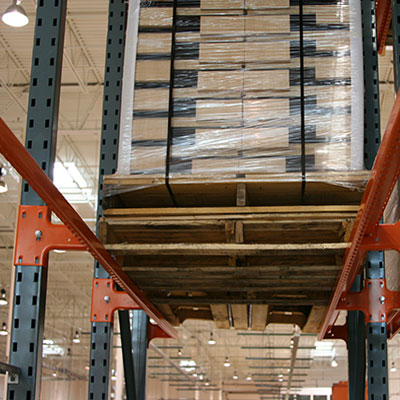
Automated storage and retrieval system rack structure in modern distribution center
Sub-Millimeter Precision

Extreme Tolerances for Automated Logistics

Structural channel and roll-formed racking fabricated specifically for high-speed automated storage cranes and 4-way shuttles.

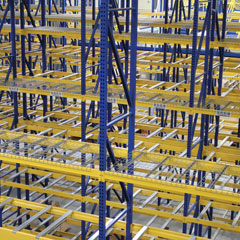
High density deep lane pallet storage automation
Maximum Cubic Utilization

Multi-Deep Automated Pallet Warehousing

Maximize footprint efficiency up to 45 meters vertical clearance while slashing operating labor and thermal loss.

Executive Technical Briefing

Why AS/RS Warehouse Architecture Has Become the Core Strategic Asset of Modern Supply Chains

In the era of hyper-scale distribution, unpredictable global supply shocks, escalating land values, and acute operational labor constraints, traditional static manual warehousing has encountered an insurmountable physical ceiling. Global logistics executives, warehouse architects, and material handling systems integrators are no longer looking at an AS/RS warehouse (Automated Storage and Retrieval System) as merely an equipment upgrade; it represents an entirely recalculated capital structure where real estate footprints shrink by up to 60%, structural verticality expands up to 45 meters, and throughput predictability reaches six-sigma standard reliability.

Unlike standard manual pallet racking, where dimensional variations of a half-inch can be forgiven by an experienced forklift driver, an automated storage and retrieval warehouse functions as an immense, rigid, high-speed robotic mechanism. The steel rack framework does not simply hold goods; it acts as the high-precision operating guide rail for automated cranes, shuttle vehicles, top tie beams, power distribution busbars, and optical sensor arrays.

At UNARCO RACKING, our engineering division has designed and manufactured heavy-duty structural and roll-formed automated rack infrastructures for nearly seven decades. Operating in strict conformance with the Rack Manufacturers Institute (RMI ANSI MH16.1) standard and global seismic building codes, UNARCO RACKING bridges the gap between massive structural capacity and sub-millimeter fabrication tolerances. Whether designing high-bay Unit-Load crane aisles exceeding 130 feet or multi-level 4-way pallet shuttle systems with multi-directional autonomous travel, our systems deliver the structural integrity, torsion resistance, and dynamic deflection dampening demanded by today's leading automated integrators.
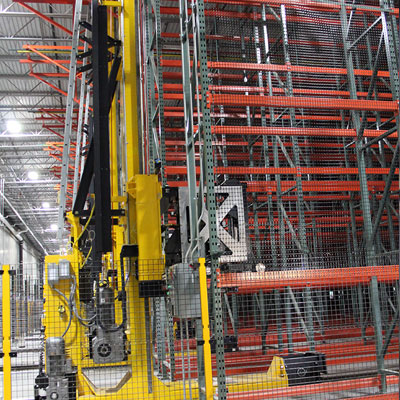
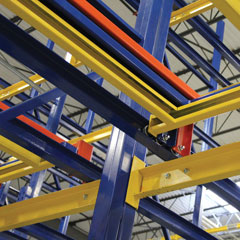
AS/RS warehouse automated high bay aisle racking
Engineered System Profiles

Recommended AS/RS Warehouse Configurations: Matching Architecture to Unit Payload & Throughput

No two warehouse operations share identical SKU distributions, pallet integrity factors, or acceleration velocity requirements. UNARCO RACKING engineers evaluate load profiles across four primary automated system tiers.

Unit-Load Pallet AS/RS Crane System

Unit-Load Crane AS/RS

Engineered for full-pallet payloads reaching up to 3,500 kg per position and vertical heights up to 45 meters. Designed with single- or double-deep telescopic forks travelling down narrow aisles with integrated top and bottom crane guidance rails.

Best Suited For: Heavy manufacturing reserves, bulk cold stores, and high-bay distribution hubs requiring 100% SKU selectivity.

Contact Us
4-Way Pallet Shuttle AS/RS Racking

4-Way Autonomous Pallet Shuttle

Decouples vertical hoisting from horizontal movement. Independent robotic shuttles traverse longitudinal rails and cross-aisles inside deep racking channels, providing ultra-dense cubic utilization with high redundancy.

Best Suited For: Medium-to-low SKU proliferation with massive volume per SKU, FMCG, cold storage, and buffer zones.

Contact Us
Mini-Load & Tote AS/RS Racking System

Mini-Load Tote & Case AS/RS

Precision lightweight rack framework designed for rapid acceleration robotic cranes handling totes, cartons, and plastic trays weighing under 100 kg. Features micro-level beam adjustability and tight deflection thresholds.

Best Suited For: E-commerce split-case order picking, pharmaceutical micro-fulfillment, and electronics parts staging.

Contact Us
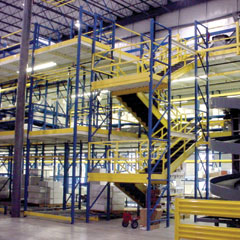
Rack-Supported Building AS/RS Clad Warehouse

Rack-Supported Clad AS/RS

The rack structure itself constitutes the primary structural framing of the building, supporting exterior roof trusses, insulated sandwich wall cladding, wind loads, snow loads, and seismic shear forces directly.

Best Suited For: Massive greenfield cold-chain centers and global logistics hubs requiring minimized construction schedules.

Contact Us
Engineering Specifications & Structural R&D

The Engineering Evolution of AS/RS Warehouse Infrastructure

The boundary between traditional structural engineering and robotic mechanics has converged. Review the critical technical disciplines governing automated rack survivability.

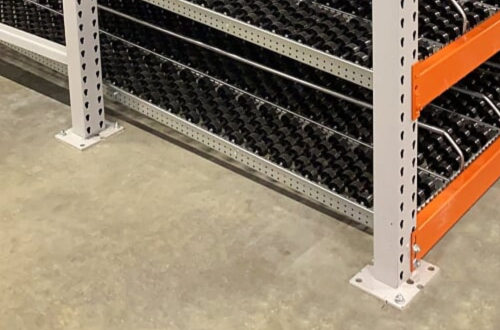
Anchorage dynamic shear engineering in automated AS/RS
Dynamic Loading

Mitigating Acceleration, Deceleration, and Braking Harmonics

AS/RS cranes accelerate horizontally at up to 3.0 m/s² while simultaneously lifting full payloads. UNARCO RACKING structural engineers calculate dynamic horizontal thrust forces and cyclic torsional stress, preventing harmonic frame sway from triggering automated laser sensor fault trips.

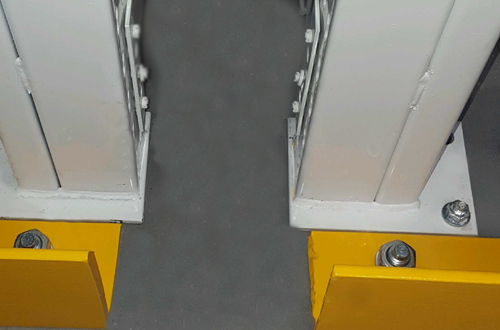
Concrete slab interface and anchor design in AS/RS
Foundation & Slab

Slab Interaction: High-Capacity Baseplates and Anchor Embedment

Extreme bay heights exert severe point loads and uplift bending moments on warehouse floor slabs. We engineer oversized structural baseplates, ductile anchor embedment schedules, and specialized leveling systems capable of absorbing dynamic seismic shear without micro-fracturing concrete.

Seismic performance engineering in high bay racking
Seismic Codes

Nonlinear Dynamic Finite Element Modeling for High-Seismic Zones

Building codes (IBC, ASCE 7, and RMI MH16.1) mandate stringent drift limits for automated storage systems. UNARCO RACKING applies advanced FEA structural modeling to verify second-order (P-Delta) structural stability during seismic ground motions, safeguarding billions of dollars in inventory.

Integrated AS/RS pick module automation
System Integration

Sub-Millimeter Vertical Alignment and Sensor Compatibility

Because automated stacker cranes rely on photo-electric positioning and optical bar-code tape, our manufacturing processes guarantee precise beam punch pitch, laser-aligned upright columns, and structural channel tolerances within +/- 1.5 mm across the entire vertical stroke.

Comprehensive System Comparison

AS/RS Warehouse Technologies: Structural & Operational Matrix

Benchmark the four dominant automated warehousing architectures against throughput, vertical density, and mechanical tolerance demands.

Automated Technology Max Practical Height Pallet Weight Capacity Aisle Clear Tolerance Throughput Velocity Structural Steel Class
Unit-Load Crane (Single-Deep) Up to 45 meters (148 ft) 500 – 3,500 kg / pallet +/- 2.0 mm continuous 45 – 65 Pallets/Hour/Crane Heavy Hot-Rolled Structural Channel
Unit-Load Crane (Double-Deep) Up to 40 meters (131 ft) 500 – 2,500 kg / pallet +/- 3.0 mm continuous 35 – 50 Pallets/Hour/Crane High-Yield Structural / Heavy Roll-Formed
4-Way Autonomous Pallet Shuttle Up to 24 meters (78 ft) Up to 1,800 kg / pallet +/- 1.5 mm track level Variable (Scalable Rover Fleet) Precision Formed Structural Rail Tracks
Rack-Clad High-Bay System Up to 50 meters (164 ft) Custom Engineered Site-Specific Dynamic Drift Integrated System Dependent Heavy Structural Framing (IBC Building Code)

Engineering Note: Actual structural steel sizing and beam profiles must be engineered around building wind shear, roof live loads, floor slab thickness, and seismic spectral acceleration values (Ss/S1). Direct your layout drawings to UNARCO RACKING engineering at [email protected].

Enterprise Credentials

Why Global Supply Chains Partner with UNARCO RACKING

Engineering authority, high-volume domestic manufacturing, and seven decades of structural innovation protect your automation capital investment.

Modern AS/RS warehouse projects represent multi-million-dollar capital investments with zero room for fabrication failure or installation delay. UNARCO RACKING brings unparalleled manufacturing heritage and structural expertise to the automated material handling industry.

  • Nearly 70 years of engineered racking innovation
  • Structural and roll-formed capability in one source
  • RMI / ANSI MH16.1 certified manufacturing
  • In-house seismic PE stamping across all 50 states & international
  • Multi-million-dollar automated powder-coat lines
  • Trusted partner to Fortune 500 corporations and global 3PLs

From initial feasibility layout reviews to finite element stress simulations, slab anchor embedment evaluations, and complete on-site installation project management, our specialized team delivers confidence at every milestone.

0+

Years of continuous pallet rack manufacturing experience

0%

RMI / ANSI MH16.1 code-compliant fabrication

0m

Maximum engineered AS/RS rack structure verticality

F500

Preferred supplier to premier Fortune 500 logistics operations

Procurement & Engineering FAQ

Frequently Asked Questions: AS/RS Warehouse Procurement & Engineering

Direct technical answers to the most common queries evaluated by procurement directors, consulting engineers, and logistics leaders.

What millimetric tolerance thresholds must an AS/RS warehouse rack structure maintain?

Unlike conventional manual forklift selective racking where field plumb tolerances are often 1/500 (or about 0.5 inches over 20 feet), automated AS/RS warehouse structures require strict millimetric tolerances, commonly within +/- 1.5 mm to +/- 3.0 mm across crane operating aisles and vertical plumb standards. Stacker cranes travel at horizontal speeds exceeding 300 m/min with vertical mast heights surpassing 100 feet; even minute structural drifts can cause optical positioning scanners to lose lock, resulting in emergency automated stops or mechanical interference between the crane shuttle and pallet load.

How do UNARCO RACKING engineers manage seismic drift and dynamic crane loading simultaneously?

Our engineers utilize advanced structural dynamic finite element analysis (FEA) compliant with RMI (ANSI MH16.1) and IBC provisions to calculate dynamic crane acceleration, decelerations, seismic ground accelerations, baseplate anchor shear forces, and concrete slab interaction. By integrating heavy-duty structural channel columns with proprietary welded diagonal bracing frameworks and high-strength bolted beam connectors, the structure maintains exceptional torsional rigidity while safely absorbing dynamic cyclic vibration and seismic base shear.

What are the primary differences between Unit-Load SRM and 4-Way Pallet Shuttle AS/RS?

Unit-Load SRM (Storage & Retrieval Machine) utilizes dedicated mast-guided automated cranes down single aisles up to 45 meters high for heavy pallet throughput. 4-Way Pallet Shuttle AS/RS decouples vertical lifts from horizontal movement, allowing scalable fleets of intelligent shuttles to traverse deep rack channels with maximum footprint density. Shuttles are ideal for high storage density with medium throughput, whereas Unit-Load cranes offer higher individual pallet lifting capacities and rapid single-cycle retrieval rates.

How does slab floor flatness (FF/FL) affect AS/RS warehouse installation viability?

Sub-millimeter crane wheel travel and high-bay vertical alignment demand specialized superflat floors (often F-min 100 or higher per ASTM E1155). UNARCO RACKING engineering evaluates geotechnical and concrete slab specifications early in the architectural process. We provide customized heavy-duty baseplate designs, high-strength anchor bolt schedules, and precision shimming kits to ensure that minor slab variations do not translate into out-of-tolerance rack plumb errors.

What is the typical ROI timeframe for an industrial AS/RS warehouse modernization project?

Depending on regional labor costs, energy consumption in temperature-controlled cold chains, real estate footprint savings, and throughput velocity, modern AS/RS warehouse retrofits and greenfield builds typically reach full payback within 3 to 5 years. In cold storage applications, where building volume reductions immediately slash continuous refrigeration electrical costs, payback can occur in as little as 2.5 to 3 years.

How does UNARCO RACKING ensure finish durability in cold storage AS/RS warehouses?

Our multi-million-dollar automated electrostatic powder-coating lines apply a resilient, cross-linked polyester or epoxy-hybrid coating that cures with zero porosity. This finish resists thermal shock, cyclic condensation, chemical sanitization, and sub-zero brittleness down to -30°C, preventing under-film corrosion that could compromise structural steel strength over decades of automated cycling.

Ready to Engineer Your High-Performance AS/RS Warehouse?

Consult directly with UNARCO RACKING structural automation engineers. Share your load data and CAD drawings: [email protected]

Contact Us