Navigating Modern Warehouse Storage Systems in High-Velocity Supply Chains
In the contemporary logistics ecosystem, warehouse storage systems have evolved far beyond passive steel framework. As global supply chains face shifting SKU profiles, explosive micro-fulfillment velocities, and surging industrial real estate costs, structural racking represents an engineered infrastructure asset directly governing facility throughput, operating expense, and worker safety.
When global distribution directors and chief procurement officers evaluate warehouse storage systems, the core objective is no longer merely finding the lowest cost-per-pallet position. Instead, technical stakeholders must resolve intricate mechanical trade-offs between storage density and order selectivity, calculate building slab dynamic load capacities, comply with evolving ANSI MH16.1 building codes, and mitigate seismic risks.
Whether modernizing a regional cold-storage distribution center with high-density structural drive-in racks or outfitting a 40-foot clear-height automated logistics hub with AS/RS crane structures, specifying the appropriate warehouse storage system is a multi-million-dollar capital investment that determines your logistics profitability for the next 20 to 30 years. At UNARCO RACKING, our engineering teams bridge structural precision with practical industrial material handling, delivering high-performance, compliant systems tailored to global distribution demands.
Core Warehouse Storage Systems Recommended for Industrial Facilities
Engineered to the rigorous design guidelines of the Rack Manufacturers Institute (RMI), UNARCO RACKING delivers the industry's broadest array of structural and roll-formed warehouse storage systems.
Selective Pallet Rack
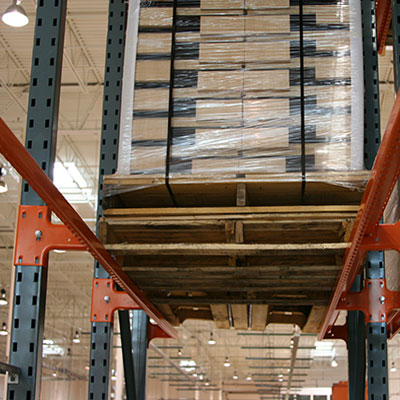
The global benchmark for 100% pallet accessibility. Configured with interchangeable teardrop or heavy-duty T-bolt connections, selective pallet racking accommodates diverse SKU variations, rapid forklift cycles, and seamless beam level adjustments.
Inquire Now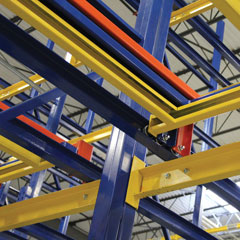
Push Back Rack Systems
Dynamic 2-to-6 deep pallet storage utilizing nested inclined cart carriages. Operating on a LIFO (Last-In, First-Out) principle, push-back storage systems eliminate multiple forklift access aisles, multiplying floor space density while preventing honeycomb picking losses.
Inquire Now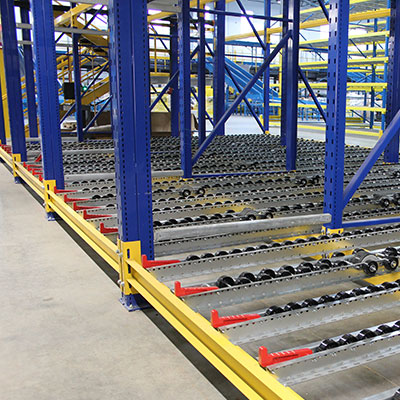
Pallet Flow Systems
Gravity-driven FIFO (First-In, First-Out) racking equipped with heavy-duty skate wheels, speed controllers, and entry separators. Ideal for temperature-controlled warehousing, pharmaceutical lots, and food distribution where strict batch rotation is essential.
Inquire NowDrive-In / Drive-Thru Racks
Maximum volumetric pallet accumulation designed for single-SKU bulk inventory. Lift trucks drive directly into structural storage lanes along reinforced support rails, cutting footprint area by up to 60% compared to traditional selective configurations.
Inquire Now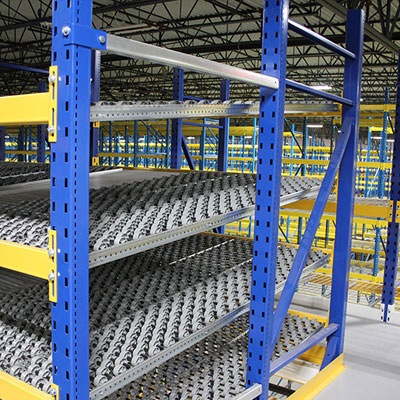
Industrial Carton Flow
Engineered for high-volume split-case order picking and e-commerce staging. Gravity roller tracks guarantee continuous product presentation at the pick face, dramatically minimizing travel time and worker ergonomic fatigue across multi-tier pick modules.
Inquire NowAutomated Storage (AS/RS) Racks
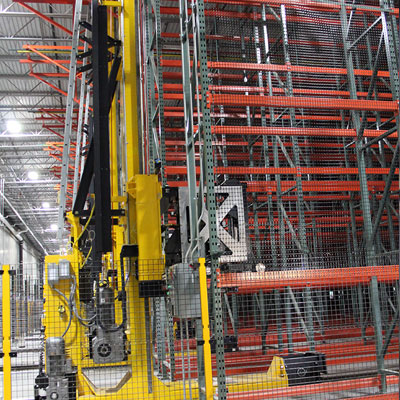
High-tolerance structural engineering designed to integrate with automated cranes, shuttles, and robotic retrieval tooling. Fabricated under stringent deflection limits to ensure fail-safe interaction between automation hardware and steel infrastructure.
Inquire Now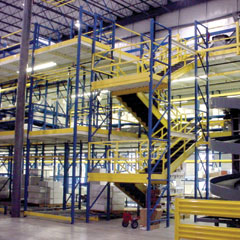
Pick Modules & Mezzanines
Multi-story engineered structures combining pallet storage, flow tracks, integrated conveyor paths, and stairs into a unified order-fulfillment platform. Multiplies square footage without expensive structural building expansion.
Inquire Now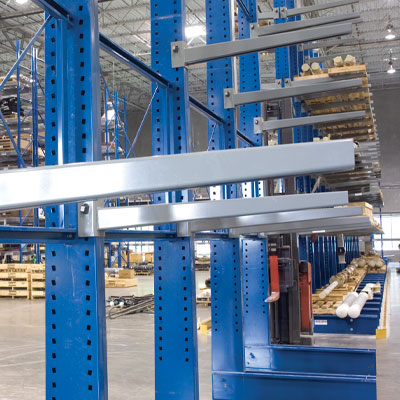
Cantilever Storage Systems
Unobstructed front-column access specifically built for long, heavy, or non-standard industrial loads such as structural tubing, timber, steel plates, extruded plastics, and furniture with customized load-bearing arms.
Inquire NowWarehouse Storage Systems Performance & Engineering Comparison
Analyze how varying rack geometries, accessibility thresholds, and mechanical lifecycles align with your operational facility parameters.
| System Topology | Volumetric Density | Selectivity | Inventory Method | Structural Resilience | Operational Target |
|---|---|---|---|---|---|
| Standard Selective Rack | Baseline (40-50%) | 100% Direct Access | FIFO / LIFO Flexible | Standard to High | High SKU count, varied order profiles, fast picking |
| Push Back Racking (2-6 Deep) | High (70-75%) | Single-Face per Lane | LIFO Rotation | Heavy Steel Cart C-Channels | Medium-velocity SKUs, bulk reserve, fast staging |
| Pallet Flow Systems | Maximum (85-90%) | One Pallet Lane Pick Face | Strict FIFO Flow | Dynamic Skate / Brake Rollers | Date-sensitive items, perishables, high turnover |
| Drive-In / Drive-Thru | Maximum (85%) | Low (Lane-dependent) | LIFO (Drive-In) / FIFO | Heavy Structural Framing Mandate | Cold storage, blast freezers, homogeneous SKUs |
| Automated AS/RS Storage | Ultra-High (90%+) | 100% Automated Crane Pick | System Algorithm Controlled | Millimeter Tight Tolerances | Lights-out warehouses, e-commerce mega-hubs |
Future Procurement & Technological Trends in Warehouse Storage Systems
How forward-thinking engineering and global logistics shifts are revolutionizing warehouse storage investments through 2030 and beyond.
1. The Convergence of Static Racking & AMR Automation
Modern warehouse storage systems are transitioning from purely static manual racks to hybrid automation envelopes. Automated Guided Vehicles (AGVs) and Autonomous Mobile Robots (AMRs) require millimeter-accurate baseplate installations, specialized bottom-rail guidance channels, and ultra-flat floor tolerances. Procurement heads must specify rack systems capable of handling the cyclic dynamic loading exerted by continuous robotic retrieval without causing structural fatigue or deflections that misalign optical sensors.
2. Stricter Seismic Codes & Dynamic Baseplate Engineering
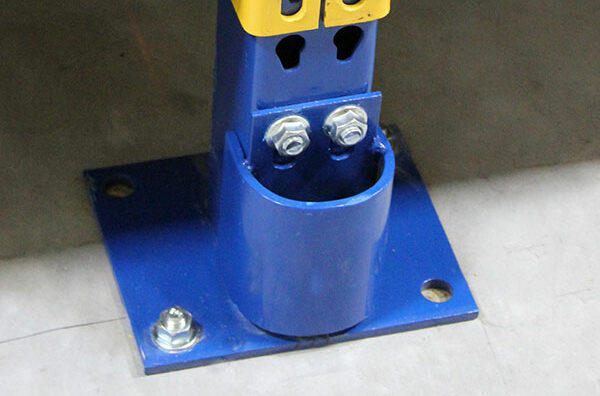
Updated International Building Code (IBC) and ANSI MH16.1 specifications demand advanced seismic modeling. Siesmic engineering now directly influences steel gauge selection, horizontal and diagonal frame bracing, and heavy-duty slab anchor embedment depths. Global logistics providers are selecting engineered warehouse storage systems equipped with seismic baseplates designed to dissipate energy and resist upright base shearing during high-magnitude seismic events.
3. Cold-Chain Expansion & Heavy Structural Durability
With pharmaceuticals, biologicals, and frozen foods growing rapidly, demand for sub-zero warehouse storage systems is at an all-time high. Cold environments exacerbate metal embrittlement and magnify lift truck impact hazards due to moisture condensation. As a result, procurement managers increasingly specify structural steel channel frames and beams over lighter cold-formed options due to their superior resistance to severe impact in tight freezer aisles.
4. Modular Lifecycle Maintenance & Engineered Repair Kits
The historic cycle of tearing down an entire racking bay every time an upright leg suffers an impact is commercially obsolete. Forward-thinking operations invest in engineered bolt-on column repair systems and heavy-gauge factory straddle protectors upfront. Certified modular repair kits allow distribution managers to restore damaged uprights to 100% rated capacity without unloading adjacent bays, saving hundreds of thousands of dollars in facility downtime.
Why Global Supply Chains Trust UNARCO RACKING
Setting the benchmark in warehouse storage systems engineering, manufacturing precision, and turnkey lifecycle accountability for nearly 70 years.
In-House PE Project Engineering
Our licensed professional engineers conduct rigorous structural FEA modeling, anchor bolt embedment analysis, and site-specific seismic calculations to guarantee total ANSI MH16.1 compliance.
View EngineeringStructural & Roll-Formed Flexibility
UNARCO RACKING is one of the elite few global manufacturers fabricating both heavy hot-rolled structural steel channels and precision roll-formed teardrop profiles under one roof.
Explore RangeAutomated Powder-Coat Lines
Multi-million-dollar automated finishing facilities ensure impact-resistant, corrosion-proof, and aesthetically superior electrostatic powder coatings engineered for grueling industrial wear.
Our FacilitiesTurnkey Project Management
From architectural CAD layout and slab load verification to professional installation oversight, our project engineers deliver end-to-end accountability, eliminating project delays.
Inquire NowFrequently Asked Questions on Warehouse Storage Systems
Clear, technically sound answers addressing the critical questions industrial buyers and warehouse engineers face during storage rack procurement.
How do I determine whether roll-formed or structural warehouse storage systems fit my facility?
The choice between roll-formed and structural steel depends primarily on duty cycle, vehicle impact exposure, environmental temperatures, and budget parameters. Roll-formed racking is cold-formed from high-tensile sheet steel, providing exceptional cost-efficiency, rapid beam elevation adjustability via teardrop connections, and versatile reconfiguration for standard retail distribution hubs.
In contrast, structural warehouse storage systems are constructed from heavy hot-rolled C-channels and secured with high-strength bolts. Structural steel provides unmatched impact durability against heavy reach trucks, making it mandatory for abusive environments such as high-turnover grocery warehouses, drive-in systems, and sub-zero cold-storage facilities where brittle fracture risks and lift truck impacts are severe.
What site and building data must be prepared before engineering warehouse storage systems?
To produce a fully compliant, code-approved structural racking design, facility planners should supply our engineering team with:
- Architectural layout drawings (AutoCAD DWG) showing building columns, egress pathways, and dock staging doors.
- Clear ceiling height under joists and the exact location of overhead ESFR fire sprinkler pipes and lighting runs.
- Pallet profiles: maximum pallet dimensions (length, width, height including load overhang) and maximum gross weight.
- Lift truck specifications: mast height, turning radius, and outrigger dimensions.
- Concrete slab details: compressive slab strength (psi/f'c), overall thickness, and reinforcement structure (rebar or fiber).
- Project site location (ZIP code/GPS coordinates) for calculating local seismic acceleration forces (Ss and S1 values).
Can existing selective warehouse storage systems be converted into dynamic push-back or flow racks?
Yes, retrofitting is mechanically feasible, but it requires rigorous structural recertification. Converting a selective rack bay into a push-back or pallet flow lane introduces higher point loads on beams, altered center of mass dynamics, and dynamic impact forces from moving pallets. An engineer must evaluate the existing upright frame column gauges, diagonal bracing, baseplate sizing, and floor anchor embedment to confirm that the existing steel can sustain the higher load concentrations without defying ANSI MH16.1 deflection limits.
What are the key engineering tolerances required when integrating racks with automated AS/RS and AMRs?
Automated storage and retrieval systems (AS/RS) and AMR environments leave virtually zero margin for structural error. While conventional forklift racks tolerate installation deviations up to 1/2 inch over 40 feet, automated racking typically requires alignment tolerances within 1/16 inch across all planes. Beam deflection limits under full load must be engineered strictly (often L/500 or tighter) to prevent sensor beam interruption. Additionally, bottom guidance rails, floor anchor embeds, and baseplate levelers must be engineered to resist constant high-frequency vibration.
How can I safely repair damaged warehouse rack columns without replacing the entire upright frame?
Replacing an entire damaged upright frame requires completely offloading adjacent bays, halting warehouse throughput, and dismantling overhead beam levels. UNARCO RACKING provides engineered bolt-on rack repair kits that allow certified technicians to cut away the damaged lower column section and bolt in a high-strength structural steel leg reinforced with internal backing plates and factory straddle guards. Because our kits are fully engineered to meet original manufacturer load ratings, your facility preserves structural compliance with minimum operational interruption.
The UNARCO RACKING Five-Stage Engineering & Delivery Workflow
Our end-to-end engineered delivery model protects procurement capital and eliminates multi-vendor misalignment.
Data Intake & Profiling
Analysis of pallet dimensions, clear height, SKU velocity, building slab data, and lift truck geometry.
PE Structural Design
CAD layout modeling, finite element analysis, RMI compliance review, and site seismic calculations.
Precision Fabrication
High-tensile steel manufacturing with fully automated welding, punching, and powder-coat finish lines.
Turnkey Logistics
Staged deliveries, crane and installation management, plumb inspection, and laser alignment certification.
Lifecycle Safety
Load rating plaques, protective column straddles, annual safety auditing, and engineered repair kits.
Ready to Optimize Your Warehouse Storage Systems?
Connect directly with our structural engineering team. Submit your CAD drawings, building parameters, and load criteria to [email protected] for a rapid project assessment.