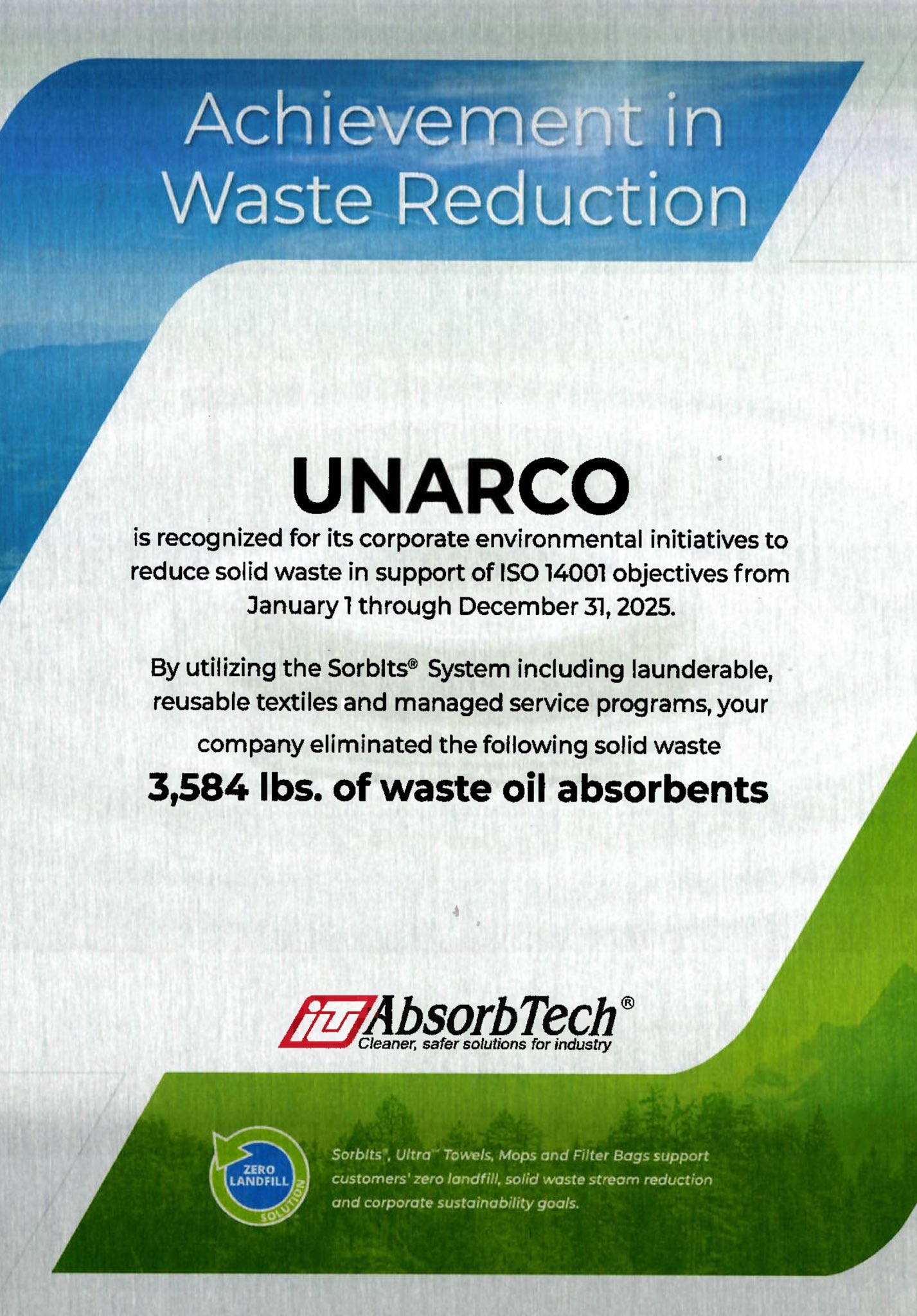
Engineered Pallet Rack Configurations for High-Throughput Supply Chains
Procuring the optimal industrial pallet rack requires aligning horizontal footprint limits, clear vertical warehouse height, inventory velocity (FIFO vs. LIFO), and mechanical handling equipment (MHE). Discover our precision-engineered pallet rack configurations built to perform in the most demanding supply chain ecosystems.
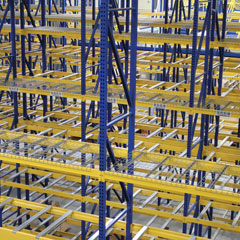
Selective Pallet Rack
The universal industry benchmark offering 100% immediate pallet selectivity and rapid cycle times. Available in classic teardrop roll-formed configurations or heavy-duty structural steel with patented T-Bolt fasteners, engineered for high-SKU distribution and direct reach-truck access.
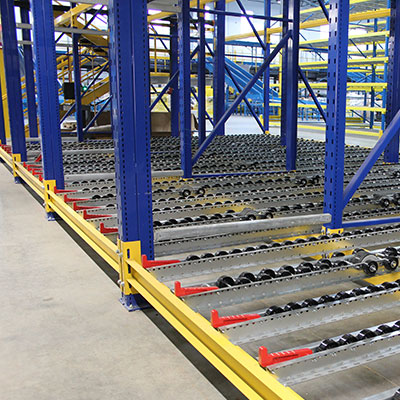
Pallet Flow Systems
Dynamic gravity-driven storage lanes engineered for strict First-In, First-Out (FIFO) inventory rotation. Utilizes heavy-duty skate wheels or full-width steel rollers coupled with internal speed controllers, cutting forklift travel distance while maximizing cubic storage density.
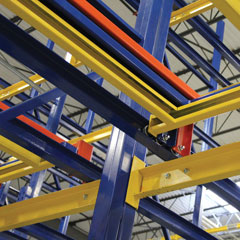
Push Back Rack
High-density Last-In, First-Out (LIFO) nested cart system storing 2 to 6 pallets deep per lane. Pallets rest on low-profile telescoping rolling carts flowing forward via gravity, maintaining single-aisle operational access without requiring trucks to enter the storage structure.
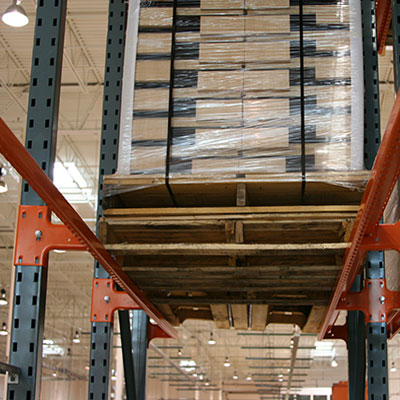
Drive-In / Drive-Thru
Engineered for massive bulk storage where aisles are minimized. Forklifts drive directly into storage bays to stage unit loads on structural steel cantilevered rails. Exceptional density solution for cold storage, seasonal manufacturing, and low-SKU, high-volume products.
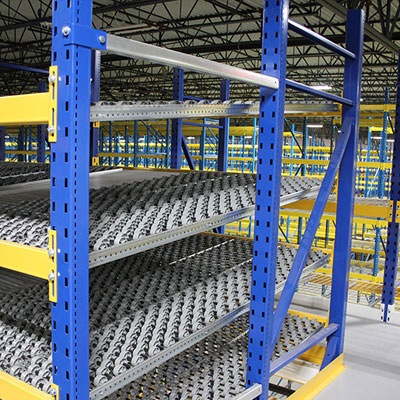
Carton Flow & Pick Modules
High-efficiency split-case gravity flow picking modules integrating multi-tier mezzanine floors, carton runways, and automated conveyor interfaces. Eliminates dead-walking time for distribution crews and drastically boosts picker lines-per-hour output.
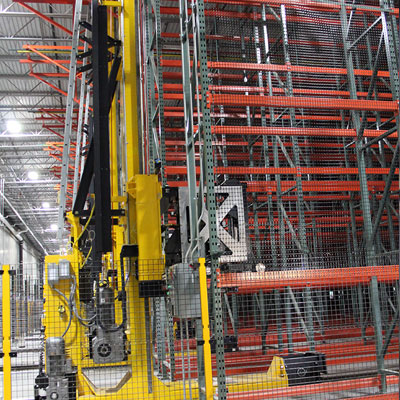
AS/RS Rack Structures
Millimeter-precise rack architectures built specifically to integrate with automated storage and retrieval cranes, shuttles, and autonomous mobile robots (AMRs). Engineered with ultra-stringent plumbness, minimal beam deflection, and custom rack-supported building options.
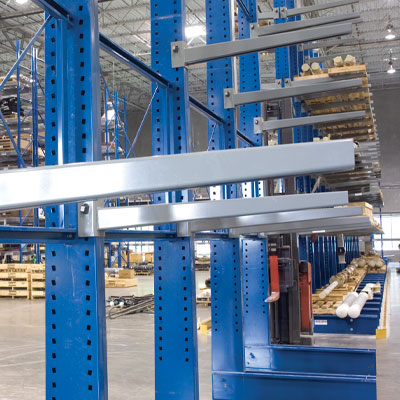
Cantilever Rack Systems
Heavy-duty, unhindered linear storage engineered without front upright columns. Built to handle non-standard, bulky, and elongated profiles such as structural steel tubes, industrial timber packs, extruded plumbing, and commercial sheet products.
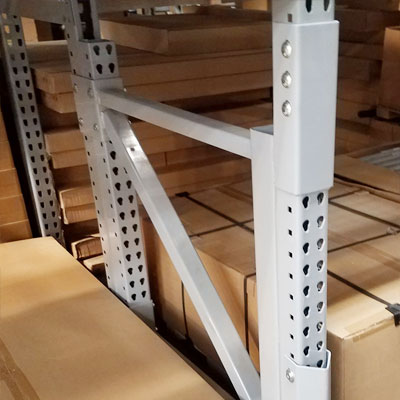
Engineered Rack Repair
Engineered, bolt-on upright frame repair systems that restore full certified load capacity without tearing down active pallet bays. Certified under ANSI MH16.1, saving thousands of labor hours and mitigating catastrophic warehouse frame collapse hazards.
Future Pallet Rack Procurement Trends: What Global Supply Chain Heads Must Know
In modern procurement, specifying a pallet rack goes far beyond tonnage and price-per-pound metrics. As global logistics networks pivot toward automated systems, stringent building codes, and environmental regulations, procurement directors must evaluate long-term lifecycle metrics to secure supply chain resilience.
Total Cost of Ownership (TCO) vs. Initial CapEx
Global procurement teams often make the mistake of buying pallet rack systems solely on lowest initial purchase price. However, in heavy-traffic environments, roll-formed columns without protective reinforcement experience forklift impact damage that requires frequent column replacement, unexpected structural re-inspections, and catastrophic downtime. Forward-thinking procurement strategies factor in life-cycle resilience: specifying hot-rolled structural steel columns in ground-level impact zones, bolt-on straddle deflector boots, and thick baseplates to achieve long-term ROI.
Modular Adaptability & E-Commerce Volatility
With seasonal SKU velocity fluctuation and unpredictable retail packaging changes, procurement contracts are prioritizing modular beam connector designs that allow rapid vertical tier re-spacing without welding or structural cutting. Systems equipped with universal interchangeability, bolted connectors (such as the high-shear UNARCO RACKING T-Bolt), and adjustable step beam profiles give warehouse operators immediate agility to transition between bulk unit-loads and high-density split-case picking systems.
Decarbonization & Green Steel Certification
Global supply chains are scrutinizing the carbon footprint of structural assets. The future of racking procurement demands compliance with circular economy standards: high-efficiency automated powder-coating processes that emit zero volatile organic compounds (VOCs) and use structural steel fabricated from scrap-based electric arc furnaces (EAF). These material specifications provide measurable Scope 3 emission reductions for multinational warehouse operators.
Average reduction in lifetime maintenance costs when specifying structural impact-resistant upright frames in primary drive aisles.
Verification that every weld, roll profile, and bolted connector complies with strict RMI ANSI MH16.1 engineering stress safety margins.
Volatile Organic Compounds emitted from UNARCO RACKING's multi-million-dollar automated electrostatic powder coat finish lines.
Strict vertical column plumbness tolerance mandated for automated racking installations interacting with autonomous guided forklifts.
The Technological Evolution of Pallet Rack Systems: Automation, Seismic Dynamics & Structural Channel Rigidity
Industrial racking is no longer a passive static warehouse shelf; it has evolved into a dynamic, highly engineered structural system that interfaces with autonomous machinery and withstands complex environmental loads.
| Evaluation Parameter | Roll-Formed Pallet Rack | Structural Channel Pallet Rack | High-Tolerance Automated Rack (AS/RS) |
|---|---|---|---|
| Steel Profile & Grade | Cold-rolled steel coils, formed into open c-channels with punched teardrop holes. | Heavy-gauge hot-rolled steel channel sections with solid, unperforated load faces. | Calibrated, high-yield structural tubing and tight-tolerance rolled channel steel. |
| Impact Resistance | Moderate. Susceptible to local torsional deformation from lateral forklift blows. | Maximum. Hot-rolled corners resist severe impacts in busy loading docks and cold stores. | Engineered around robotic guidance tracks; protected by external collision barriers. |
| Connection System | Punched teardrop with gravity locking pins or snap-in spring safety clips. | High-tensile Grade 5 structural bolts or patented front-access T-Bolt assemblies. | Machined shear tabs, rigid bolted torque fittings, and calibrated precision connections. |
| Application Suitability | Standard selective warehousing, retail showrooms, e-commerce carton picking. | Drive-in, push back, cold storage facilities, outdoor yards, and heavy manufacturing. | Multi-shuttle systems, crane-based high-bay warehouses, autonomous mobile robot docks. |
| Vertical Deflection Limits | Typically designed around L/180 standard deflection under uniform load. | Engineered to tight deflection ratings; accommodates dynamic fork abuse. | Ultra-rigid engineering: strictly maintained between L/300 and L/400 for robotic sensors. |
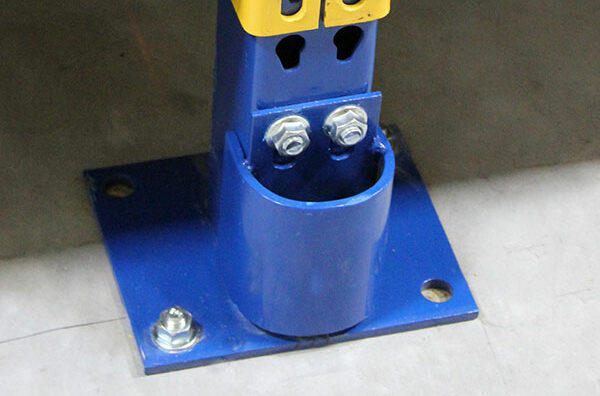
Advanced Seismic Engineering
Seismic design forces defined by international building codes require calculating site-specific spectral acceleration factors (Ss and S1), slab shear interaction, and ductility reduction factors. UNARCO RACKING engineers customize heavy-duty baseplates and anchor embedment patterns to resist ground-motion acceleration without column shear.
Robotic & AMR Compatibility
Warehouse automation requires ultra-precise rack alignment. Autonomous Mobile Robots (AMRs) and Automated Storage and Retrieval Systems (AS/RS) rely on optical sensors, LiDAR, and tight-clearance forks. Millimeter-level plumbness tolerances and anti-sway bracing prevent sensor faults and racking contact.
Dynamic Impact Mitigation
Heavy warehouse traffic inevitably leads to forklift contact. Integrating structural channel column protectors, heavy bottom ties, and bolt-on straddle deflectors shields vulnerable bottom-tier steel columns, ensuring the upright maintains its rated compressive strength.
Electrostatic Powder Finishes
Industrial durability depends on surface protection. Multi-stage washing, iron phosphate pretreatment, and automated electrostatic powder coating produce a resilient finish that resists chipping, scratching, and chemical corrosion in ambient and sub-zero storage environments.
Why Fortune 500 Enterprises Standardize on UNARCO RACKING
With nearly 70 years of manufacturing heritage, UNARCO RACKING delivers structural integrity, precision manufacturing, and end-to-end turnkey project execution worldwide.
Years of continuous engineering innovation in industrial storage rack manufacturing.
Comprehensive engineered product families: from standard selective pallet rack to advanced AS/RS high-bay towers.
Rigorous compliance with Rack Manufacturers Institute specifications and ANSI MH16.1 building safety codes.
Licensed Professional Engineers on staff to review site conditions, load capacities, and slab anchorage calculations.
Structural & Roll-Formed Manufacturing Under One Roof
Unlike regional suppliers limited to a single production methodology, UNARCO RACKING manufactures both cold roll-formed teardrop systems and hot-rolled structural channel steel racking. This dual manufacturing capability allows us to design hybrid solutions: pairing high-impact structural channel lower tiers with cost-effective roll-formed upper levels for optimum performance and value.
- In-house structural engineering and site-specific seismic reviews
- Patented structural T-Bolt system offering rapid front-assembly
- Turnkey project management from initial layout CADs to handover
- Mobile Rack Warrior application for real-time load capacity calculation
- Certified bolt-on engineered rack repair solutions meeting RMI safety rules
- Global export logistics support with optimized container loading
Frequently Asked Questions: Global Pallet Rack Procurement
Detailed technical answers to common questions asked by supply chain managers, warehouse directors, and industrial procurement teams.
How do I select between structural steel and roll-formed pallet rack?
Roll-formed pallet rack is fabricated from cold-rolled steel coils and utilizes punched teardrop patterns. It offers lower initial CapEx, rapid vertical adjustment, and fast installation, making it ideal for standard selective warehousing and retail environments. Structural steel pallet rack is manufactured from heavy hot-rolled c-channels and secured with high-tensile bolts. It provides exceptional resistance to forklift impacts, making it the preferred choice for heavy distribution centers, cold storage warehouses, outdoor applications, and drive-in configurations.
What seismic parameters must be accounted for in industrial pallet rack engineering?
Pallet rack seismic engineering is governed by local building codes such as IBC, NFPA 5000, and ASCE 7. Key engineering variables include short-period spectral response acceleration values (Ss and S1), soil site classification, and total design live loads. Engineers evaluate base shear forces, anchor bolt embedment depth, concrete slab thickness (often 6 to 8 inches or greater), and column baseplate dimensions to ensure ductile failure behavior and prevent rack collapse during seismic events.
Can standard pallet rack be adapted for automated guided vehicles (AGVs) and AS/RS?
Yes, provided the structural tolerances and deflection ratings are calibrated for automation. Robotic systems and AS/RS cranes require strict vertical plumbness (often within 1:1000) and tighter horizontal beam deflection limits (L/300 to L/400, compared to L/180 for standard selective racks). Systems must also incorporate visual reflective targets, heavy-duty floor anchoring, and reinforced guide rails to prevent vehicle interference.
How do changing beam tier elevations affect overall upright frame load capacity?
An upright frame's load-bearing capacity is determined by its largest unsupported vertical length (the distance between adjacent beam elevations). When you raise or remove the bottom beam to double-stack pallets on the concrete floor, you lengthen the unbraced column span. This significantly increases column slenderness, reducing the frame's total allowable compressive capacity. Any beam spacing changes must be recalculated and approved by a professional rack engineer under ANSI MH16.1 guidelines.
When is in-situ engineered pallet rack repair compliant versus total frame replacement?
Under ANSI MH16.1 guidelines, in-situ rack repair is compliant when performed using engineered bolt-on repair kits stamped by a qualified professional engineer. The repair must fully restore the original column load capacity, securely anchor to the existing concrete floor, and match the existing frame bracing geometry. Bolt-on repairs eliminate the need to hot-work weld inside active warehouses and avoid the operational disruption of completely unloading and dismantling entire rack rows.
What parameters are required to generate an accurate pallet rack quotation?
To produce an accurate structural design and cost estimate, our engineers require: (1) Architectural CAD floor plans with building clear heights and column grids; (2) Pallet dimensions (Width x Depth x Height), including load overhang; (3) Maximum and average pallet gross weights; (4) Required SKU counts and operational rotation (FIFO vs. LIFO); (5) Material handling equipment specifications (lift truck type, reach height, and minimum aisle turning radius); and (6) Facility geographic location for seismic and geotechnical calculation. You can share your data directly with [email protected].
Optimize Your Warehouse Density with Engineered Pallet Racking
Partner with UNARCO RACKING's project engineering team. Share your warehouse layout, load profiles, and seismic parameters: [email protected]