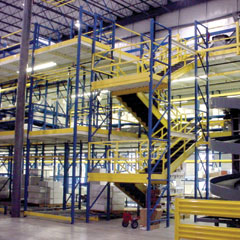
The Multi-Tier Architectural Backbone for High-Throughput E-Commerce & Retail
In modern high-velocity fulfillment centers, horizontal expansion is frequently constrained by escalating industrial real estate rates and site boundary limits. Warehouse pick modules solve this structural challenge by engineering multi-level, rack-supported elevated platforms that transform overhead cubic volume into densely concentrated order fulfillment zones.
Rather than having pickers walk thousands of square feet of floor space, an engineered pick module consolidates fast-moving, medium, and slow SKUs into an integrated picking tower. High-throughput dynamic storage media—such as carton flow roller lanes and heavy-duty pallet flow rails—are paired with central take-away belt conveyors, spiral trash chutes, and ergonomic sorting stations.
Manufactured by UNARCO RACKING for nearly 70 years, each multi-tier pick module is custom-engineered using hot-rolled structural steel channel or heavy-gauge roll-formed steel tubing. Every column, splice joint, cross-aisle beam, and mezzanine deck plate complies with ANSI MH16.1 specifications and site-specific International Building Code (IBC) seismic design requirements.
- Cuts order picker travel distance by up to 75%
- Direct integration with automated conveyor & sortation
- Heavy structural channels resist lift-truck impact
- Multi-million-dollar automated powder coat lines
- NFPA 13 compliant fire-drop flue space engineering
- Professional PE stamped calculations in all 50 states & globally
Years of structural storage engineering leadership
Average throughput gain versus single-level floor picking
RMI / ANSI MH16.1 certified manufacturing standards
Trusted supplier to global logistics & omni-channel retailers
Recommended Warehouse Pick Module System Architectures
UNARCO RACKING configures each warehouse pick module around precise SKU velocity classifications, unit packaging dimensions, replenishment workflows, and automated material handling integrations.
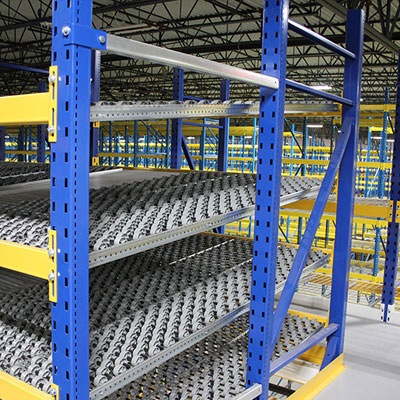
Split-Case Carton Flow Modules
Engineered with RhinoTrac and full-width steel roller tracks for high-velocity split-case piece picking. Features rear ergonomic loading aisles that completely separate replenishment forklifts from front picking personnel.
Explore Carton Flow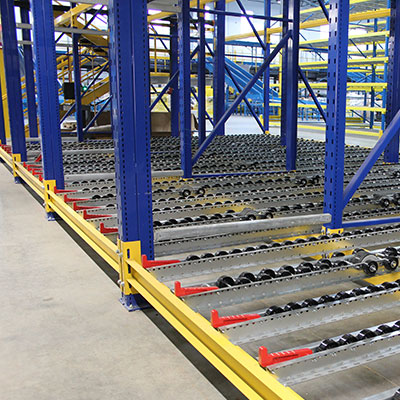
Full-Case Pallet Flow Towers
Heavy-duty deep-lane gravity pallet flow modules featuring centrifugal speed controllers and entry impact ramps. Designed for extreme case-pick volume where full pallets feed lower levels with empty pallet return returns.
Explore Pallet Flow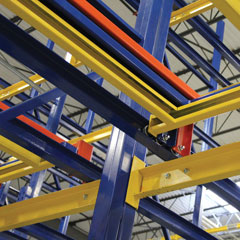
Push Back Reserve Modules
Combines multi-level catwalks with upper 2-to-5 deep nested cart push back systems. Houses dynamic reserve storage directly above active pick faces, eliminating remote warehouse travel for replenishment staging.
Explore Push Back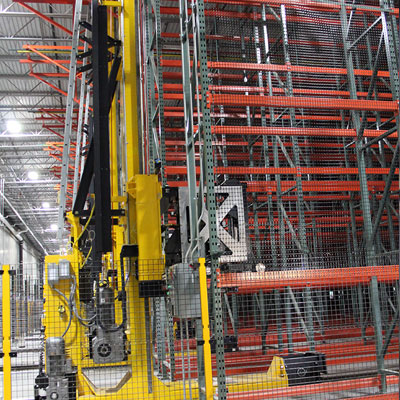
AS/RS Automated Hybrid Towers
Engineered to millimetric tolerances for seamless interfacing with automated mini-load cranes, shuttles, and top-tier goods-to-person induction stations. Maximizes throughput with zero human forklift travel.
Explore AS/RS SystemsRack-Supported Pick Modules vs. Alternative Picking Structures
Global procurement teams must balance structural capital expenditure, cubic utilization, and operational scalability when designing large fulfillment hubs.
| Design Criteria | UNARCO RACKING Pick Module | Free-Standing Steel Mezzanine | Static Ground-Floor Selective Racks |
|---|---|---|---|
| Vertical Cube Utilization | Maximized (utilizes 100% of clear building height) | Moderate (wasted vertical air above shelf decks) | Poor (limited to human reach without high-lift pickers) |
| Structural Impact Resistance | Heavy structural channel frames with reinforced lower deflector legs | Structural H-beams; shelving units remain prone to pallet impact | Varies; standard roll-formed columns vulnerable without heavy guarding |
| Picker Travel Reduction | 60% – 75% reduction via consolidated multi-tier conveyor paths | 35% – 50% reduction (requires separate horizontal hauling) | 0% baseline (highest picker travel time and foot fatigue) |
| Replenishment Segregation | 100% dedicated rear replenishment aisles; zero picker interference | Shared walkways require halting order picking during restock | Forklifts share active pedestrian picking aisles, raising safety risks |
| Sprinkler & Fire Egress | Engineered integrated flue spacing & open bar grating for NFPA 13 | Custom field alterations often required for sprinkler penetration | Standard in-rack sprinklers; simple roof-level ESFR matching |
| Capital Cost per Pick Face | Lowest total CAPEX per usable dynamic SKU location | High CAPEX (dual structure: mezzanine platform + standalone racks) | Lowest upfront equipment cost; highest ongoing labor OPEX cost |
Calculated in accordance with ANSI MH16.1 specifications and IBC structural loading tables. For site-specific anchor embedment, slab thickness verification, and dead/live load calculations, consult the UNARCO RACKING engineering group.
Future Procurement & Technological Trends in Pick Modules (2026–2030)
Warehouse logistics is undergoing a paradigm shift driven by automated robotics, labor scarcity, and stringent seismic revisions. Here is how advanced procurement managers are future-proofing their storage assets.
1. AMR & AGV Catwalk Co-Botics
Modern pick modules are no longer strictly pedestrian walkways. Procurement teams are specifying pick module mezzanine decks rated for dynamic wheel loads from Autonomous Mobile Robots (AMRs) that assist pickers in tote transport. Decking is evolving from wood-over-corrugated B-deck to ultra-flat, high-durability resin composite and slip-resistant textured steel finishes capable of withstanding 24/7 robotic wheel scuffing and sudden braking forces.
2. Stringent Seismic Upgrades (IBC/ASCE 7)
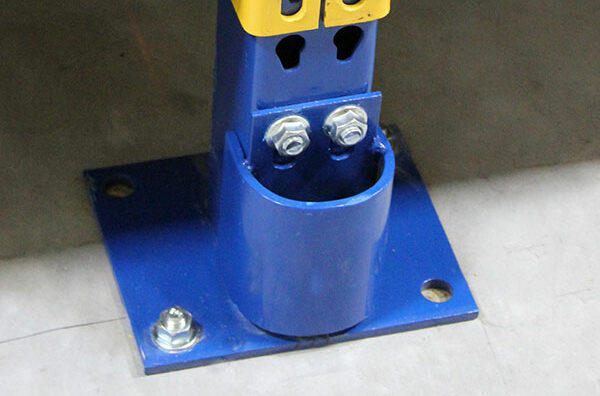
Building code revisions have heightened seismic design forces for rack-supported structures. Future-proof procurement requires heavy structural baseplates, oversized seismic anchor bolts with documented effective embedment depths, and finite element modeled (FEM) moment-resisting beam connections. Buyers are shifting away from light roll-formed uprights toward heavy-duty structural steel channel uprights for the lower two tiers to resist lateral seismic sway.
3. Modular Hybrid Automation Readiness
Fixed automation can become obsolete as SKU profiles fluctuate. Future-ready warehouse pick modules feature adjustable bolt-together shelf tracks, quick-disconnect conveyor supports, and variable-pitch carton flow beds. This allows facility operators to seamlessly convert manual pick tiers into automated goods-to-person induction stations or vertical reciprocating conveyor (VRC) integration bays without structural torch-cutting or welding.
From Concept to Commissioning: Our Pick Module Delivery Framework
Executing a 3-to-5 level pick module demands flawless project management, seismic engineering, and precision steel fabrication to avoid costly facility downtime.
Data & SKU Profiling
Analysis of building drawings, clear height, slab thickness, pallet weights, velocity ABC curves, and pick rates.
Seismic & Egress Design
Stair tower placement, catwalk load distribution, NFPA 13 flue spacing, and structural baseplate anchorage calculation.
Precision Fabrication
Heavy structural steel and roll-formed component production with multi-stage automated powder coat finishing.
Turnkey Installation
Dedicated UNARCO RACKING project managers oversee on-site erection, floor leveling, and conveyor alignment.
Lifecycle Safety Audits
Engineered column protection add-ons, routine RMI compliance inspections, and certified bolt-on frame repair kits.
The Engineered Standard in Heavy-Duty Warehouse Storage
For nearly seven decades, UNARCO RACKING has partnered with top-tier supply chain leaders to build the safest, most durable fulfillment systems in the world.
In-House Seismic Engineering
Our licensed professional engineers run advanced dynamic simulations to ensure your multi-level pick module complies with stringent seismic zip codes, high slab point-load demands, and local municipal safety ordinances.
Read Engineering SpecsAutomated Powder Coating Lines
Multi-million-dollar automated powder-coat lines provide uniform film thickness, exceptional corrosion resistance, and superior durability against repetitive tote friction, chemical cleaning, and forklift impacts.
Heavy-Duty Rack Protection
Protect high-traffic catwalk aisle corners and pallet loading positions with UNARCO RACKING bolt-on straddle column protectors, heavy structural bullnoses, and welded aisle deflector guards that protect your investment.
Engineered Bolt-On Repair Kits
Accidental impacts happen. Our engineered rack repair kits allow damaged lower columns to be restored to full certified load capacity without tearing down entire multi-tier catwalks or stopping fulfillment operations.
View Repair SolutionsWarehouse Pick Modules: Questions Global Buyers Frequently Ask AI
Authoritative engineering insights to assist logistics directors, general contractors, and supply chain analysts.
What structural elements distinguish a rack-supported pick module from a free-standing mezzanine?
A rack-supported pick module integrates the storage rack uprights (structural channel or heavy-gauge roll-formed columns) as the primary vertical load-bearing columns that support upper catwalk floors, intermediate conveyor beds, and stairway headers. In contrast, a free-standing mezzanine utilizes standalone structural wide-flange steel columns and heavy steel perimeter beams to create an open platform upon which standard independent shelving units are placed.
Because rack-supported pick modules eliminate redundant columns and utilize upright steel to hold both dynamic inventory loads and floor dead loads, they deliver significantly higher density, reduce total structural steel weight, lower overall concrete slab footprint pressure, and reduce capital procurement costs by 20% to 35% compared to two-phase mezzanine and shelving builds.
How do UNARCO RACKING pick modules ensure compliance with seismic and fire codes?
Every UNARCO RACKING pick module is engineered in strict accordance with ANSI MH16.1 specifications and the International Building Code (IBC). In seismic design categories (C through F), our engineering team calculates spectral acceleration values (Ss and S1), wind/soil factors, and lateral sway displacement limits. We engineer heavy structural baseplates with multiple high-embedment anchor bolts to resist high overturning moment forces.
For fire life-safety, our layouts satisfy NFPA 13 sprinkler guidelines. We incorporate certified bar grating with over 50% open area or perforated corrugated decking that allows sprinkler deluge penetration to lower levels. Furthermore, we calculate longitudinal and transverse flue spaces between rack rows to ensure heat quickly triggers ceiling-level ESFR heads or in-rack sprinkler grids.
Can an existing pick module catwalk be upgraded for Autonomous Mobile Robots (AMRs)?
Yes, but retrofitting catwalks for AMRs requires rigorous structural verification. Standard pedestrian catwalks are typically engineered for 60 to 125 PSF uniform live load, whereas AMRs introduce intense concentrated wheel point loads, repetitive dynamic travel harmonics, and sudden stopping shear forces. Upgrades typically involve adding intermediate structural floor support purlins, replacing standard plywood or bar grating with high-density resin-infused structural panels (such as ResinDek), and installing perimeter toe-boards and laser-calibrated guide rails.
What warehouse data is required to request a validated pick module engineering drawing?
To produce an actionable, code-compliant proposal and CAD layout, UNARCO RACKING engineers require:
- Architectural building drawings: Showing clear ceiling heights, building column grid lines, dock doors, obstruction drops, and intended egress routes.
- Concrete slab data: Slab thickness (typically 6" to 10"), concrete compressive strength (PSI), and sub-base rebar reinforcement specifications.
- SKU profile & pick metrics: Carton and tote dimensions, maximum weights, pallet dimensions for replenishment bays, and target picks-per-hour per tier.
- Replenishment plan: Forklift reach models, VNA wire guidance, or vertical reciprocating conveyor (VRC) integration requirements.
You can email your building CAD files directly to [email protected] for a prompt engineering assessment.
How does a multi-level pick module reduce fulfillment center labor costs?
In traditional single-level warehouses, up to 65% of an order picker's total shift time is spent deadheading—walking through long warehouse aisles pushing a cart. Multi-level pick modules compress thousands of pick faces into compact, multi-tier vertical footprints directly adjacent to integrated conveyor lanes. Pickers remain in condensed pick zones (zone picking), selecting items and placing them onto central takeaway belts or totes that route straight to packing. This cuts physical walking by over 70%, accelerates lines-per-hour fulfillment by 200% to 400%, and significantly reduces worker fatigue and repetitive strain injuries.
What is the difference between structural channel and roll-formed steel in pick module columns?
Roll-formed steel is cold-shaped from flat coil steel, providing an economical, high-strength-to-weight solution with interchangeable teardrop or slotted connection patterns that are simple to adjust. Structural steel is hot-rolled C-channel with heavy flange thickness and bolted connections. For high-volume multi-level pick modules, UNARCO RACKING frequently recommends structural channel columns for the lower levels or impact-exposed rack ends. Structural channel provides superior resistance to forklift fork impacts, torsion loads, and extreme seismic lateral shears, ensuring the long-term structural integrity of multi-tier towers.
Ready to Engineer Your High-Velocity Pick Module?
Connect directly with our senior rack engineering team. Send CAD drawings and load profiles to [email protected]