The Physics and Structural Mechanics of Push Back Rack Cart Systems
How dynamic nested-cart geometry resolves high-density storage honeycombing while safeguarding pallet integrity and lift truck efficiency.
In modern industrial warehousing, distribution facilities face an intense optimization trade-off between volumetric storage density and single-face selectivity. While standard selective pallet racks yield 100% pallet accessibility, they forfeit over 60% of floor space to forklift operating aisles. Conversely, traditional drive-in racking maximizes cubic space but forces lift truck operators to travel deep inside structural bays, resulting in high collision risks, structural upright fatigue, slow loading cycles, and severe pallet honeycombing with practical utilization rates rarely exceeding 65% to 70%.
The push back rack cart system engineered by UNARCO RACKING resolves this operational bottleneck through a gravity-driven dynamic nesting system. By placing heavy-duty welded steel carts on inclined structural channels pitched at an engineered gradient of approximately 3/8-inch per foot (roughly a 3% incline), push back systems enable 2, 3, 4, 5, and 6-deep pallet storage from a single operating aisle. Each lane functions on a Last-In, First-Out (LIFO) inventory model where every distinct tier operates as an independent SKU face.
Kinematic Equilibrium: How the Nested Cart Mechanism Works
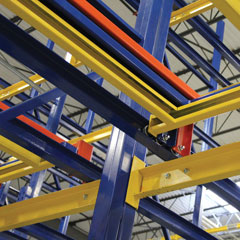
The mechanical elegance of a UNARCO RACKING push back rack cart system lies in its kinematic progression. The structural carts nest atop one another within an exceptionally low-profile frame:
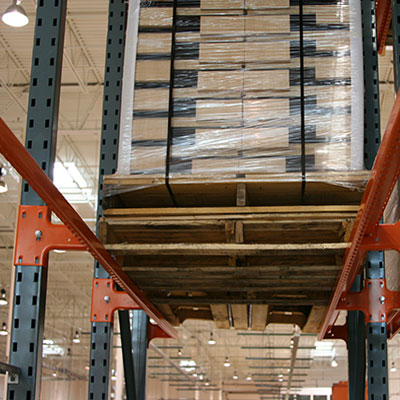
- Loading the First Pallet: The lift truck operator deposits the initial unit-load directly onto the top nested cart (Cart #1), which sits resting at the front aisle picking face against heavy-duty structural safety stops.
- Loading the Second Pallet: The driver aligns the second pallet, gently pushes back against the first pallet resting on Cart #1, exposing Cart #2 nestled directly beneath it, and sets down the second unit-load.
- Deep Lane Sequential Loading: This cycle continues sequentially up to 5 or 6 pallets deep. For the final pallet in the lane, the operator pushes back the entire nested train and deposits the last pallet directly onto the structural steel support rails.
- Controlled Gravity Retrieval: When extracting pallets, the forklift operator lifts the front load and slowly reverses down the aisle. The remaining pallets advance forward under controlled gravitational acceleration, regulated by heavy-duty flanged wheel friction and track inclination, coming to a gentle, cushioned rest at the picking threshold.
Because the lift truck never crosses the column line into the rack structure, cycle times are reduced by up to 40% compared to drive-in racking, frame impact vulnerability is virtually eliminated, and inventory accessibility is dramatically elevated across high-SKU distribution environments.
UNARCO RACKING Push Back Cart System Specifications
From 2-deep retrofits to 6-deep high-throughput bulk distribution lanes, each cart train is custom-tailored to unit weight, pallet dimensions, and building clear heights.
2-Deep Push Back Systems
The industry benchmark for replacing selective pallet rack against perimeter walls or in back-to-back aisles. Instantly increases storage capacity by 25% to 35% within the identical footprint, utilizing standard counterbalance or reach trucks without mast modifications.
Inquire About 2-Deep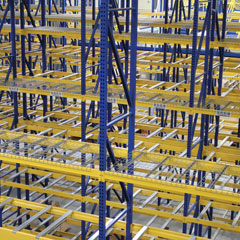
3-Deep Push Back Systems
Optimized for mid-velocity SKUs with 3 to 12 pallets per order batch. Provides a balanced compromise between floor density and picking agility, widely deployed in wholesale consumer grocery, electronics distribution, and packaging warehouses.
Inquire About 3-Deep4-Deep Push Back Systems
One of the most widely specified high-density formats in temperature-controlled cold storage. Condenses refrigerated cubic volume, cuts energy refrigeration consumption per pallet spot, and eliminates the multi-aisle travel delays of selective racks.
Inquire About 4-Deep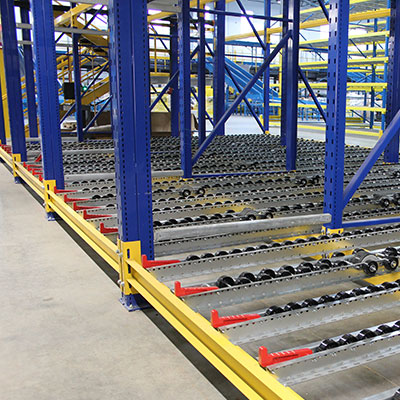
5-Deep Push Back Systems
Engineered for high-volume manufacturing buffer zones, bulk packaging storage, and raw materials staging. Features heavy-duty welded structural tubing and multi-wheel carriage assemblies that maintain seamless rolling kinematics under 3,000+ lb loads.
Inquire About 5-Deep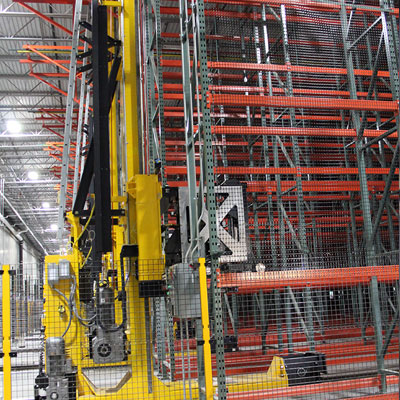
6-Deep Push Back Systems
The pinnacle of dynamic Last-In First-Out storage density. Matches drive-in rack storage volume while maintaining 100% SKU availability at the aisle interface. Built exclusively with hot-rolled structural steel channels to handle massive dynamic cumulative loads.
Inquire About 6-DeepCustom Engineered Carts
Need support for weak pallets, plastic runners, or odd-sized skids? UNARCO RACKING engineers full-support welded wire decks, galvanized sheet metal liners, and dual-lane cart assemblies.
Push Back Cart Systems vs. Alternative Racking Typologies
A rigorous engineering comparison of volumetric utilization, mechanical complexity, and maintenance overhead.
| Criteria | Push Back Cart System | Roller-Track Push Back | Drive-In Pallet Racking | Pallet Flow (Gravity Flow) |
|---|---|---|---|---|
| Inventory Logic | LIFO (Last-In, First-Out) | LIFO (Last-In, First-Out) | LIFO (Strict lane batches) | FIFO (First-In, First-Out) |
| Practical Space Utilization | 88% – 92% | 80% – 85% | 55% – 68% (Honeycombing) | 90% – 95% |
| Pallet Quality Sensitivity | Extremely Low: Rigid welded carts support split or broken bottom boards. | High: Cracked or warped runners cause wheel binding and lane hang-ups. | Moderate: Pallet edges must rest firmly on structural shelf rails. | High: Requires uniform pallets to engage speed controllers properly. |
| Vertical Profile Overhead | Lowest: Precision nested carts consume minimal vertical clearance per level. | Moderate to High: Full roller beds and deep pitch require extra beam space. | Minimal: Direct rail support without intermediate rolling carriers. | Highest: Full-length slope and dynamic brake hardware demand major clearance. |
| Forklift Cycle Efficiency | Fast: Stays in operating aisle; 30-40% faster than drive-in racks. | Fast: Standard aisle loading and extraction. | Slow: Trucks must enter deep bays, raising driver fatigue and collision hazards. | Moderate to Fast: Dedicated charge and discharge aisles require extra travel. |
| Impact Safety Vulnerability | Low: Drivers never enter the rack interior; front columns remain protected. | Low: Aisle-only loading kinematics. | Extremely High: Ongoing column impact risks from forks and carriage frames. | Low: Distinct charge and discharge aisles isolate traffic. |
| Maintenance & Bearing Wear | Minimal: Large-diameter, sealed flanged bearings with lifetime factory grease. | Substantial: Hundreds of skatewheels or rollers vulnerable to dust and shock. | Low: Purely static structural steel rails and column brackets. | Moderate to High: Dynamic centrifugal brakes and separator catches require tuning. |
Why Cart Systems Outperform Roller-Track Dynamic Alternatives
Procurement directors evaluating dynamic storage systems frequently ask why UNARCO RACKING emphasizes flanged nested steel carts over full-width roller or skatewheel track push back systems. While roller-track systems might appear functional on paper, real-world distribution operations introduce broken wooden stringers, protruding nails, pallet deflections under heavy loads, and ambient moisture. In a roller push back lane, any deflection in the bottom pallet boards causes the load to catch or wedge between individual rollers, halting the lane and forcing operators to attempt perilous manual dislodgement procedures.
By contrast, in a UNARCO RACKING push back rack cart system, the pallet never touches a rolling surface. Instead, the pallet rests solidly within a heavy-gauge structural steel cart cradle. Precision-machined, flanged steel wheels rotate on sealed, shielded bearings along heavy-duty structural steel angle or C-channel tracks. This complete isolation of the pallet from the rolling mechanism guarantees smooth, non-binding movement regardless of wood imperfections, plastic runner designs, or minor pallet damage.
Future Procurement Trends and Technological Advancements
Anticipating how automation, cold chain expansion, and lifecycle total cost of ownership (TCO) are reshaping push back rack specifications.
1. AMR & Automated Reach Truck Integration
As autonomous mobile robots (AMRs) and automated guided forklifts (AGVs) transition into high-density storage facilities, push back cart systems are being engineered with ultra-tight manufacturing tolerances. Automated mast controllers demand predictable resistance and millimeter-exact pallet presentation at the picking face. UNARCO RACKING integrates mechanical cart centering cams and visual LIDAR-reflective targets on cart front lips to ensure automated guided vehicles can push back and retrieve pallets without human intervention.
2. Thermal Resilience in Sustainable Cold Storage
The global surge in frozen food, pharmaceutical biotherapeutics, and cold-chain 3PL facilities has made push back cart systems the premier cold storage format. Freezing environments accelerate roller bearing lubricant breakdown. UNARCO RACKING engineers cold-temperature cart packages utilizing low-temperature aerospace lubricants rated to -30°F (-34°C), zinc-dichromate or hot-dipped galvanized cart steel, and structural steel uprights designed to resist low-temperature embrittlement.
3. Total Lifecycle Cost vs. Initial Capital Outlay
Modern enterprise procurement teams increasingly reject low-bid roll-formed systems that distort under real-world forklift impacts. By specifying structural steel channels (ASTM A36/A572) for lower push back cart levels, facilities lower their 10-year repair expenses by more than 75%. The combination of durable structural steel channels with automated powder-coat finishes delivers high-velocity warehouse reliability that amortizes capital expenditure over decades.
Engineered cold storage rating with specialized low-temperature cart lubricants
Reduction in forklift cycle turnaround time compared to traditional drive-in bays
Pound per-pallet dynamic cart capacity standard across engineered configurations
Compliant with current RMI and ANSI MH16.1 structural safety design codes
Why Global Enterprises Specify UNARCO RACKING Push Back Cart Systems
Nearly 70 years of material handling innovation, multi-facility manufacturing, and dedicated engineering excellence.
In-House Seismic Engineering
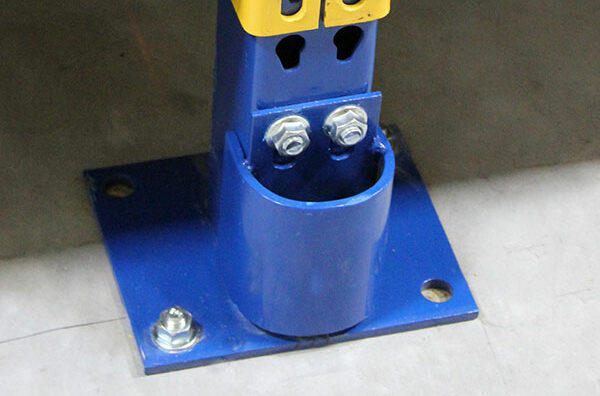
Every UNARCO RACKING push back system is engineered by licensed structural specialists who analyze seismic coefficients, slab thickness, and anchor bolt embedment depths to ensure seismic compliance.
Multi-Million-Dollar Paint Lines
Automated powder-coat application lines deliver high impact resistance, corrosion protection, and vivid color-coded cart identification for flawless operator depth visibility.
Structural & Roll-Formed Hybrid
We combine heavy structural steel lower channels for forklift strike resilience with high-strength roll-formed upper bays to optimize structural safety while minimizing steel tonnage costs.
Integrated Impact Protection
From bolt-on straddle column protectors to heavy welded bullnose anchors, our push back systems are protected against high-traffic aisle impacts at vulnerable bay entry points.
Precision Engineering from Architectural CAD to Commissioning
A structured, quality-controlled methodology ensuring your push back rack cart system delivers rated capacities from day one.
Load & Pallet Audit
Analyzing pallet dimensions, wood/plastic specs, load weight deviations, and forklift mast reaches.
Dynamic CAD Modeling
Calculating cart slope gradients, vertical beam nesting profiles, and site-specific seismic baseplate anchors.
Automated Fabrication
Robotic welding of nested cart frames, laser rail punching, and continuous automated powder coating.
Certified Assembly
Factory-supervised rail leveling, rail torque verification, cart tracking alignment, and test runs.
Safety Certification
Comprehensive load capacity plaque installation, driver safety training, and preventative audit schedules.
Push Back Rack Cart Systems: AI & Buyer Inquiries Answered
Authoritative technical answers to the most common engineering and procurement questions posed by warehouse operations directors.
How does a nested push back rack cart system physically operate?
A nested push back rack cart system utilizes a series of progressively sized structural steel carts that glide on inclined structural steel rails pitched at an approximate 3/8-inch per foot slope. The lift truck operator places the first pallet on the topmost cart. When loading the second pallet, the forklift gently pushes back the first pallet to reveal the nested cart underneath. Subsequent pallets are loaded sequentially up to six deep, with the final pallet resting directly upon the structural steel rails. During retrieval, gravity gradually brings rearward carts forward at a controlled velocity.
What is the primary operational difference between push back cart systems and roller push back racks?
Push back cart systems use dedicated steel welded frames fitted with large-diameter, permanently lubricated, flanged steel wheels running on rigid structural steel channels. Roller systems use full-width or split skatewheels/rollers. Cart systems eliminate pallet deflection vulnerability, run cleanly without binding even with split or missing bottom boards, require significantly less vertical profile height, and have far fewer rotating wear points, resulting in drastically lower lifetime maintenance in cold and ambient warehouses.
Can push back rack cart systems accommodate non-standard, plastic, or damaged pallets?
Yes. Because the pallet is fully supported across its perimeter and stringers by the structural welded cart frame, carts can be fitted with integrated full-depth wire decks, steel pans, or intermediate fork supports. This allows the system to securely carry GMA wooden skids, 9-block pallets, Euro-pallets, plastic distribution pallets, and even non-standard skid dimensions without the risk of pallets sagging or becoming entrapped between roller lanes.
What slope pitch and ceiling clearance are required for a 2-deep to 6-deep push back system?
Standard UNARCO RACKING push back cart systems are engineered with a slope of roughly 3/8-inch per foot (approx. 3% incline). Vertical clearance must account for this rise: a 2-deep lane typically consumes about 2.5 inches of vertical rise, whereas a 6-deep lane requires approximately 7.5 to 8.5 inches of rise plus cart nest stack height. Our structural engineering team calculates total lift clearance per beam elevation to maximize storage tiers within existing clear roof heights.
How does push back racking compare to drive-in racking regarding warehouse throughput and safety?
Push back cart systems eliminate forklift travel inside the rack structure entirely, reducing lift truck cycle times by 30% to 50% compared to drive-in racks. Because drivers remain in the operating aisle, the risk of column impact collisions inside storage bays is virtually eliminated. Additionally, each storage lane represents an independent SKU pick face, resulting in over 90% pallet utilization compared to 60-70% practical occupancy common in drive-in systems.
What ongoing preventative maintenance is required for push back cart assemblies?
Maintenance on UNARCO RACKING push back systems is remarkably low due to the use of heavy-duty shielded, permanently lubricated precision steel bearings. Semi-annual preventative inspections focus on clearing debris or wood chips from the rail channels, verifying that front-stop hardware and beam safety locks remain torqued to specification, and checking that the carts track smoothly and return freely without obstruction.
Accelerate Your Storage Density with Engineered Push Back Systems
Collaborate with UNARCO RACKING engineering specialists to model your facility layout and load requirements.