Engineering High-Velocity Warehousing with Precision Flow Rack Systems
In modern industrial logistics, static pallet storage frequently struggles to balance footprint density with throughput speed. Global supply chains face rising real estate costs, explosive SKU fragmentation, and surging labor rates. A dynamic flow rack system transforms conventional aisle-heavy warehouses into high-density gravity-fed engines, executing automated First-In, First-Out (FIFO) replenishment without electrical power or mechanical downtime.
At UNARCO RACKING, our nearly 70 years of structural and roll-formed rack engineering expertise ensures that every flow lane is mathematically modeled for load weight, pallet deflection, bottom runner configurations, and local seismic forces. Rather than providing off-the-shelf catalog racks, we engineer integrated gravity-flow environments that decouple forklift replenishment traffic from picking aisles.
By slanting roller tracks at a precise pitch—typically between 3/8-inch and 1/2-inch per foot—pallets and cartons glide smoothly from the rear loading face to the front extraction point. Integrated speed controllers, centrifugal braking rollers, impact-absorbing entry guides, and heavy-duty floor stops govern load momentum, guaranteeing pristine package integrity and uncompromised operator safety across food distribution, cold chain logistics, pharmaceutical hubs, and automotive manufacturing.
- Automated FIFO stock rotation without electrical power consumption
- 35% to 65% reduction in dedicated warehouse travel aisles
- Engineered speed controllers for consistent transit speeds of 50-60 FPM
- Elimination of cross-aisle traffic conflicts between stockers and pickers
- RMI ANSI MH16.1 structural steel channel & roll-formed engineering
- Full operational integration with AS/RS crane outfeeds and AGV/AMR robotics
Decades of pallet racking engineering leadership
Average floor area reclaimed versus standard selective rack
Strict FIFO compliance with zero algorithmic software overhead
Engineered installations trusted by top global enterprise operators
Recommended Flow Rack System Configurations for Global Logistics
Dynamic gravity storage requires tailored roller geometries, structural steel impact durability, and safety interlocks engineered for specific load profiles and throughput speeds.
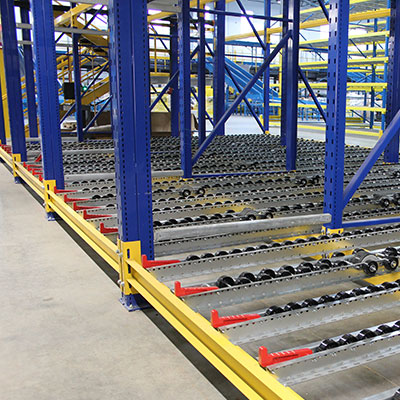
Deep-Lane Pallet Flow Rack
Designed for enterprise inventory holding 2 to 25 pallets deep per lane. Engineered with heavy-duty structural steel channel uprights, full-width or multi-track skate wheels, and centrifugal speed controllers to ensure safe gravity conveyance of dense palletized freight in cold storage and high-throughput bulk distribution.
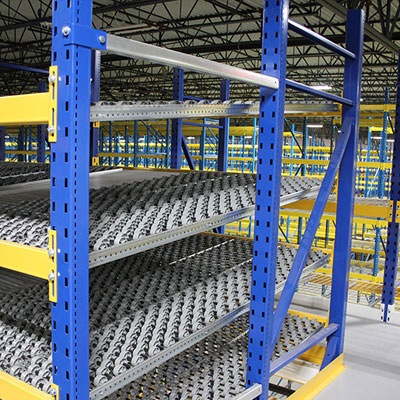
High-Density Carton Flow Rack
Precision-engineered roller beds and dedicated wheel tracks drop into roll-formed upright structures to support intense split-case order picking. Carton flow systems feature adjustable knurled aluminum or steel rollers, universal track mounting, and drop-in lane dividers for dynamic SKU changes in e-commerce fulfillment centers.
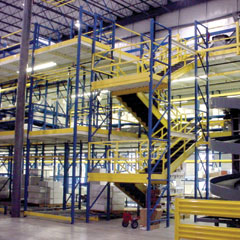
Flow Rack Pick Modules
Multi-tier engineered platforms combining structural pallet flow reserves on upper tiers with ergonomic carton flow pick faces on lower walkways. Integrated with central takeaway belt conveyors, trash chutes, and barometric flow lane sensors, creating high-density multi-level order fulfillment engines with massive vertical capacity.
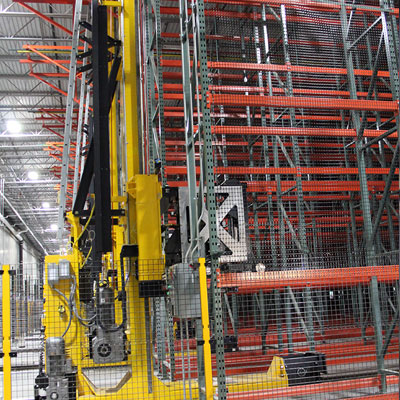
AS/RS Automated Flow Interfaces
Tight-tolerance gravity flow buffers engineered specifically for robotic staging, AGV/AMR pickup stations, and high-speed automated storage and retrieval crane output lanes. Precision structural framing guarantees deflection control under heavy dynamic cyclical loads while maintaining absolute alignment tolerances.
Global Procurement Trends & Next-Generation Flow Rack Advancements
How automation, ESG initiatives, and smart warehouse intelligence are transforming how procurement directors evaluate dynamic gravity flow infrastructure.
The Shift Toward Hybrid Automation Buffers
Modern supply chain architecture is shifting from pure manual picking toward hybrid automation. Procurement executives are increasingly deploying dynamic flow rack systems as zero-energy buffer storage between high-speed AS/RS crane corridors and autonomous mobile robot (AMR) marshalling stations. By leveraging gravity rather than powered continuous conveyors, operators eliminate complex electrical drives, reduce facility thermal loads in freezer environments, and cut maintenance overhead while maintaining continuous order staging.
Resilience Against Cold Chain Energy Escalation
Within temperature-controlled refrigerated and deep-freeze logistics (-20°F to -40°F), air volume refrigeration is an enormous operational expenditure. Conventional selective racks demand wide forklift aisles that must be cooled continuously. High-density pallet flow systems condense footprint volume by up to 60%, drastically shrinking the cubic volume requiring chilling. Furthermore, gravity roller bearings engineered with low-temperature synthetic lubricants ensure reliable operation without freezing, binding, or mechanical failure.
Sensorized Smart Flow Lanes and Real-Time IoT Tracking
The convergence of dynamic racking and Industrial Internet of Things (IoT) technologies has driven the adoption of smart flow lanes. Non-intrusive photoelectric optical sensors, retrofitted wireless load cells, and RFID tag scanners embedded along gravity flow rails now monitor pallet transit velocities, detect lane blockages, and signal real-time replenishment needs to warehouse management systems (WMS). This eliminates empty pick faces and alerts maintenance engineers to worn brake rollers before line stoppages occur.
Key Procurement Evaluation Criteria
Global procurement teams must look beyond initial steel prices. When evaluating flow rack systems, engineered system reliability dictates the lowest total cost of ownership (TCO):
- Pallet Bottom Board Deflection Testing: Ensuring wooden, plastic, or metal pallet runners do not sag over rollers and stop gravity flow under maximum payload ratings.
- Structural Channel vs. Roll-Formed Uprights: Structural C-channel steel offers superior impact resistance against heavy forklift collisions in high-cycle loading bays.
- Speed Governor Quality: Centrifugal internal braking assemblies engineered for consistent torque application regardless of seasonal ambient warehouse temperatures.
- Long-Lasting Surface Finishing: Multi-stage pretreated automated powder coating that resists chipping, oxidation, and corrosion in damp or sub-zero environments.
Flow Rack Systems vs. Alternative High-Density Warehouse Storage
A rigorous engineering comparison of operating characteristics, space utilization, and cost factors across industrial racking designs.
| Storage System Type | Space Density | Stock Rotation Logic | Forklift Aisle Demand | Throughput Speed | Best Warehouse Application |
|---|---|---|---|---|---|
| Pallet Flow Rack System | Maximum (up to 90%) | Strict FIFO (Gravity Fed) | Minimal (2 Dedicated Aisles) | Ultra-High (Separated replenishment/pick) | Perishables, date-sensitive consumer goods, cold storage staging |
| Carton Flow Rack System | High (Case Level) | Strict FIFO (Gravity Fed) | Zero (Pedestrian pick aisles) | Maximum (Split-case picking) | E-commerce fulfillment centers, pick modules, retail replenishment |
| Push Back Rack System | High (2-6 Deep) | LIFO (Nested Carts) | Moderate (Single front aisle) | Moderate to High | Medium velocity inventory, multiple pallets per SKU |
| Drive-In / Drive-Thru | Very High | LIFO (Drive-In) / FIFO | Low (Forklifts enter bays) | Low to Moderate (Travel inside rack) | Bulk homogeneous commodities, seasonal buffer storage |
| Selective Pallet Rack | Moderate (40-50%) | Random Access / Manual | High (Aisle between every rack row) | Moderate (Forklift travel delays) | High SKU variety with low quantity per SKU, universal access |
Engineering Note: Flow rack lane dimensions, speed braking intervals, and frame column sizing are custom-calculated based on maximum unit load weights and building slab engineering. Review our engineering specifications or connect directly with our engineering department at [email protected].
Engineered Excellence Backed by Nearly 70 Years of Innovation
Why Fortune 500 distribution operations and tier-one material handling integrators partner with UNARCO RACKING for custom flow rack system engineering.
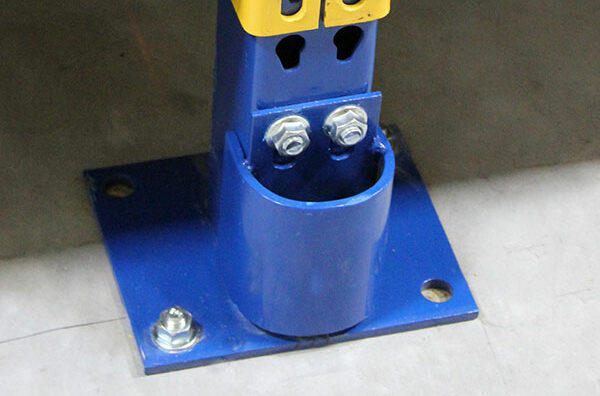
In-House Project Engineering
Our dedicated structural engineering staff analyzes CAD floor plans, live wheel-load dynamics, and seismic ground accelerations to engineer optimized flow rack lanes configured to current ANSI MH16.1 specifications.
Explore CapabilitiesHeavy-Duty Rack Protection
High-turnover flow bays face continuous forklift proximity. We engineer impact-deflecting bullnose column protectors, reinforced structural channel uprights, and durable entry guide shoes that shield your capital investment from premature damage.
Automated Powder-Coat Lines
Our multi-million-dollar automated finishing facilities utilize high-grade powder coatings that deliver uniform coverage, superior impact durability, and resistance to environmental moisture, chemical cleaning, and sub-zero cold room abrasion.
Roll-Formed & Structural Manufacturing
UNARCO RACKING is one of the elite few manufacturers with simultaneous high-capacity structural C-channel fabrication and high-speed cold roll-formed production lines under one engineering roof, ensuring total design flexibility.
Turnkey Flow Rack Execution: From Pallet Testing to System Commissioning
A structured, end-to-end engineering discipline ensures dynamic gravity flow lanes perform with absolute precision from day one.
Pallet & Load Testing
We test your actual production pallets, cases, and maximum load weights on test flow tracks to establish true friction coefficients and pitch.
Seismic & Structural Design
Complete facility analysis evaluating floor slab depth, sub-base ratings, and seismic building codes for structural upright and baseplate sizing.
Precision Fabrication
Production at our automated facilities, incorporating robust roller rail alignments, precision entry funnels, and durable powder-coat finishes.
Dedicated Project Management
Single-source oversight coordinating factory production schedules, overseas shipping logistics, staging, and certified installation crews.
Validation & Lifetime Safety
Comprehensive physical test runs across every lane, dynamic brake tuning, load capacity labeling, and preventative maintenance support.
Frequently Asked Questions on Flow Rack System Engineering & Procurement
Expert, definitive answers to the most common technical and operational questions posed by warehouse operations directors and procurement planners.
How does a gravity flow rack system ensure strict FIFO stock rotation?
A gravity flow rack system utilizes inclined roller or skate-wheel tracks set at an engineered pitch. Pallets or cartons are loaded from the higher replenishment aisle and glide by gravity down to the pick face on the discharge side. Because the first unit loaded is always positioned next for retrieval, stock rotation is automatically maintained without manual sorting or complex algorithmic picking schedules. This makes it the preferred storage method for perishables, pharmaceuticals, and high-velocity consumer goods.
What slope pitch and braking mechanisms are required for safe pallet flow operations?
Pallet flow systems typically require an engineered pitch of 3/8-inch to 1/2-inch per foot, depending on pallet construction, load weight, and bottom runner consistency. For deep lanes (exceeding 3 pallets deep), centrifugal speed controllers and internal roller brakes are incorporated to regulate transit speed to approximately 50-60 feet per minute, preventing runaway velocity and heavy collisions at the front stop.
Can pallet flow and carton flow systems be integrated into automated AS/RS facilities?
Yes. Engineered flow rack systems frequently interface with AS/RS crane outfeeds, automated guided vehicles (AGVs), autonomous mobile robots (AMRs), and pick-to-light picking tunnels. In automated configurations, tight structural tolerances and precision entry/exit alignment are critical to ensure smooth robotic pallet placement and carton extraction without structural jams.
How do UNARCO RACKING flow systems meet seismic and RMI building code requirements?
UNARCO RACKING engineers evaluate location-specific seismic spectral accelerations, building code editions, slab thickness, and dynamic live loads from rolling pallets. Systems are fabricated in strict compliance with RMI / ANSI MH16.1 specifications, utilizing reinforced heavy-gauge structural channel or roll-formed steel, seismic baseplates, and validated anchor embedment depths.
What is the expected ROI timeline when switching from static selective racking to a flow rack system?
Most enterprise distribution centers realize complete capital payback within 12 to 24 months. Payback is driven by a 30% to 50% reduction in required warehouse square footage, dramatic decreases in forklift travel distances, reduced operator labor hours, eliminated inventory shrinkage from expired stock, and consolidated replenishment traffic.
How do poor quality or damaged pallets affect pallet flow lane reliability?
Damaged, cracked, or missing bottom deck boards can cause pallets to catch or track improperly on skate-wheel lanes. To mitigate this, UNARCO RACKING engineers full-width steel roller tracks for operations using mixed-quality wooden pallets, or recommends heavy-duty plastic/composite pallets. We also conduct physical load deflection tests at our manufacturing testing labs to certify track designs before system fabrication.
What maintenance is required on gravity flow rack rollers and braking systems?
Because flow rack systems rely on passive gravity rather than electric motors and drive belts, routine maintenance is exceptionally low. Preventative maintenance centers on periodic visual inspections of roller bearings, clearing debris from track channels, checking alignment of end stops, and testing centrifugal speed controller action to ensure controlled braking performance over years of cyclical operation.
Ready to Engineer High-Density Dynamic Flow Storage?
Consult with our lead rack engineers to calculate track pitch, lane capacities, and layout options: [email protected]