[email protected] Fabricated to RMI / ANSI MH16.1 Specifications
0%

Choosing the best Heavy Duty Drive In Racking for 2026 requires more than comparing steel thickness or advertised capacity. Warehouse conditions decide whether a system performs safely and efficiently. This guide examines pallet dimensions, load weights, storage depth, forklift access, and product turnover. These details often matter more than a low purchase price.

Heavy Duty Drive In Racking suits high-density storage with many pallets holding the same product. It reduces aisle space and uses a guided forklift entry system. However, it is not ideal for every inventory profile. LIFO operation may slow access when products change frequently. Deep lanes can also increase handling risks if operators lack proper training. Small differences in pallet quality can affect rail alignment, clearance, and stability.

Practical evaluation should include upright strength, rail design, bracing, floor conditions, and impact protection. A reliable supplier should provide tested load data, installation guidance, inspection procedures, and replacement support. Local safety requirements must also be reviewed before installation. Field experience suggests that the “best” rack is rarely the strongest one. It is the system matching actual warehouse traffic and product flow.

Some decisions remain uncertain.

A site survey can reveal hidden constraints, including uneven floors, restricted turning space, or changing pallet heights. These issues deserve attention before final specifications are approved. The following comparison considers capacity, accessibility, durability, safety, maintenance, and long-term value. It also questions common assumptions, because maximum density alone does not guarantee the best warehouse result.
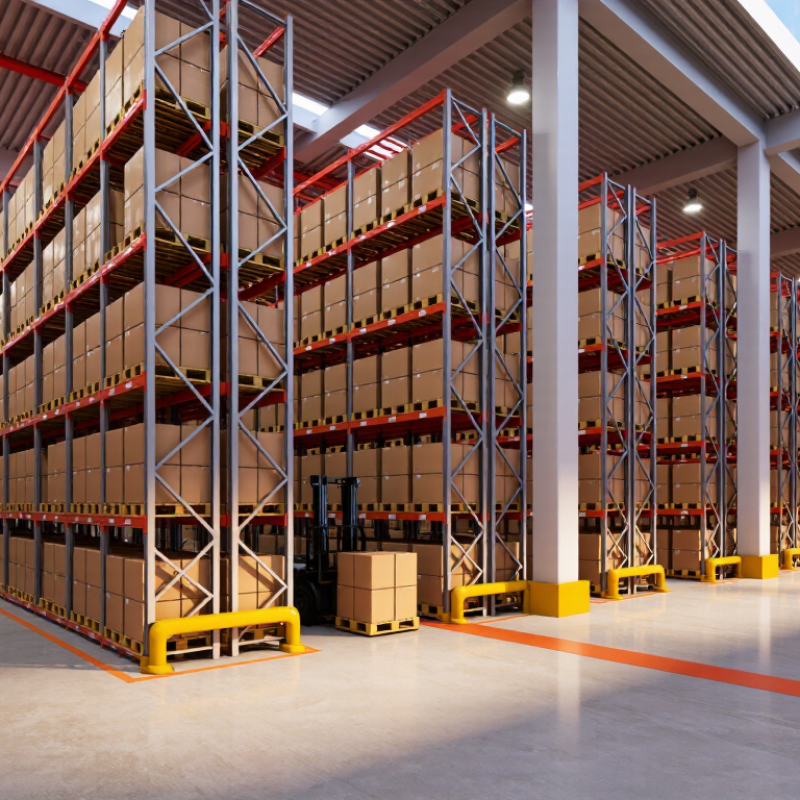
Which Heavy Duty Drive In Racking Is Best in 2026?

What Is Heavy-Duty Drive-In Racking and How Does It Work?

Heavy-duty drive-in racking stores pallets deep within guided lanes, reducing the number of aisles needed. Upright frames stand at each lane entrance, while horizontal rails support pallets along both sides. A forklift enters the lane and places each pallet on the next available rail position. The truck then reverses out. Space is the prize.

Most drive-in systems use last-in, first-out access: the newest pallet placed in a lane is usually the first one retrieved. This suits warehouses holding many pallets of the same product, especially when stock rotation is predictable. It is less convenient when workers need frequent access to different items. For access from both ends, a drive-through layout can support first-in, first-out handling, though it needs a suitable building arrangement.

Safe operation depends on more than rack capacity. Pallet dimensions, load weight, forklift width, turning clearance, and rail height all affect lane design. Drivers need clear guidance and enough room to enter without striking uprights. Routine checks should look for bent rails, damaged frames, loose components, and unstable loads. A lane can look efficient on a drawing and feel awkward in daily use. That trade-off matters. Before installation, have a qualified rack professional assess the loads, equipment, floor, and operating pattern; small mismatches can slow handling or create damage risks.

Which Types of Drive-In Racking Suit Different Warehouse Needs?

Which Heavy Duty Drive In Racking Is Best in 2026?

Which Types of Drive-In Racking Suit Different Warehouse Needs?

Standard single-entry drive-in racking suits warehouses storing many pallets of one SKU. It uses LIFO rotation and removes repeated aisle space. Cold stores often benefit because fewer aisles reduce refrigerated volume. Double-entry drive-through racking supports FIFO movement from opposite sides. It fits food, beverage, and chemical-free consumables requiring clearer stock rotation. However, it needs disciplined loading and unloading. A dense layout can look efficient, yet become frustrating during partial-pallet picking.

MHI’s 2024 Annual Industry Report projects supply-chain AI adoption to rise from 15% to 73% within five years. That shift makes location tracking more important, even in simple racking systems. A warehouse with mixed SKUs may need narrower drive-in blocks and stronger location controls. Heavy pallets also require an engineered frame, suitable rails, and verified floor capacity. Racking design should follow applicable RMI and ANSI MH16.1 guidance. I would not select density alone. Access frequency, pallet condition, forklift turning radius, and emergency clearance matter more than a sales diagram.

Tips: Audit one representative aisle before full installation. Record pallet dimensions, entry damage, retrieval time, and SKU turnover. Test both LIFO and FIFO workflows during a busy shift. Leave space for inspection. The perfect layout rarely survives daily handling.

Which Heavy-Duty Drive-In Racking Suits Your Warehouse Needs?

Compare common high-density storage systems by their relative fit for four warehouse priorities.

How to read this chart: Scores are qualitative planning ratings from 1 (lower fit) to 5 (higher fit), not measured performance guarantees. Drive-in is typically suited to high-density, low-SKU storage with LIFO access; drive-through supports FIFO access. Push-back is generally LIFO, while pallet shuttles can be configured for LIFO or FIFO. Confirm the right system against your inventory, pallet dimensions, and handling equipment.

How Do Capacity, Safety, and Compatibility Affect Racking Selection?

Which Heavy Duty Drive In Racking Is Best in 2026?

Capacity should be measured at pallet level, not only by the rack’s advertised tonnage. A 1,000-kilogram pallet needs clear load data, stable unit loads, and correctly spaced rails. Rack Manufacturers Institute guidance requires designs to consider upright strength, beam elevation, pallet support, and seismic conditions. In practice, I inspect the lowest tunnel first. Damaged rails often reveal poor forklift alignment or unsuitable pallet dimensions. A cheaper system may look efficient, but its real capacity can shrink after every operating change.

Safety depends on daily behavior, not steel alone. OSHA estimates that powered industrial trucks cause about 35,000 serious injuries and 85 fatalities annually in the United States. Drive-in layouts increase forklift contact risk because vehicles enter the rack structure. Protective guards, operator training, impact inspections, and visible load limits are essential. EN 15635 also recommends systematic rack inspections and recorded corrective actions. That sounds simple. It is frequently missed.

Compatibility deserves equal attention. Pallet width, entry direction, fork length, load overhang, and forklift turning clearance must match the tunnel geometry. High-density storage is valuable for uniform products with predictable rotation. It is less suitable for mixed stock or frequent access. The 2024 MHI Annual Industry Report identifies labor availability and operational efficiency as continuing warehouse challenges, but automation cannot correct poor rack compatibility. I would test one loaded lane before approving a full installation. Real pallets behave differently from drawings.

Which Drive-In Racking Features Matter Most in 2026?

In 2026, the best heavy duty drive-in racking will not be judged by capacity alone. Warehouse experience shows that usable capacity depends on pallet size, load weight, and forklift accuracy. A strong system needs uprights, rails, and bracing designed for repeated impact. Small clearances matter. A few extra centimeters can prevent damaged pallets and slow loading.

Load rating remains essential, but it must match real operating conditions. Ask whether the rating covers each pallet position, lane, and loading level. Check beam deflection, frame protection, and anchoring details. Adjustable guides can support different pallet dimensions, although too much flexibility may reduce storage efficiency. Clear entry signs and visible lane markers also help operators work consistently.

Safety features deserve closer attention in 2026. Rack protectors, back stops, pallet supports, and controlled forklift speed reduce common risks. Optional sensors can record impacts or identify overloaded locations. They are useful, but technology cannot repair poor inspections. Monthly checks may reveal bent rails, loose anchors, or cracked pallets before failure occurs. Corrosion-resistant finishes matter in cold rooms and humid facilities. Fire protection requirements should also be reviewed with qualified professionals.

Energy use and service access are easy to overlook. Durable components may cost more initially, yet they can reduce replacement work and downtime. Still, the most expensive specification is not always the best choice. In some warehouses, selective racking may provide faster access than dense drive-in storage. That compromise deserves an honest review before installation. Our practical lesson is simple: measure the operation first, then choose features that solve its actual problems.

Which Heavy Duty Drive In Racking Is Best in 2026? - Which Drive-In Racking Features Matter Most in 2026?

System or Feature How It Works Best Suited For Main Advantage Main Trade-Off 2026 Selection Check
Single-entry drive-in Forklifts enter storage lanes from one end. Loading and retrieval generally follow a last-in, first-out (LIFO) sequence. Large quantities of the same SKU with limited requirements for direct access to every pallet. High storage density because fewer aisles are needed than with selective racking. Lower selectivity; pallets deeper in a lane are not directly accessible until pallets in front are removed. Confirm SKU consistency per lane, lane depth, forklift clearance, and the required storage and retrieval sequence.
Drive-through racking Forklifts can access each lane from both ends. This can support first-in, first-out (FIFO) operation when loading and retrieval are organized at opposite ends. High-volume operations where stock rotation is important and a two-sided layout is practical. Two-sided access can make stock rotation easier than in a single-entry drive-in lane. Needs access and operating space at both ends; FIFO depends on disciplined warehouse procedures. Check building layout, traffic separation, and whether the operating process will consistently maintain FIFO.
Pallet-flow racking Pallets move on inclined roller tracks from the loading side toward the picking side; it is a different high-density system from drive-in racking. Operations needing high-density FIFO storage and frequent pallet rotation. Supports FIFO flow and separates loading from picking faces. Pallet condition, load characteristics, and track design affect reliable movement; it is typically more mechanically complex. Compare total lifecycle and maintenance requirements with drive-in before choosing a system.
Selective pallet racking Each pallet position is accessed from an aisle without moving other pallets in the same lane. Warehouses with many SKUs, frequent picking, or a high need for direct pallet access. High selectivity and straightforward access to individual pallets. Requires more aisle space for the same storage area than a dense drive-in layout may require. Choose it when access and SKU flexibility outweigh maximum storage density.
Pallet support rails and entry guides Rails support pallet loads within each lane; guides help operators position pallets and forklifts at the lane entrance. Drive-in applications where safe, repeatable pallet placement is essential. Can help reduce misalignment and improve consistent pallet placement when correctly designed and used. Does not eliminate the need for operator training, inspection, or suitable pallets. Verify pallet dimensions, entry clearances, rail alignment, and compatibility with the handling equipment.
Frame and upright protection Impact-protection components are installed at vulnerable areas, such as aisle ends or upright locations exposed to forklift traffic. Any drive-in installation with equipment operating close to structural members. Provides a protective measure at impact-prone points when selected and installed appropriately. Protection is not a substitute for inspections or for assessing and repairing rack damage. Include protection in the layout review and establish a documented inspection and damage-reporting process.
Load rating and engineering The rack is designed for specified pallet loads, bay or lane geometry, handling conditions, and site requirements. Every installation, especially heavy-duty or high-bay applications. Project-specific design provides a basis for safe loading and installation. There is no universal safe load capacity; ratings depend on the complete design and site conditions. Obtain engineered load information for the actual pallet, rack layout, floor, seismic conditions, and local requirements.

Practical recommendation: Single-entry drive-in is often a strong choice when storage density is the priority, pallets are grouped by SKU, and LIFO is acceptable. Consider drive-through when two-sided access and FIFO are operational priorities. Final suitability and load capacity must be confirmed through project-specific engineering; actual lane depth, clearances, and ratings vary by pallet, forklift, layout, and site conditions.

How Can Businesses Compare Drive-In Racking Options?

Which Heavy Duty Drive-In Racking Is Best in 2026?

Businesses should compare drive-in racking by operating conditions, not catalogue capacity alone. Start with pallet dimensions, load weight, forklift type, and required storage depth. Measure usable cubic capacity against access frequency. The best option for slow-moving, uniform pallets may be inefficient for mixed products.

The MHI Annual Industry Report 2024 found that 55% of surveyed organisations were increasing technology investment.

It also reported that 91% expected supply chain technology spending to rise within five years.

These figures support a practical comparison: check whether the racking integrates with warehouse software, sensors, or future automation. However, technology cannot correct poor channel planning. It may only make mistakes faster.

Safety and durability require closer inspection. Compare upright thickness, rail design, entry protection, corrosion resistance, and rated load capacity. EN 15629 and EN 15635 provide useful European guidance for specification and inspection.

In cold storage, ask for material performance at the actual operating temperature. A low-cost finish may crack earlier than expected. We have seen impressive capacity figures lose value when forklifts require excessive manoeuvring space.

Calculate installation cost, maintenance access, pallet damage risk, and retrieval time together. Price per pallet position is useful, but incomplete. Test a loaded bay with the real forklift before purchasing.

FAQS

How should pallet capacity be measured?

Check the load limit for each pallet position, not just the rack’s total advertised capacity. A 1,000-kilogram pallet needs stable support and correctly spaced rails. Small details matter.

What safety features are important in drive-in racking?

Use upright guards, clear load signs, trained forklift operators, and regular impact inspections. Record damage and repairs. This is easy to overlook.

How does forklift compatibility affect rack selection?

Match tunnel width and depth to the forklift’s turning space, fork length, and pallet entry direction. Test with a real loaded pallet. Drawings can be misleading.

When is drive-in racking a practical choice?

It can suit uniform products that move predictably and need dense storage. It may slow access to mixed stock or frequently requested pallets. Not always ideal.

What should businesses compare beyond price?

Compare usable pallet positions, installation costs, maintenance access, retrieval time, and pallet damage risk. Price per position helps, but it leaves things out.

How can a business check a rack before full installation?

Set up and load one lane using the intended forklift and actual pallets. Watch for tight turns, overhang, and awkward handling. Then reconsider the layout.

What should cold-storage facilities check?

Confirm that the rack materials and finish suit the actual operating temperature. A low-cost coating may crack sooner than expected. That deserves a closer look.

Can automation solve poor rack compatibility?

No. Software, sensors, or automation cannot fix badly planned channels or unsuitable pallet dimensions. They might only make errors happen faster.

Conclusion

Choosing the best Heavy Duty Drive In Racking in 2026 requires more than comparing storage capacity. This system is designed for high-density warehouses, allowing forklifts to enter the rack structure and place pallets on supported rails. Its last-in, first-out layout makes it especially suitable for uniform products with limited variety and high volume. However, different warehouse needs may call for drive-in, drive-through, or customized configurations depending on inventory rotation, access requirements, and available floor space.

The right selection should balance load capacity, rack height, pallet dimensions, forklift compatibility, structural stability, and workplace safety. Important features for 2026 include stronger protective components, adjustable layouts, improved impact resistance, efficient space utilization, and practical inspection access. Businesses should compare options by reviewing total cost, installation requirements, maintenance needs, scalability, and long-term operational value rather than focusing only on the initial price. A well-matched system can improve storage density, streamline handling, and support safer, more adaptable warehouse operations.

Amelia

Amelia

Amelia is a professional marketing specialist who helps make complex product information clear, useful, and engaging. With a strong understanding of the company’s offerings, she regularly contributes expert articles to the company website, sharing practical guidance, product insights, and ideas......