[email protected] Fabricated to RMI / ANSI MH16.1 Specifications
0%

A warehouse rack is not just steel in a neat grid. It is a load-bearing system shaped by pallet weight, forklift turning space, beam levels, and daily handling. The right Heavy Duty Selective Pallet Racking can make every pallet position directly accessible, but poor load assumptions can turn a tidy layout into a costly constraint.

Demand keeps storage decisions under pressure. The U.S. Census Bureau reported that U.S. retail e-commerce sales reached $1.19 trillion in 2024, or 16.1% of total retail sales. MHI’s 2024 Annual Industry Report also found that 55% of surveyed supply-chain professionals planned to increase investment in supply-chain innovation over the next five years. These figures do not dictate a rack design. They do show why capacity, access, and adaptability deserve careful review.

Rack Manufacturers Institute (RMI) guidance is a useful technical reference for selecting and using steel storage racks. John Paxton, MHI’s president and CEO, has discussed the need for supply chains to adapt through innovation. A practical takeaway for rack planning is: “Design for the load, the aisle, and the next change.” That sentence is a planning principle, not a verbatim Paxton quotation. It is worth remembering. This guide compares heavy-duty selective systems by capacity, configuration, safety features, and operating fit. No rack is best for every warehouse. Measure the real loads, check the floor and equipment constraints, and question assumptions before ordering.
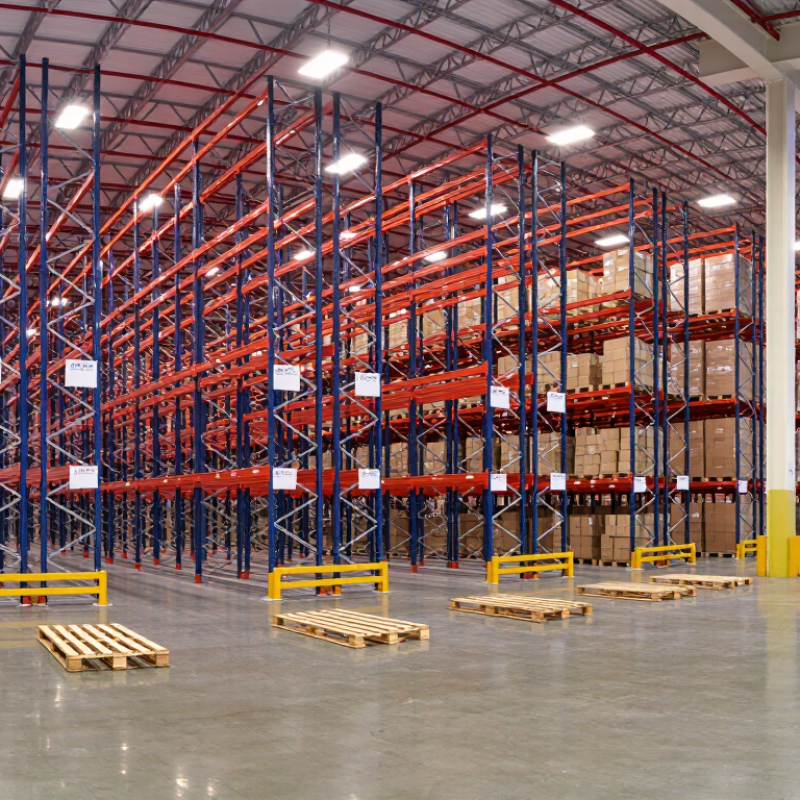
2026 Best Heavy Duty Selective Pallet Racking for Warehouses

What Heavy-Duty Selective Pallet Racking Is

Heavy-duty selective pallet racking is a steel storage system built from upright frames and horizontal beams. Pallets sit on the beams, usually one position deep, so operators can reach each stored load directly from an aisle. That access makes the system useful for warehouses handling many product types or frequent stock rotation. In plain terms, every pallet has a clear face.

“ Heavy-duty” does not mean every rack suits every load. Capacity depends on beam length, frame height, steel thickness, bracing, floor conditions, and how weight is distributed. The Rack Manufacturers Institute’s ANSI MH16.1 standard sets design and testing requirements for industrial steel storage racks. In practice, a rack should display its rated load capacity, and any changed layout needs a fresh capacity review. A heavier pallet can matter more than it looks.

Selective racks trade storage density for access. Each aisle serves pallet positions on both sides, which can mean more travel space than a dense, drive-in system. The U.S. Bureau of Labor Statistics reported a 4.8 total recordable injury rate per 100 full-time workers in warehousing and storage for 2023. That figure covers the sector, not rack failures, but it is a reminder to protect aisles, inspect impact damage, and train lift-truck operators. The weak point is often a small bent upright noticed too late.

How Selective Pallet Racking Supports Warehouse Operations

How Selective Pallet Racking Supports Warehouse Operations

Selective pallet racking gives warehouse teams direct access to each stored pallet. That simple layout can reduce unnecessary moves during picking and replenishment. A forklift can approach a chosen load without shifting neighboring pallets first. In a busy aisle, that matters. Less reshuffling can help keep orders moving and reduce handling damage.

The system also makes inventory easier to see and organize. Teams can assign locations by product type, turnover, or pallet size, then adjust as demand changes. Clear aisle labels and consistent loading practices help workers find stock quickly. Solid beams. Stable loads. These details are easy to overlook, but they support safer daily work. Rack capacity must match the stored load, and damaged components should be inspected before use.

Selective access is not perfect for every warehouse. It may require more aisle space than high-density storage, so the layout should reflect actual equipment and picking needs. Measure forklifts, turning areas, and pallet dimensions before installation. Even careful plans can miss a pinch point. A walk-through with operators can reveal awkward corners or sightline issues that drawings may not show.

Key Design Features for 2026 Warehouse Requirements

In 2026, selective pallet racking must support denser storage without weakening access or safety. The MHI 2024 Annual Industry Report identified cloud computing, robotics, and predictive analytics as major investment areas. Rack design should therefore include clear location labels, barcode-ready positions, and aisle space for automated equipment. Every beam level needs a documented load rating based on pallet weight, dimensions, and placement.

Safety details matter at floor level. Upright guards protect columns from forklift impact, while properly fixed wire decking supports uneven pallet loads. OSHA 29 CFR 1910.176(b) requires stored materials to remain stable and secure. EN 15635 also recommends documented inspections and immediate action after structural damage. These requirements should shape the specification, not appear as paperwork afterward. Small details count.

A 2026-ready system should offer adjustable beam heights, reinforced frames, and optional sensors for impact or overload alerts. The 2024 MHI report found that 55% of surveyed organizations used cloud computing, showing why rack data should connect with inventory systems. Capacity planning must include fire protection, sprinkler clearance, floor loading, and future equipment changes. A perfect layout is unlikely. Real warehouses change. Leave practical expansion space, test turning paths with loaded forklifts, and review the design after several months of operation.

How to Choose the Right Rack Capacity and Configuration

2026 Best Heavy Duty Selective Pallet Racking for Warehouses

Choosing the right selective rack starts with the load, not the aisle. Record each pallet’s maximum weight, dimensions, and overhang, then calculate the total load per beam level and frame. Do not rely on average inventory weights; one unusually heavy pallet can change the design. The Rack Manufacturers Institute’s ANSI MH16.1 specification provides engineering guidance for steel storage racks, including capacity and structural design. Ask a qualified rack designer to verify the proposed configuration against actual loads and site conditions.

Next, match bay width, beam height, and aisle space to the equipment that will serve the rack. Measure the tallest loaded pallet, including its base, and allow practical clearance for lifting and sprinkler systems. A wider aisle may improve maneuverability, but it reduces storage density. The right balance depends on daily throughput and forklift turning needs. The U.S. Bureau of Labor Statistics reported a 4.8 total recordable injury and illness rate per 100 full-time workers in warehousing and storage for 2022; this is a sector-wide figure, not a rack-specific measure, but it reinforces the value of safe access and handling. Inspect the floor, anchors, and rack protection, too. Capacity labels help, but they do not replace engineering review. And real warehouses change—sometimes faster than the layout plan.

Installation, Safety, Inspection, and Maintenance Guidelines

Installation starts with a floor check, not a hurried unload. Confirm the slab is level, sound, and suitable for the intended loads. Follow the rack designer’s layout and anchoring details. Keep aisles clear, and protect uprights where forklifts turn tightly. A small alignment error can grow across a long row. It is worth measuring twice.

Before loading, verify beam locks are engaged and frames are plumb. Display load limits where operators can see them. Place heavier pallets on lower levels, and keep loads centered on the beams. Never climb the rack or use damaged pallets. Staff training matters, but it cannot prevent every impact. Forklift contact still happens.

Inspect racks on a regular schedule and after any collision, even one that looks minor. Look for bent uprights, loose anchors, displaced beams, cracked welds, and missing safety clips. Record the location and severity of each defect. Unload affected bays when damage may compromise stability, then arrange assessment by a qualified rack professional. Do not straighten structural parts with improvised tools. Keep inspection records, and review them when storage patterns or loads change. A checklist helps, though rushed checks can miss details. Maintenance should include tightening or replacing approved components, clearing debris around base plates, and confirming that repairs match the rack design and applicable local requirements.

FAQS

What is heavy-duty selective pallet racking?

It uses steel frames and horizontal beams to hold pallets. Each pallet is usually one position deep and accessible from an aisle. Every pallet, visible.

Does “heavy-duty” mean the rack can hold any pallet?

No. Capacity depends on beam length, frame height, steel, bracing, floor conditions, and load distribution. Check the displayed rating and get a qualified design review.

What information should I collect before choosing a rack?

Record each pallet’s maximum weight, dimensions, and overhang. Use the heaviest realistic load, not an average. One heavy pallet can change the design.

How do aisle width and rack layout affect storage?

Wider aisles can help forklifts turn and handle loads, but they reduce storage density. Match aisle space to equipment and daily warehouse traffic.

What should be checked before installation?

Confirm the floor is level, sound, and suitable for the intended loads. Follow the approved layout and anchoring details. Measure twice.

How should pallets be loaded onto the rack?

Engage beam locks, center loads on beams, and place heavier pallets on lower levels. Keep load limits visible, and never climb the rack.

What should routine rack inspections look for?

Check for bent uprights, loose anchors, displaced beams, cracked welds, and missing safety clips. Inspect after collisions, even minor ones. Forklift taps happen.

What should staff do when rack damage is found?

Record the defect and its location. Unload the affected bay if stability may be compromised, then contact a qualified rack professional. Do not straighten structural parts with improvised tools.

How should repairs and changing loads be managed?

Use approved replacement components and have repairs checked against the rack design. Review capacity when layouts or loads change. A checklist helps, but rushed checks still miss things.

Conclusion

Heavy Duty Selective Pallet Racking is a practical storage solution for warehouses that need reliable access to individual pallets, efficient use of vertical space, and flexible inventory organization. Its adjustable beam levels and aisle-based layout support a wide range of pallet sizes, product categories, and handling processes. For 2026 warehouse requirements, rack systems should be designed with strong structural stability, suitable load ratings, optimized aisle widths, clear labeling, and compatibility with current material-handling equipment and warehouse workflows.

Choosing the right configuration requires evaluating pallet dimensions, total loads, storage height, turnover rates, floor conditions, and available space. Each rack should be professionally installed according to its design specifications, with secure anchoring and appropriate protection in high-traffic areas. Regular inspections should check for bent components, loose connections, impact damage, and overloading. Clear operating procedures, employee training, scheduled maintenance, and timely replacement of damaged parts help maintain safe performance, extend service life, and support consistent warehouse productivity.

Amelia

Amelia

Amelia is a professional marketing specialist who helps make complex product information clear, useful, and engaging. With a strong understanding of the company’s offerings, she regularly contributes expert articles to the company website, sharing practical guidance, product insights, and ideas......