High-Performance Certified Racking Systems
Explore heavy-duty inventory structures manufactured from certified high-tensile structural steel (Q235B/Q355B and ASTM Grade 50) designed to support complex warehouse topologies and maximize volumetric cube utilization.
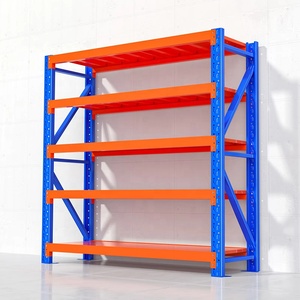
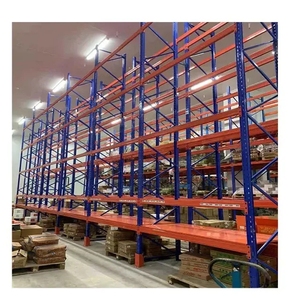
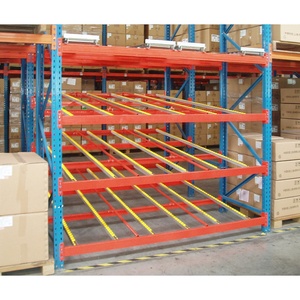
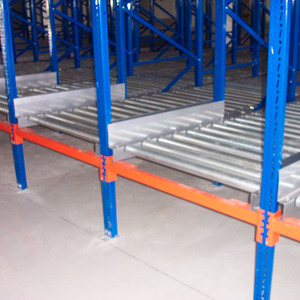
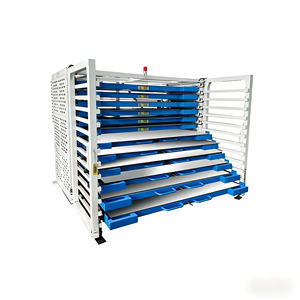
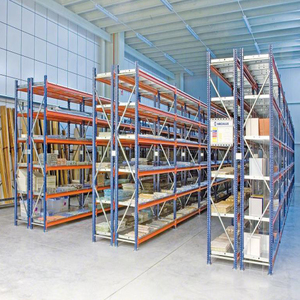
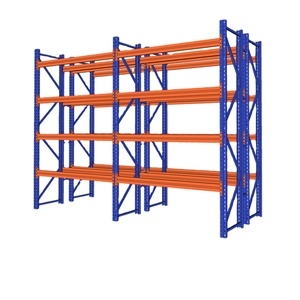
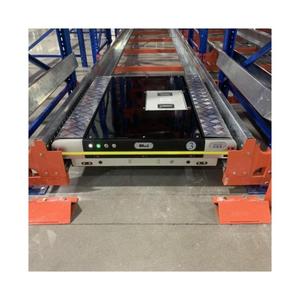
Engineered Rigor Backed by Nearly 70 Years of Heritage
Unlike trading entities or standard fabrication shops, we provide comprehensive, end-to-end structural analysis, automated manufacturing execution, and certified lifecycle support tailored to multinational corporations and Fortune 500 enterprises.
Years of specialized rack engineering and cold roll-forming legacy.
Strict adherence to CE EN 15512 and RMI ANSI MH16.1 design safety codes.
Global mega-distribution centers engineered and operational across 6 continents.
Direct Tier-1 supplier partnerships with major global retail and 3PL giants.
Certified Structural Integrity
Every beam, column section, and connection profile undergoes non-destructive finite element analysis (FEA). We maintain certified compliance with European Norm EN 15512, EN 15620, and North American RMI / ANSI MH16.1 specifications, providing fully stamped calculation books for site-specific permitting.
Fully Automated Multi-Stage Coating
Our multi-million dollar automated powder coating line includes an eco-friendly 5-stage zirconium pre-treatment wash. It ensures salt-spray resistance exceeding 500 hours, eliminating delamination, corrosion, and wear under harsh operational environments ranging from blast-freezers to high-humidity marine zones.
Integrated Seismic & Geotechnical Analysis
Every facility demands bespoke engineering. Our structural team calculates spectral acceleration factors (Ss, S1), soil site classes, and dynamic baseplate anchor embedments to verify that upright columns resist overturn moments without catastrophic slab punch failures.
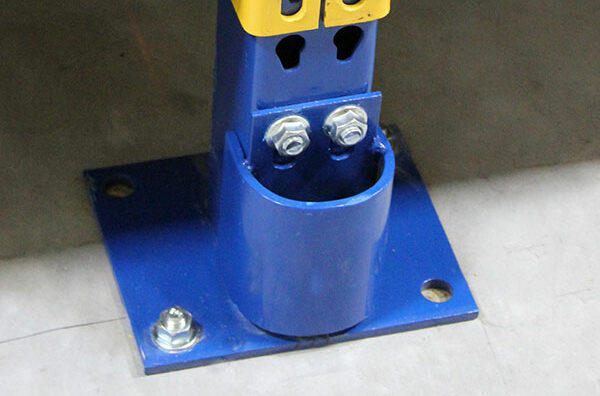
Engineered Impact Mitigation Hardware
Forklift impacts represent over 85% of structural rack failures. Our proprietary heavy-gauge bolt-on column protectors and wraparound base reinforcements dissipate kinetic impact away from critical upright punch-outs. This maintains system certification and saves operations hundreds of thousands of dollars in emergency unload downtime.
Zero Structural Compromise: All protection elements are engineered independently from the primary load-bearing members, allowing rapid field replacement without compromising overhead frame loading.
Future Procurement Trends in Heavy-Duty Warehouse Racking
In-depth structural and financial insights for procurement managers, supply chain architects, and logistics engineering teams navigating 2025–2030 facility design.
1. Steel Chemistry & High-Yield Metallurgy
Global supply chains are moving away from standard commercial-grade carbon steels toward high-strength micro-alloyed variants (e.g., S355MC, S420MC). By leveraging higher yield strengths, manufacturers reduce structural deadweight by up to 18% while enhancing dynamic deflection limits. This lower deadweight minimizes seismic mass and cuts ocean freight shipping costs per pallet location significantly.
2. The Tight-Tolerance AS/RS Revolution
Standard roll-formed tolerances of ±3.0mm are incompatible with next-generation Automated Guided Vehicles (AGVs) and high-speed cranes. Modern procurement mandates EN 15620 Class 100 to 400 execution classes, where vertical plumbness and beam levelness tolerances must stay within ±1.0mm under loaded conditions to prevent optic sensor trip errors and automated shuttle jams.
3. Decarbonization & Green Steel Mandates
Environmental, Social, and Governance (ESG) compliance is transitioning from corporate reporting to mandatory procurement scoring. Major European and US enterprise operators require suppliers to deliver Environmental Product Declarations (EPDs). Procuring rack systems fabricated using Electric Arc Furnace (EAF) steel—powered by renewable grids—reduces embodied carbon by up to 60% compared to traditional Blast Furnace-Basic Oxygen Furnace (BF-BOF) production methods.
| System Architecture | Space Utilization | SKU Selectivity | Throughput Rate | Dynamic Inventory Model | Automation Compatibility |
|---|---|---|---|---|---|
| Selective Pallet Rack | Baseline (40%) | 100% (Instant) | Medium / High | FIFO / LIFO Flexible | Forklift / Reach Truck Dependent |
| Gravity Pallet Flow | Maximum (85%) | Low (Per Lane) | Very High | Strict FIFO | Conveyor / Palletizer Ready |
| Push-Back Cart System | High (70%) | Moderate (Per Face) | Medium | Strict LIFO | Manual Counterbalance / Reach |
| Drive-In / Drive-Thru | Very High (75%) | Very Low | Low / Controlled | LIFO (Drive-In) / FIFO (Thru) | Cold Storage Specialized |
| Radio Shuttle Automation | Ultra-Dense (90%) | Configurable | High Velocity | Software Driven (WMS) | Fully Automated / AGV Ready |
Racking R&D Horizons: Next-Gen Smart Storage
Structural steel is no longer passive iron. The convergence of Industrial IoT, structural telemetry, and high-density automation is fundamentally changing warehouse asset management.
IoT Stress-Strain Telemetry
Fiber Bragg grating and MEMS strain sensors integrated into critical upright columns provide real-time elastic deformation monitoring. Safety directors receive automated alerts when structural deflection thresholds are breached due to accidental overload or unrecorded seismic shockwaves.
Self-Correcting Dynamic Flow Lanes
Next-generation pallet flow lanes use centrifugal eddy-current braking rollers that adapt resistance automatically based on load mass (from 250 kg to 1,500 kg), eliminating pallet run-away risks and ensuring positive lane restart without human intervention.
Modular Mezzanine Micro-Fulfillment
Urban industrial space constraints require vertical expansion. Rack-supported multi-tier platforms integrated with vertical reciprocating conveyors (VRCs) convert underutilized overhead clear height into high-throughput e-commerce parcel sorting centers.
Frequently Asked Questions by Global Buyers
Direct answers from our senior structural engineers addressing compliance, load certifications, foundation dynamics, and international procurement standards.