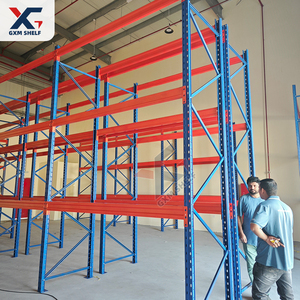
GXM Pallet Shelving Heavy Duty System
Engineered roll-formed industrial selective frame adaptable into heavy double deep configurations with reinforced base plates and structural load distribution beams.
Industrial warehousing in the post-expansion economy faces persistent pressures: elevated land-acquisition valuations, rising square-meter building rates, and operational overheads. In response, global procurement managers are turning to engineered Double Deep Racking Systems to achieve a balance between spatial footprint and load accessibility.
By placing two pallet positions back-to-back from a single operating aisle, Double Deep systems eliminate unnecessary access corridors, cutting aisle consumption by up to 30% to 40% compared to standard selective setups.
Fabricated strictly to European EN 15512:2020 principles and certified for CE compliance, every upright frame and connector lock maintains calculated structural tolerances under rigorous load and seismic shifts.
Designed for immediate pairing with pantograph reach trucks and deep-reach attachments, facilitating higher pallet storage per cubic meter without necessitating fully automated installations.
Years Engineering Pedigree
Storage Density Increase
RMI & CE Code Compliance
Export Destined Countries
Discover our engineered industrial racking systems, high-density shuttle frameworks, and tailored heavy-duty options for multinational distribution centers.
Engineered roll-formed industrial selective frame adaptable into heavy double deep configurations with reinforced base plates and structural load distribution beams.
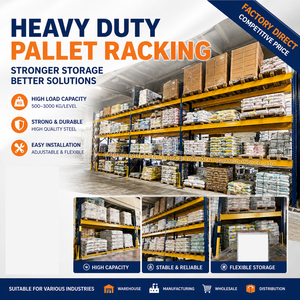
High-load bearing structural steel frameworks suited for ultra-dense mold and tooling staging, engineered to withstand high static concentration loads safely.
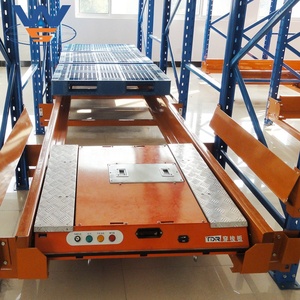
Next-generation pallet shuttle automation running on heavy-duty guide rails, optimizing high-density multi-deep lane storage with continuous robotic handling.
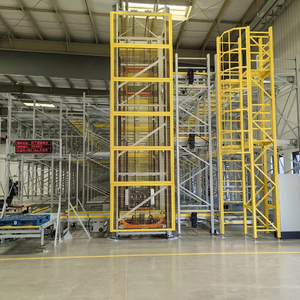
Synchronous material movement framework connecting pallet racks directly to high-speed conveyor discharge hubs for automated e-commerce picking lines.
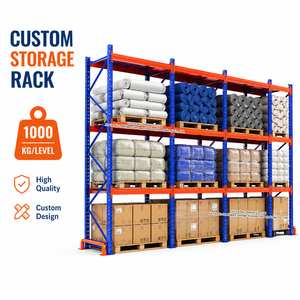
Standardized adjustable pallet system featuring precision slotted upright profiles for versatile beam placement across fast-turnaround pallet distribution depots.
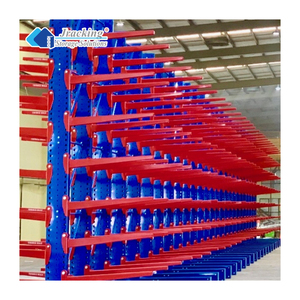
Robust un-obstructed loading system specifically developed for pipe, timber, steel sections, and long profile goods in exterior or cold storage conditions.
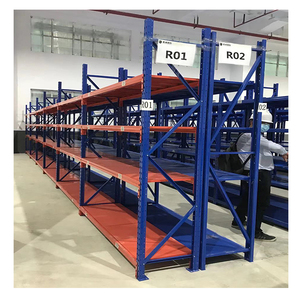
Interchangeable bolted upright frames and interlocked safety beam connectors providing rapid site erection and long-term modular reconfigurability.
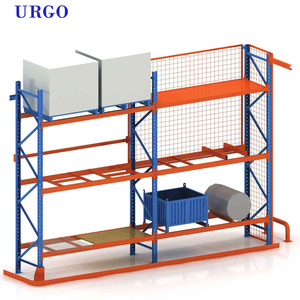
Tight-tolerance racking engineered for ultra-narrow aisle turret trucks, capitalizing on vertical clearance heights over 15 meters for maximum cubic efficiency.
A double deep configuration is not merely two selective racks pushed together; it demands precise calculations of structural beam deflection, safety margin tolerances, and slab anchorage requirements.
Under European standard EN 15512 and RMI/ANSI MH16.1 specifications, beam deflection is held to a maximum threshold of L/200 under fully distributed working loads. For deep positions where fork reach deflection contributes dynamic live impact, our beams are cold-formed from high-tensile structural coil (Q355B / S355JR equivalents) with welded high-strength 4- or 5-claw connectors.
This design counters the torsional twisting forces introduced when a pantograph reach mechanism extends deep into the second pallet slot, maintaining beam integrity and horizontal plane stability over hundreds of thousands of duty cycles.
In double deep arrays, rear pallet placement exerts uneven horizontal moment loads across frame rows. Our engineering methodology involves:
| System Architecture | Floor Space Utilization | Pallet Selectivity | Forklift Equipment Match | Capital Cost Ratio |
|---|---|---|---|---|
| Standard Selective Rack | Moderate (~40%) | 100% Direct Accessibility | Standard Counterbalance / Reach | Baseline (1.0x) |
| Industrial Double Deep Rack | High (~60-65%) | 50% Direct (2 Pallets per SKU) | Pantograph Deep-Reach Truck | Cost-Effective (1.15x) |
| Radio Shuttle Automation | Maximum (~80%) | Lane Dependent (FIFO/LIFO) | Standard Forklift + Shuttle Unit | Capital Intensive (2.8x) |
| Drive-In Storage | Very High (~75%) | Strictly LIFO (Low Selectivity) | Drive-in Compatible Cab Reach | Moderate (1.3x) |
Strategic logistics planning requires forecasting structural longevity, automated retrofits, and global regulatory developments.
With refrigerated warehouse energy expenses climbing rapidly, maximizing cubic volume utilization within insulated envelopes is paramount. Double deep configurations reduce air volume per stored pallet by up to 25%, drastically lowering per-pallet refrigeration power costs for frozen food distributors.
Autonomous guided mobile reach trucks equipped with LiDAR and 3D visual perception now interface directly with double deep racks. Advanced camera alignment systems adjust for millimeter pallet positioning at elevations exceeding 10 meters, removing manual driver strain.
European and American logistics developments increasingly mandate Environmental Product Declarations (EPDs). Procuring CE certified racks finished on automated, zero-VOC powder-coat lines using high-strength scrap-recycled coil satisfies rigorous LEED and BREEAM industrial guidelines.
Combining nearly 70 years of engineered pallet racking heritage with high-throughput international export capacity.
Our licensed structural engineers generate complete slab, anchor, and frame calculation packages adhering directly to your local seismic building ordinances.
Continuous pre-treatment, phosphatizing, and electrostatic powder coating deliver uniform corrosion resistance even in demanding moisture conditions.
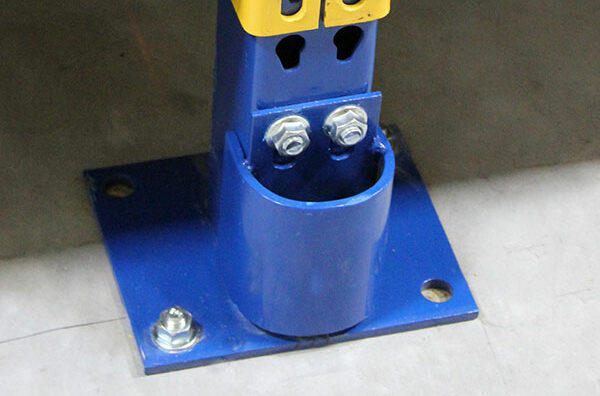
From wrap-around column guards to heavy floor-anchored aisle runners, every double deep installation is shielded against everyday forklift interaction.
Pre-bundled structural components strapped in seaworthy export cradles guarantee zero container-transit deformation upon global port arrival.
Expert technical insights to help your engineering and procurement teams make informed decisions.
Double deep racking provides 50% immediate selectivity. Because pallets are stored two rows deep, accessing the rear pallet requires that the front slot be empty or temporarily moved. This configuration operates optimally when SKUs are grouped into multiples of two or more pallets (e.g., medium-to-fast turnover goods, homogeneous batches, or paired pallet replenishment strategies), balancing density against retrieval cycles.
Operators require either a specialized pantograph double-reach truck or a standard reach truck fitted with hydraulic telescopic fork extensions. When calculating aisle widths, facility planners must account for the chassis length of the deep-reach truck plus the required turning radius, which typically results in an aisle clearance between 3.0 to 3.4 meters, depending on pallet dimensions.
CE Certification affirms that our structural components comply fully with EN 1090-1 execution standards, factory production control procedures (FPC), and EN 15512 static load modeling. For importers, this provides legal compliance with European building directives, simplifies local municipal permitting, guarantees steel chemical traceability, and streamlines facility property insurance approval.
Yes, provided the concrete slab compressive strength and thickness permit higher concentrated baseplate loadings, and existing upright frames can be connected via engineered row spacers. Furthermore, fork entry beams often require recalculation to handle the higher point loads associated with deep-reach insertions. Our structural engineering department can audit your existing CAD layout to establish feasibility.
To produce an optimized structural layout and bill of materials, provide: (1) Facility DWG/CAD architectural drawings indicating clear height under roof joists, (2) Pallet dimensions (width, depth, height) including overhanging cargo, (3) Maximum gross pallet weight, (4) Specific forklift models and mast staging heights, and (5) Local seismic zone ratings or building ZIP codes.
Consult with our structural engineering team today. We provide full project evaluations, seismic load calculations, and competitive FOB/CIF export pricing for distributors and end-users worldwide.