Featured Heavy-Duty Warehouse & Automated Racking Lines
Custom-engineered racking frameworks designed for stacker cranes, 4-way automated shuttles, narrow-aisle picking towers, and deep-lane gravity systems.
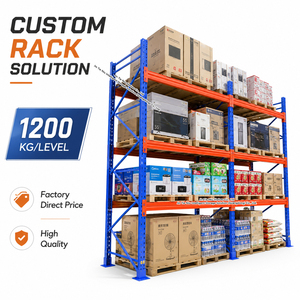
1200KG Steel Heavy Duty Pallet Storage Shelving System
Reinforced cold-rolled structural steel construction designed for uniform loading capacities up to 1,200kg per level. Built for high-throughput fulfillment hubs.
Product Details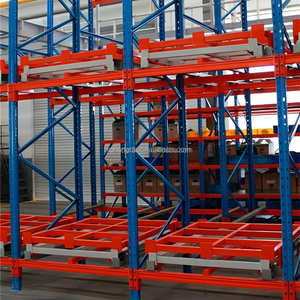
Warehouse Storage Push Back Pallet Racking Manufacturer
Nested-cart dynamic gravity-feed configuration enabling 2 to 6 pallet-deep LIFO inventory rotations without lift trucks entering the structural bays.
Product Details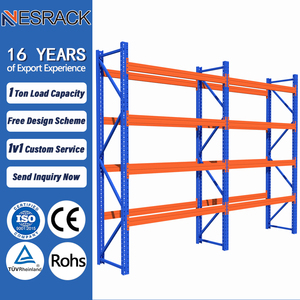
Heavy Duty Warehouse Shelving 5-Layers Industrial Rack
Multi-tier modular selective rack profile featuring tear-drop slot patterns, anti-corrosive electro-coating, and high horizontal beam stiffness.
Product Details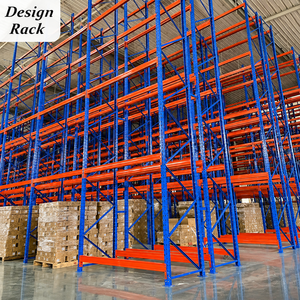
Certificated Large Heavy-Duty Industrial Material Pallet Rack
Certified ISO/RMI structural racking modules engineered for oversized payloads, automated guided vehicle (AGV) interfaces, and intense daily logistics cycles.
Product Details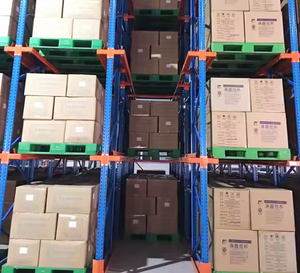
Heavy-Duty VNA / Drive-In Metal Warehouse Pallet Rack
Ultra-dense storage profile optimizing vertical cube volume. Engineered with ground guide rails and anti-sway diagonal cross-bracings for narrow aisle handling.
Product Details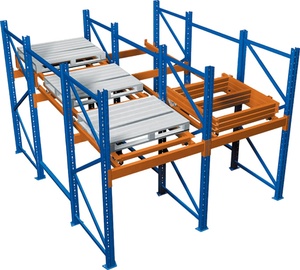
URGO High-Density Heavy Duty Push Back Racking System
Precision-incline rolling rail tracks featuring high-grade steel wheel bearings to guarantee frictionless pallet flow across deep-freeze and temperature-controlled sites.
Product Details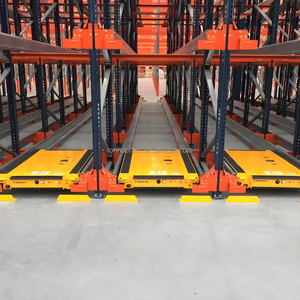
Factory Customizable 4-Way Automated Radio Shuttle System
State-of-the-art AS/RS shuttle framework with millimeter-level rail leveling tolerances, high-speed lateral transitions, and fully autonomous fleet integration.
Product Details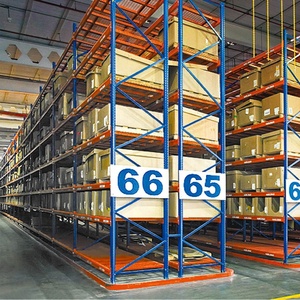
Narrow Aisle VNA High-Density E-commerce Logistics Rack
High-bay structural matrix engineered up to 20 meters high, cold-rolled from high-tensile Q355B steel to support maximum throughput picking mast towers.
Product DetailsYears Engineering Pedigree
ANSI / RMI & FEM Compliance
AS/RS Rail Deflection Limits
Global Automated Installs
Engineering Heavy-Duty AS/RS Racks: Beyond Standard Pallet Storage
Automated Storage and Retrieval Systems (AS/RS) impose radically different structural engineering requirements compared to traditional, forklift-accessed selective pallet racks. In an automated high-bay environment, the racking matrix does not merely act as static shelving—it functions as a rigid, load-bearing machine foundation. High-speed Stacker Cranes (SRMs) travelling at speeds exceeding 4 to 6 m/s and 4-way robotic shuttles maneuvering within deep lanes apply dynamic horizontal braking forces, localized torque, and continuous harmonic vibrations across the upright framework. As premier China best heavy duty ASRS racking manufacturers & suppliers, we engineer high-precision structural steel arrays configured to tolerate stringent dynamic deflection limits outlined under FEM 9.831, FEM 10.2.08, and ANSI MH16.1 specifications.
The difference between operational success and catastrophic sensor trips lies in structural tolerance. When an automated crane operates at heights ranging from 18 to over 40 meters, even a fraction of a degree in upright out-of-plumb deviation can produce a top-level mast displacement of several centimeters. This displacement disrupts optical positioning sensors, damages laser guidance mirrors, and risks destructive shuttle derailments. Our AS/RS manufacturing lines deploy automated high-frequency roll-forming mills, laser cut-to-length stamping, and robotic multi-station welding cells to hold total dimensional tolerance across upright frame lengths to within ±1.0mm.
Dynamic Braking & Sway Resistance
Vertical towers integrate heavy structural horizontal ties and K-truss portal bracings designed through finite element analysis (FEA) to absorb rapid acceleration and deceleration loads generated by 5-ton automated cranes.
Strict Deflection Thresholds
Standard storage racks tolerate a 1/180 beam deflection. Our automated AS/RS beams are precision-engineered to maintain a deflection limit below 1/300 or 1/400 under maximum static pallet capacity, preventing sensor tracking failures.
High-Grade Metallurgical Spec
Using premium certified Q355B (S355JR equivalent) and hot-rolled structural C-channels, our components provide exceptional yield strength, cyclic fatigue endurance, and verified ductility for low-temperature cold chain deployment.
Technical Benchmark: Automated AS/RS vs. Conventional Pallet Racking
Procurement directors and supply chain engineers must understand the distinct operational and structural thresholds separating automated installations from manual storage systems:
| Performance Parameter | High-Bay Heavy-Duty AS/RS Racking | Conventional Selective Pallet Racking | Engineering Implication |
|---|---|---|---|
| Operating Height | 15m to 45m+ (High-Bay Clad available) | Up to 12m (Limited by Forklift Mast) | Requires massive baseplates, embedment anchoring & seismic modeling. |
| Beam Deflection Tolerance | L/300 to L/400 of beam span | L/180 of beam span (RMI Standard) | Eliminates automated sensor misreads during crane insertion. |
| Plumbness & Leveling | ±1.0mm per 10m height | ±12.5mm per 10m height | Precision shimming and laser-guided alignment ensure rail tracking. |
| Handling Acceleration Forces | High dynamic horizontal thrust (0.5m/s² - 1.5m/s²) | Negligible (Static vertical resting loads) | Demands bolted spine trusses and reinforced top tie structures. |
| Aisle Width Requirements | 1,400mm – 1,600mm (Crane envelope) | 2,800mm – 3,600mm (Standard counterbalance) | Recovers up to 60% of lost floor space into revenue-generating storage. |
Future Sourcing & Procurement Trends in Automated Storage Systems
The industrial landscape for automated warehouse racking is evolving rapidly across Europe, North America, the Middle East, and Asia-Pacific. Engineering procurement teams are shifting away from standalone hardware sourcing toward integrated turnkey ecosystems. Several key trends are redefining international supply chains:
1. The Rise of Rack-Supported Building Cladding (Rack-Clad Warehouses): Modern logistics operators are bypassing traditional tilt-up concrete building constructions. Instead, high-bay AS/RS racking systems are engineered as the building's core structural skeleton, carrying roof trusses, side cladding, wind shear forces, and live seismic loads directly through the racking uprights. This turnkey methodology slashes capital construction costs by 20% to 35% and drastically accelerates facility delivery schedules.
2. Adoption of 4-Way Multi-Directional Pallet Shuttles: While traditional unit-load stacker cranes remain dominant in heavy single-item retrieval, 4-way robotic radio shuttle racking is capturing high-growth sectors such as beverage logistics, pharmaceutical storage, and cold-chain distribution. Racking suppliers must now deliver multi-lane track grids featuring cross-directional interchange switches that maintain millimeter-accurate levelness across vast horizontal floor plates.
3. Advanced Anti-Corrosion Finishes for Harsh Cold-Chain Environments: As global consumption of frozen foods and cold storage operations expand at sub-zero temperatures (-25°C to -35°C), standard paint application methods are inadequate. Buyers are mandating multi-stage automated powder coating lines, zinc phosphating pre-treatments, or heavy continuous hot-dip galvanizing to eliminate moisture condensation peeling, brittle fracture, and corrosion under structural base assemblies.
4. Digital Twin Modeling and Structural Health Monitoring (SHM): Enterprise projects increasingly integrate real-time strain-gauge load cells, tilt sensors, and IoT accelerometers directly into primary rack uprights. Through BIM (Building Information Modeling) and digital twin platforms, logistics facility managers can monitor localized stresses, identify minor impact deformations caused by maintenance equipment, and schedule predictive repairs without interrupting 24/7 automated operations.
Frequently Asked Questions: AS/RS & Heavy-Duty Racking Procurement
Essential guidance from our chief application engineers to help you navigate technical risk, slab preparation, and system sizing.