Engineered Bulk Storage & Pallet Racking Portfolio
Manufactured from high-tensile Q235B and Q355B cold-rolled structural steel, our racking configurations are calculated to accommodate dynamic seismic forces, beam deflection limits (≤L/200), and custom pallet footprints.
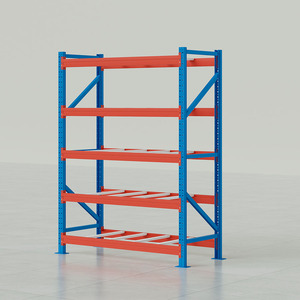
Industrial Warehouse Shelves Storage Rack Industrial Shelving System
- Capacity: 300 - 800 kg/tier
- Pitch Adjustment: 50mm pitch
- Finish: Electrostatic Epoxy Coating
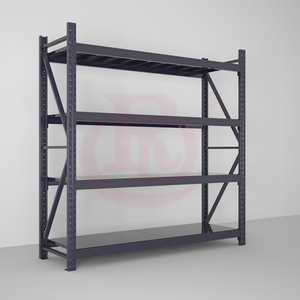
Heavy Duty Steel Shelving Unit with 5 Layer 200kg Load Capacity Adjustable & Thickened
- Load: 200 kg per layer (UDL)
- Frame: Thickened cold-rolled angle
- Assembly: Quick boltless lock
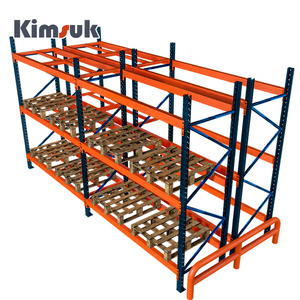
Adjustable Durable Vertical Warehouse Storage Rack CE Certified Heavy Duty AU Standard Pallet Racking
- Standard: AS 4084 & EN 15512
- Capacity: Up to 4,500 kg/level
- Upright: 90/100/120mm profile
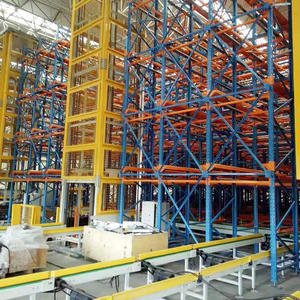
Factory Custom Heavy Duty Steel Four-Way Shuttle Racking System High-Density Warehouse Rack
- Density: 90% floor footprint use
- Tolerance: Precision-machined rails
- Automation: Fleet-ready WMS/WCS
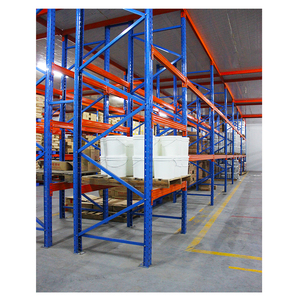
Warehouse Racking Large Capacity Selective Racking System Double Deep Pallet Racking
- Layout: 2-pallet depth reach
- Efficiency: Reduces aisles by 50%
- Safety: Heavy-duty back stops
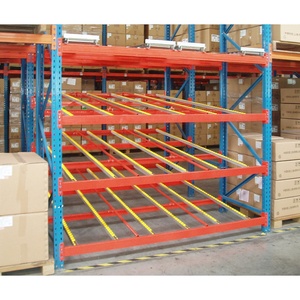
Warehouse Equipment Roller Shelves Industrial Dynamic Carton Flow Racks
- Principle: FIFO Order Fulfillment
- Track: Aluminum alloy & steel rollers
- Application: E-commerce pick modules
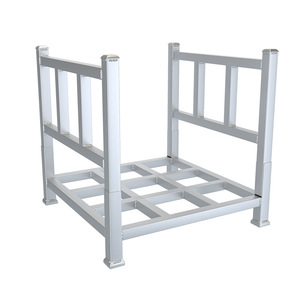
Heavy Duty Folding Stacking Rack Pallet Storage Frame No Assembly Required
- Stacking: 4 to 5 tiers static load
- Versatility: Foldable when empty
- Capacity: 1,000 - 1,500 kg/unit
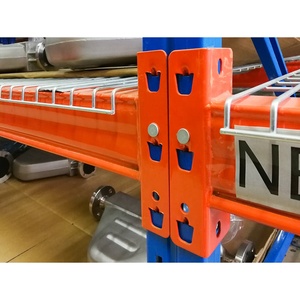
Heavy Duty Workshop Storage Rack Industrial Rack Shelf Suitable For Pallet & Small Items
- Configuration: Hybrid deck & pallet
- Upright Thickness: 2.0mm - 2.5mm
- Protection: Column base impact wrap
Structural Matrix: Comparative Engineering Guide
Selecting the optimal bulk storage configuration requires balancing floor area density, inventory throughput (FIFO vs. LIFO), structural load limits, and lift truck aisle dimensions. Review the engineering matrix below.
| Storage System Type | Space Utilization | Pallet Selectivity | Structural Load Rating | Inventory Rotation | Optimal Application Profile |
|---|---|---|---|---|---|
| Standard Selective Rack | 40% - 50% | 100% Direct | Up to 4,000 kg / Beam Pair | Universal (FIFO/LIFO) | High SKU variety, fast pick cycles, standard counterbalance or reach trucks. |
| Double Deep Pallet Rack | 60% - 65% | 50% Semi-Direct | Up to 3,500 kg / Level | LIFO Strategy | Medium throughput, multi-pallet SKU batches, deep-reach pantograph trucks. |
| Four-Way Shuttle AS/RS | 85% - 92% | 100% Automated | Up to 1,500 kg / Pallet Position | Dynamic FIFO/LIFO | Cold storage, mega-distribution centers, lights-out automated fulfillment. |
| Drive-In / Drive-Thru | 75% - 85% | Low Selectivity | Heavy Impact Channel Rail | Strict LIFO / FIFO | Homogeneous bulk goods, seasonal reserves, blast freezing and cold rooms. |
| Dynamic Pallet & Carton Flow | 70% - 80% | Dedicated Pick Face | 1,200 kg / Roller Track | Strict FIFO | Perishables, pharmaceuticals, fast-moving retail consumer packaging. |
| Folding Stacking Racks | Flexible Bulk | Block Stacking | 1,500 kg / 4-5 High Stack | Batch LIFO | Temporary seasonal expansion, irregular bulk goods, tire storage, cross-docking. |
Future Procurement Trends in Industrial Storage Racking
Global supply chains are navigating raw material volatility, heightened seismic safety codes, and aggressive carbon neutral mandates. Leading engineering procurement directors focus on three emerging paradigms.
1. High-Yield Metallurgy & Structural Thin-Gauge Optimization
Modern procurement moves away from over-engineered heavy steel profiles toward micro-alloyed Q355B and high-yield cold-rolled coils (up to 550 MPa). Advanced continuous roll-forming lines allow manufacturers to engineer complex geometric profiles with multi-flange stiffeners. This delivers a 14% to 18% reduction in structural self-weight while improving vertical torsional rigidity and buckling resistance under seismic load combinations.
2. Automation-Ready Tolerances for AS/RS and AMR Fleets
Procurement specifications increasingly mandate FEM 9.831 and RMI ANSI MH16.1 Class 100/200 manufacturing tolerances. Automated Guided Vehicles (AGVs) and 4-way shuttles operate with sub-millimeter clearances. Racking factories must supply laser-calibrated beams, robotic weldment uprights, and post-assembly deflection variances under 0.05% to prevent shuttle drive slippage or optical sensor communication faults.
3. Decarbonized Steel Supply & Green Powder Coating
Enterprise tenders now mandate Environmental Product Declarations (EPD). Progressive Chinese racking factories are transitioning to zero-emission closed-loop multi-stage silane nano-ceramic pre-treatments that replace traditional toxic phosphate baths. Coupled with lead-free TGIC-free thermosetting electrostatic powders, this reduces procurement carbon footprints by up to 22% while providing 1,000+ hour ASTM B117 salt spray corrosion protection.
Technological Advancements in Heavy-Duty Rack Manufacturing
Advanced Chinese manufacturing facilities combine German CNC continuous roll-forming systems with robotic welding arrays to guarantee dimensional consistency and long-term joint integrity.
Continuous Punching & Multi-Stand Roll Forming
Our upright manufacturing utilizes fully synchronized servo-feed lines capable of punching teardrop, hex, or diamond slot designs at ±0.1mm cumulative tolerance across 12-meter continuous sections. High-precision 24-stand roll formers gradually shape high-strength coil steel into multi-bend open columns without inducing internal residual stresses.
Robotic Dual-Torch Beam Welding Arrays
Beam connectors and box-beam profiles are welded using 6-axis robotic welding cells featuring seam-tracking sensors. Double-pass full-penetration fillet welds prevent weld cracking under dynamic fork truck loading and ensure consistent moment-rotation capacity at beam-to-column connections, certified under AWS D1.1 structural welding specifications.
Seismic FEA Modeling & In-House Load Proofing
Every non-standard racking system is engineered with non-linear Finite Element Analysis (FEA) using ANSYS to assess base-plate prying, upright second-order P-Delta effects, and rotational stiffness. Physical tests verify component compliance on full-scale vertical compressive and horizontal portal test frames.
Engineering Credentials, Seismic Design & Quality Control
Backed by decades of structural engineering expertise, our production facility delivers high-precision pallet racking certified to RMI, AS 4084, and FEM international standards.
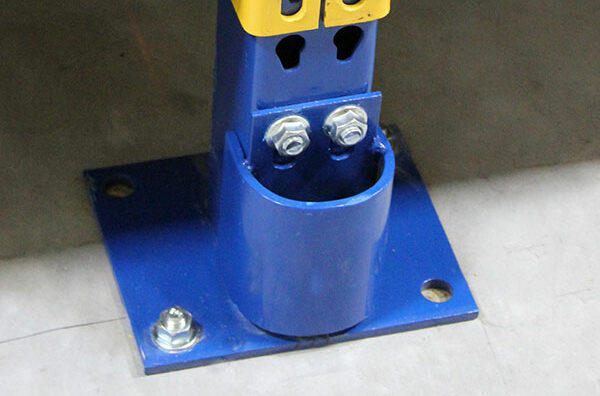
Impact Protection & Guarding
High-grade structural steel wrap-around column guards and straddle protectors mitigate forklift mast impacts at high-traffic aisle intersections.
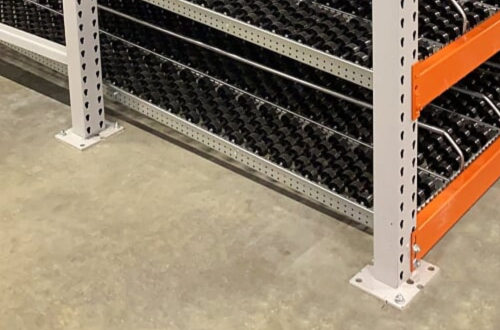
Engineered Anchor Assemblies
Seismic concrete anchor bolt tables calculated for effective embedment depth, slab edge breakout limits, and shear resistance under dynamic warehouse cycles.
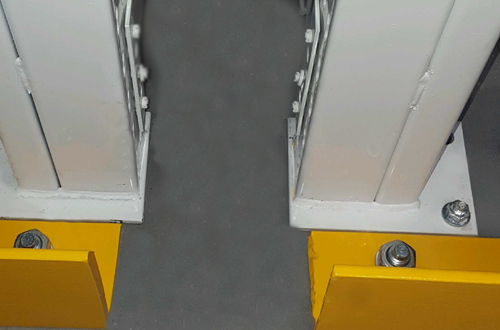
Concrete Slab & Baseplate Engineering
Baseplate dimensions and anchor spacing are engineered according to concrete compressive strength (≥3,000 PSI) to eliminate punching shear and micro-cracking.
IBC Seismic Force Adaptation
Fully compliant with updated International Building Code (IBC) guidelines, engineering frame bracings for high ground acceleration areas (Seismic Categories D, E, F).
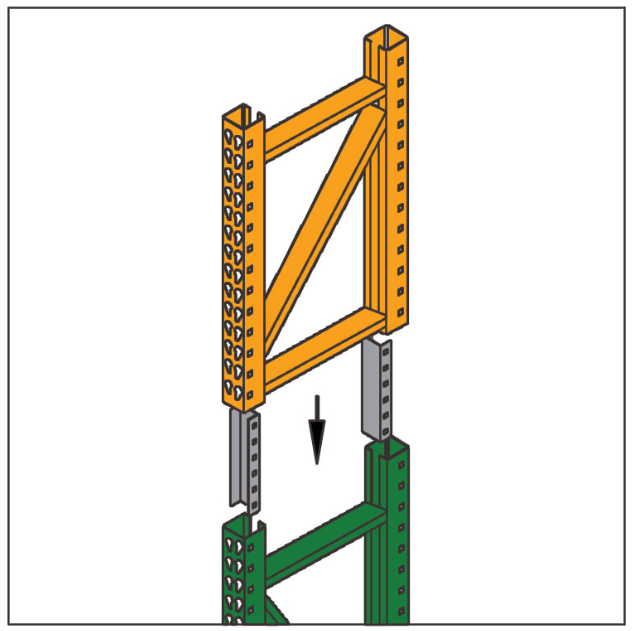
Engineered Upright Frame Extensions
Certified splice kit calculations that maintain moment transmission capacity across vertical frame extensions, allowing safe warehouse height expansion.
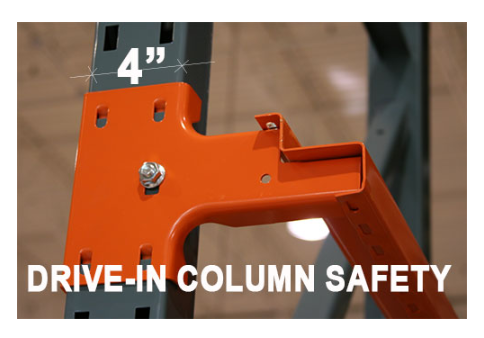
Drive-In Channel Reinforcements
Heavy hot-rolled structural steel C-channel uprights for high-impact drive-in and drive-thru tunnels, providing superior resistance against continuous truck contact.
Why Tier-1 Integrators Choose Our Manufacturing Facilities
Combining the heritage of nearly 70 years of pallet rack engineering leadership with high-capacity Chinese manufacturing efficiency.
Both Structural & Roll-Formed Capabilities
We are one of the few global manufacturers providing both hot-rolled structural steel channel racks (ideal for harsh food distribution and heavy manufacturing) and precision cold roll-formed teardrop and slotted profiles from a single integrated manufacturing hub.
Full RMI / ANSI MH16.1 & AS 4084 Certification
Every single frame, beam, and connector bracket is fabricated to the strict engineering guidelines of the Rack Manufacturers Institute (RMI) specification ANSI MH16.1 and Australian Standard AS 4084-2023. Comprehensive third-party load test reports accompany each production batch.
Complete In-House Project Engineering
Our structural engineering department uses advanced CAD, Revit BIM modeling, and customized load-calculation tools to provide complete seismic PE stamped calculations, bill of materials optimization, anchor design checks, and aisle clearance analysis before manufacturing begins.
Multi-Million Dollar Automated Paint Lines
Equipped with Swiss Gema automated electrostatic powder coating guns and multi-zone convection curing ovens, our finishing lines deliver a tough, uniform 60-80 micron coating. Standard finishes withstand heavy warehouse handling, extreme humidity, and sub-zero cold room environments.
Direct Experience with Fortune 500 Enterprises
Our systems support critical logistics hubs across North America, Europe, Australia, and Asia. We maintain long-term direct-supply partnerships with the world's largest 3PL logistics corporations, retail giants, e-commerce platforms, and automotive manufacturers.
Engineered In-Place Rack Repair Systems
Beyond new manufacturing, we engineer bolt-on column repair inserts that restore original structural capacity to damaged uprights without requiring the full tear-down of adjacent warehouse bays, significantly reducing downtime and long-term maintenance costs.
Frequently Asked Questions: Bulk Storage Racking Procurement
In-depth structural engineering answers to support procurement managers, project engineers, and facility directors in specifying industrial warehouse racking.
What is the structural difference between nominal embedment and effective embedment for rack anchors?
Nominal embedment refers to the total length of the anchor bolt positioned below the surface of the concrete slab, measured from the top of the concrete to the bottom tip of the expansion sleeve or threaded rod. In contrast, effective embedment depth (h_ef) represents the actual mechanical engagement depth that resists tension and pull-out forces, measured from the concrete surface to the deepest point where the expansion clip engages the concrete wedge.
When calculating baseplate resistance under seismic overturning moments or lateral forklift impact, structural engineers must use the effective embedment rather than nominal depth. For instance, a 3/4" expansion anchor may require a 4.5" hole (nominal), but its effective embedment depth is only 3.25". Failure to distinguish these values can lead to overestimating tension capacity by up to 30%, risking concrete cone failure during seismic events.
When should buyers specify structural steel channel racking over roll-formed pallet racking?
Structural steel pallet racking is manufactured from hot-rolled C-channel profiles (ASTM A36 or Q235B channel steel) and assembled using heavy-duty grade 5 or grade 8 structural bolts. It features thicker corners, a minimum web thickness of 3.0mm to 5.0mm, and significantly higher impact resistance. It should be specified in high-traffic distribution centers, freezer and blast-chilling facilities where brittle fracture is a hazard, drive-in systems where lift trucks routinely navigate inside the racking bays, and outdoor storage setups.
Roll-formed pallet racking is cold-formed from steel coils into C, Omega, or tubular shapes with teardrop or keyed slots. It is lighter, faster to adjust in 50mm or 76.2mm increments without tools, and more economical for standard retail warehouses, selective storage, and e-commerce picking with low fork truck collision risks.
How do building codes (IBC) and seismic design categories (SDC) affect racking engineering?
Under the International Building Code (IBC) and ANSI MH16.1 specifications, storage racks higher than 8 feet are classified as building structures. Depending on the site’s geographic coordinates and soil classification (Site Class A through F), the rack must be engineered to resist specific spectral acceleration values (Ss and S1).
In high seismic zones (Seismic Design Categories D, E, and F):
- Upright profiles must incorporate heavier wall gauges and wider horizontal/diagonal bracing channels.
- Baseplates are enlarged (e.g., from 4"x4" to 8"x8" or 10"x10") with multiple anchor bolt holes to distribute seismic base shears.
- Beam connections require 4-pin or 5-pin heavy-gauge brackets with high moment capacities to minimize frame drift during seismic motion.
Can warehouse operators safely remove the bottom beam level to allow double-stacking on the floor?
Never remove the bottom beam level without written approval from a qualified rack structural engineer. The rated axial load capacity of an upright column is inversely proportional to its unsupported length squared (Euler's buckling formula: P_cr = π²EI / (KL)²). The lowest beam level provides critical lateral bracing that fixes the effective buckling length (L) of the upright column.
Removing the bottom beam increases the unsupported column length from approximately 1.5 meters to over 3.0 meters. This single change can diminish the upright frame's load-carrying capacity by 40% to 60%, creating an immediate collapse hazard under full overhead loads. If floor-level double stacking is required, the rack must be re-engineered with heavier upright sections, supplemental back diagonal braces, or rigid floor tie-beams.
What concrete slab specifications are required to safely install heavy-duty pallet racking?
Standard industrial pallet rack installations require a reinforced concrete floor slab with a minimum compressive strength of 3,000 PSI (20.7 MPa) to 4,000 PSI (27.6 MPa), typically with a minimum slab thickness of 6 inches (150 mm) to 8 inches (200 mm). For very tall narrow-aisle (VNA) or automated AS/RS systems reaching heights over 12 meters, concrete slabs often require 5,000 PSI concrete and strict floor flatness tolerances conforming to DIN 18202 or ACI 117 F-min values (F_F 50 / F_L 50 or higher).
Furthermore, post-tensioned slabs demand precise electromagnetic radar scanning prior to core drilling to prevent severing structural tension cables, which can cause severe slab structural failure.
What are the dangers of mixing beams and uprights from different racking manufacturers?
While many cold-formed racking brands utilize a teardrop-style connection pattern, subtle differences in metal thickness, teardrop taper angles, pin diameters, and locking pin engagement depths vary between manufacturers. Mixing components voids the original manufacturer's engineering warranty and certifications (such as RMI or AS 4084).
Mismatched beam end connectors can lead to improper seating, point loading on the upright face, reduced moment-resistance capacity, and accidental beam dislodgement under lift truck upward impacts. If components from different manufacturers must be integrated, a certified structural engineer must perform physical connection testing and provide stamped engineering certification.
What information is required to receive a full engineering drawing and quotation?
To produce an accurate, code-compliant CAD layout and engineering proposal, please prepare the following data:
- Warehouse Architectural CAD: Clear ceiling height to bottom of steel trusses, building column grid spacing, floor slab thickness, and overhead sprinkler pipe clearances.
- Unit Load Dimensions: Pallet depth, width, total height including load, and maximum gross weight per pallet.
- Forklift Specifications: Lift truck type (Counterbalance, Reach truck, VNA turret truck), maximum lifting height, and minimum required right-angle stacking aisle width.
- Environmental Data: Project geographic location for local seismic and wind code determinations, warehouse operating temperature (ambient or cold storage).
Consult with Our Warehouse Structural Engineering Team
Whether you require a custom high-density Four-Way Shuttle system, RMI-compliant structural C-channel rack, or standard selective pallet racking, our engineering team provides free preliminary CAD layouts, seismic load calculations, and comprehensive factory direct quotations.