Featured Heavy Duty Storage & Live Pallet Racking Systems
Explore our heavy-duty industrial storage series, spanning high-throughput gravity flow rollers, 4-way radio shuttles, high-capacity selective beams, and custom precision sheet metal architectures.
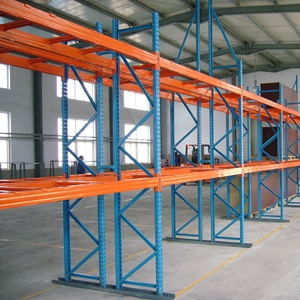
Adjustable Heavy Duty Pallet Rack Shelf Two Levels Custom High Load Industrial Warehouse Storage
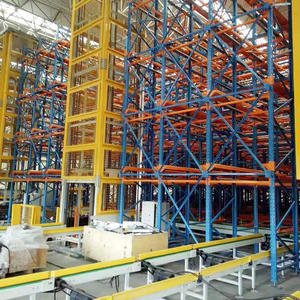
Factory Custom Heavy Duty Steel Four-Way Shuttle Racking System High-Density Warehouse Rack
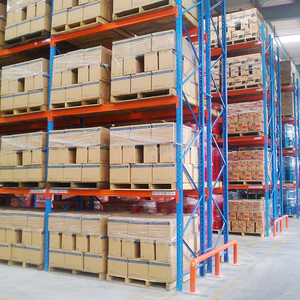
Combined Load-Row Connected Industrial Pallet Racking System 2000kg Steel Storage
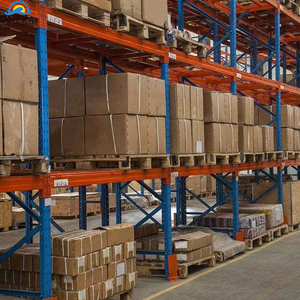
Custom Heavy Duty Industrial Steel Selective Pallet Rack Adjustable Warehouse Shelves
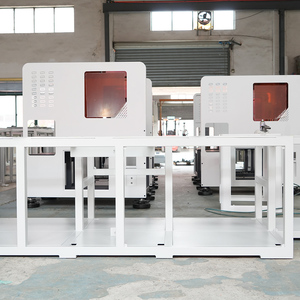
OEM Custom Sheet Metal Fabrication Service High Precision Assembled Equipment Cabinet
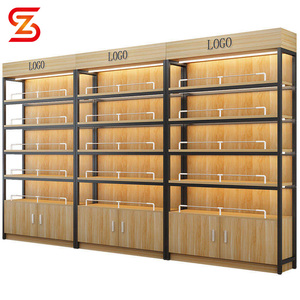
Wall Mount Freestanding Slatwall Display Cabinet With Retail Custom Shelves & Rail
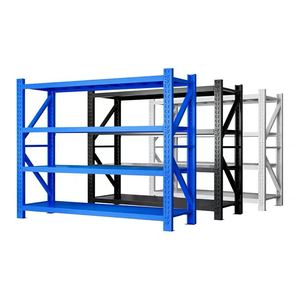
Car System Semi Automatic Rack 4 Ways Remote Control Radio Shuttle Racking
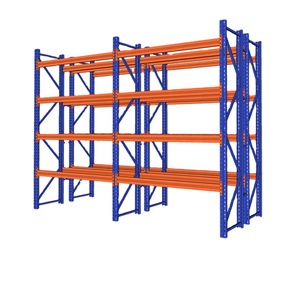
Customized Heavy-Duty 5-Layer Industrial Pallet Rack System Steel Storage Shelf
The Mechanics of Heavy Duty Live Storage: Dynamic Gravity Flow Physics & Structural Integrity
In modern, high-velocity distribution centers, Heavy Duty Live Storage Racking—widely recognized across international logistics as Pallet Flow or Gravity Flow Racking—stands as the definitive technological benchmark for First-In, First-Out (FIFO) material handling. Operating on inclined roller tracks utilizing gravitational potential energy, live storage systems bridge the divide between ultra-dense cubic floor utilization and high-cadence throughput. As a premier China manufacturer and global engineering supplier, our industrial systems are engineered to resolve the complex kinetic challenges associated with dynamic loads exceeding 1,500 kg per pallet position across multi-deep lane profiles extending up to 30 pallets in depth.
1. Critical Incline Gradient & Roller Track Kinematics
The kinetic efficiency of dynamic live pallet storage is strictly governed by the gravitational gradient angle (θ), typically calculated between 2.5% and 3.5% (approx. 1.5° to 2.0°) depending on bottom pallet board geometry, moisture content, and tare weight. When the gradient is insufficient, static friction overcomes rolling inertia, inducing stalled lanes that necessitate hazardous manual intervention. Conversely, an excessive slope generates dangerous runaway acceleration. Our precision manufacturing integrates high-grade cold-drawn steel rollers fitted with low-drag, labyrinth-sealed precision bearings (AISI 1020 / 52100 bearing steel). Each roller is balanced dynamically to dissipate rolling resistance while upholding static load threshold ratings up to 300 kg per roller cylinder.
2. Controlled Deceleration via Centrifugal Brake Rollers
To safely transport pallet masses reaching 1,500 to 2,000 kg, gravitational acceleration must be counterbalanced by engineered speed controllers. We install continuous-action centrifugal speed retarders (brake rollers) spaced at systematic pallet-length intervals (typically every 1 to 2 pallet depths). These internal centrifugal units engage dynamically as linear velocity approaches 0.25 to 0.30 m/s: the higher the kinetic speed of the advancing pallet, the greater the braking torque generated by the internal clutch shoes. This self-regulating mechanism guarantees smooth, predictable glide velocities across cold-storage environments (-30°C) and tropical distribution hubs (+45°C) without requiring external electrical power.
3. Automatic Backpressure Relief Separators at the Discharge Face
A common failure mode in rudimentary gravity flow racks is severe backpressure. In a 20-pallet-deep lane, cumulative hydrostatic pressure from 19 queued rear pallets pushes relentlessly against the lead pallet at the discharge aisle, binding the pallet against the front stops and preventing lift-truck extraction or causing load collapse. Our engineering solves this through mechanically linked Pallet Separator Assemblies. As the lead pallet reaches the front extraction pick face, the separator trips a trailing latch that locks the second and subsequent pallets 150mm upstream. The forklift operator safely extracts the primary load with zero backpressure. Once the pallet clears the front frame, the separator resets automatically, allowing the lane to index forward one position under controlled velocity.
4. Structural Load Dissipation & Seismic Deflection
Unlike static racks subjected purely to vertical compressive forces, heavy-duty live storage racks encounter severe cyclic kinetic loads, brake roller reaction torques, and forklift dynamic impact at entry guide chutes. In strict adherence to ANSI MH16.1 and EN 15512 specifications, our upright frame assemblies utilize high-tensile hot-rolled or cold-formed Q355B micro-alloyed structural steel. Upright post profiles feature specialized stiffening ribs along the web and flanges, yielding elevated sectional modulus properties. Finite Element Modeling (FEM) ensures structural column buckling resistance under maximum lane saturation, while oversized heavy-gauge baseplates (minimum 12mm thickness) provide anchorage shear resistance against code-mandated seismic ground motions.
Dynamic Live Storage vs. Alternative Warehouse Systems
Data-driven evaluation of density, throughput velocity, operational safety, and lifecycle total cost of ownership (TCO) across standard industrial racking configurations.
| Storage Topology | Space Utilization | Inventory Rotation | Forklift Travel Time | SKU Selectivity | Pallet Damage Risk | CapEx vs. OpEx Index |
|---|---|---|---|---|---|---|
| Heavy Duty Live Storage (Pallet Flow) | 85% - 90% (Ultra High) | Strict FIFO (Gravity Driven) | Minimal (Dedicated In/Out Aisles) | 1 SKU Per Lane Face | Extremely Low (Controlled Flow) | Moderate CapEx / Lowest OpEx |
| Standard Selective Racking | 40% - 50% (Low Floor Density) | FIFO or LIFO (Flexible) | High (Aisle Access Traversal) | 100% Immediate Direct Access | Moderate (Fork Truck Interaction) | Low CapEx / High Labor OpEx |
| Push-Back Cart System | 70% - 75% (High Density) | Strict LIFO (Last-In-First-Out) | Moderate (Front Aisle Cycling) | 1 SKU Per Cart Lane (2-6 Deep) | Low-Moderate (Pushing Impact) | Moderate CapEx / Moderate OpEx |
| Drive-In / Drive-Thru Racking | 75% - 85% (High Density) | LIFO (Drive-In) / FIFO (Drive-Thru) | Very High (Maneuvering In Bay) | Very Low (Batch Only) | High (Frequent Column Collisions) | Low CapEx / Elevated Upkeep OpEx |
| 4-Way Radio Shuttle Automated | 88% - 92% (Maximum Density) | Software Selectable FIFO/LIFO | Low (Robotic Aisle Indexing) | Channel Level Selectivity | Extremely Low (Automated Carrier) | High CapEx / Low Labor OpEx |
Why Global Tier-1 Enterprises Partner With Our China Plant
Combining nearly seven decades of engineered pallet racking heritage with high-precision Chinese manufacturing automation, European standards compliance, and dedicated engineering oversight.
Full RMI / ANSI MH16.1 Compliance
Our fabrication protocols comply rigorously with the Rack Manufacturers Institute (RMI) ANSI MH16.1, EN 15512, and AS 4084 specifications, ensuring overseas buyers pass regulatory municipal permitting seamlessly.
In-House Finite Element Analysis (FEA)
Every heavy-duty live storage project undergoes computer-aided structural simulation and finite element stress analysis, taking into account site-specific seismic ground spectral accelerations, slab thickness, and soil strata.
Automated Dual-Line Powder Coating
Multi-million-dollar continuous powder coating lines feature pre-treatment chemical washing, automated phosphate conversion, and electrostatic thermosetting polyester deposition, ensuring 80-120μm corrosion-proof skin.
End-to-End Project Engineering
From CAD concept drawings and dynamic flow endurance tests to overseas shipping container volume optimization and site installation supervision, a single dedicated project engineering team manages your account.
Future Procurement & Technological Trends in Live Storage
How intelligent automation, sustainable metallurgy, and digital twins are reshaping the global live storage and pallet flow procurement landscape.
AGV / AMR Interface Standardization
Global warehouses are rapidly replacing manual forklifts with Autonomous Mobile Robots (AMRs) and counterbalanced AGVs. Future live storage procurement demands optical alignment targets, high-precision funnel entry guides, and sensorized discharge stops that interface seamlessly with robotic lift tines without requiring millimeter human alignment tolerances.
Smart Rollers & Kinetic Flow Telemetry
The next generation of heavy-duty pallet flow incorporates self-powered, vibration-harvesting IoT sensors within brake rollers. These modules transmit continuous telemetry on pallet transit velocity, internal bearing heat, roller wear patterns, and lane occupancy to the Warehouse Execution System (WES), enabling predictive maintenance before a lane stalls.
Green Steel & Ultra-Cold Alloys
Driven by Scope 3 decarbonization mandates, international procurement teams are specifying high-strength, low-carbon electric arc furnace (EAF) steel. Concurrently, specialized micro-alloyed steel formulations with nickel-chromium trace additives maintain ductile toughness down to -35°C without brittle fracture risks inside blast freezer facilities.
Frequently Asked Questions by Global Buyers & Engineers
Technical, operational, and commercial insights to streamline your heavy-duty live storage acquisition and facility planning.
What pallet specifications are critical to ensure smooth operation in live storage flow racks?
Live storage pallet flow systems rely on direct physical contact between the bottom boards of the pallet and the roller tracks. Optimal operation requires rigid, high-quality wooden or composite pallets (e.g., GMA 48x40-inch, Euro-pallets 800x1200mm, or industrial 1200x1200mm) with continuous bottom runner orientation parallel to the flow direction. Pallets must be free of missing boards, protruding nails, or severe deflection exceeding 1/180th of the span. Plastic pallets can also be used if molded with flat, continuous perimeter runners or fitted with specialized steel reinforcement bars. We routinely conduct physical sample flow testing in our plant testing lane to verify rolling friction and brake performance prior to mass production.
How do you calculate the correct incline gradient and speed controller distribution for varying load weights?
The standard gradient is engineered between 2.5% and 3.5% (typically 35mm elevation drop per 1,000mm of lane length). In operations handling variable weights (e.g., 400 kg to 1,200 kg in the same bay), we specify dual-spring or self-adjusting centrifugal brake rollers. These units remain disengaged at low entry speeds, allowing lighter pallets to roll smoothly under static gravity, but engage proportionally higher internal braking resistance when a heavy 1,200 kg pallet begins accelerating. Speed controllers are generally placed starting from the second pallet position and repeated every one to two pallet lengths depending on structural lane depth.
Can your heavy-duty live storage systems be deployed inside sub-zero cold storage facilities?
Yes. Cold storage and blast freezing environments (ranging from 0°C down to -35°C) represent one of the most prominent applications for live pallet storage because high density minimizes refrigerated air volume. For sub-zero installations, our engineering team implements low-temperature synthetic hydrocarbon greases within all roller bearings, uses zinc-plated or galvannealed steel roller shells to eliminate condensation rust, and specifies notch-tough structural steel that avoids low-temperature embrittlement under cyclic loading.
What structural data and floor slab documentation are required to initiate an engineering proposal?
To deliver an accurate RMI/ANSI-compliant structural engineering calculation, our design team requires: (1) Warehouse CAD floor plan detailing column grids, building clear height, and overhead obstacles (sprinklers, HVAC, lighting); (2) Concrete slab thickness, compressive strength rating (e.g., 28-day f'c ≥ 3,000 to 4,000 PSI), and rebar reinforcement data; (3) Complete pallet load profile including maximum tare weight, minimum weight, load height, overhang, and pallet construction style; (4) Local seismic acceleration parameters (Ss, S1 values or regional building code edition); and (5) Lift truck make, model, mast collapsed/extended height, and outrigger constraints.
How do you guarantee transit safety and prevent shipping damage for overseas ocean freight?
Heavy-duty live storage components—specifically precision roller tracks, separator linkages, and structural uprights—require specialized export bundling. Upright frames are nested with protective timber dunnage and heavy-duty polyester strapping to prevent metal-to-metal chafing. Roller tracks are crated in rigid wooden enclosures or bundled with protective edge guards to safeguard the alignment of roller spindles and internal brake clutches. All hardware, anchor bolts, and speed controllers are vacuum-sealed with desiccant packets inside moisture-proof wooden crates to ensure zero corrosion during 30 to 50 days of ocean transit.
What is the expected maintenance schedule for heavy duty gravity roller tracks and brake rollers?
Heavy-duty live storage is fundamentally an elegant mechanical system with low ongoing maintenance. Recommended operational checks include: (1) Quarterly visual inspections of roller tracks for debris, wood splinters, or binding; (2) Semi-annual verification of separator trigger arm free play and return spring tension; (3) Annual dynamic velocity checks of centrifugal brake rollers using a test pallet to verify smooth rotation without clutch slippage; and (4) Annual structural torque audits of floor anchor bolts and beam-to-frame locking devices. Because our bearings are factory-sealed for life, periodic lubrication of rollers is unnecessary.
Accelerate Your Warehouse Density with Engineered Live Storage
Connect directly with our senior application engineering team in China. Send us your facility layout, pallet load matrix, and throughput metrics for an optimized CAD design, seismic structural review, and competitive factory-direct supply quote.