Precision Engineered Rack & Mezzanine Systems
Direct supply of cold-rolled and structural steel racking systems engineered to integrate seamlessly into multi-tier pick modules and rack-supported mezzanine platforms.
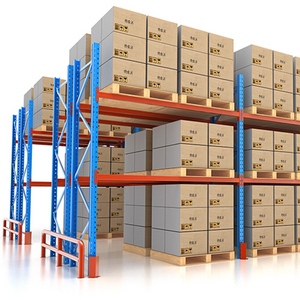
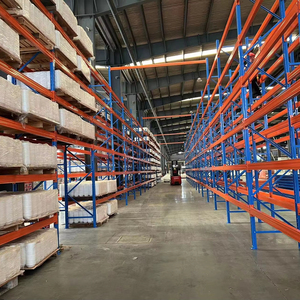
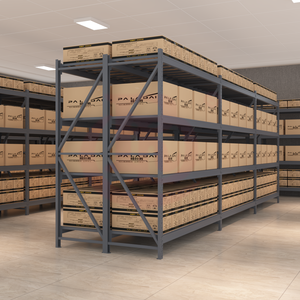
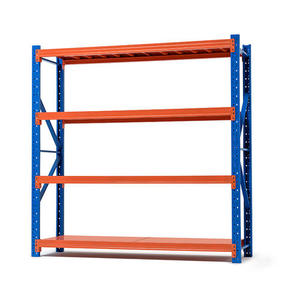
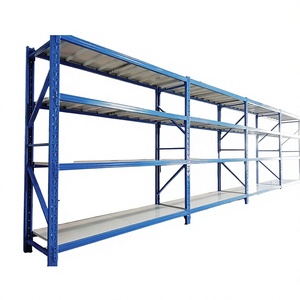
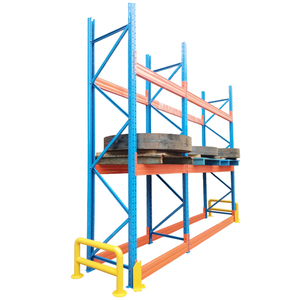
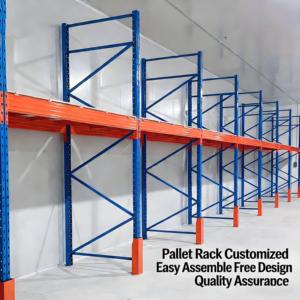
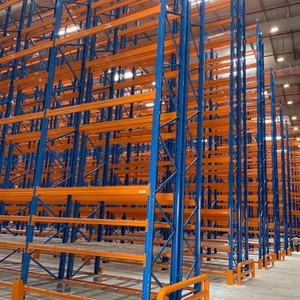
Engineering Fundamentals of Heavy Duty Rack Supported Mezzanines
A Heavy Duty Rack Supported Mezzanine represents an advanced structural synthesis of high-density pallet storage and multi-level elevated industrial flooring. Unlike standalone structural steel mezzanines that rely on massive structural I-beams and wide-flange columns (which monopolize extensive footprint areas on the primary ground slab), rack-supported multi-tier platforms leverage the continuous vertical load capacity of heavy-duty upright frames. This engineered methodology effectively eliminates redundant column footprints, enabling logistics facilities to realize up to 100% to 200% vertical footprint expansion without acquiring additional land or engaging in costly civil expansions.
When selecting a qualified China best heavy duty rack supported mezzanine supplier, global engineering directors must prioritize design methodologies conforming to recognized international standards: the Rack Manufacturers Institute (RMI / ANSI MH16.1), the International Building Code (IBC), and European EN 15512 norms. High-integrity rack mezzanines engineered in China feature certified cold-formed high-tensile steel (such as Q235B and Q355B structural grades) precisely roll-formed with heavy rib geometries to resist torsion, secondary axial buckling, and dynamic cyclic loading from pallet jacks and automated guided vehicles (AGVs).
Structural Efficiency
Dual-purpose upright columns carry dynamic pallet loads while concurrently bearing catwalk and upper deck mezzanine live loads.
Seismic Mitigation
Calculated baseplate anchors, cross-aisle portal ties, and structural bracing designed to absorb high seismic drift and ground acceleration.
Decking Configurations
Galvanized steel bar grating, perforated steel planks, heavy-duty B-deck with composite plywood, and anti-slip resin board matrices.
Automated Finishes
Automated multi-stage continuous electrostatic powder coating ensuring uniform 60-80 micron thickness and rigorous salt-spray corrosion resistance.
Structural Comparison: Rack Supported vs. Structural Steel Platforms
Logistics planners frequently face the dilemma of choosing between rack-integrated frameworks and post-and-beam structural platforms. The engineering comparison below highlights key structural parameters verified during enterprise layout reviews:
| Structural Parameter | Heavy Duty Rack-Supported Mezzanine | Structural I-Beam Mezzanine | Standard Selective Pallet Rack |
|---|---|---|---|
| Primary Vertical Column Load | Transmitted via cold-formed uprights (Omega profile) | Transmitted via hot-rolled H-Section / Square hollow tubes | Upright columns exclusively bear tier pallet weight |
| Cubic Storage Utilization | Exceptional (Up to 85% of total building envelope) | Moderate (Depends on sub-floor clearance & layout) | Standard (Ground-level footprint bounded by aisles) |
| Deck Loading Capacity | 300 kg/m² to 1,200 kg/m² (Engineered for pick & pack) | 500 kg/m² to 2,500+ kg/m² (Heavy machinery/forklifts) | Not applicable (Beam tier loading only) |
| Civil Foundation Requirement | Standard industrial concrete slab (150-200mm thickness) | Deep footings or reinforced concrete grade beams required | Standard slab matching nominal point anchor embedment |
| Total Cost of Ownership (TCO) | Lowest CAPEX per pallet position / floor area ratio | Higher material and structural welding overhead | Low CAPEX, but limited to single-level access heights |
Future Procurement Trends in Industrial Storage Platforms
The global supply chain landscape is witnessing unprecedented verticalization. In reviewing multi-tier mezzanine procurement across North America, Europe, the Middle East, and Asia-Pacific, several transformative procurement patterns have emerged:
1. Convergence with Autonomous Mobile Robots (AMRs) and Goods-to-Person (G2P) Automation: Modern enterprise RFQs for rack-supported mezzanines no longer specify manual push-cart pathways alone. Suppliers must now guarantee deflection tolerances tighter than L/400 to accommodate the high-speed navigation of AMRs operating on upper decking levels. This entails laser-flat floor decking, precision-bolted joint seams, and anti-vibration damping isolators integrated directly beneath joist connections.
2. Structural Digital Twins and BIM/Revit Lifecycle Integration: Cross-border buyers increasingly mandate complete Building Information Modeling (BIM Level 2/3) files prior to cutting steel. Certified suppliers in China leverage automated Tekla Structures and finite element analysis (FEA) software to provide clash detection with HVAC, overhead in-rack fire sprinkler systems (NFPA 13 compliance), and electrical raceways.
3. Low-Carbon and Traceable Structural Steels: Environmental, Social, and Governance (ESG) mandates have filtered into heavy industrial procurement. Tier-1 suppliers are adopting scrap-recycled Electric Arc Furnace (EAF) structural steel coils coupled with lead-free, zero-VOC powder-coating finishing lines to decrease embodied carbon metrics across high-bay facilities.
Supplier Engineering Capabilities & Manufacturing Advantages
Drawing on nearly 70 years of engineered pallet racking heritage and manufacturing innovation, our fabrication facilities maintain a standard of excellence trusted by global distribution hubs and Fortune 500 logistics leaders. When evaluating our production infrastructure against global benchmarks, enterprise procurement teams benefit from unmatched engineering scale:
In-House Project Engineering
Decades of sophisticated structural project engineering, executing rigorous layout analysis, localized seismic calculations, and anchorage verification.
Single-Source Responsibility
Full lifecycle management from original CAD optimization to manufacturing, automated finishing, global logistics packing, and installation oversight.
Automated Powder Paint Lines
Multi-million-dollar automated continuous powder-coat lines delivering uniform paint bonding, impact resistance, and long-term durability.
Integrated Rack Protection
Engineered column protectors, structural end-of-aisle wrap guards, and bolt-on impact mitigators protecting structural uprights against lift truck strikes.
Whether configuring high-density carton flow pick faces, pallet flow lanes, push-back mechanisms, or high-bay AS/RS structures supporting three levels of open mezzanine decking, our engineered systems fulfill current RMI ANSI MH16.1 specifications, ensuring full project sign-off and risk-free commissioning.
Frequently Asked Questions: Global Procurement & Engineering
Practical technical answers addressing structural, safety, seismic, and logistical questions frequently raised by overseas buyers.
What engineering data is mandatory to design a rack-supported mezzanine?
How do you verify structural integrity and seismic compliance?
Can rack-supported mezzanines integrate with automated systems like conveyors or AGVs?
How does the supplier manage overseas freight packing and rust prevention?
Ready to Engineer Your High-Density Storage Mezzanine?
Consult directly with our project structural engineering team to receive customized CAD layouts, load calculations, and competitive factory-direct pricing.