Heavy Duty Robotic Storage Racks for Demanding Automation
Precision cold-roll formed uprights, dynamic gravity channels, and micron-tolerance beam structures engineered for unit-load AS/RS cranes, autonomous mobile robots (AMRs), and high-density pallet shuttles.
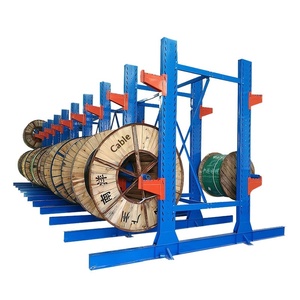
Heavy-duty Cantilever Shelving for Cable Reels & Spools
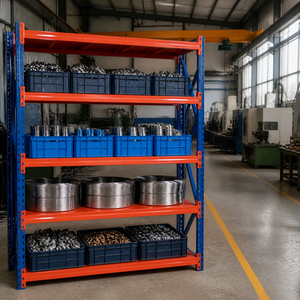
Custom Adjustable VNA Steel Pallet Racking System
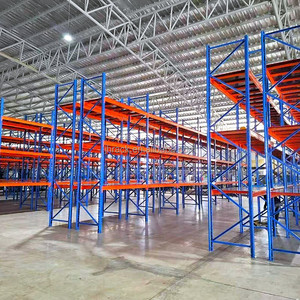
ODM Adjustable Beam Heavy-Duty Warehouse Pallet Racking

High Strength Steel FIFO Gravity Carton Flow Picking System
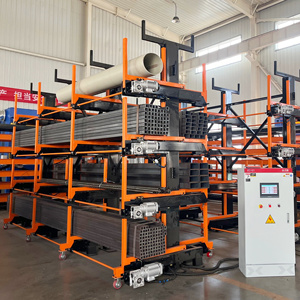
Industrial Telescopic Cantilever Heavy Load Racking System
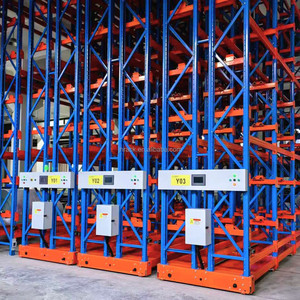
Industrial Heavy-Duty Electric Automated Mobile Racking
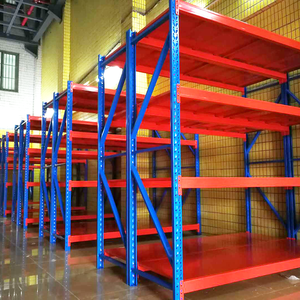
Narrow Aisle Multi-Layer High-Density Adjustable Rack
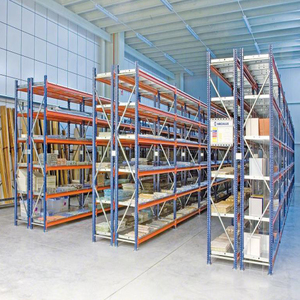
Pallet Racking Heavy-Duty Teardrop Upright & Beam System
Robotic Storage Racking: The Transition from Passive Steel to Dynamic Automation Infrastructure
In modern gigawatt-hour battery plants, cold chain multi-temperature centers, and high-velocity e-commerce fulfillment hubs, storage racking is no longer a static shelving system. It acts as the mechanical chassis for automated material handling.
Dimensional Deflection & Tolerances
Traditional manual racking operates safely with deflection limits of L/180 or L/240. In contrast, robotic AS/RS and 4-way pallet shuttle systems demand deflection limits tighter than L/300 to L/450 under peak load. If a beam flexes excessively, automated optical sensor arrays and laser-guided robotic forks encounter positioning errors, triggering automated system lockouts.
Dynamic vs. Static Loading Cycles
Robotic shuttles and high-speed stacker cranes introduce rapid acceleration, deceleration, and cyclical mechanical vibrations. Factory engineering must calculate fatigue limits, local buckling stresses, and anchor shear forces under continuous 24/7/365 multi-axis dynamics rather than static resting deadweight.
Seismic-Slab Interactive Engineering
In high-bay racking reaching heights over 30 to 45 meters, seismic horizontal forces amplify exponentially. Tier-1 Chinese manufacturers integrate non-linear response spectrum analysis, assessing concrete slab compressive strength, anchor embedment depths, and structural floor interaction to prevent progressive collapse.
Future Procurement Trends in Heavy-Duty Robotic Racking
Procurement directors and warehouse infrastructure architects are re-evaluating sourcing criteria. Factory selection is shifting from price-per-ton metrics toward structural integrity, software interoperability, and lifecycle resilience.
4-Way Shuttle Racking Dominance
Pallet-climbing 4-way robotic shuttles are rapidly displacing older single-direction crane AS/RS due to lower headroom requirements, modular scalability, and flexible SKU throughput. Racking factories must supply cold-formed guide rail assemblies with sub-millimeter level alignment tolerances.
TCO & Operational Longevity
Buyers are moving away from thin-gauge low-initial-cost structures. Factoring in rack downtime—which can cost thousands of dollars per hour in an automated DC—procurement teams now specify heavy structural channel steel for base impact zones and factory-applied electro-welded reinforcements.
Low-Carbon & High-Tensile Steel
Leading Chinese heavy-duty racking factories are utilizing high-strength low-alloy (HSLA) steels such as Q355B and Q460, reducing gross structural steel weight while maintaining rated load capacity. This lowers maritime container freight costs and supports corporate ESG carbon-reduction mandates.
Plug-and-Play Integrator Modules
Global systems integrators require factory pre-drilled brackets, integrated sensor wiring conduits, optical reflector brackets, and laser positioning targets directly stamped on beams, eliminating costly and hazardous field modification on job sites.
Engineering Evaluation: Selecting the Right Heavy Duty Racking Topology
Compare mechanical characteristics, automation interfaces, and floor space utilization ratios across automated and high-density warehouse systems.
| Racking System Type | Robotic / AMR Interface | Max Height Potential | Deflection Tolerance Standard | Optimal Inventory Application |
|---|---|---|---|---|
| Unit-Load AS/RS Clad Rack | Full Automation (Stacker Cranes) | Up to 45 Meters | L/400 (Ultra-Strict FEM 9.831) | Extreme vertical utilization, mega-distribution centers, automated dark warehouses. |
| 4-Way Pallet Shuttle Racking | Autonomous 4-Way Shuttles + Hoists | Up to 25 Meters | L/350 (Continuous dynamic rail load) | High-density buffer storage, cold storage facilities, beverage & FMCG hubs. |
| Electric Mobile Pallet Racking | PLC automated rail-guided bases | Up to 12 Meters | L/250 (Intermittent mobile torque) | Zero-degree freezer storage, pharmaceutical archives, extreme footprint conservation. |
| Very Narrow Aisle (VNA) Pallet Rack | Wire-guided or AGV/AMR turret trucks | Up to 16 Meters | L/300 (Tight vertical upright plumbness) | High SKU diversity, 100% pallet accessibility, balanced throughput facilities. |
| Dynamic Gravity Carton & Pallet Flow | Autonomous tugger carts / AGVs | Up to 10 Meters | L/200 (Brake roller velocity controlled) | Fast-moving retail split case picking, FIFO expiration-sensitive inventories. |
| Structural Heavy-Duty Cantilever | Specialized side-loader AGVs / Cranes | Up to 10 Meters | L/180 (Heavy cantilever arm moment load) | Pipes, aluminum extrusions, cable spools, long timber, and heavy bulky steel profiles. |
Why Top Global Enterprises Partner with Our Manufacturing Plants
Refined through nearly 70 years of pallet racking engineering, our Chinese manufacturing hubs integrate heavy structural fabrication with robotic production lines to satisfy demanding multinational engineering audits.
Continuous Roll-Forming Mill Precision
Our facilities house multi-station roll-forming lines featuring in-line CNC punching stations. This ensures cumulative hole-pitch tolerance is held within ±0.5mm across a continuous 12-meter upright section, essential for automated stacker crane mast alignment.
Certified Structural RMI Compliance
Every beam-to-column connector, bracing profile, and baseplate is engineered in strict accordance with ANSI MH16.1 (Rack Manufacturers Institute) and European FEM 10.2.02 codes. We provide certified structural calculation packets reviewed by licensed structural engineers.
Automated Pretreatment & Powder Coating
Our multi-million-dollar automated powder coat lines feature a 7-stage silane nano-ceramic conversion wash, followed by electrostatic powder application and precision thermal curing. The result: over 1,000 hours of salt spray corrosion resistance for cold-chain environments.
Seismic Analysis & Anchor Design
We evaluate site-specific seismic parameters, evaluating Spectral Acceleration values (Ss and S1), concrete slab compressive capacities (psi/MPa), and anchor bolt embedment depths to configure heavy structural footplates with verified pull-out resistance.
Fortune 500 Trusted Partnerships
From global automotive OEM gigafactories to retail supermarket distribution centers, our heavy-duty roll-formed and structural racks have been field-tested across thousands of global installations, meeting international warranty and reliability standards.
Integrated Global Project Delivery
Our dedicated project management groups bridge international engineering teams, general contractors, and automation vendors, coordinating everything from structural CAD/BIM modeling to ocean container nesting, export customs clearance, and site supervision.
Frequently Asked Questions for Robotic Storage Procurement
Detailed engineering answers addressing common questions from supply chain executives, warehouse safety directors, and logistics facility developers.
What specific manufacturing tolerances are required for automated robotic racking (AS/RS)?
How does our engineering team verify Chinese steel racking against RMI and EN codes?
What is the difference between nominal embedment and effective embedment for anchor bolts?
Why must structural channel steel be specified in robotic picking lower levels?
How are containerized shipments packaged to prevent transit corrosion and deformation?
Connect with Our Senior Storage Structural Engineering Group
Send your warehouse floor layouts, slab engineering specifications, and automation profiles for structural modeling, seismic evaluation, and direct factory pricing.