Dynamic Stacking
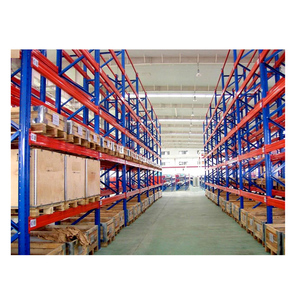
Explore heavy-duty stack racks, sheet metal roll-out drawers, teardrop industrial systems, and modular pallet racks manufactured from high-yield cold-rolled and hot-rolled structural steel profiles.
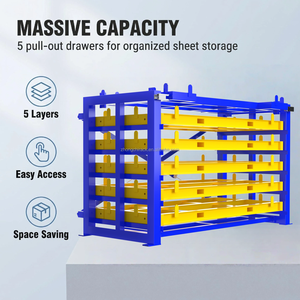
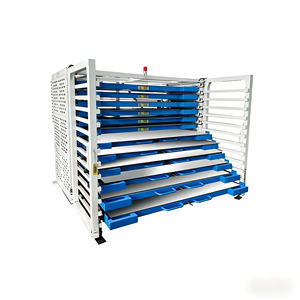
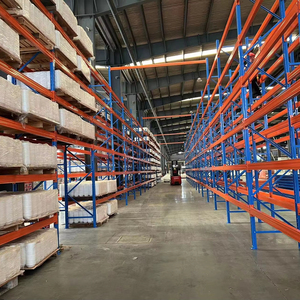
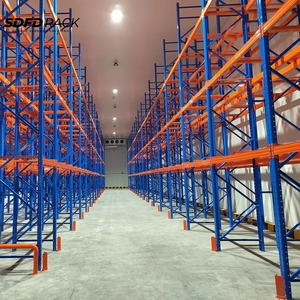
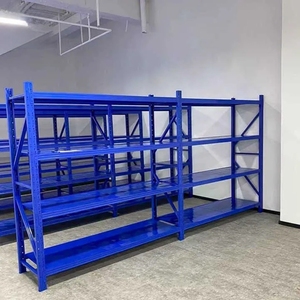
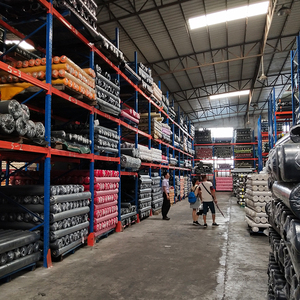
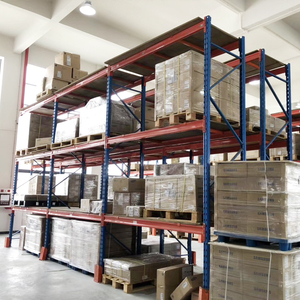
As premier Chinese industrial rack fabricators partnering with leading global brands such as UNARCO and Fortune 500 supply chains, our production complexes integrate nearly seven decades of collective manufacturing heritage with state-of-the-art cold-forming and automated welding equipment.
We do not broker generic steel; we engineer certified structural storage systems fabricated in strict compliance with Rack Manufacturers Institute (RMI / ANSI MH16.1) and European FEM 10.2.02 guidelines. Every batch of prime Q235B and high-yield Q355B coil undergoes spectral chemical verification, mechanical tensile profiling, and weld ultrasonics before entering roll-forming mills.
Our infrastructure encompasses multi-stage chemical pretreatment baths and continuous electrostatic polyester powder-coating lines, guaranteeing dry film thickness (DFT) between 60 to 90 microns with salt spray resistance exceeding 500 hours (ASTM B117), essential for maritime transit and cold chain operations.
Years of Collective Engineered Racking Heritage
ANSI MH16.1 & RMI Standard Verification
Metric Tons Annual Cold-Forming Capacity
Strict Structural Deflection Tolerance (L/200)
Every stack rack and pallet frame is mathematically validated under dynamic seismic forces (Ss and S1 spectral response accelerations). We tailor baseplate thickness and concrete anchor bolt embedment depths to ensure seismic resilience in high-risk zones.
State-of-the-art multi-stage washing, iron phosphating, and deionized water rinsing lines prevent sub-surface oxidation. Our computer-controlled reciprocal spray booths apply thermo-cured architectural powder finishes resistant to chipping and chemical splash.
From initial AutoCAD warehouse slotting layouts and lift-truck aisle optimization to structural calculations, containerized export nesting, and on-site engineering supervision, we deliver single-source accountability for multi-facility operations.
A rigorous examination of nesting geometry, dynamic load safety factors, metallurgical grain structures, and robotic automation integration transforming modern bulk storage logistics.
Heavy duty stack racks—often classified in international material handling literature as post pallets, manuracks, or portable nesting cradles—represent one of the most flexible alternatives to traditional anchored structural racking. Unlike static teardrop or boltless systems anchored permanently into slab concrete, stack racking utilizes a self-supporting, column-borne nesting design that transfers compressive forces through cup-and-cone interlocking interfaces.
In high-throughput industrial logistics, stack racking eliminates dead aisle space while providing dynamic vertical staging. When empty, these racks can be nested or dismantled with high return ratios (typically 4:1 to 7:1), drastically lowering backhaul freight expenditures and freeing valuable manufacturing floor square footage.
| Structural Parameter | Standard Commercial Stack Rack | Engineered Industrial Stack Rack | Heavy Roll-Out Sheet Metal Cassette |
|---|---|---|---|
| Primary Steel Grade | Commercial Quality Q195 / Q215 | Prime Low-Alloy Q235B / Q355B | Heavy Structural Channel (ASTM A36 / SS400) |
| Upright Wall Thickness | 1.8 mm – 2.5 mm Cold-Formed Tube | 3.0 mm – 4.5 mm Structural Tube | 5.0 mm – 8.0 mm Formed Plate / Structural C-Beams |
| Static Safety Factor | 1.65 : 1 (Minimal Buffer) | 2.0 : 1 to 2.2 : 1 (ANSI MH26.2 Compliant) | 2.5 : 1 (Craneway Dynamic Service Factor) |
| Nesting Interface | Stamped Sheet Cup Socket | Cast Steel Target Cone & Centering Cup | Precision Machined Linear Roller Guides |
| Max Permissible Stack | 3 High Static / 2 High Dynamic | 4 to 6 High Static / 3 High Dynamic | Multi-Tier Fixed Upright Frame |
| Surface Protection | Air-Dried Solvent Enamel | Electrostatic Thermoset Polyester (80µm DFT) | Industrial Polyurethane or Hot-Dip Galvanized |
The primary point of failure in sub-standard stack racking occurs at the interlocking cup interface during multi-tier stacking. If the cup flared angle does not match the post foot curvature precisely, dynamic point loading causes eccentric post buckling. Our factory utilizes high-strength forged or investment cast steel nesting cups designed with a 15-degree lead-in taper. This geometry forces the upper unit's column directly into the concentric center of the lower rack's upright, eliminating eccentric bending moments under maximum rated payloads (up to 3,000 kg per tier).
While roll-formed light-gauge tubing offers economic efficiency, heavy industrial manufacturing environments—such as automotive metal stamping, tire warehousing, and casting foundries—demand high resistance to fork-truck impact. Integrating high-yield structural tubing for vertical posts with continuous automated submerged arc-welded bases ensures high resistance against permanent lateral deflection, conforming to ANSI MH16.1 $L/200$ deflection thresholds.
Modern mega-distribution hubs are rapidly transitioning away from manual counterbalance forklifts toward heavy-payload Autonomous Mobile Robots (AMRs) and Automated Storage and Retrieval Systems (AS/RS). This transition imposes stringent manufacturing tolerances on stack racks. Dimensional deviations must remain within ±1.5 mm across all axes. Our robotic welding fixtures guarantee rigid parallelism, enabling robotic lifting pins and conveyor roller transfers to interface without system tripping or mispicks.
Strategic procurement metrics, carbon border compliance, nesting freight optimization, and modular supply chain resilience models governing international tenders.
With ocean shipping volatility, buyers prioritize portable stack racks offering high teardown or nesting ratios. Optimized demountable post racks allow over 280 units per 40ft High Cube container, reducing per-unit freight costs by up to 58% compared to rigid welded counterparts.
Procurement teams are shifting away from lowest-price purchasing toward whole-life asset analysis. Factoring in impact durability, powder coat longevity under harsh washdowns, and modular repairability yields lower lifecycle costs than lightweight steel alternatives.
European and North American ESG regulations mandate transparent carbon footprint auditing. Procurement contracts demand mill test certificates (EN 10204 3.1) showing high scrap ratios produced via Electric Arc Furnace (EAF) processing, preparing for CBAM compliance.
Modern distribution operations demand cross-functional storage that transitions seamlessly between internal warehouse stacking, intermediate transit trailers, and final assembly lines without re-palletization, eliminating redundant handling cycles.
Engineered technical answers to complex structural, safety, seismic, and logistical questions commonly raised by procurement directors and facility plant engineers.
Industrial stack racks and post pallets are primarily designed under the rigorous guidelines of the Rack Manufacturers Institute (RMI / ANSI MH16.1 and ANSI MH26.2) in the United States and FEM 10.2.02 / EN 15512 in Europe. Under these structural standards:
Dynamic verification combines empirical non-destructive proof testing with Finite Element Analysis (FEA) computer simulations:
Selecting between demountable (knock-down) and rigid all-welded configurations hinges on operational velocity, freight costs, and footprint constraints:
Unlike selective pallet racking that uses wide engineered anchor baseplates to distribute loads across large floor surfaces, stack racks concentrate the total cumulative weight of all stacked tiers onto four small corner target feet:
For example, a 4-tier stack of racks carrying 2,000 kg per level yields a total gross weight of 8,000 kg (approx. 17,600 lbs). Concentrated across four post feet with a 100 mm × 100 mm surface area, the localized punching shear stress on the concrete slab can exceed 1.96 MPa (285 psi).
Facility planners must verify that warehouse concrete compressive strength reaches at least 25 to 30 MPa (3,500 to 4,500 psi) and that slab thickness (minimum 150 mm to 200 mm reinforced) is structurally sufficient to prevent concrete spalling or punch-through failure.
Cold storage, blast freezer facilities (-30°C), and humid packaging environments accelerate condensation corrosion. We provide two primary engineered surface options:
To generate certified structural calculations, AutoCAD shop drawings, and an accurate factory quotation, please prepare the following technical parameters:
Collaborate directly with our certified structural racking engineers. Submit your warehouse layouts, load profiles, or custom dimensional specifications for free AutoCAD design, FEA structural validation, and competitive OEM factory pricing.