Engineering White Paper & Sourcing Authority
Transforming Spatial Economics via High-Density Heavy-Duty VNA Racking
A comprehensive architectural and engineering breakdown for industrial logistics directors, 3PL architects, and enterprise procurement specialists seeking maximum cubic utilization.
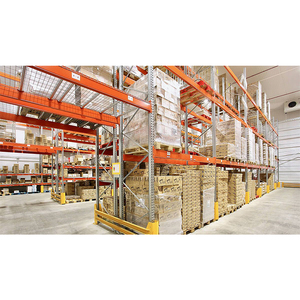
As real estate industrial land costs surge across North America, Europe, and Asia-Pacific, traditional selective pallet warehousing with wide aisles (3.5 to 4.2 meters) represents substantial unused cubic capacity. Very Narrow Aisle (VNA) pallet racking systems compress operating aisles down to 1.5 to 1.8 meters, reallocating redundant operational horizontal planes directly into storage capacity. This structural consolidation boosts facility footprint utilization by up to 40% to 50% over standard reach configurations, all while guaranteeing 100% selective accessibility to every single SKU pallet.
50%
Floor Footprint Optimization
18m
Maximum High-Bay Lifting Height
100%
RMI & FEM Standard Compliance
5,000kg
Heavy-Duty Bay Load Rating
Factory Direct Portfolio
Engineered Industrial Racking Systems & Heavy-Duty Configurations
Explore our high-performance heavy-duty VNA and industrial storage assemblies, precision manufactured to withstand extreme seismic loads and intense operational cycles.
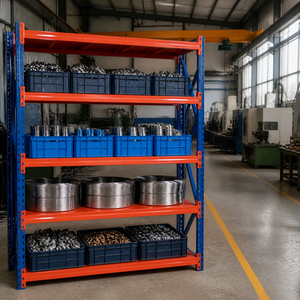
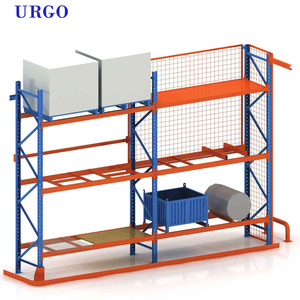
• Profile: High-Tensile Q235B / Q355B Steel
• Bay Capacity: Up to 4,500 kg / level
• Finish: Electrostatic Epoxy Powder Coat
Get a Quote
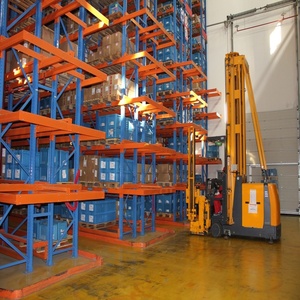
• Aisle Dimension: 1,500 mm - 1,800 mm
• Height Range: Up to 16,000 mm
• Guidance: Mechanical Rail / Wire Inductive
Get a Quote
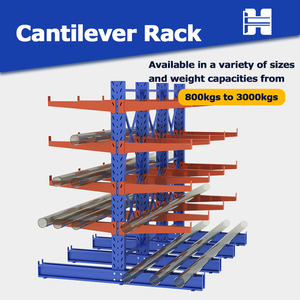
• Configuration: Pivot Arm Impact Safe
• Arm Capacity: 500 kg - 1,800 kg / Arm
• Application: Extrusions, Timber, Tubing
Get a Quote
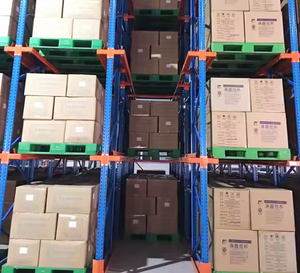
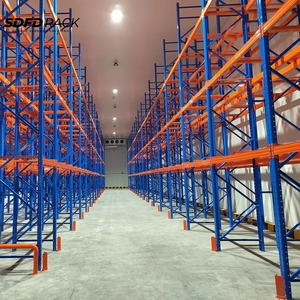
• System: High Density LIFO / FIFO
• Anti-Corrosion: Pre-Galvanized / Baked Powder
• Compliance: ANSI MH16.1 / RMI Standard
Get a Quote
• Upright Section: Up to 140 mm Heavy C-Profile
• Pitch Adjustment: 50 mm / 75 mm / 76.2 mm
• Seismic Zone: Engineered for Zones 1 to 4
Get a Quote
• Layering: 5 to 12 Storage Levels
• Compatibility: Man-Up / Man-Down VNA Turrets
• Safety: Integrated Run-Out Stops & Guide Rails
Get a Quote
• Connection: Boltless Teardrop Interlocking
• Beam Design: Step Beam with Safety Lock Pins
• Standard: RMI Tested & Certified Design
Get a Quote
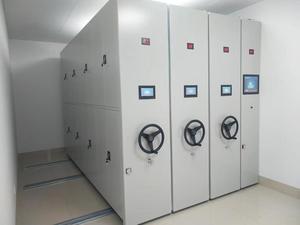
• Drive: Electric Smart Sensor / Mechanical Handwheel
• Track: Floor-Recessed Heavy Load Rails
• Protection: Infrared Anti-Pinch Safeguards
Get a Quote
Engineering Physics & Structural Architecture of Heavy Duty VNA Racking
Industrial heavy-duty VNA racking is fundamentally distinct from conventional static pallet racks due to the operational physics generated at vertical elevations exceeding 12 to 18 meters. In a standard warehouse, lateral upright deflection tolerances adhere to typical deflection values (often 1/200th of vertical height). However, when operating specialized VNA tri-lateral turret trucks or high-bay automated stacker cranes within a 1,600 mm aisle clearance, millimetric precision becomes a vital safety parameter.
1. Second-Order Structural Analysis (P-Delta Effects) & Cold-Formed Steel Dynamics
Our factory utilizes advanced finite element modeling (FEM) based on European standard EN 15512 and ANSI MH16.1 specifications. Because VNA systems carry structural heights up to 18 meters, second-order P-Delta effects (where vertical compressive loads interact with horizontal sway displacement) induce significant bending moments at lower column segments. We address this structural challenge by engineering custom omega-shaped and closed-box column profiles cold-rolled from high-grade Q355B (equivalent to ASTM A572 Grade 50) steel coil.
Slab Floor Levelness (DIN 18202 & TR34 Fmin)
Turret mast sway magnifies floor irregularities proportionally to mast height. We supply specialized high-modulus shims and anchorage profiles to ensure compliance with strict superflat floor specifications.
Integrated Low-Profile Guide Rail Geometry
Custom structural angle iron (typically 100×75×10mm or 120×80×10mm) or wire guidance inductive systems anchor with sub-millimeter concentricity to ensure high-speed, crash-free transit.
Portal Top-Ties & X-Braced Backstop Towers
To resist torsional sway forces without restricting forklift access, our layouts integrate top portal bracing trusses and back-to-back run spacers, increasing torsional stiffness by up to 340%.
Comparative Technical Engineering Matrix
Understanding the mechanical differences between warehouse racking configurations enables structural designers and supply chain executives to balance CAPEX against square-meter operational throughput.
| Storage System Type |
Aisle Clear Width (mm) |
Max Storage Height (m) |
Floor Space Efficiency |
SKU Selectivity Ratio |
MHE Investment Level |
| Heavy Duty VNA Pallet Racking |
1,500 – 1,800 mm |
Up to 18.0 m |
90% – 95% (Extreme) |
100% Direct Access |
Moderate to High (VNA Turret) |
| Standard Selective Pallet Racking |
3,200 – 4,000 mm |
Up to 11.0 m |
40% – 50% (Standard) |
100% Direct Access |
Low (Standard Counterbalance) |
| Drive-In / Drive-Thru Racking |
Forklift-width channels |
Up to 10.0 m |
75% – 85% (High LIFO) |
Low (Bulk SKUs only) |
Low to Moderate (Standard Reach) |
| Push-Back Cart Racking |
2,800 – 3,200 mm |
Up to 8.0 m |
70% – 75% (Medium LIFO) |
Medium (Lane Level Only) |
Standard Counterbalance |
| High-Bay AS/RS Crane Structure |
1,300 – 1,500 mm |
Up to 40.0 m |
98% (Maximum Vertical) |
100% Automated Access |
High (Automated Cranes & WCS) |
Future Procurement Trends in Heavy-Duty VNA Storage (2025–2030)
Procurement workflows for heavy industrial logistics equipment are moving past rudimentary price-per-kilogram steel metrics. Forward-looking warehouse operations evaluate lifecycle performance, total cost of ownership (TCO), and automated compatibility. We have identified four transformative purchasing shifts shaping corporate tenders globally:
1. Convergence of VNA & Autonomous Mobile Robots (AMRs)
Global fulfillment centers are rapidly pairing static VNA structural high-bays with autonomous narrow-aisle AGVs. Buyers now mandate ultra-tight cross-aisle tolerances and non-reflective powder coats that interface cleanly with onboard optical LiDAR and laser navigation targets.
2. Decarbonized Steel & EPD Environmental Certifications
Multinational enterprises require Environmental Product Declarations (EPDs) demonstrating low embodied carbon. Manufacturing facilities powered by industrial solar arrays, utilizing closed-loop water treatment and low-VOC powder coating, hold a decisive competitive advantage in overseas public tenders.
3. Real-Time Structural Health Monitoring (IoT Sensors)
Future high-bay systems increasingly integrate wireless strain-gauge sensors inside lower column bases. These IoT systems instantly detect structural deflection, anchor looseness, or accidental forklift impacts, transmitting safety alerts straight to facility maintenance dashboards.
Technological & Metallurgical Evolution of VNA Rack Manufacturing
The manufacturing of heavy-duty industrial shelving has advanced from basic manual stamping presses into precision, automated roll-forming lines. Producing cold-formed steel uprights up to 18 meters long without cumulative twisting or longitudinal camber requires exacting metallurgical quality control.
Continuous 28-Pass Roll Forming & Precision Micro-Alloy Steels
Traditional upright manufacturing often produces internal stress gradients when forcing heavy-gauge steel (up to 3.0mm thickness) through high-speed shaping stations. Our high-precision production lines leverage continuous 28-pass roll-forming dies. By gradually shaping the cold-rolled strip steel at controlled velocities, the material retains its ductile integrity while yield strength jumps significantly.
Surface Durability: Multi-Stage Automated Pre-Treatment & Epoxy Finishing
Surface protection directly dictates installation longevity, especially across pharmaceutical temperature-controlled cold rooms and maritime coastal warehouses. Our manufacturing operations utilize a continuous 7-stage chemical pre-treatment cycle comprising hot alkaline degreasing, acid rust conversion, nano-ceramic silane bonding, and multi-stage deionized water rinsing. The electrostatically applied thermo-cured epoxy powder delivers a minimum finish thickness of 70 to 90 microns, reliably resisting abrasion and corrosion during decades of heavy pallet contact.
Manufacturing Authority & Enterprise Factory Advantages
Leveraging our robust manufacturing foundation, advanced engineering resources, and decades of racking expertise, we deliver world-class storage solutions tailored to demanding industrial requirements worldwide.
RMI & European Standard Compliance
Every racking system is calculated and detailed in strict accordance with Rack Manufacturers Institute (RMI / ANSI MH16.1), FEM 10.2.02, and EN 15512 international quality standards, ensuring predictable structural integrity.
Comprehensive In-House Engineering & PE Stamping
Our dedicated structural engineering department conducts 3D finite element stress simulations, site-specific seismic base calculations, and anchor bolt pull-out assessments for complex industrial installations.
Multi-Million Dollar Automated Finishing Lines
Our facilities house multi-stage robotic electrostatic powder coat lines. This delivers salt-spray resistance exceeding 500 hours, uniform film thickness, and rich visual appeal across high-throughput commercial centers.
End-to-End Accountable Project Management
From initial DWG/CAD architectural layouts to container export logistics, custom palletizing, and on-site assembly supervision, we supply a single, reliable point of contact for international EPC contractors.
Engineered Impact Protection Ecosystems
We supply reinforced wrap-around column protectors, heavy structural bullnose aisle-entry shields, and dual-anchor floor shoes that safeguard upright bases against operational turret truck forces.
Versatile Product System Configurations
Our production capability covers structural channel racks, roll-formed teardrop profiles, heavy-duty cantilever systems, and multi-tier mezzanine decks from a unified, quality-controlled source.
Expert Technical FAQ
Frequently Asked Questions on Heavy Duty VNA Racking Procurement
In-depth structural, logistical, and architectural answers tailored for procurement teams and project managers.
What warehouse floor flatness standard is required for high-bay VNA installations?
High-bay VNA racking systems require specialized floor flatness tolerances to avoid mast lean and equipment collision. According to the Concrete Society's Technical Report 34 (TR34), installations under 13 meters require a minimum DM2 classification, while systems between 13 and 18 meters demand Category Fmin 100 or Superflat (DM1) standards under DIN 18202. If the concrete slab exhibits localized variations, high-strength structural grout and millimetric steel base-shim plates must be installed beneath each upright baseplate to guarantee vertical upright alignment.
What are the differences between mechanical steel guide rails and inductive wire guidance?
Mechanical Guide Rails: Utilize heavy structural steel angle iron (such as 100×75×10mm) anchored along the base of every rack run. Guide rollers on the turret truck make physical contact with the steel rail, providing mechanical steering inside the aisle. This option has lower MHE system costs, offers physical impact shielding to the bottom of the uprights, but requires floor anchoring and regular anchor checks.
Inductive Wire Guidance: Involves cutting a narrow, shallow trench down the aisle center to embed a low-frequency guide wire beneath epoxy sealant. Sensors on the turret truck track this electromagnetic frequency to steer automatically. Wire guidance leaves the floor surface clean and uncluttered for picking, eliminates tripping hazards, but requires specialized MHE sensor packages and an uninterrupted power signal.
How do seismic zone accelerations (Ss, S1) influence VNA rack column profiles?
In regions subject to seismic hazards, seismic base shear forces and overturning moments scale dramatically with rack height. According to RMI ANSI MH16.1 and IBC (International Building Code), seismic design requires verifying upright baseplate surface areas, anchoring depths, beam-to-column connector torsional stiffness, and horizontal back-bracing systems. For Seismic Design Categories C through E, we routinely specify heavy 120mm to 140mm wide-flange uprights, closed-box section welding, reinforced anchor baseplates with 4 to 6 anchor bolts per column, and dual cross-aisle portal bracing beams.
Can VNA racking configurations be adapted into Automated Storage & Retrieval Systems (AS/RS)?
Yes. Modern VNA rack designs serve as an ideal stepping stone toward full automation. By replacing manual man-up or man-down turret trucks with automated stacker cranes or narrow-aisle AGVs, existing upright and beam geometries can be converted directly into an automated facility. However, our engineering team must account for crane run-out tolerances, top guide rail brackets, optical sensor targets, and integrated pallet backstop stops during initial manufacturing design.
What key structural and pallet data are needed to request an accurate quotation?
To prepare an optimized CAD layout, loading calculation, and formal proposal, please provide:
- Detailed architectural drawings (DWG/PDF) indicating building column grids, clear ceiling height, slab thickness, and overhead sprinkler/lighting drops.
- Pallet dimensions (Width × Depth × Overall Height including cargo) and maximum pallet weight ratings.
- Turret truck or MHE model cut-sheets (specifying overall chassis width, reach heights, and cabin lift profile).
- Warehouse project location (to cross-reference local building codes, soil categories, and seismic acceleration maps).
Ready to Optimize Your Warehouse Spatial Economics?
Consult directly with our senior structural racking engineers. Receive customized 3D CAD design layouts, structural capacity calculations, and transparent factory-direct pricing within 24 hours.