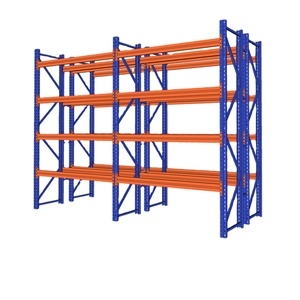
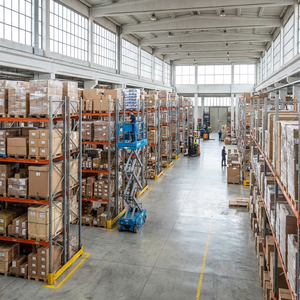
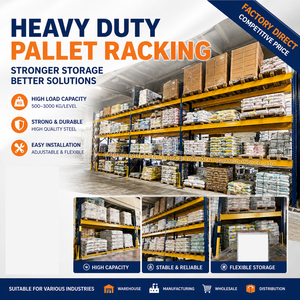
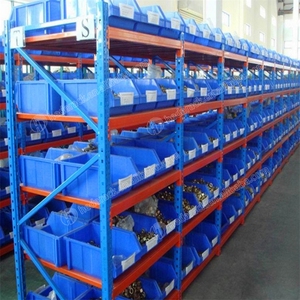
Engineering Whitepaper: Next-Generation Heavy Duty Collapsible & Structural Pallet Racks
Modern global logistics networks face continuous operational strain: soaring square-footage costs, accelerated automated transit tempos, stringent municipal seismic safety codes, and aggressive carbon offset goals. Within this complex landscape, heavy duty pallet racking has ceased to be passive structural furniture. It has evolved into a dynamically engineered backbone of global supply chain infrastructure. Specifying storage solutions today requires understanding metallurgy, structural engineering, and dynamic material flow analysis.
As a leading premier China manufacturer of structural and roll-formed warehousing storage systems, our facility incorporates almost seven decades of structural engineering lineage into high-capacity storage designs. Certified under strict ANSI MH16.1 specifications established by the Rack Manufacturers Institute (RMI), our manufacturing plants deploy advanced high-tensile structural cold-formed profiles, hot-rolled structural steel shapes, and patented collapsible connection details optimized for international multi-modal container transport.
1. Structural vs. Roll-Formed Steel Pallet Racks: The Metallurgical Assessment
A primary consideration in industrial warehouse architecture is balancing impact endurance against seismic dead-weight and freight economics. Standard industrial racking typically adopts one of two fundamental manufacturing methods: cold-formed roll-formed sections or heavy structural C-channels.
| Performance Dimension | Roll-Formed Teardrop Configurations | Structural Channel (Hot-Rolled) | Hybrid Collapsible Heavy-Duty Modular |
|---|---|---|---|
| Yield Strength Standard | ASTM A1011 / Q235B / Q355B (Cold-rolled) | ASTM A36 / Structural C-Channel | Q355 Structural Box Section + Bolted Node |
| Forklift Impact Resistance | Moderate; requires deflector shields | Extreme; resilient to continuous impacts | High; built with reinforced structural bottom uprights |
| International Freight Volume | Standard knock-down components | Bulky; higher shipping costs | Optimized flat-pack packing density |
| Reconfiguration Agility | Instant slotless adjustability | Bolted joints; requires structural re-torque | Precision slip-interlock with safety locking pins |
| Primary Application | Retail, FMCG, E-Commerce Distribution | Freezers, Heavy Manufacturing, Raw Materials | Multi-tenant 3PL, Scalable Automated Hubs |
When engineering collapsible heavy-duty pallet racks for international procurement, our R&D team mitigates classical bolted frame wear by utilizing robotic seam-welded base assemblies, high-tensile Grade 8.8 structural connections, and integrated heavy column wraps. These features safeguard the bottom 48 inches of the upright frame, where 88% of reach-truck and counterbalanced forklift impact damage occurs.
2. Seismic Resilience: Site-Specific Dynamic Simulation
Racking structures installed across North America, Europe, Australia, and seismic-active regions across South America must withstand dynamic lateral and longitudinal earth acceleration forces. In accordance with updated International Building Code (IBC) guidelines and AS4084 requirements, structural rack engineering requires finite element modeling (FEM) based on actual project site geographic data.
Our engineering services review critical design parameters: concrete slab compressive rating (f'c), minimum slab anchor depth embedment, effective versus nominal bolt anchorage, and total live-load mass amplification. This analytical rigor prevents progressive post-buckling systemic frame collapse during dynamic ground shift cycles.
3. Surface Treatment Metallurgy: Environmental Longevity
Corrosion mitigation directly dictates the operational lifecycle of industrial racking, especially in cold storage installations, marine-proximate hubs, and chemical logistics facilities. Our facility operates high-capacity automated, multi-stage pretreatment powder coating production lines.
The automated finishing process integrates shot-blasting to achieve standard surface cleanliness, hot-water rinse cycles, zinc-phosphate conversion micro-coating, and high-voltage electrostatic deposition of thermoset polyester epoxy resins. The curing ovens operate under calibrated thermal tracking to guarantee a uniform dry-film thickness of 70 to 110 microns. This protects against impact, chemical exposure, scratching, and oxidation across diverse warehouse operating environments.
Global Procurement Trends for Heavy-Duty Racking Systems
Procurement teams are shifting away from standalone component buying toward turnkey engineering and data-driven material handling installations. Major shifts driving modern capital investments include:
ASRS & AMR Compatibility
Tighter manufacturing tolerances are mandatory. Automated Storage & Retrieval Systems (AS/RS) require frame deflection deviations below 1/1000th of system height to ensure autonomous load crane alignment.
In-Situ Frame Repair Modules
Facility operators prefer modular, bolt-on upright repair systems rather than completely replacing unloaded upright bays, minimizing operational downtime.
Cradle-to-Grave Traceability
Large cross-border buyers require documented structural steel coil test certifications (MTCs), complete ultrasonic weld testing, and measurable CO2 lifecycle impact data.
Future Technology Trends: Warehouse Storage Evolution (2025–2035)
The industrial storage industry is undergoing significant transformation driven by automation, material science, and real-time structural monitoring:
1. Smart Racks with Integrated IoT Telemetry: Future heavy-duty racking frames will feature integrated strain-gauge sensors and edge-computing micro-accelerometers. These systems monitor operational loads in real time, alerting operations teams if human forklift impacts compromise column stability, or if localized bays exceed rated working load limits.
2. Advanced Ultra-High-Strength Micro-Alloy Steels: Leveraging advanced high-yield micro-alloyed automotive-grade steels enables lighter profile cross-sections with increased structural load capabilities. This material reduction reduces freight dead-weight, cuts ocean shipping logistics emissions, and maintains strict structural safety margins.
3. Autonomous Mobile Robot (AMR) Micro-Fulfillment Layouts: Fixed, single-selective wide-aisle storage configurations are transitioning toward modular, dynamic, low-bay collapsible rack systems that integrate with autonomous picking fleets, combining high-density pallet cube staging with agile floor-level order fulfillment.