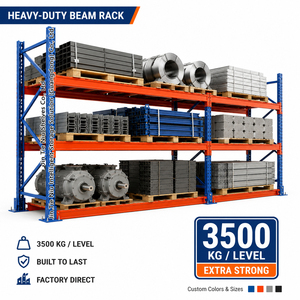
3500kg Extra Strong Industrial Steel Coil Motor Storage Heavy Duty Beam Pallet Warehouse Rack
High-integrity box-beam configuration specifically calculated for point-load resistance and dense motor component staging.
Explore heavy-duty pallet systems manufactured with Q235B/Q355B high-tensile structural steel, multi-stage automated powder coating, and precision robotic welding.
High-integrity box-beam configuration specifically calculated for point-load resistance and dense motor component staging.
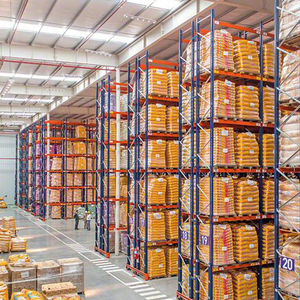
Cost-efficient modular roll-formed teardrop and slotted upright frames optimized for flexible beam placement and bulk palletization.
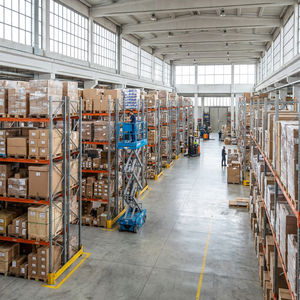
Engineered for intense throughput distribution hubs requiring direct pallet selectivity and full seismic anchorage compliance.
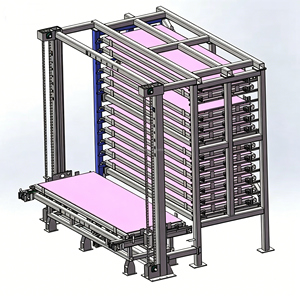
Ergonomic pull-out drawer racking solution for sheet metal bundles, heavy dies, and semi-automated tooling accessibility.
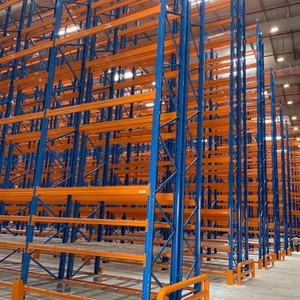
Bespoke upright column punching and custom profile dimensions built strictly according to facility CAD blueprints and load charts.
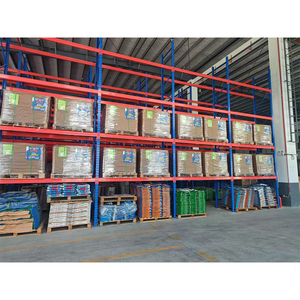
Precision vertical engineering reaching up to 18+ meters; reduces operating aisle widths by 45% for high-density cubic storage.
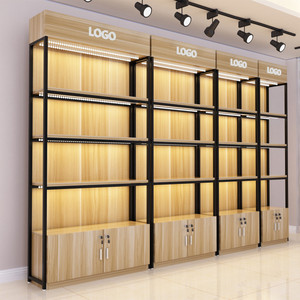
Hybrid structural steel frame and architectural millwork designed for front-end industrial cash-and-carry retail environments.
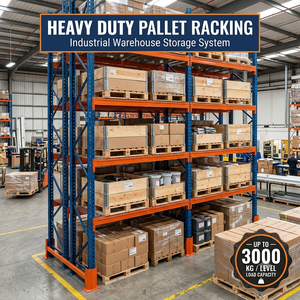
Reinforced 4-hook beam connectors with integrated gravity safety locking pins for seismic vibration dampening and load safety.
In modern high bay intralogistics, vertical rack deflection, seismic baseplate kinematics, and metallurgical durability represent critical criteria for safe facility management.
Specifying high-bay storage configurations exceeding 12 meters in height demands precise evaluation of beam-to-column connector rigidity, rotational stiffness, and ground floor anchoring tolerances. As a leading manufacturer and direct global exporter, our engineering facilities utilize advanced Finite Element Analysis (FEA) to simulate static vertical loads, asymmetric point loading, and seismic acceleration forces.
Industrial racking systems generally diverge into two primary manufacturing methods: Hot-Rolled Structural Channel Steel and Cold-Formed Roll Steel. Structural steel channels provide unmatched impact resilience in harsh distribution hubs with high forklift traffic. Conversely, precision roll-formed teardrop profiles deliver outstanding modular versatility, optimal strength-to-weight ratios, and rapid reconfiguration capabilities across dynamic e-commerce fulfillment hubs.

| Storage Racking System | Typical Bay Height | Pallet Selectivity | Floor Space Utilization | Forklift Compatibility | Standard Load Class |
|---|---|---|---|---|---|
| Selective Pallet Rack | Up to 12.0 Meters | 100% Direct Access | 35% - 40% Floor Area | Standard Counterbalance, Reach Truck | 1,000 kg – 3,500 kg / Level |
| Very Narrow Aisle (VNA) | Up to 18.5 Meters | 100% Direct Access | 55% - 65% Floor Area | Guided VNA Man-up / Turret Trucks | 1,500 kg – 3,000 kg / Level |
| Drive-In / Drive-Thru | Up to 11.0 Meters | LIFO / FIFO (Batch) | 70% - 80% Floor Area | Reach Trucks entering internal rails | 1,000 kg – 2,000 kg / Pallet |
| High Bay AS/RS Structure | Up to 40.0 Meters | Automated Matrix | 85% - 90% Floor Area | Automated Crane Stacker, Shuttles | 500 kg – 2,500 kg / Location |
Strategic logistics planning requires supply chain executives to anticipate structural integration demands over the next decade.
Procurement teams are shifting capital investments away from static manual selective racking toward tight-tolerance automated racks. High bay structural systems must meet sub-millimeter beam deflection (L/300 or L/500) to support robotic crane stackers and 4-way automated pallet shuttles without clearance errors.
Soaring land acquisition and industrial construction costs have fueled the rise of clad-rack architectures. In this construction model, the high bay racking system acts as the primary structural skeleton supporting building roof purlins and wall panels, eliminating conventional structural columns and slashing construction schedules by 30%.
Next-generation heavy-duty high bay facilities are integrating continuous structural health monitoring. Smart strain-gauge sensors and IoT collision transmitters mounted on vulnerable aisle uprights notify safety managers of forklift impacts, joint micro-fatigue, and weight overload risks in real-time before structural failure occurs.
Global carbon border adjustment mechanisms (CBAM) and corporate ESG mandates necessitate sustainable metallurgical tracking. High-end exporters prioritize high-recycled-content electric arc furnace (EAF) steel and solvent-free, heavy-metal-free electrostatic powder coatings that resist corrosive salt-fog exposure during ocean freight transit.
Global warehouse operators standardize warehouse footprints across multinational locations. Specifying universal hole-pitch geometries (such as 50mm, 75mm, or 76.2mm teardrop configurations) protects against proprietary component lock-in, enabling swift expansion and interchangeability of drop-in wire decking and cross-bars.
The explosive expansion of global perishable logistics requires heavy-duty racking designed specifically for -30°C temperature ranges. Steel microstructures must undergo Charpy V-notch impact testing to ensure zero cold-embrittlement cracking in high bay uprights subjected to heavy dynamic forklift loading.
Combining state-of-the-art automated machinery with over seven decades of engineered pallet rack design principles.
Selecting an international racking supplier requires confidence in technical fabrication integrity and lifecycle reliability. Our facilities deliver industrial warehouse systems engineered to the highest safety margins.
Expert answers addressing structural design codes, sea freight optimization, concrete anchorage, and safety compliance.
Our heavy-duty industrial storage systems are engineered and fabricated in strict conformance with major global racking codes. For North American projects, systems comply with the Rack Manufacturers Institute (RMI) specification ANSI MH16.1. For European and British Commonwealth projects, calculations adhere to EN 15512 (Steel static storage systems – Adjustable pallet racking systems – Principles for structural design) and FEM 10.2.02. Australian and New Zealand installations follow AS 4084:2023 design requirements.
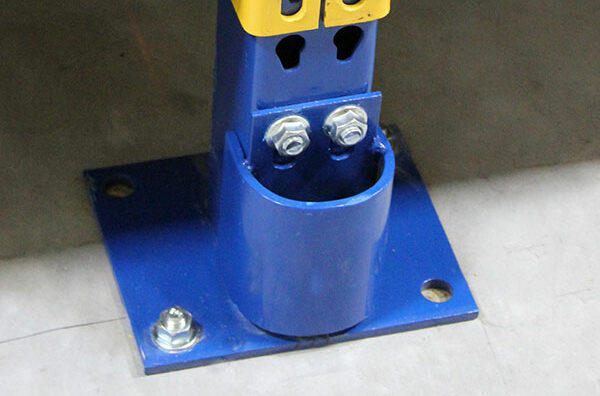
The concrete foundation acts as an integral element of the racking load path. To transfer vertical axial loads and seismic overturning moments safely, minimum slab thickness (typically 150mm to 250mm, with compressive strength ≥ 25–30 MPa) is required. The design must distinguish between nominal drill embedment and effective anchor embedment depth to prevent concrete cone breakout failures during seismic acceleration or forklift impacts.
Hot-rolled structural channel racking is manufactured from solid C-channel steel shapes assembled with high-tensile Grade 5 bolts. It delivers superior resistance against repetitive forklift collisions, making it the premier choice for drive-in aisles, refrigerated facilities, and harsh cross-dock centers. Roll-formed racking is continuous cold-rolled from high-grade steel coils; it offers a lighter footprint, cost-effective shipping, tool-less teardrop adjustments, and exceptional versatility for high-density selective storage.
High bay uprights often exceed standard 40ft High Cube container lengths (12.03 meters). To optimize ocean freight efficiency and lower shipping costs, our engineering team designs precision bolted frame splice joints. Splice locations are calculated at points of minimal bending moment (inflection points), reinforced with internal heavy-gauge sleeve plates. Bundling configurations utilize customized steel strapping and wood dunnage to prevent transit deflection and paint abrasion.
To produce an engineered CAD layout and load matrix, we recommend providing: 1) Building CAD floor plans detailing column grids, clear ceiling height, and floor joints; 2) Pallet specifications (width, depth, overall height including cargo, and maximum gross weight); 3) Inventory velocity and pallet turnover requirements; 4) Forklift specifications (minimum turning radius, mast lift height, collapsed mast height); 5) Project geographic location for local seismic coefficient (Ss, S1) calculations; 6) In-rack sprinkler pipe clearance allowances.
Consult with our structural engineering team today to review your project blueprints, calculate bay load profiles, and optimize storage density within international safety standards.
Get a Quote