Industrial Bin & Heavy Duty Warehouse Storage Catalog
Explore precision-engineered structural racking and automated picking units tailored for high static tolerance, inventory selectivity, and seamless operations.
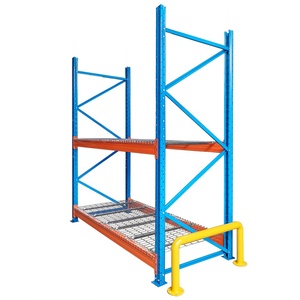
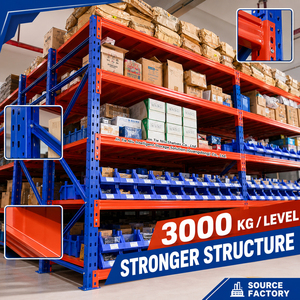
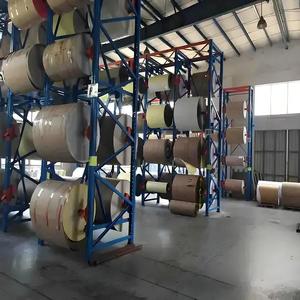
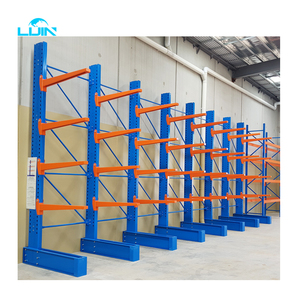
Engineering Authority: Precision Manufacturing & Structural Integrity
A rigorous industrial perspective on structural design, yield limits, and high-density warehouse storage systems.
Modern distribution complexes, high-velocity e-commerce fulfillment hubs, and heavy industrial staging areas demand storage infrastructure that extends beyond conventional static shelving. Selecting a strategic vendor among China wholesale heavy duty bin storage racking manufacturers and exporters requires analyzing structural steel engineering, cross-sectional mechanical properties, seismically certified frame geometries, and long-term yield tolerances. From custom multi-tier pick modules and heavy-duty roll-formed pallet racking to automated radio shuttle systems and specialized cantilever setups, structural integrity dictates warehouse throughput and workplace safety.
As industry veterans with engineering pedigrees spanning nearly seven decades, our manufacturing philosophy aligns directly with current Rack Manufacturers Institute (RMI) ANSI MH16.1 specifications. When engineering storage racks for bin-based assembly lines, carton flow operations, or dense pallet staging, mechanical yield strength remains the baseline metric. We fabricate upright frames using certified cold-formed high-tensile steel coils and structural hot-rolled channels (Q235B and high-yield Q355B grade equivalents). This material selection ensures resilient stability against dynamic forklift impacts, seismic torsional shears, and heavy static layer loads exceeding 3,000 kg per level.
| Racking Architecture | Material Engineering Profile | Layer Load Range | Primary Industrial Application | System Compliance |
|---|---|---|---|---|
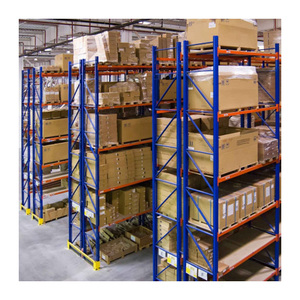
| Structural Heavy-Duty Selective | Hot-rolled structural channel / Grade Q235B-Q355B | 1,500 – 5,000 kg / level | High-throughput distribution hubs, bulk pallet staging | RMI ANSI MH16.1 / EN 15512 |
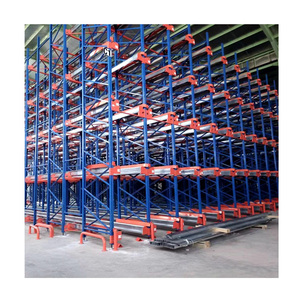
| Automated Four-Way Shuttle | Precision cold-rolled profiles ±0.5mm tolerance | 1,000 – 2,000 kg / pallet | Cold storage, dense staging, automated buffer zones | FEM 10.2.02 / CE ISO 9001 |
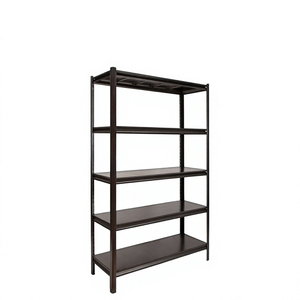
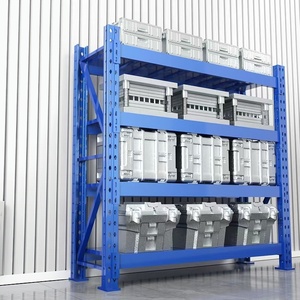
| Boltless Industrial Longspan | Interlocking step beam / Steel panel decking | 300 – 1,000 kg / shelf | Manual bin-picking, split-case fulfillment, tool cribs | AS 4084 / OSHA Safety Guides |
| Heavy Industrial Cantilever | Tapered column & pinned structural arm assemblies | 1,000 – 6,000 kg / arm | Pipe profiles, structural lumber, sheet raw materials | AISC 360 / RMI Standards |
Procurement & Technology Trends in Industrial Racking
Strategic transformations driving warehouse investments: automation compatibility, seismic resilience, and sustainable anti-corrosion chemistry.
Convergence with Shuttle Automation
Global logistics centers are retrofitting traditional deep-lane racking into automated shuttle environments. Racking frames are engineered with tight deflection tolerances to accommodate autonomous vehicles, robotic shuttle tracks, and sensor-driven material handling workflows.
Site-Specific Seismic Engineering
Global procurement teams now require site-specific structural verification rather than generic load tables. Upright base plates, anchoring embedments, and braced upright columns are engineered according to IBC and Eurocode 8 seismic acceleration values.
Thermoset Architectural Powder Lines
Exported warehouse racking faces varying humidity levels and mechanical abrasion. High-capacity automated finishing lines apply zinc-rich electrostatic epoxy primers followed by cured thermoset polymer coatings, delivering durable corrosion protection.
Procurement teams are prioritizing life-cycle ROI over initial component acquisition pricing. The total cost of ownership (TCO) for heavy-duty bin and pallet racking systems correlates directly with damage containment, beam adjustment modularity, and interchangeability. Incorporating heavy-duty column reinforcements, straddle protectors, and precision-punched teardrop or hook connections allows operations to reconfigure shelf elevations dynamically as product packaging evolutions take place across SKUs.
Engineering Advantages: Enterprise Manufacturing Capacity
Built upon nearly 70 years of manufacturing lineage, supporting Fortune 500 enterprises with verified quality controls.
Dual Production Ecosystem
Operating structural hot-rolled lines alongside high-speed continuous roll-forming mills, delivering hybrid systems from a single manufacturing source.
Structural Simulation & Testing
Every beam-to-frame connector, base plate assembly, and shelf deck undergoes finite element analysis (FEA) and physical cycle testing to verify failure mode thresholds.
Multi-Million Dollar Finishing
Automated powder coating lines utilize multi-stage chemical pre-treatment and electrostatic spray booths, ensuring adhesion across interior channels.
Dedicated Project Management
Professional engineering support manages the workflow from structural design through container consolidation, export documentation, and on-site assembly oversight.
Procurement & Engineering FAQ
Key technical answers regarding overseas shipping, anchor design, capacity ratings, and compliance.
Q1: How are load capacities calculated and certified for custom export projects?
Capacities are calculated using cold-formed and structural steel design standards under ANSI MH16.1, FEM 10.2.02, or AS 4084 methodologies. Calculations consider unbraced upright frame lengths, beam section moduli, maximum allowable frame deflection (L/180 or L/240), and specific concrete compressive strength limits.
Q2: What is the mechanical difference between roll-formed and structural steel racking?
Roll-formed steel is cold-shaped from coiled sheet steel, creating a lightweight, adaptable, and cost-effective system ideal for standard selective storage. Structural racking is hot-rolled from structural channel iron with bolted connections, offering superior impact resistance for high-abuse, drive-in, or heavy manufacturing environments.
Q3: Can custom bin storage racking be adapted to automated picking systems later?
Yes. By specifying precision upright punch pitches, rigid beam connector clips, and tight manufacturing tolerances during initial engineering, bin racks can be upgraded with automated carton flow tracks, pick-to-light hardware, or autonomous mobile robot (AMR) interfaces.
Q4: How does floor slab quality affect racking design and anchor embedment?
Anchor bolt performance relies on the slab depth, rebar reinforcement grid, and compressive strength (typically 3,000 to 4,000 PSI minimum). We specify nominal versus effective anchor embedments to prevent shear cone pullout and spalling under lateral loading.
Q5: What measures prevent cargo damage and corrosion during ocean transport?
Racking components are bundled with protective corrugated interleaving, wrapped in heavy polyethylene moisture-barrier film, steel-strapped with corner protectors, and securely blocked in shipping containers to prevent shifting and surface abrasion during ocean transit.
Q6: Can different manufacturer components be combined on existing racking?
While many teardrop patterns are physically interchangeable, mixing components from different manufacturers can compromise structural certifications and void load warranties. Structural engineering validation is required to certify composite capacities safely.
Engineering Your High-Density Storage Architecture
Consult with our structural engineering team to review building CAD files, seismic considerations, capacity profiles, and direct-export schedules.
Send an Inquiry