High-Capacity Industrial Racking Systems & Shelving
Fabricated with strict alignment to RMI (ANSI MH16.1) international engineering guidelines and ISO cold-formed steel manufacturing standards. Explore our core wholesale export selection configured for international third-party logistics, heavy equipment distribution, and modern e-commerce fulfillment hubs.
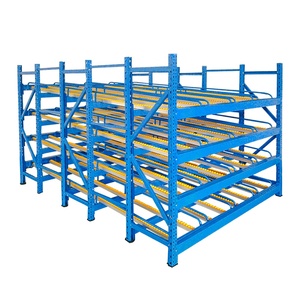
Furniture Factory Storage Push Back Roller Rack Shelving FIFO Carton Flow Rack System
Combines dynamic gravity roller tracks and split-case carton flow picking channels for pristine stock rotation and rapid piece picking.
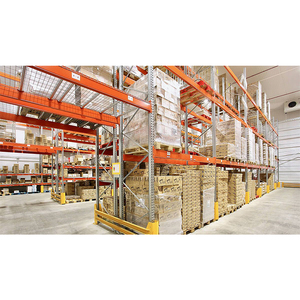
Very Narrow Aisle Storage System Reach Truck Warehouse Solution Space Saving VNA Rack
Ultra-dense storage layout utilizing guided rail or wire-guided reach trucks to condense working aisle widths down to 1.6 meters.
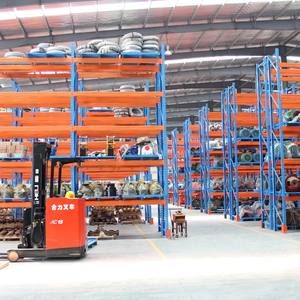
Best Selling Customized Warehouse Drive in Rack Steel Pallet Racking System Heavy Duty Industrial Warehouse Steel Rack
High-density LIFO/FIFO deep-lane racking engineered for uniform SKUs, cold chain refrigeration storage, and heavy pallet consolidation.
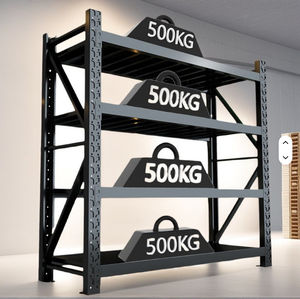
Mracking Industrial Light Duty Durable Steel 5 Adjustable Snap-In Storage Racks Longspan Shelving Powder Coating Garage
Boltless step-beam snap-in structure delivering flexible pitch adjustability, scratch-resistant powder coat, and heavy manual load storage.
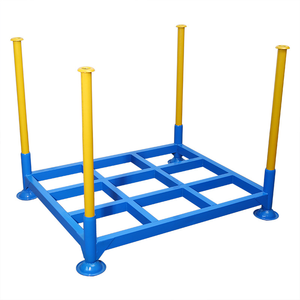
Factory Direct Hot Sale Customized Corrosion Protection Steel Warehouse Stacking Rack Foldable Storage Pallet Rack
Galvanized anti-corrosion post-pallet racking designed for dynamic seasonal stock holding, stackable tiered placement, and compact foldability.
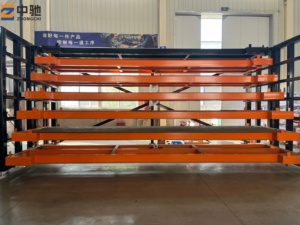
High Load Capacity 8-Layer Anti-Rust Powder Coated Steel Rack Heavy Duty Warehouse Storage System for Industrial Pallet Use
Reinforced column uprights paired with heavy box beams engineered to support continuous unit multi-tier pallet loads up to 4500 kg per bay.
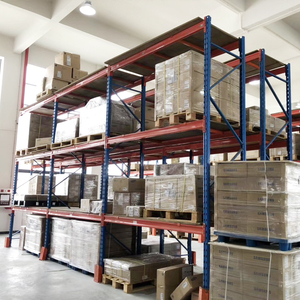
Heavy Duty Storage Equipment Steel Warehouse Rack For Industrial Material Storage
Universal industrial profile utilizing Q235B/Q355B certified steel, designed for heavy machinery parts, automotive components, and die tooling.
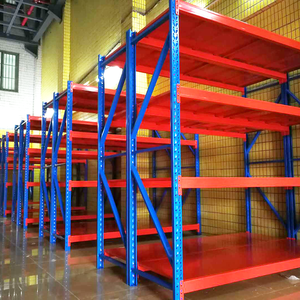
Narrow Aisle 300kg Load 5 Layer Adjustable Rack for High-Density Warehousing
Precision longspan shelving featuring 5 adjustable layers for hand-loaded bins, pharmaceutical cartons, and high-SKU distribution logistics.
Years of Engineering Pedigree & Manufacturing Excellence
RMI / ANSI MH16.1 & FEM Design Specification Compliance
Maximum Custom Load Rating Per Shelf Level Under Uniform Strain
Trusted Strategic Supplier to Global Multinationals Across 65+ Countries
The Evolution of Heavy Duty Longspan Racking in Global Supply Chains
As global distribution operations navigate soaring warehouse leasing rates, seismic vulnerabilities, and the surge of automated guided vehicle (AGV) integration, purchasing decisions have shifted from superficial cost-per-bay comparisons to structural lifecycle optimization. Heavy-duty longspan racking and selective systems now represent the structural baseline of agile micro-fulfillment centers, omnichannel cross-docks, and mega cold-chain hubs worldwide.
Transition to High-Yield Cold-Formed Steels
Modern procurement is actively abandoning unverified standard carbon steels in favor of certified Q235B and Q355B structural alloys. By executing precise cold-roll forming processes, profile thicknesses achieve heightened structural ductility without adding parasitic deadweight to building floor slabs, allowing higher allowable bending stress across long clear spans up to 3000 mm.
Rigorous Seismic & Dynamic Load Compliance
Supply chain infrastructure increasingly insists on finite element structural analysis (FEA) verified to ANSI MH16.1, AS 4084, and EN 15512. Engineers evaluate moment-resisting beam-to-column connections, baseplate anchor embedment depths, and floor slab load dissemination to prevent catastrophic domino-effect structural failure during seismic accelerations.
Modular Hybridization: Longspan to Mezzanine
Traditional single-tier shelving is giving way to vertically expandable, multi-tier raised platforms. Longspan uprights engineered with teardrop or step-slot profiles allow fulfillment hubs to quickly mount catwalks, heavy steel grating, and conveyor chutes directly to existing framework without requiring structural building renovations.
Automation Readiness & AGV Tolerances
Warehousing operations deploying Autonomous Mobile Robots (AMRs) and Very Narrow Aisle (VNA) forklifts demand tight fabrication tolerances (±1.0 mm). Deflection criteria (L/200 or L/300) must strictly withstand dynamic loading without beam sag that could trigger vision-sensor misreads on automated equipment.
Eco-Friendly Thermoset Powder Finishing
Environmental guidelines demand zero-VOC, heavy-metal-free electrostatic finishes. Multi-stage automated pretreatment, zinc phosphating, and thermoset polyester powders provide salt-spray resistance exceeding 500 hours, critical for unconditioned high-humidity distribution centers and coastal installations.
Direct Factory Sourcing & Knock-Down Optimization
Global enterprise purchasers are bypassing trade intermediaries to work directly with fully integrated Chinese manufacturers. Optimized completely knocked down (CKD) packing methods reduce ocean container freight expenditures by up to 35% while preserving paint integrity during long maritime transit.
Why Global Supply Chain Giants Specify Our Heavy Duty Racking
Combining over seven decades of technical mastery with high-volume precision manufacturing capacity.
Custom Structural Calculation
Every bay profile, frame gauge, and beam step is verified using certified structural calculation reports taking into account local seismic acceleration, slab thickness, and anchor pull-out ratings.
Advanced Automated Coating
State-of-the-art continuous powder-coating processing lines deliver consistent micron-depth film coverage, preventing premature rust, micro-cracking, and chemical wear under harsh industrial use.
Comprehensive System Safety
From heavy-gauge column base protectors and straddle guards to drop-in safety locking pins, our hardware packages eliminate accidental beam unseating during high-velocity forklift operations.
Single-Source Export Authority
Complete project management from conceptual AutoCAD warehouse layout and container space maximization down to on-site assembly guides, bolt torque tables, and global warranty backing.
Frequently Asked Questions: Heavy Duty Longspan Racking
Clear, engineering-backed answers to the most vital questions faced by project engineers, facility managers, and international sourcing teams.
What is the difference between Heavy Duty Longspan Racking and Pallet Racking?
While standard pallet racking is engineered primarily for full unit-load pallet placement using counterbalanced or reach forklifts, Heavy Duty Longspan Racking is optimized for manual piece-picking, bulky non-palletized cargo, or multi-sku storage bins. Longspan systems utilize broad horizontal beams with integrated drop-in shelves (such as galvanized steel panels, wire mesh decking, or high-density particle board).
However, industrial longspan systems borrow structural roll-formed upright engineering from pallet rack designs, allowing individual shelf capacities ranging from 300 kg up to 1,500 kg per level, making it the perfect middle ground between standard commercial shelving and heavy selective pallet bays.
How do you calculate uniformly distributed load (UDL) capacity?
UDL ratings stipulate that weight must be spread evenly across the full width and depth of the beam pair, rather than concentrated on a single focal point. Allowable load capacity is determined according to RMI and FEM specifications, where maximum allowable deflection must not exceed L/200 (length divided by 200) for standard applications, or L/300 when interfacing with sensitive automated picking machinery.
When requesting quotations, always clarify your actual packaging dimensions, pallet footings, and whether dynamic impact forces from manual loading will occur, so that our engineering team can apply appropriate safety factor margins (typically 1.5 to 1.65).
Can longspan racking be integrated into multi-tier picking mezzanines?
Yes. One of the strongest advantages of heavy-duty longspan design is modular multi-tier adaptability. Because our upright profiles are cold-formed from high-yield structural steel coils, the lower column sections can be engineered with sufficient residual axial load capacity to support intermediate catwalk walkways, handrails, staircases, and pallet drop gates.
This allows fulfillment operators to double or triple their usable floor storage square footage inside high-cube warehouses without the enormous expense of pouring new concrete or commissioning independent structural steel mezzanine columns.
What corrosion protection options are recommended for coastal or freezer storage?
For standard temperature-controlled warehouses, our electrostatically applied thermoset epoxy-polyester powder coating provides superior scratch resistance and aesthetic longevity. However, for cold-storage environments (-25°C), outdoor staging areas, or coastal regions with high ambient salinity, we recommend either Hot-Dip Galvanizing (HDG) conforming to ASTM A123 / EN ISO 1461, or pre-galvanized zinc-coated steel coil profiles.
Galvanized steel develops a self-healing zinc carbonate patina that resists micro-corrosion and stops oxidation from propagating beneath the surface coating even if impacted by heavy material handling machinery.
What documents and site parameters are required to generate an engineered layout?
To produce an optimized CAD warehouse proposal and load cert sheet, our engineering group requires:
- Building architectural drawings showing column grid locations, overhead truss clear heights, and service door locations.
- Slab specifications including concrete compressive strength (typically 20-30 MPa minimum), floor thickness, and rebar positioning.
- Cargo load definitions (length x width x height, net weight, center of gravity, and storage unit types).
- Local seismic acceleration factors (Ss, S1) or postal code to ensure appropriate anchor baseplate calculations.
Ready to Engineer Your Industrial Storage Facility?
Connect with our technical design team for custom project drawings, load capacity tables, and direct factory pricing.