70+
Years Manufacturing Experience
100%
ANSI MH16.1 / RMI Compliant
2500+
KG Max UDL Per Tier
F500
Global Supply Chain Partnerships
Engineered Industrial Racking & Mesh Decking Solutions
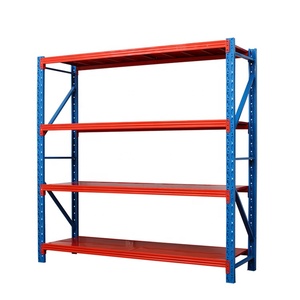
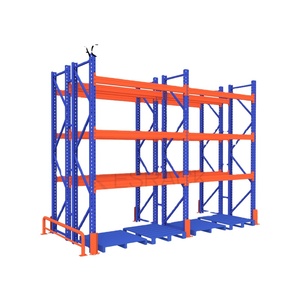
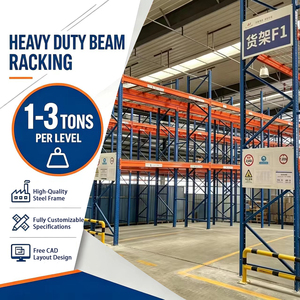
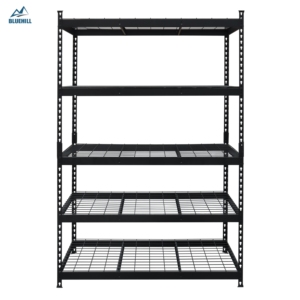
Explore our heavy-duty roll-formed and structural warehouse storage configurations. Each system is fully customizable with flare, step, or drop-in waterfall wire mesh decking for versatile load bearing.
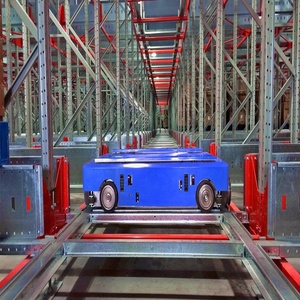
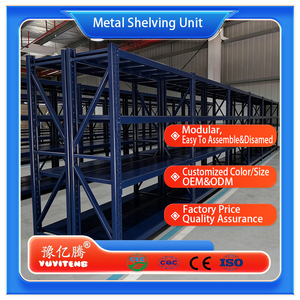
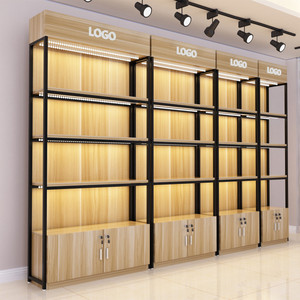
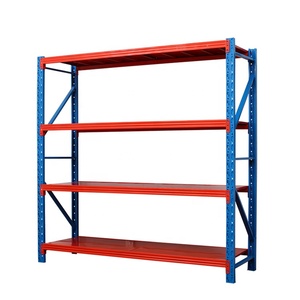
Technical Specification & Structural Architecture of Heavy Duty Mesh Deck Racking
In modern high-cube warehousing, cross-docking facilities, and 3PL fulfillment hubs, the demand for structural integrity and operational safety has elevated heavy-duty mesh deck racking from a secondary storage fixture to an essential component of intralogistics design. Sourcing directly from premier Chinese manufacturing facilities gives EPC contractors, procurement directors, and distribution center operators access to mill-certified Q235B and Q355B structural steel, precision automated resistance cold-wire welding, and electrostatic powder coatings engineered to resist mechanical abrasions, chemical corrosion, and seismic stress.
Unlike continuous solid timber, chipboard, or flat steel decking plates, heavy-duty welded wire mesh decking panels offer essential safety advantages governed by international life-safety codes, particularly NFPA 13 (Standard for the Installation of Sprinkler Systems) and FM Global Data Sheets 8-9. A calibrated open-area ratio exceeding 50% ensures that in-rack fire suppression sprinkler discharge penetrates all storage tiers without dry shadowing, while ambient lighting and barcode scanning cameras maintain clear line-of-sight across multi-tier pick modules.
Structural wire mesh decks are supported by heavy-gauge steel channel support bars (typically 14-gauge to 12-gauge pressed steel) welded directly beneath a 50x50mm or 50x100mm wire matrix (wire diameter ranging from 4.5mm to 6.0mm). These internal reinforcement channels rest securely on the step beams or box beams of industrial pallet racks, distributing point loads and uniformly distributed loads (UDL) safely to the beam profile, eliminating the sagging, warping, and moisture degradation common to composite wood panels.
| Decking & Racking Category | Standard Gauge & Mesh Matrix | UDL Capacity Per Level | Fire Sprinkler Compliance | Primary Application Profile |
|---|---|---|---|---|
| Universal Waterfall Mesh Deck | 4.8mm - 6.0mm Wire / 50x100mm Grid | 1,000 kg – 2,500 kg (UDL) | Full NFPA 13 / FM Global Pass (>65% Open) | Heavy Pallet Storage, Selective Racking, Step Beams |
| Inverted Flange Flush Deck | 5.0mm Wire / 50x50mm Tight Matrix | 800 kg – 1,800 kg (UDL) | Full NFPA 13 / FM Global Pass (>50% Open) | Box Beams, Structural Channel Beams, Hand-Stacked Cartons |
| Drop-In Internal Step Deck | 4.5mm - 5.5mm Wire / 50x100mm Grid | 1,200 kg – 2,000 kg (UDL) | Full NFPA 13 / FM Global Pass (>70% Open) | Narrow Aisle (VNA) Systems, Robotic Pick Interfaces |
| Solid Pressed Steel Pan Decks | 1.2mm - 2.0mm Sheet Cold-Rolled | 500 kg – 1,500 kg (UDL) | Requires External Sprinkler Droppers | Heavy Tooling, Dies, Non-Palletized Bulk Metal Goods |
Future Sourcing & Procurement Trends in Heavy-Duty Racking (2026–2030)
How global supply chain volatility, decarbonization policies, and automation requirements are reshaping direct procurement from Chinese manufacturing hubs.
Near-Zero Carbon Steel Raw Materials
Procurement directors increasingly demand verified Environmental Product Declarations (EPDs) and low-embodied-carbon steel scrap melted in Electric Arc Furnaces (EAF). Tier-1 Chinese suppliers now document Scope 1 and Scope 2 emissions, ensuring compliance with the European Carbon Border Adjustment Mechanism (CBAM) and corporate ESG mandates.
Integrated AS/RS Modular Decking
The transition toward autonomous mobile robots (AMRs), automated storage and retrieval systems (AS/RS), and four-way radio shuttles requires tighter tolerances. Future mesh deck procurements specify millimeter-level plane tolerance (±1.0mm) to prevent robotic shuttle sensor misalignment or uneven wheel trajectory.
Anti-Corrosive Zinc-Aluminum-Magnesium Coatings
Traditional hot-dip galvanizing and low-cure electrostatic paint are giving way to high-performance pre-coated Zinc-Aluminum-Magnesium (ZAM) alloys. ZAM delivers up to 10 times the corrosion resistance of standard galvanization in sub-zero cold storage facilities and high-humidity chemical storage environments.
Evolutionary Engineering: Structural Racking Development Dynamics
Engineering advancements focusing on finite element analysis (FEA), high-strength micro-alloying, and digital-twin lifecycle management.
Modern warehouse racking engineering has moved beyond empirical trial-and-error load tables. Today's manufacturing relies on nonlinear Finite Element Analysis (FEA) to simulate complex load combinations, including cyclic seismic accelerations, localized fork truck impact shocks, and accidental pallet drop loads. By utilizing advanced cold-formed profile geometries with multiple stiffening ribs along upright columns and step beam ledges, Chinese factories deliver higher strength-to-weight ratios, saving substantial freight tonnage on ocean container shipments without compromising safety factors.
Another major trend is the integration of passive RFID and smart strain-gauge sensor technology directly into structural racking uprights and mesh support brackets. These IoT-enabled racking components feed real-time deflection data to warehouse management systems (WMS), flagging bay overloads, structural anchor looseness, or upright misalignment caused by material handling equipment (MHE) collisions before structural failures occur.
Enterprise Engineering Strengths & Factory Heritage
Leveraging nearly 70 years of proven manufacturing excellence, multi-million dollar automated powder-coat lines, and in-house seismic engineering capabilities.
RMI & ANSI MH16.1 Design Rigor
Every structural pallet rack frame, roll-formed column, and heavy-duty mesh deck is engineered in strict compliance with current Rack Manufacturers Institute (RMI) specifications (ANSI MH16.1). Complete layout optimization, slab thickness verification, and site-specific seismic calculations are provided for every project.
Automated High-Capacity Powder Coat Lines
Multi-million-dollar investments in multi-stage continuous automated pretreatment and electrostatic powder-coat lines ensure zero-defect surface finishes, high mechanical impact resistance, and consistent film thickness across millions of square meters of decking and racking steelwork.
End-to-End Turnkey Project Management
From initial site review and load analysis to CAD layout optimization, container loading, and onsite installation guidance, our dedicated project engineers provide a single point of accountability for EPC general contractors, logistics operators, and global distributor networks.
Frequently Asked Questions Regarding Industrial Mesh Deck Racking
Direct answers from our senior racking structural engineers to help streamline your procurement decisions.
What design standards govern China-manufactured heavy-duty mesh deck racking?
Our heavy-duty pallet racking and mesh decking systems are engineered and manufactured in strict compliance with current ANSI MH16.1 (RMI standard for industrial steel storage racks), ANSI MH26.2 (design testing and utilization of industrial steel wire mesh decking), European EN 15512, and Australian AS 4084 specifications. Mill test certificates (MTC) detailing yield strength, tensile strength, and chemical composition of structural steel coils are supplied with every export shipment.
What is the difference between standard waterfall and flush-fit inverted wire mesh decks?
Standard waterfall decking features an overhanging front and back wire perimeter that wraps around the face of the pallet rack beam. This design prevents accidental dislodgement during forklift loading and visual alignment errors. Flush-fit or inverted channel decks sit entirely within the step of the beam, creating an obstruction-free beam face that is ideal for carton barcode scanning labels, narrow-aisle picking, and specialized box beams.
How do wire mesh decks contribute to warehouse fire insurance safety ratings?
Unlike plywood, solid particleboard, or steel pans, wire mesh decking features an open grid pattern (typically 50x50mm or 50x100mm) that yields over 50% to 70% open surface area. This meets the mandatory criteria of NFPA 13 and FM Global standard 8-9 by allowing ceiling-mounted fire sprinkler water to cascade directly to lower pallet tiers, quickly suppressing fire spread and minimizing required in-rack sprinkler pipework.
Can your factory supply custom seismic base plates and seismic-engineered uprights?
Yes. Our engineering division calculates site-specific seismic parameters based on local building codes (e.g., IBC 2024, Eurocode 8, or ASCE 7). We provide finite element structural calculation reports, oversized heavy-gauge seismic base plates, heavy-duty floor anchor embedment schedules, and reinforced diagonal/horizontal frame bracing patterns tailored to your warehouse slab thickness and geotechnical soil profile.
What data is required to obtain a formal engineering layout and turnkey quotation?
To produce an optimized racking layout and load capacity calculation, please share: (1) Architectural warehouse CAD floor plans indicating clear ceiling heights, column grids, and dock doors; (2) Pallet dimensions (W x D x H) including load overhang and maximum gross unit weight; (3) Material handling equipment (MHE) turning radius and maximum lift height; and (4) Facility ambient conditions (e.g., ambient warehouse vs. cold storage sub-zero environments).
Plan Your Heavy-Duty Racking Project with Certified Engineers
Looking for factory-direct wholesale pricing, custom load testing calculations, or ANSI MH16.1-compliant warehouse CAD layouts? Connect directly with our senior intralogistics engineering desk today.