Engineered Industrial Warehouse Racking Systems
Custom fabricated with premium Q235B/Q355B cold-rolled structural steel, electrostatic powder coating, and ultra-high dynamic load engineering to support global logistics hubs.
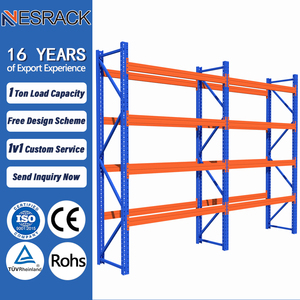
Heavy Duty 5-Layer Industrial Steel Storage Rack
- 1,000–3,500 kg per tier capacity
- Adjustable pitch 50mm/75mm
- Certified Q235B cold rolled steel
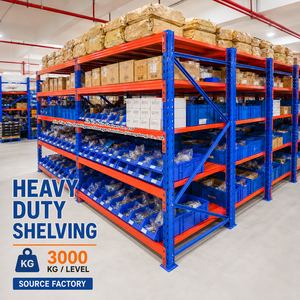
3000KG Custom Solid Steel Deck Storage System
- 3000kg uniformly distributed load
- Heavy gauge corrugated steel decks
- Optimized for small parts & totes
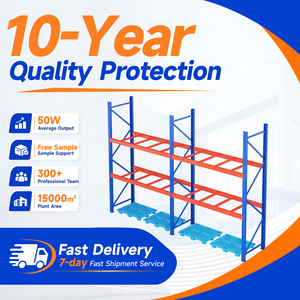
Commercial Heavy Duty Boltless Rivet Shelving
- Modular fast boltless assembly
- 5-tier customizable configuration
- Ideal for distribution & retail
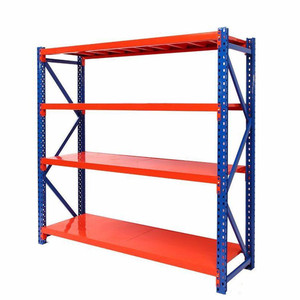
Engineered Heavy Duty Metal Cargo Storage Shelf
- High-tensile iron & structural steel
- Anti-corrosive thermoset finish
- Severe duty impact protection
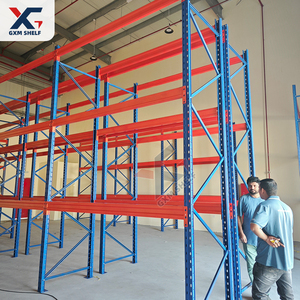
GXM Selective Industrial Pallet Rack System
- 100% immediate pallet selectivity
- Heavy duty roll-formed uprights
- Compatible with all forklift classes
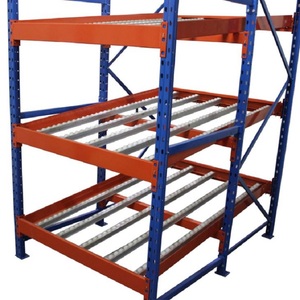
Dynamic FIFO Carton Flow Gravity Racking
- Gravity roller wheel-bed tracks
- First-In, First-Out split-case picking
- Reduces walking travel distance by 60%
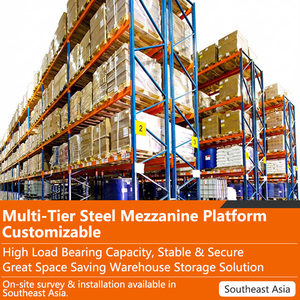
Teardrop Style Industrial Beam Pallet Racking
- Universal American teardrop hole pattern
- Precision cold roll-formed uprights
- Safety locking pins with dual snap
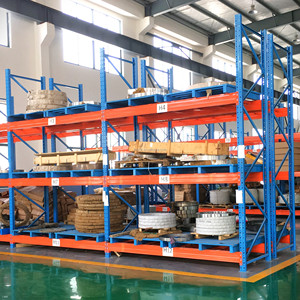
High-Capacity 3-Layer Modular Stacking Racks
- Portable bulk post stackable framing
- 4-way forklift pocket entry
- Nestable footprint when unladen
The Engineering Mechanics of Heavy-Duty Mobile Pallet Racking
Heavy-duty motorized mobile pallet racking represents the pinnacle of volumetric floor-density optimization in modern material handling. While conventional selective pallet racks require dedicated service aisles ranging between 2.8 meters to 3.5 meters for counterbalanced or reach trucks, an electronically driven mobile racking installation consolidates multiple storage runs onto high-capacity motorized chassis (bogies) that glide across flush-embedded floor guide tracks. By condensing multiple access corridors into a single dynamic, software-controlled operational aisle, facility managers routinely reclaim between 80% to 90% of unoccupied floor area or augment overall pallet volume by up to 180% within the exact same structural footprint.
"The core engineering premise of mobile racking is the decoupling of selective accessibility from spatial waste. Instead of dedicating 60% of warehouse volume to empty forklift lanes, a synchronized mobile chassis system translates hundreds of tons of racking with sub-millimeter precision, unlocking the exact requested aisle on demand through PLC automation."
From a structural integrity perspective, designing mobile pallet racking requires strict mechanical adherence to ANSI MH16.1 specifications, FEM 10.2.07 guidelines, and DIN EN 15095 standards for power-operated mobile storage. Because the racking structure experiences dynamic kinetic forces during acceleration, cruising, and deceleration phases, the base wheel bogies are machined with forged alloy wheels mounted on spherical roller bearings, powered by decentralized, variable-frequency geared motors (VFD). This avoids torsional flex across the upright superstructure, ensuring that beam-to-column connections maintain zero unseating deflection during lateral transit.
| Storage System Type | Volumetric Density | Selectivity Rate | Floor Space Recovery | Cold Storage Efficiency | Optimum SKU Profile |
|---|---|---|---|---|---|
| Heavy Duty Mobile Racking (MOVO) | Ultra-High (85%+) | 100% Individual Pallet Access | 80% – 90% | Maximum (50% refrigeration saving) | Medium to High-Value / Raw & Finished Goods |
| Standard Selective Rack | Low (35% – 40%) | 100% Individual Pallet Access | Baseline (0%) | Poor (High thermal volume waste) | High SKU variety / High velocity picking |
| Drive-In / Drive-Thru | High (65% – 70%) | Low (Last-In, First-Out) | 50% – 60% | Moderate (Risk of honeycombing) | Homogeneous batch products / Low SKU count |
| Automated Unit-Load AS/RS | Maximum (90%+) | 100% Robotic Automated | 85% – 95% | Excellent (High capital expenditure) | Extreme throughput / 24/7 automated flows |
Furthermore, safety engineering in motorized mobile racking is paramount. Modern systems integrate multi-tiered photoelectric safety light curtains mounted along the longitudinal chassis bases, emergency trip wires, optical distance sensors, and tactile bumper stops. If any personnel, forklift, or stray debris interrupts the optical safety grid while a bay corridor is in motion, the fail-safe programmable logic controller (PLC) commands an immediate class-0 deceleration stop within milliseconds, preserving worker safety and cargo stability.
Future Sourcing Trends in Heavy-Duty Mobile Pallet Racking
How global supply chain volatility, industrial energy costs, and digital logistics infrastructure are redefining procurement criteria for warehouse racking systems.
Cold Chain Energy Decarbonization
With cold-storage refrigeration constituting upwards of 60% of total facility operational expenditure, global cold-chain operators are aggressively abandoning static selective racking. Sourcing trends show a 42% compound surge in motorized mobile racking procurement across blast freezers and cold storage facilities (-30°C). By compressing the conditioned air cube and slashing the thermal envelope requirement, operators reduce compressor electricity loads by up to 50% per stored pallet position.
WMS & AGV/AMR Co-Engineering
Procurement teams are no longer evaluating racking as passive structural steel. Tomorrow's sourcing contracts demand integrated industrial IoT protocols. Modern mobile racking systems feature RESTful API interfaces and OPC-UA connectivity linking the mobile rack's Siemens or Schneider PLC directly with Warehouse Management Systems (WMS). Autonomous Guided Vehicles (AGVs) communicate with mobile racks via industrial Wi-Fi or 5G, autonomously commanding aisle openings ahead of arrival to eliminate transit idling.
Low-Carbon Steel & Scope 3 Auditing
Institutional buyers across Europe, North America, and Australasia are mandating strict environmental product declarations (EPD) for structural steel fabrications. In response, Tier-1 Chinese manufacturers are transitioning to scrap-based Electric Arc Furnace (EAF) steel with documented carbon intensities below 0.8 tons CO2 per ton of finished rack. Automated dry powder coating reclamation systems have become a baseline qualification benchmark during OEM vendor audits.
Engineering Evolution & Structural Innovations
Cutting-edge metallurgical processing, sensor fusion, and structural kinematics driving the next generation of mobile industrial storage.
High-Yield Micro-Alloyed Steels
By adopting continuous cold roll-forming with Q355B and high-yield micro-alloyed niobium-titanium steels, modern upright profiles achieve greater torsional stiffness and flexural resistance while reducing total tare weight by 14%. Thinner yet stronger profiles ensure maximum seismic performance under dynamic horizontal base shear forces, complying with ASCE 7-22 and Eurocode 8 criteria without excessive foundation anchor stress.
Laser Guidance & Rail-Less Track Tech
Historically, mobile racking required deep floor cutting to embed steel guide tracks into concrete slabs. Recent engineering innovations feature surface-mounted ultra-low profile guide strips (sub-10mm) and high-precision magnetic/laser-guided steering bogies. This radical technological shift cuts civil engineering installation time by 65%, allowing retrofitting into existing leased facilities without damaging pre-stressed post-tensioned floor slabs.
Predictive IoT Vibration & Wheel Telemetry
Embedded edge-computing accelerometers on each drive wheel bogie monitor continuous vibration signatures, motor current draw, and bearing temperatures. AI-driven predictive algorithms detect track misalignments, wheel tread pitting, or uneven floor settlement months before mechanical failure occurs, ensuring zero unplanned operational stoppages in mission-critical logistics hubs.
70 Years of Precision Engineering Heritage & Scale
As an engineering pioneer in heavy-duty structural steel warehouse racking, we design, calculate, roll-form, and coat complete turnkey storage systems for Fortune 500 distribution operations worldwide. From site-specific seismic FEA modeling to advanced continuous powder coat finishing, our manufacturing plants uphold the most rigorous international standards.
Every project is assigned a dedicated senior structural engineer who oversees structural calculations, concrete slab stress verification, seismic anchor embedment depth assessments, and turnkey logistics coordination.
Frequently Asked Questions by Industrial Buyers
Direct technical answers to critical engineering, installation, floor loading, and compliance questions encountered during wholesale racking procurement.
What slab specifications are required for heavy-duty mobile racking?
Mobile pallet racking transfers the concentrated weight of multiple rack runs onto discrete steel wheel tracks. Therefore, the concrete floor slab must typically be at least 180mm to 250mm thick with adequate double-mesh rebar reinforcement, capable of sustaining point loads up to 100–180 kN. Floor flatness must adhere strictly to DIN 18202 (Table 3, Group 4) or TR34 DM2 specifications to prevent wheel binding and ensure uniform load transfer along all guide rails.
How do mobile pallet racks function in deep-freeze cold storage environments?
Our heavy-duty mobile racking systems engineered for cold storage (-25°C to -30°C) feature specialized low-temperature synthetic lubricants, IP65-sealed geared drive motors, cryogenic electrical wiring harnesses, and thermostatically controlled internal PLC heating enclosures. These components prevent condensation freezing and guarantee continuous, jam-free bogie movement even in high-humidity ambient cycles.
What international structural standards do your systems comply with?
All structural and roll-formed systems fabricated in our state-of-the-art facilities conform strictly to the Rack Manufacturers Institute (RMI) ANSI MH16.1 specifications, European Standard EN 15512, FEM 10.2.07 for mobile racks, and DIN EN 15095 for power-operated mobile storage. Every wholesale order includes comprehensive engineering calculation books and FEA seismic reports stamped by licensed structural engineers.
How are fire sprinkler systems integrated into motorized mobile racks?
In high-density mobile racking, ceiling-level Early Suppression Fast Response (ESFR) sprinkler systems are typically the primary protection method when clearance allows. For very tall bays or specialized Class IV commodities, flexible high-pressure pantograph articulated pipe linkages or overhead multi-hinged supply lines are engineered to supply in-rack sprinkler grids continuously as the mobile blocks transit along the floor.
What is the typical aisle transit speed and operational cycle time?
Our heavy-duty mobile chassis operate at controlled linear velocities between 4.0 and 4.8 meters per minute, featuring soft-start and soft-stop Variable Frequency Drive (VFD) ramp profiles. Opening a typical 3.0-meter clear forklift aisle across a 6-base block requires approximately 38 to 45 seconds, which can be triggered remotely by the forklift operator via radio transmitter while in transit to the zone.
What is the difference between structural channel and roll-formed steel racks?
Structural pallet rack is manufactured from hot-rolled C-channel structural steel with heavy bolted connections, delivering unmatched resilience against repetitive forklift impacts—ideal for high-throughput distribution hubs and drive-in lanes. Roll-formed racking is continuous cold-formed from high-tensile coil steel, offering high adaptability, teardrop interchangeability, lower tare weight, and optimal cost efficiency for large-scale selective installations.
Ready to Engineer Your High-Density Storage Solution?
Consult directly with our senior application engineers. Share your warehouse CAD layouts, clear ceiling heights, pallet load matrices, and seismic parameters for a turnkey engineered design and competitive wholesale factory quotation.
Get a Quote