High-Performance Warehouse Rack Configurations
Explore our export-certified heavy duty racking systems. Engineered with high-yield Q235B/Q355B cold-rolled steel, robotic continuous welding, and automated thermoset electrostatic powder coating.
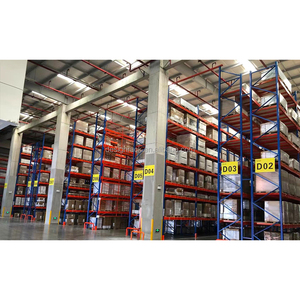
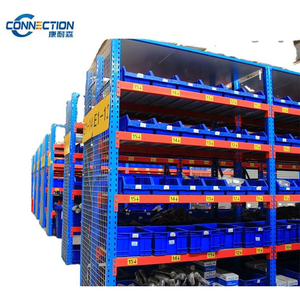
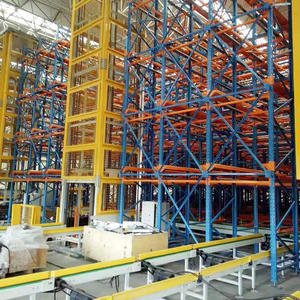
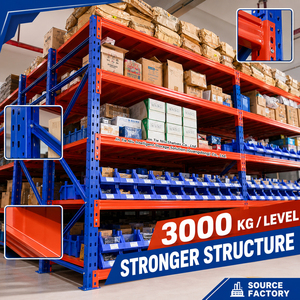
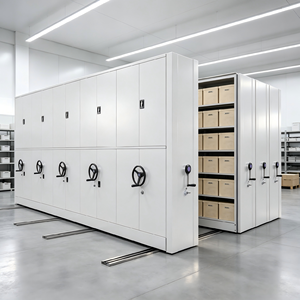
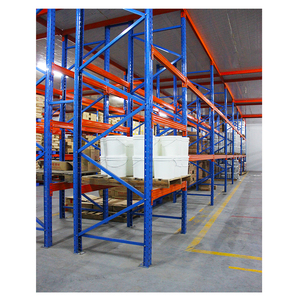
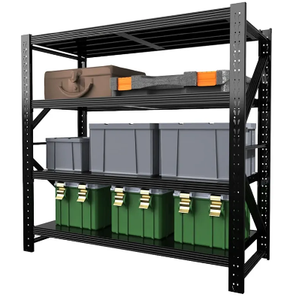
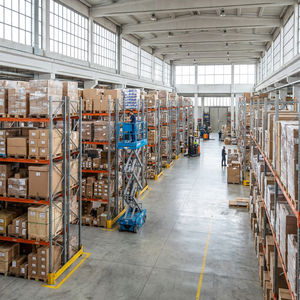
Structural Integrity, Material Metallurgy, and Export Rigor
Heavy duty selective pallet racking remains the universal backbone of modern supply chain distribution centers. As a specialized Chinese manufacturer and turnkey global exporter, our structural systems bridge cost-efficiency with uncompromising structural engineering.
Cold-Formed vs. Hot-Rolled Structural Channels
We provide both high-precision roll-formed teardrop/omega profiles and structural C-channel steel. For standard high-throughput distribution centers, roll-formed profiles offer micro-adjustable pitch (50mm, 75mm, or 76.2mm / 3 inches). In punishing environments—such as freezer facilities, drive-in systems, or facilities handling constant forklift collisions—our hot-rolled structural steel sections deliver extraordinary torsional stiffness and resistance to shearing forces.
Finite Element Seismic Verification
Global export demands adaptability to disparate seismic zone standards. Utilizing ANSYS structural modeling, our project engineers execute finite element analysis (FEA) compliant with IBC (International Building Code), AS4084 (Australia), and EN 15512 (Europe). Baseplates, expansion wedge anchors, and chemical anchors are calibrated precisely to local peak ground acceleration (PGA) metrics, concrete slab compressive strength (f'c ≥ 25-30 MPa), and rebar layout.
Automated Electrostatic Coating & Galvanization
Corrosion mitigation is fundamental to storage longevity. We operate automated multi-stage pre-treatment and degreasing immersion lines followed by dry-off ovens. Our advanced electrostatic powder coating delivers an even 60–90 micron thermosetting polyester finish, guaranteeing over 500 hours of continuous salt spray test resistance (ASTM B117). For outdoor or sub-zero blast freezers, continuous pre-galvanized or hot-dip galvanized finishes (HDG ≥ 65μm) eliminate flaking and oxidation.
Engineering Specification Comparison
A reference architecture for warehouse directors evaluating selective pallet racking versus alternative high-density steel configurations.
| Storage System Type | Selectivity & Access | Floor Space Efficiency | Typical Load Limits | Forklift Compatibility | Best Logistical Use Case |
|---|---|---|---|---|---|
| Standard Selective Rack | 100% Immediate | Moderate (35-40%) | 1,000 – 4,500 kg / beam level | Standard Counterbalance, Reach Truck | High SKU variety, rapid FMCG rotation |
| Double Deep Racking | 50% FILO Access | High (50-60%) | 1,000 – 3,200 kg / beam level | Pantograph / Deep Reach Trucks | Identical multi-pallet batch dispatch |
| Narrow Aisle (VNA) Rack | 100% Immediate | Very High (65-75%) | 1,000 – 4,000 kg / beam level | VNA Turret Trucks, Wire/Rail Guided | Maximum ceiling height utilization |
| Four-Way Shuttle Automation | Automated Matrix | Maximum (80-90%) | 500 – 2,000 kg / pallet space | Integrated Robotic AS/RS Shuttles | High-density cold chain, dark storage |
| Heavy Duty Drive-In Rack | Low (LIFO / FIFO) | Extremely High (70-80%) | 1,000 – 2,000 kg / rail lane | Counterbalance Driving Into Bays | Bulk homogeneous SKUs, raw materials |
Future Sourcing & Technological Trends in Pallet Racking
The global intralogistics landscape is experiencing structural transformation. Forward-looking warehouse operations are shifting from static storage to responsive, digitized physical assets.
1. Convergence with Autonomous Mobile Robots (AMRs)
Traditional selective racking aisles were laid out purely around forklift turning radiuses (AST). Modern facilities are re-engineering lower rack tiers to accommodate high-velocity autonomous mobile robots (AMRs) and automated pallet jacks. Upright profiles now incorporate laser-cut fiducial indexing markers and recessed bottom cross-braces to facilitate frictionless robotic underride and automated barcode scanning.
2. Structural Health Monitoring & IoT Sensors
The next procurement horizon involves structural digital twins. Procurement directors increasingly specify integrated wireless impact sensors and strain gauges attached to corner aisle columns. These IoT sensors alert warehouse managers in real time to excessive forklift collisions or progressive beam deflection, transforming reactive OSHA inspections into proactive predictive maintenance routines.
3. Decarbonized Steel Sourcing & LCA Audits
ESG mandates across Europe, North America, and Australasia now require documented embodied carbon audits. As a leading exporter, our manufacturing plants leverage electric arc furnace (EAF) low-carbon recycled steel coils and solar-powered powder coating lines, providing verifiable Life Cycle Assessment (LCA) documentation and ISO 14064 carbon footprint verifications for turnkey export consignments.
Why International Enterprise Buyers Partner With Us
Combining nearly 70 years of industrial engineering heritage with advanced digital fabrication capabilities.
Seven Decades of Rigorous Design Heritage
Our foundational systems align with historical engineering pioneers, having engineered custom rack configurations for global Fortune 500 distribution operations across cold storage, automotive, e-commerce, and logistics hubs.
End-to-End Project Engineering
We do not simply ship steel profiles. Our dedicated project managers and CAD/BIM structural engineers oversee load capacity calculation sheets, slab punch checks, and layout optimization from inception to turnkey container dispatch.
Multi-Million Dollar Automated Lines
Production is powered by state-of-the-art multi-roll roll-forming mills, robotic continuous-weld arm cells, and fully automated Swiss Gema powder coating booths, ensuring dimensional tolerances within 0.5mm across tens of thousands of components.
Complete Global Export Logistics
Export packaging is engineered for containerized ocean transit. Bundles are protected with heavy-duty corner guards, anti-scratch foam padding, and moisture-barrier shrink wrap, maximizing container cubing and preventing transit damage.
Frequently Asked Questions on Heavy Duty Racking
Key technical, structural, and logistical guidance addressing global procurement criteria.
What structural standards do your selective pallet racks comply with?
All exported racks are custom-engineered to meet target jurisdiction codes: ANSI MH16.1 / RMI (USA), AS4084 (Australia), and EN 15512 / FEM 10.2.02 (Europe). We provide third-party mill test certificates (MTC) verifying raw material yields, tensile limits, and chemical compositions.
How do you determine beam capacity and upright frame ratings?
Capacity is calculated according to the maximum permissible deflection limit of L/200 (or L/250 in specialized codes) based on uniformly distributed loads (UDL). Upright frame capacity accounts for the vertical distance between beam levels, building seismic accelerations, and slab anchoring properties.
Can we mix components with existing teardrop or European brand racks?
Yes. We manufacture universal teardrop profiles compatible with major North American configurations, as well as 50mm pitch hook-in connectors compatible with European standards. Our engineering team can analyze your existing upright sample or drawing to ensure mechanical fit and safety compliance.
What concrete slab data is required prior to project finalization?
Prior to engineering stamping, we require the concrete slab thickness (typically 150mm – 250mm), 28-day compressive strength (psi or MPa), rebar mesh placement, and expansion joint locations. This ensures anchor bolt embedment depth (effective embedment vs. nominal embedment) safely absorbs uplift and shear forces.
What is the typical production and overseas delivery lead time?
Standard fabrication for a 10 to 30 container consignment is 25 to 35 business days. Our plant is located near major maritime ports (Shanghai/Ningbo), enabling streamlined customs clearance and flexible ocean container loading (40ft HQ dry containers or open-top units for oversized structural elements).
Do you provide seismic engineering calculations and stamping?
Yes. We furnish complete structural calculations, FEA simulation reports, and anchorage engineering plans. For projects in North America, Europe, or Australasia requiring localized professional engineering (PE) stamps, our partner network of local licensed engineers handles municipal review approvals.
Plan Your Turnkey Warehouse Storage System
Submit your CAD floor plan, load dimensions, and seismic site criteria. Our structural engineers will return a complete 2D/3D layout, bill of materials, and direct FOB/CIF container quote within 24 hours.
Get Catalog