[email protected] Fabricated to RMI / ANSI MH16.1 Specifications

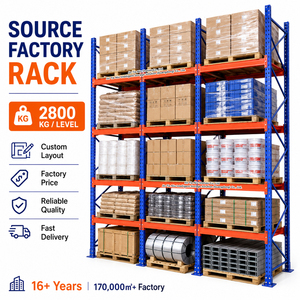
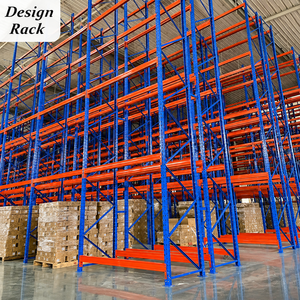
Custom OEM Industrial Selective Pallet Racking Manufacturer & Exporter

Precision-Engineered Heavy-Duty Racking Systems Fabricated to Global RMI & ANSI MH16.1 Standards for High-Velocity Modern Warehouses

Engineered Product Portfolios

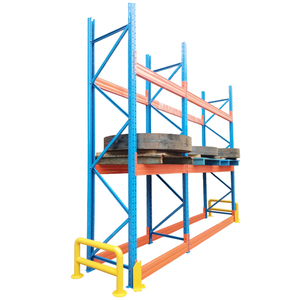
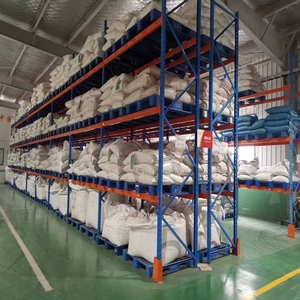
High-Performance Pallet Racking Systems

Explore heavy-duty, selective, teardrop, and automated racking configurations engineered for structural durability, strict load predictability, and maximum cubic space utilization.
70+

Years of Pallet Rack Engineering & Manufacturing Mastery

100%

RMI (ANSI MH16.1) & CE Structural Code Conformance

50k+

Global Warehousing & 3PL Installations Deployed

0Defect

Automated Powder Coating & Beam Welding Integrity

Factory Direct Engineering

Why Tier-1 Integrators Choose Our Pallet Racking Solutions

Combining structural hot-rolled resilience and precision cold-formed engineering to fulfill high-bay, seismic, and multi-tier distribution requirements.

Certified RMI Compliance

Every frame, connector, and beam calculation adheres rigorously to current Rack Manufacturers Institute (ANSI MH16.1) criteria. We utilize certified structural high-tensile steel (Q235B, Q355B, ASTM A36/A1011 equivalent) to ensure total load factor safety.

Automated Coating Lines

Multi-million-dollar multi-stage continuous automated powder-coating lines produce an ultra-durable, scratch-resistant thermoset finish. Our surfaces pass severe neutral salt spray resistance tests, ensuring protection across sub-zero freezers and humid hubs.

Site-Specific Seismic Engineering

Racking stability demands site-specific structural verification. Our in-house finite element structural analysis accounts for dynamic ground acceleration coefficients, anchor bolt pullout shear forces, and concrete slab compressive tolerances across global zones.

Architectural Matrix

Selective Pallet Racking Engineering & Operational Guide

Selective pallet racking represents the industry standard for 100% individual pallet selectivity. Contrast key mechanical characteristics across operational warehouse models.

Racking Architecture Pallet Selectivity Cubic Density Floor Footprint Efficiency Primary Industrial Use-Case
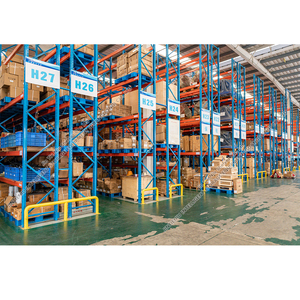
Standard Wide Aisle Selective 100% Direct Accessibility Moderate (35% - 40%) Aisle widths: 3.2m – 3.8m Fast-turn distribution, high SKU counts, mixed pallet profiles
Very Narrow Aisle (VNA) Selective 100% Direct Accessibility High (55% - 65%) Aisle widths: 1.6m – 1.9m High-bay warehouses, order fulfillment, expensive per-sqm land
Double Deep Selective 50% Immediate Access High (50% - 60%) Requires pantograph deep-reach trucks Homogeneous product runs, batch staging, intermediate buffer stock
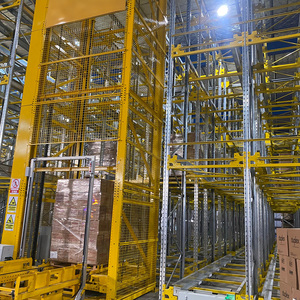
AS/RS Integrated High-Bay Rack System-Controlled Access Ultra-High (75% - 85%) Automated crane corridors up to 40m Unmanned, automated mega-hubs, cold storage logistics
Future Procurement Analysis

Macro Trends Shaping Industrial Pallet Racking (2025–2030)

A comprehensive strategic outlook for logistics procurement managers, warehouse architects, and project stakeholders.

Automation-Ready Tolerances

Conventional selective pallet racks are increasingly deployed alongside Autonomous Mobile Robots (AMRs), automated guided reach trucks, and pallet shuttle runners.

  • Tighter vertical deflection limits (L/600 vs conventional L/200).
  • Integration of laser-guided targets on horizontal beams.
  • Reinforced lower bay frames to mitigate automated AGV dock-strikes.

Cold-Room Thermal Dynamics

Global cold chain growth has driven procurement toward specialized cold-rolled steel alloys designed to maintain ductile strength in sub-zero freezers down to -30°C.

  • Elimination of cold-embrittlement failure points in connectors.
  • Micro-grooved beam surfaces for frozen pallet grip.
  • Specialized anti-corrosive primer systems resisting condensed frosting cycles.

Total Cost of Ownership (TCO)

Procurement teams are shifting away from evaluating initial structural purchase cost toward factoring long-term lifecycle durability and repair modularity.

  • Widespread adoption of modular bolt-on sacrificial column protectors.
  • Standardization on universally interchangeable teardrop geometries.
  • Finite Element Analysis (FEA) reducing over-engineering steel waste.
Procurement Due Diligence

Frequently Asked Questions on Pallet Racking Procurement

Essential structural and commercial considerations for supply chain leaders, safety directors, and logistics buyers.

What parameters are required to calculate pallet rack load capacity?
Accurate load design requires knowing: (1) Total pallet dimensions (W x D x H) including product overhang; (2) Maximum gross weight per pallet; (3) Number of pallets per beam level; (4) Total beam levels per upright bay; (5) First beam level elevation (which determines the unbraced length of the column); and (6) Local seismic acceleration coefficients (Ss, S1).
What is the difference between Roll-Formed and Structural Steel Racking?
Roll-formed pallet rack is manufactured from high-yield cold-rolled coil steel using continuous forming lines. It offers rapid teardrop adjustability, lightweight modularity, and cost-efficiency. Structural steel pallet rack is hot-rolled from heavy channel steel with bolted connectors, offering maximum resistance to direct forklift impact in high-velocity hubs and deep-freeze operations.
How does beam level elevation affect the upright frame capacity?
Upright capacity is governed by column buckling equations under ANSI MH16.1. The unsupported vertical distance between the floor and the first beam level—or the maximum vertical pitch between subsequent beam levels—dictates the unbraced column length. Increasing the bottom beam clearance significantly reduces overall frame load ratings.
How do you ensure international shipping and container packing efficiency?
As a global exporter, we engineer custom knockdown bundling. Uprights can be shipped pre-assembled or flat-packed as bolted frames to increase shipping container volumetric efficiency by up to 35%. Beams are strapped in nested bundles with specialized steel Dunnage corners to eliminate transit chafing, coating scratches, and sea-freight oxidation.
What concrete slab thickness and strength are required for heavy rack anchors?
Industrial selective racks typically require a concrete slab thickness between 150mm and 250mm, with compressive strengths ranging from 25 to 35 MPa (3,500 to 5,000 PSI). The slab must be uncracked and reinforced to develop the full rated tensile embedment depth of heavy-duty seismic wedge anchors.
Can customized rack colors, OEM frame punchings, and branding be requested?
Yes. We operate fully customized OEM manufacturing lines. We accommodate specific upright punch patterns (US Teardrop, European 50mm/75mm Pitch, T-Bolt, and Hex), customized safety colorways via RAL powder codes, private labeling, embossed upright logos, and tailored load safety plaques for distributors.

Connect with a Senior Racking Application Engineer

Send your warehouse CAD architectural drawings, load distribution profiles, and project scope. Receive certified RMI calculations, comprehensive bay profiles, and an itemized export quotation within 24 hours.

Contact Us