High-Capacity Industrial Stacking & Storage Rack Systems
Engineered to RMI/ANSI MH16.1 specifications with cold-rolled Q235B steel, modular nested post pallets, dynamic radio shuttle channels, and industrial powder coatings.
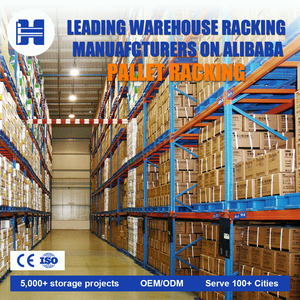
Factory Manufacturing Warehouse Pallet Rack Heavy Duty Steel Durable CE Certified High Load Capacity
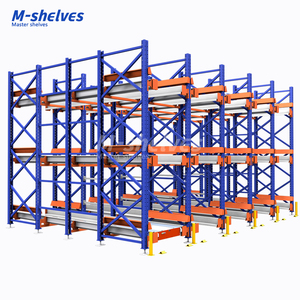
Radio Shuttle Car Intelligent Heavy Duty Steel Storage Rack System Semi-Automated High Density
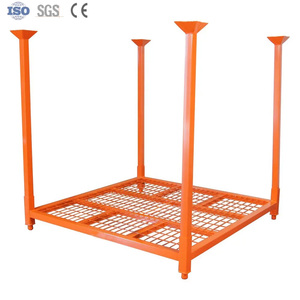
CE Certified Manurack Post Pallet - Hot-Dip Galvanized Stacking Rack For Euro Cold Storage
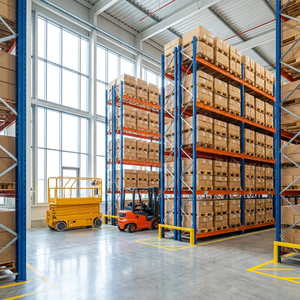
Q235B Cold Rolled Steel Rack Multi Level Pallet Rack Warehouse Shelving Industrial Systems
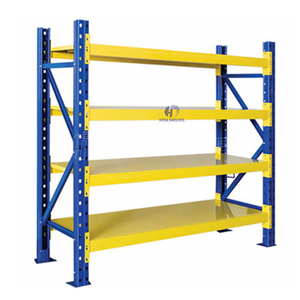
Manufacturer Heavy Duty Warehouse Shelving/Storage Pallet Rack Selective Heavy Duty System
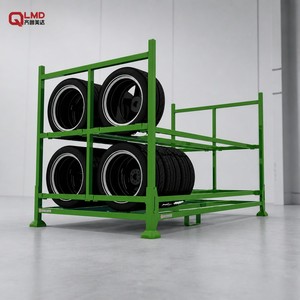
Boltless Riveted Steel Heavy Duty Storage Rack | 5-Layer Brushed Anti-Rust Stillage 2000mm
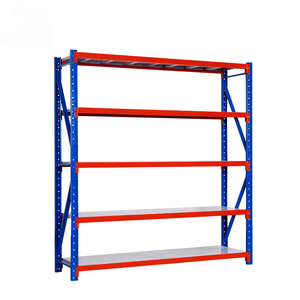
Dongguan Manufacturer Factory 500kg Loading Capacity Medium Duty Warehouse Rack
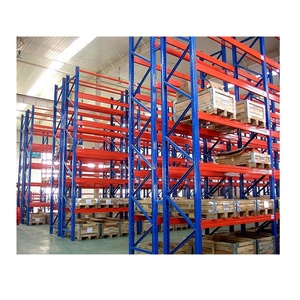
Longspan Shelving Rack High Bay Industrial Shelves Narrow Aisle Heavy Duty Selective Racking
Engineering Integrity: Structural Hot-Rolled vs. Cold-Formed Steel Stacking Racks
A technical evaluation for procurement managers, structural engineers, and logistics directors balancing deflection limits, seismic dynamic loads, and lifecycle costs.
In high-throughput distribution hubs, manufacturing staging zones, and extreme cold-storage freezers, selecting the correct racking topology dictates long-term workplace safety, product shrinkage, and capital utilization. As premier OEM/ODM heavy-duty stacking racks manufacturers and global exporters, our engineering teams build systems adhering to strict international criteria including ANSI MH16.1 (Specification for the Design, Testing and Utilization of Industrial Steel Storage Racks) and European standard EN 15512.
A primary structural determination revolves around the baseline metallurgy: Hot-Rolled Structural Channel Steel versus High-Tensile Cold-Rolled Q235B/Q355B Formed Profiles. Structural steel channels exhibit superior impact resistance against errant forklift collisions, making them indispensable in drive-in racking channels, exterior stacking yards, and aggressive industrial environments. Conversely, continuous roll-formed uprights engineered with multiple return bends optimize weight-to-load capacity ratios, reducing freight deadweight and yielding adaptable 50mm or 75mm beam adjustment increments.
Seismic Resilience & Concrete Slab Anchoring Dynamics
Structural reliability depends not merely on beam load tables, but on the slab-anchor-column interface. Upright baseplate design must absorb cyclic seismic moments (Ss and S1 spectral acceleration forces) without slab punching shear failure or anchor shear cleavage. Effective embedment depths must be verified against compressive concrete strengths (f'c ≥ 28-day 3,000 to 4,000 PSI).
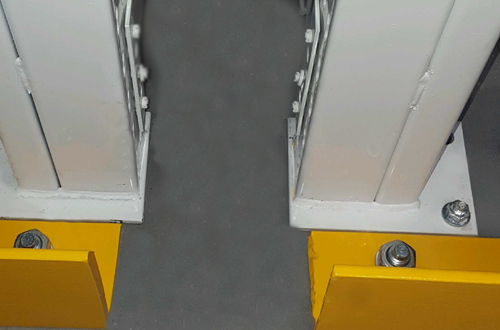
Calculated Anchor Embedment: Mitigating Brittle Concrete Failure
A common vulnerability in third-party racking procurement is the confusion between nominal drilled hole depth and effective mechanical anchor embedment (h_ef). In seismic zones 3 and 4, seismic shear loads create tension uplift along the rear upright column.
Our OEM/ODM engineering protocol specifies heavy-gauge structural baseplates equipped with dual anchor slots. This dissipates base moment rotation and guarantees that wedge anchors or heavy-duty chemical injection anchors penetrate deeply past micro-cracking boundary layers of the structural slab.
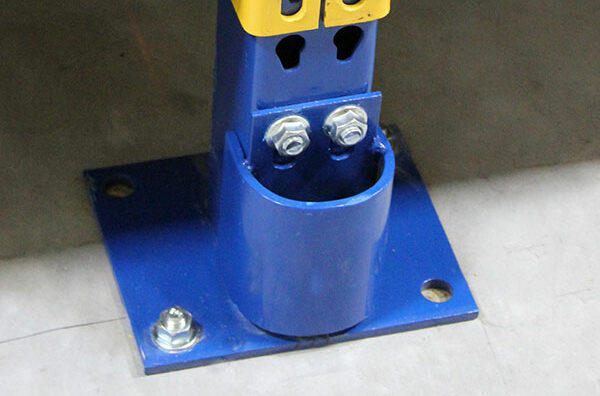
Structural Impact Mitigation: Bolt-On Straddle Column Protectors
Over 82% of warehouse rack structural failures originate in the lower 300mm to 600mm of the aisle-facing upright frame. Repeated impacts from counterbalanced forklift chassis, reach truck outriggers, and heavy Euro pallets degrade cold-formed column geometry, initiating elastic-plastic buckling under full rated payload.
Our proprietary OEM straddle column guards and wrap-around anchor-isolated protectors isolate the frame from kinetic collisions. By transferring impact loads directly into the concrete floor slab through independent floor-mounted anchors, the load-bearing integrity of the upright remains completely unaffected.
Future Global Procurement Trends in Heavy-Duty Stacking Racks
Market dynamics, supply chain nearshoring, high automation compatibility, and circular ESG criteria shaping enterprise purchases over the next decade.
1. Transition to Flexible Stacking vs. Fixed Footprint
Fixed selective racking binds warehouse operators to rigid aisle arrangements. Rising land lease costs favor modular post pallets (Manuracks) and demountable stacking stillages. Facilities dynamically reconfigure floor layouts from peak harvest cold storage to off-season dry staging within hours.
- Elimination of wasted transit aisles in bulk staging
- Zero floor anchoring required for post pallets
- 1:4 nested return ratio for cost-effective empty return
2. Automation-Ready Tolerance (AS/RS & AGV/AMR)
Traditional manually-loaded tolerances of ±3.0mm are incompatible with Autonomous Mobile Robots (AMRs) and automated radio shuttle carriers. Modern procurement requires sub-millimeter robotic manufacturing tolerances to ensure sensor arrays and shuttle wheels track without mechanical jamming.
- CNC roll-forming and robotic welding jigs
- Integrated guide rails for four-way autonomous shuttles
- Reflector and optical target mounting provisions
3. Extreme Environment Cold Chain Finishes
With pharmaceutical and quick-frozen food distribution expanding globally, procurement focuses heavily on zinc metallurgy. Standard wet sprays flake under blast-freezer thermal contraction (-30°C to +40°C defrost cycles). Hot-dip galvanization conforming to EN ISO 1461 is becoming the mandatory standard.
- 75–100 µm sacrificial zinc coating thickness
- Complete internal tube rust protection
- Resistance against condensing moisture and washdowns
4. IBC Code Evolution & Seismic Certification
Updated International Building Code (IBC) and ASCE 7 editions enforce higher seismic design parameters. Tier-1 buyers and multinational insurers no longer accept generic load tables; purchase agreements now mandate PE-stamped (Professional Engineer) structural calculations for specific GPS locations.
- Site-specific soil classification compliance (Site Class A-F)
- Finite Element Analysis (FEA) buckling simulation
- Certified material mill certificates (MTR) with every batch
5. Circular Lifecycle & Total Cost of Ownership (TCO)
Procurement departments are shifting scrutiny from initial purchase price (CAPEX) to 15-year TCO. Racks featuring modular bolt-on sacrificial upright repair kits, scratch-resistant TGIC polyester powder coatings, and standardized interchangeable connectors yield 40% lower depreciation.
- In-place upright repairs without unloading entire bay runs
- Zero VOC, eco-friendly automated coating processes
- High scrap salvage value from certified structural steel
Structural Specification & Selection Matrix for B2B Importers
Compare operational characteristics across heavy-duty industrial racking classes to specify the optimum solution for floor loads, SKU velocity, and material handling gear.
| Racking Topology | Typical Load Rating | Inventory Flow | Floor Space Utilization | Handling Equipment Required | Target Industries |
|---|---|---|---|---|---|
| Galvanized Manurack Post Pallet | 1,000 – 2,500 kg / tier | Dynamic / Block Stack | 85% (High Bulk Density) | Standard Counterbalance Forklift | Cold Storage Freezers, Tire Logistics, Agriculture |
| Selective Heavy-Duty Pallet Rack | 1,000 – 4,500 kg / pair of beams | 100% Selective Access | 40% – 50% (Wide Aisles) | Counterbalanced / Reach Truck | E-commerce Fulfilment, Retail, 3PL Distribution |
| Intelligent Radio Shuttle Racking | 500 – 1,500 kg / unit load | FIFO or LIFO Programmable | 80% – 90% (Ultra High Density) | Automated Shuttle + Lift Truck | Food & Beverage, High SKU Depth, Pharmaceuticals |
| Narrow Aisle (VNA) High Bay Rack | 1,200 – 3,500 kg / level | 100% High Bay Access | 65% – 75% (Aisles < 1.8m) | Turret Truck / Wire-Guided VNA | High-rise Distribution Centers, Automotive Spares |
| Boltless Riveted Stillage Rack | 300 – 800 kg / level | Manual Shelving / Split-Case | 55% (Vertical Manual) | Manual Cart / Hand Picking | Tool Rooms, Hardware Merchandising, Spare Parts |
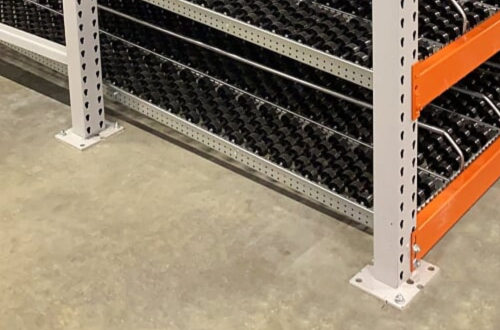
Mill-Certified Structural Fasteners and Safety Interlocks
A racking structure is only as reliable as its connection points. Our OEM export systems utilize high-tensile Grade 8.8 structural bolts for upright splicing and baseplate fixation, paired with automated one-piece safety pins stamped from spring steel.
Unlike makeshift fasteners that can loosen from daily vibration caused by lift truck mast oscillations, our positive-locking connection tabs provide audible feedback upon locking, guaranteeing zero unintentional beam dislodgement under upward forklift tines impact.
Why Tier-1 Importers Partner with Our OEM/ODM Racking Foundry
Combining nearly seven decades of engineered storage heritage with advanced robotic manufacturing lines, dedicated structural project managers, and global export packaging.
Full RMI / ANSI MH16.1 & CE Compliance
Every profile design undergoes rigorous destructive physical testing, finite element verification, and tensile strain gauge mapping to ensure uncompromising compliance with North American and European rack safety standards.
Multi-Million Dollar Automated Powder Coating
Our continuous automated lines incorporate automated multi-stage phosphate pre-wash, ultrasonic degreasing, and electrostatic reciprocator booths to apply cross-linked epoxy-polyester powder coats free of pinholes or orange peel.
Fortune 500 Proven Track Record
Long-term OEM supplier agreements with global logistics providers, supermarket chains, and heavy industrial brands ensure our quality control frameworks, container stuffing protocols, and on-time shipments satisfy demanding international audits.
In-House PE Seismic & Layout Engineering
Our dedicated engineering department provides turnkey AutoCAD layout drafting, beam deflection calculations (L/200 deflection limit), slab moment analysis, and full seismic PE stamps customized to local building codes worldwide.
Export Container Load Optimization
Using 3D spatial loading software, upright frames and teardrop beams are systematically nested with specialized steel dunnage, protective corrugated interleaves, and heavy-gauge banding to maximize 40ft HQ container cubic utilization up to 98%.
Building Code Updates: Upright Frame Height Adjustments & Safety Limits
Crucial structural considerations when reconfiguring storage layouts or retrofitting existing warehouse installations.
Unbraced Length Dynamics: The Danger of Removing Lower Beam Levels
In warehouse restructurings, floor managers frequently seek to double-stack oversize pallets on the floor by unbolting the bottom-most beam tier. From a structural engineering perspective, this dramatically increases the unbraced vertical length of the upright column.
Because the Euler critical column buckling load is inversely proportional to the square of its effective unbraced length (KL/r), elevating or removing the initial beam elevation can reduce the permissible upright frame capacity by 35% to 50%, risking sudden catenary collapse under full building loads. Our technical engineering team recalculates capacity charts and engineers supplemental vertical bracing whenever reconfigurations are required.
Frequently Asked Questions from International Buyers & Engineers
In-depth technical answers addressing steel certifications, container payload optimization, hot-dip galvanizing, and OEM manufacturing workflows.
What precise steel grades are utilized, and do you supply Mill Test Certificates (MTR)?
We source prime cold-rolled Q235B and high-yield Q355B (equivalent to ASTM A36 and ASTM A572 Grade 50) directly from audited tier-1 steel mills. Every single production batch is issued with an EN 10204 3.1 Mill Test Certificate detailing yield strength (typically ≥ 235-355 MPa), ultimate tensile strength (370-510 MPa), elongation percentage (≥ 26%), and complete chemical spectrometry (Carbon, Silicon, Manganese, Phosphorus, and Sulfur thresholds).
How do you guarantee stacking stability for 1+3 or 1+4 Manurack post pallets under dynamic operations?
Our Manurack post pallets feature robotically welded, cold-stamped conical cupped stacking feet matched to tight-tolerance inverted cup receivers. The dynamic nesting angle (typically 7 degrees of self-locating chamfer) ensures positive interlock when placed by forklift operators at heights exceeding 6 meters. All welded assemblies undergo non-destructive ultrasonic testing and cyclic vertical load testing under 1.5 times the rated payload.
Can your factory produce teardrop compatible profiles for North American replacement markets?
Yes. Our OEM roll-forming tooling includes standard 2-inch increment universal teardrop punched upright frames that are completely interchangeable with legacy North American selective pallet racking brands. We also manufacture heavy-duty structural channel beams with welded end-connectors, bolted T-bolt frames, and metric 75mm European pitch uprights.
What is the difference between Hot-Dip Galvanizing (HDG) and Electro-Galvanizing for cold storage?
For sub-zero cold rooms (-20°C to -30°C) and outdoor maritime staging yards, hot-dip galvanization (HDG according to ISO 1461) is essential. The steel is fully immersed in molten zinc at 450°C, forming an iron-zinc alloy metallurgical bond with a thickness of 70–85 microns. Electro-galvanizing only provides 10-15 microns of superficial zinc which quickly oxidizes under condensation and temperature cycling.
What deflection threshold is engineered into your pallet rack horizontal beams?
All beams are engineered to conform to the RMI / ANSI MH16.1 deflection limit of L/180 or L/200 under full Uniformly Distributed Load (UDL). This means that for a standard 2700mm clear-span beam supporting two 1,000 kg pallets, the maximum vertical elastic deflection at center span will not exceed 13.5mm, ensuring zero permanent plastic deformation after unloading.
How do you optimize 40ft High Cube container shipping to avoid wasted cubic volume?
Shipping disassembled heavy steel requires custom packaging engineering. We bundle upright frames in matched interlocking sets, interleave painted beam faces with high-density poly-foam wraps to eliminate transit abrasion, and nest post pallet posts inside specialized tube crates. A standard 40ft HQ container carries between 22 and 26 metric tons without exceeding road axle weight limits.
Accelerate Your Racking Project with Certified Factory Direct Engineering
Send us your warehouse CAD layout, pallet load profiles, and target throughput specifications. Our certified structural engineers will deliver a free 3D layout, load-capacity matrix, and competitive OEM/ODM export quotation within 24 hours.
Get a Quote