Featured Heavy-Duty Boltless & High-Density Racking Systems
Configured for demanding distribution hubs, automated cold storage facilities, and high-turnover fulfillment centers. Each system is fully tested to exceed ANSI MH16.1 and RMI standards.
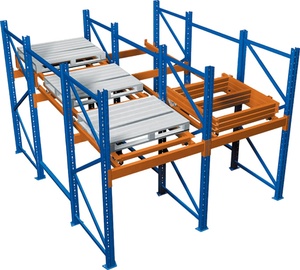
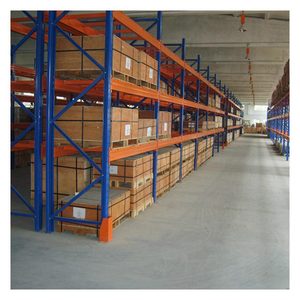
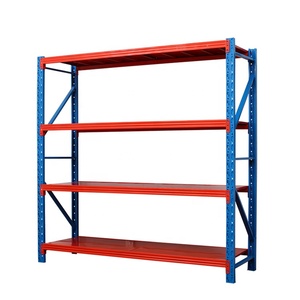
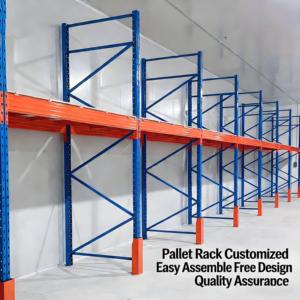
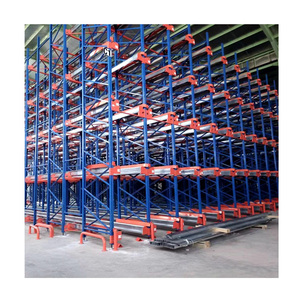
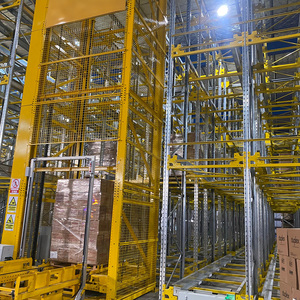
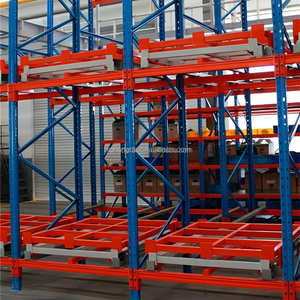
Engineering Taxonomy: Roll-Formed Boltless vs. Structural Channel
Material selection dictates operational uptime, dynamic impact resistance, and footprint adaptability. Understanding the mechanical metallurgy behind industrial heavy-duty racking ensures compliance and long-term ROI.
T-Bolt & Teardrop Geometry
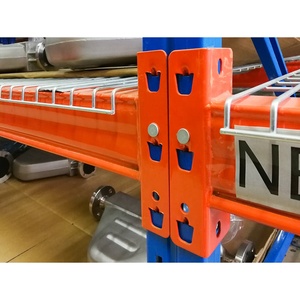
Roll-formed boltless racking employs cold-rolled steel coils, punched with tapered keyhole or teardrop patterns. Riveted connectors lock securely via gravitational load, allowing quick bay reconfiguration while delivering up to 3,500 kg per level without loose fasteners.
Structural C-Channel Durability
Built using hot-rolled ASTM A36 structural channels, these systems feature thicker webs designed to shrug off forklift collisions in high-traffic distribution centers and cold environments where cold-formed steel faces low-temperature brittleness.
Seismic & Baseplate Engineering
Modern boltless racks incorporate oversized welded footplates and multi-hole anchoring patterns engineered under ANSI MH16.1 & IBC 2024 provisions, dispersing dynamic shear forces safely into the warehouse concrete slab.
Top 10 Global Heavy-Duty Boltless Racking Suppliers Ranked
An unbiased comparison of manufacturing capabilities, structural design compliance, automation compatibility, and core market strengths.
| Rank / Manufacturer | Primary Engineering Style | Standard Compliance | Max Load Rating | Automation & Shuttle Readiness | Market Specialization |
|---|---|---|---|---|---|
| 01 UNARCO RACKING | Structural & Roll-Formed Boltless (T-Bolt / Interchangeable) | RMI, ANSI MH16.1, Seismic Zone 4 | Up to 48,000 lbs Upright | Full (AS/RS & Pick Modules) | Fortune 500 Enterprise Distribution & Retail |
| 02 SSI SCHAEFER | Precision Modular Cold-Formed Systems | EN 15512, FEM 10.2.02, ISO 9001 | High-density pallet specs | Native High-Bay Automated Cranes | Automated Mega-Intralogistics |
| 03 Interlake Mecalux | T-Bolt, Welded & Bolted Modular Hybrid | RMI, ISO 14001, CE Certified | Standard Industrial Pallet Loads | Pallet Shuttle & Stacker Cranes | E-Commerce & 3PL Regional Hubs |
| 04 Dexion (Gonvarri) | Slot-in Keyhole & Speedlock Profiles | EN Standards, SEMA Approved | Up to 30,000 kg Frame Limit | Narrow Aisle (VNA) & Shuttles | Pan-European Manufacturing Hubs |
| 05 Stow Group | Atlas Boltless Shuttle & Beam Hooks | ISO 9001, EN 15620 Tolerances | Heavy Palletized Unit Loads | e.stow 2D Shuttle Integration | Automated Storage & Deep-Lane Pallets |
| 06 Frazier Industrial | 100% Structural Steel Channel (Boltless Deck Options) | RMI Certified, AISC Standards | Extreme Heavy Impact Loading | AS/RS Rack-Supported Buildings | Freezer & Harsh Impact Environments |
| 07 Daifuku Co., Ltd. | High-Precision Unit-Load ASRS Structures | JIS, RMI, CE Compliant | Optimized Automated Tolerances | Turnkey End-to-End Robotics | Factory Automation & Pharma Cleanrooms |
| 08 Bito Storage Systems | Boltless Wide-Span & Hook-In Heavy Shelving | RAL-RG 614, FEM Compliant | Up to 1,200 kg Per Tier | Box & Pallet Flow Racks | Automotive Spare Parts & Workshops |
| 09 AR Racking | Cold-Formed High Elastic Limit Galvanized Steel | EN 15512, ISO 3834-2 | Heavy Commercial Loads | Semi-Automated Pallet Shuttles | Corrosive & Agricultural Bulk Storage |
| 10 Ridg-U-Rak | Slotted & Teardrop Hook-and-Eye Locking | RMI, ANSI MH16.1 Compliant | Standard Heavy Pallet Tiers | Gravity Pallet Flow Compatible | General Warehousing & Wholesale Clubs |
Future Procurement Trends in Industrial Storage Systems
How high material costs, urban micro-fulfillment centers, and robotics are transforming pallet rack purchasing specifications worldwide.
High-Strength, Low-Alloy Steels
To reduce shipping costs and floor-slab dead loads, manufacturers increasingly turn to HSLA (High-Strength Low-Alloy) steels with 50,000–65,000 PSI yields, lowering profile gauge while preserving beam deflection parameters.
Shuttle & AMR Compatibility
Static storage has given way to dynamic channels. Modern boltless profiles integrate dedicated guide rails, charging ports, and micro-sensors designed to accommodate 4-way autonomous shuttles and mobile robots.
Eco-Friendly Automated Coatings
VOC-heavy wet paints have been superseded by closed-loop, multi-stage zirconium wash systems with automated thermoset powder coatings, ensuring corrosion resistance in damp and sub-zero cold-storage facilities.
Modular Bolt-On Protection
Rather than replacing bent uprights, procurement teams now mandate integrated snap-in deflector boots, reinforcing wraps, and column-straddle bumpers that redirect impact energy away from critical roll-formed sections.
Enterprise Sourcing Advantages: The UNARCO Standard
With nearly seven decades of dedicated design and production experience, we engineer fully integrated warehouse racking systems, from initial structural analysis to turnkey commissioning.
Nearly 70 Years of Mastery
We helped establish the standards governing industrial pallet racking. Our deep industry footprint spans Fortune 500 enterprises, automated fulfillment hubs, and heavy industrial distribution networks worldwide.
Full RMI & ANSI MH16.1 Compliance
Every beam, column section, and connector plate is mathematically modeled and load-tested in strict compliance with current RMI design requirements, seismic accelerations, and slab anchoring rules.
Structural & Roll-Formed in One Source
Eliminate multi-vendor friction. We fabricate both cold-rolled teardrop/T-bolt boltless racking and hot-rolled structural channel systems under one roof, backed by automated multi-million dollar powder-coat finishing lines.
Frequently Asked Questions for Sourcing Directors
Straightforward answers addressing structural capacities, installation speed, seismic engineering, and long-term facility safety.
What separates true heavy-duty boltless racking from standard industrial shelving?
How does boltless beam attachment compare to bolted connections under dynamic impact?
How do slab thickness and anchor embedment affect safe working loads?
Can damaged upright columns be safely repaired without replacing the full frame?
What engineering documentation should be submitted before project sign-off?
Ready to Engineer Your Next High-Density Storage Facility?
Consult with our senior warehouse design engineers to calculate load requirements, analyze seismic parameters, and receive custom system drawings tailored to your space.
Send an Inquiry