Featured Industrial Warehouse & Cantilever Solutions
Engineered for extreme structural endurance, vertical volume utilization, and full compatibility with automated guided vehicles (AGV), narrow-aisle combi-trucks, and heavy-duty counterbalance forklifts.
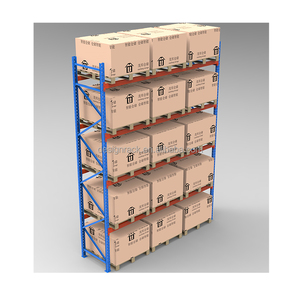
Engineered for ultra-dense high-bay facilities. Offers selective beam profiles compatible with 2-ton point loads, deep-reach handling, and narrow aisle stability.
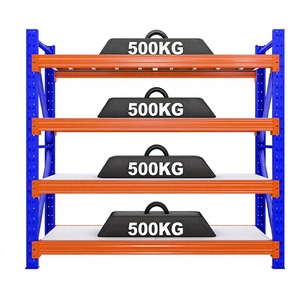
Pre-galvanized and automated powder-coat finishes provide superior resistance against rust and environmental wear in multi-tier picking facilities.
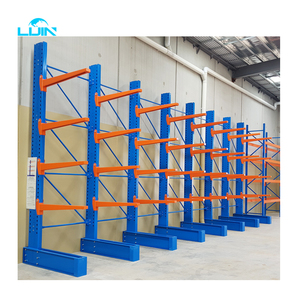
The benchmark for timber, steel tubing, and extruded aluminum. Free-front column structure removes horizontal obstruction for continuous longitudinal loading.
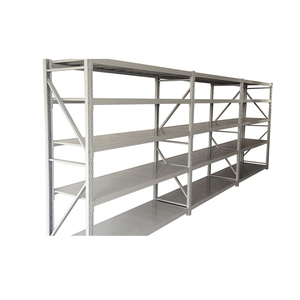
Boltless modular system optimized for rapid reconfiguration in manual distribution hubs, maintenance shops, and e-commerce picking lines.
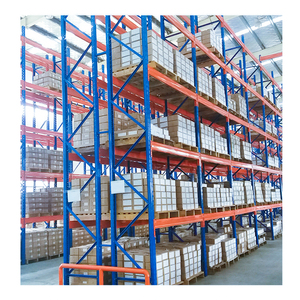
Hot-rolled structural steel construction designed for punishing logistics environments, heavy pallet throughput, and high-impact resistance.
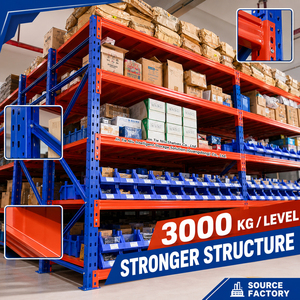
Reinforced corrugated steel panels provide 3,000kg tier capacity, delivering uncompromising strength for heavy industrial tooling and dense hardware.
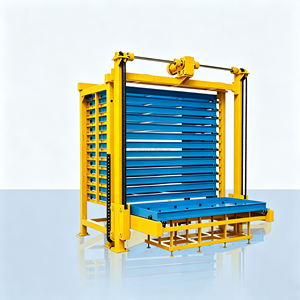
Engineered specifically for heavy sheet metal packs and plate inventory. Integrates glide-out drawers for safe hoist and overhead crane lifting.
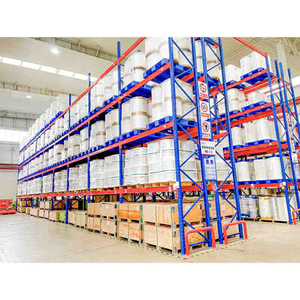
Combines roll-formed high-tensile upright frames with drop-in wire decking to comply with NFPA 13 in-rack fire suppression requirements.
Global Manufacturing Scale & Engineering Dominance
Backed by nearly 70 years of structural innovation, our engineering division delivers bespoke warehouse configurations engineered to RMI/ANSI MH16.1 specifications, providing certified stability across global seismic zones.
In-House Structural & Seismic Design
Our licensed PE structural engineers evaluate localized seismic acceleration (Ss, S1), soil classes, and slab embedment parameters to eliminate deflection failures under dynamic cantilever loads.
Multi-Million Automated Powder Lines
Our closed-loop electro-deposition and automated powder-coating lines guarantee minimum 70-micron finish thickness, resisting saline corrosion, industrial acids, and high-frequency fork abrasion.
End-to-End Project Accountability
From initial CAD modeling and floor slab core drill analysis to modular assembly, containerized sea freighting, and on-site certified installation oversight, we eliminate distributor markups.
Engineering Whitepaper: The Mechanics of Heavy-Duty Cantilever Racking
Industrial storage of long, irregular, and non-palletized inventory—such as structural steel beams, PVC and carbon steel piping, dimensional lumber, aluminum extrusions, and laminated panels—imposes unique static and dynamic physical forces on warehouse racking. Unlike standard selective pallet racks where downward forces transfer symmetrically through vertical columns via interconnected horizontal beams, a cantilever racking system relies entirely on cantilever moment physics.
In a heavy-duty cantilever setup, loads rest directly on horizontal arms that connect to an upright central column at only one end. This cantilever architecture creates high torsional and overturning bending moments concentrated at the arm-to-column connection and the column baseplate. Consequently, structural integrity demands hot-rolled I-beam steel (such as ASTM A36, Q235B, or Q355B) or heavy roll-formed sections capable of counteracting axial bending without micro-fissuring or elastic yield failure.
When selecting between Structural Steel Cantilever and Roll-Formed Cantilever, procurement directors must evaluate impact dynamics and continuous dead loads. Hot-rolled structural steel (typically C-channel or I-beam profiles) provides substantial web thickness, making it ideal for forklift-dense heavy manufacturing facilities where incidental mast collisions would buckle lighter roll-formed profiles.
| System Type | Material Specification | Max Arm Capacity | Column Height Range | Impact Resistance | Best Application Profile |
|---|---|---|---|---|---|
| Structural I-Beam Cantilever | Hot-Rolled W-Beams (ASTM A36/A572) | 1,500 kg – 6,000 kg / arm | Up to 12.0 Meters | Extreme (Heavy Impact) | Steel pipes, plate coils, structural profiles, outdoor yards |
| Roll-Formed Cantilever | Cold-Rolled Coil (50KSI Yield Steel) | 300 kg – 1,200 kg / arm | Up to 6.5 Meters | Moderate (Protected) | Lumber yards, furniture distribution, plastic conduits |
| Cantilever with Wire Decking | Tubular Arms with Welded Mesh | 500 kg – 1,500 kg / level | Up to 8.0 Meters | High Uniformity | Varied short lengths, fragile rolls, mixed palletized long goods |
| Mobile Base Cantilever | Structural I-Beam on Motorized Bogies | 2,000 kg – 5,000 kg / arm | Up to 10.0 Meters | High Tech / Enclosed | Cold storage, high land-cost facilities, slow-moving heavy raw stock |
Top 10 Heavy Duty Cantilever Racking Suppliers & Exporters
A rigorous global benchmark evaluating engineering capability, manufacturing throughput, international code certification (RMI, ANSI MH16.1, CE, FEM, AS4084), and containerized export infrastructure.
UNARCO RACKING
A legacy pioneer with nearly 70 years of engineered racking innovation. UNARCO fabricates both heavy-duty structural and high-strength roll-formed cantilever systems engineered in full accordance with RMI and ANSI MH16.1 standards.
Get a QuoteOHRA Regalanlagen GmbH
Recognized throughout Europe as the founding developer of clip-in cantilever arms. OHRA fabricates exclusively from hot-rolled solid-wall steel profiles, yielding high resilience against heavy forklift impacts.
Get a QuoteStow International
Operating massive automated manufacturing plants across Europe, Stow manufactures heavy-duty cantilever systems compliant with EN 15512 and FEM 10.2.02, engineered for both internal warehouses and covered outdoor setups.
Get a QuoteMecalux S.A.
A global material handling conglomerate with extensive production across the Americas and Europe. Their cantilever lineup addresses both light multi-tier picking and ultra-heavy structural bar-stock racking.
Get a QuoteFrazier Industrial
The largest producer of 100% structural steel storage racks in North America. Frazier’s cantilever racks utilize heavy hot-rolled structural channels and W-beams for maximum structural longevity.
Get a QuoteDexion
Under Gonvarri Material Handling, Dexion supplies engineered cantilever solutions with customized arm lengths, roof trusses for outdoor weather protection, and heavy-duty structural base assemblies.
Get a QuoteSteel King Industries
A premier American racking manufacturer offering both I-beam structural and roll-formed cantilever lines. Steel King systems are engineered to handle single-side and double-side long load storage.
Get a QuoteAtox Storage Solutions
Specializes in industrial storage systems across Europe and Latin America. Their cantilever systems offer high aesthetic paint finishes, precision punch spacing, and certified load stability.
Get a QuoteColby Storage Solutions
Operating under Dematic, Colby produces cantilever racks specifically calculated to withstand rigorous Australian AS4084 standards and aggressive outdoor mining/lumber storage environments.
Get a QuoteSperrin Metal
A UK manufacturing specialist delivering turnkey bespoke cantilever systems designed for builders’ merchants, plumbing distributors, steel stockists, and manufacturing raw material bays.
Get a QuoteFuture Procurement Trends & Engineering Innovations
How logistics leaders, multi-site warehouse operators, and global EPC firms are reshaping their cantilever capital expenditure strategies through 2030.
Automation & AGV-Integrated Long-Goods Retrieval
The chronic global shortage of experienced reach-truck and combi-lift operators is driving adoption of automated guided side-loaders and AS/RS cranes engineered for cantilever infrastructure. Future procurement specifications prioritize ultra-tight deflection tolerances (+/- 1.5mm) across column uprights to facilitate optical-sensor automated placement.
Life-Cycle Corrosion Protection & Zinc Electroplating
With real estate costs pushing heavy steel and timber storage out of covered warehouse enclosures and into external open-air yards, buyers are transitioning away from standard cosmetic single-coat paints. Specification of ISO 1461 Hot-Dip Galvanization (HDG) and marine-grade anti-corrosion primer coatings ensures 30+ year lifespan without structural re-certification.
Structural Health Monitoring & IoT Deflection Telemetry
Next-generation heavy-duty cantilever installations increasingly feature fiber-optic strain gauges and piezoelectric shock sensors mounted directly at critical arm-column joints. Real-time telemetry notifies operations management if an impact exceeds yield thresholds or if accidental overloading violates local municipal building codes.
Heavy-Duty Cantilever Procurement FAQ
Technical, regulatory, and engineering guidance addressed directly by our senior structural warehouse storage engineers.
What concrete slab thickness and soil conditions are required for heavy structural cantilever racks?
Unlike standard pallet racking where vertical downward loads are distributed across four symmetrical baseplates, cantilever racks exert concentrated overturning moment forces directly into the slab anchors. For typical medium-to-heavy applications (3,000kg to 5,000kg per column), structural engineers specify a minimum 6-inch to 8-inch reinforced concrete slab (3,000 to 4,000 PSI compressive strength).
For high-capacity structural configurations (exceeding 8,000kg to 15,000kg per upright), standard floor slabs are often inadequate; dedicated structural grade beams or continuous foundation footings engineered to resist tensile uplift on rear anchors must be poured prior to installation.
How is arm deflection calculated under ANSI MH16.1 and international racking codes?
Under RMI/ANSI MH16.1 specifications, cantilever arm deflection is typically limited to L/120 or L/180 (where L is the arm length from column face to load center). To eliminate the risk of product sliding off the front of the rack during loading or minor seismic movement, high-quality cantilever systems are manufactured with an inherent upward slope (incline) of 1.5 to 2.5 degrees.
When the rated uniformly distributed load (UDL) is fully applied, the arm deflects downward to a level horizontal plane without angling past horizontal decline.
Why is uniformly distributed load (UDL) critical versus point loading on cantilever arms?
Cantilever arm capacities are universally certified based on a Uniformly Distributed Load (UDL). If a bundle of dense steel bar is placed entirely at the tip of the arm rather than centered along the arm's length, the bending moment at the column connection doubles, halving the structural load capacity of the arm and risking mechanical sheer.
Procurement specifications should always dictate maximum bundled lengths and require the inclusion of mechanical roll stops, fork clearance spacers, or drop-in wire decking to prevent concentrated point-load failures.
Can damaged cantilever arms or uprights be field-repaired or welded?
Per OSHA and RMI regulatory standards, unauthorized on-site welding or field torch-straightening of deformed cantilever columns and arms is strictly prohibited and immediately voids manufacturer certifications and local occupancy permits. Heating steel through field welding compromises the metallurgical heat-treat properties of the alloy.
Damaged arms must be de-pinned and replaced with factory-certified spares. Upright frames with minor base damage must be repaired exclusively using factory-engineered bolt-on repair sleeves certified by a licensed Professional Engineer (PE).
What engineering documentation should global buyers demand prior to placing a PO?
Overseas procurement teams must require: (1) Certified steel mill test certificates verifying yield strength (e.g., minimum 36 KSI / 235-355 MPa); (2) Professional Engineer (PE) stamped structural calculations verifying load capacities under local building code seismic accelerations (IBC 2021/2024, ASCE 7, or EN 1998); (3) Anchor embedment calculation data verifying safety factors against pull-out; and (4) Quality management documentation including ISO 9001 and AWS D1.1 structural welding certifications.
Request an Engineered Cantilever Layout & Seismic Review
Send our senior engineering team your warehouse CAD drawings, clear ceiling heights, and load bundle profiles for a turnkey capacity analysis and factory-direct export quote.