High-Capacity Industrial Racking & Multi-Tier Systems
Engineered roll-formed and structural steel storage solutions built to ANSI MH16.1 specifications, offering scalable upright geometry, impact-resistant frames, and custom load-bearing integration.
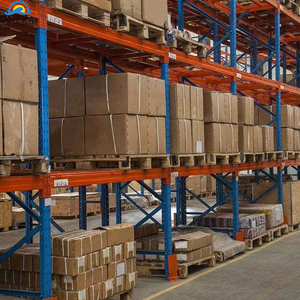
Custom Heavy Duty Industrial Steel Selective Pallet Rack Adjustable Warehouse Storage Rack Shelves
Frame Pitch: 50mm / 75mm Adjustable
Payload: Up to 5,000 kg / Level
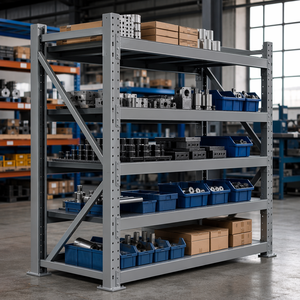
Custom OEM Storage Rack Frame | Heavy Duty Steel Welded Fabrication for Warehouse Pallet Racking
Steel Grade: Q235B / Q355B / ASTM A572
Finish: Industrial Powder Coated
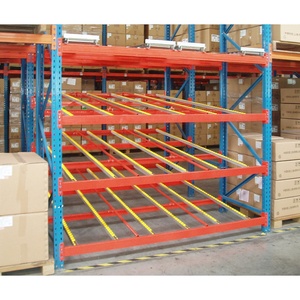
Warehouse Equipment Roller Shelves
Application: FIFO Split-Case Pick Modules
Track Profile: Heavy-Gauge Galvanized
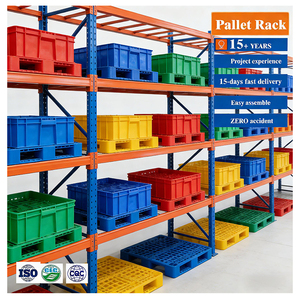
Wholesale Heavy-Duty Rack Warehouse Racks Beam Rack Heavy Duty Pallet 5 Layers 3000KG Triple Support Storage Solution
Bracing: Triple Structural Tie System
Levels: 5 Fully Adjustable Tiers
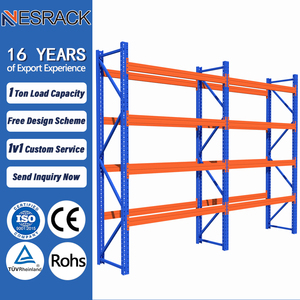
Heavy Duty Warehouse Shelving Industrial Steel Storage Rack with 5 Layers Racks for Warehouse Goods
Safety Factor: 1.67 Design Standard
Adaptability: Mezzanine Sub-Racking
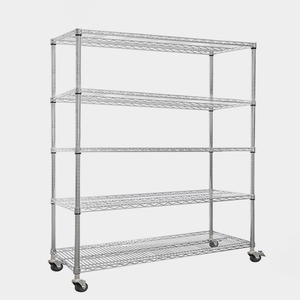
Racks Heavy Duty Metal Steel Storage Shelves 5 Layer Wire Shelf for Sale Racks Shelves
Flange Type: Step Beam Inverted Channel
Corrosion: Zinc Plated / E-Coat
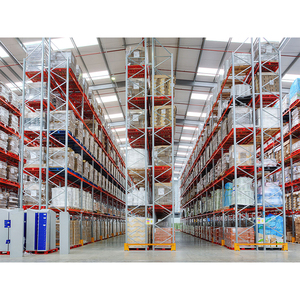
Industrial Heavy Duty Metal Warehouse Shelving System Adjustable Steel Storage Rack Pallet Racking Unit
Locking Mechanism: Auto Spring Steel Pins
Customization: Catwalk Integration Ready
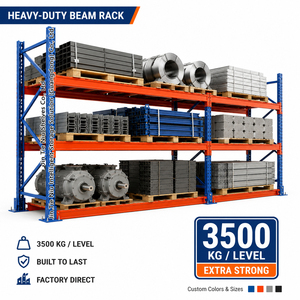
3500kg Extra Strong Industrial Steel Coil Motor Storage Heavy Duty Beam Pallet Warehouse Rack
Beam Style: Structural C-Channel Welded
Base Plates: Oversized Seismic Spreaders
Top 10 Heavy-Duty Multi-Tier Mezzanine Racking Manufacturers & Factories
A rigorous engineering and manufacturing capability audit comparing the world’s leading industrial fabricators based on weld integrity, seismic design compliance, steel roll-forming tolerances, and system scalability.
UNARCO RACKING
Pioneers of engineered pallet rack systems for nearly 70 years. UNARCO manufactures both hot-rolled structural and roll-formed high-strength steel systems. Known for heavy-duty multi-tier pick modules, catwalk mezzanines, and proprietary T-Bolt slotted connections that eliminate dislodgement while maintaining strict ANSI MH16.1 seismic compliances.
SSI Schaefer
A multinational intralogistics titan specializing in multi-tier bin storage systems and integrated automated platform solutions. Their cold-formed racking configurations are characterized by precise European FEM/EN15512 static standards, making them a preferred tier-1 vendor for multi-level robotic e-commerce pick towers.
Mecalux (Interlake Mecalux)
Providing extensive manufacturing output across Europe and the Americas, Mecalux is known for cost-effective bolted upright frame architectures and rack-supported multi-tier platforms. They maintain strong automated warehouse management software (WMS) synergy with high-density mezzanine floor operations.
Daifuku Co., Ltd.
The world’s largest material handling system integrator by revenue. Daifuku designs mega-scale multi-level structural pick modules that interface natively with automated guided vehicles (AGVs), ceiling-suspended monorails, and crane-fed automated storage and retrieval systems (AS/RS).
Frazier Industrial Company
A market leader in 100% hot-rolled structural steel channel racking. Frazier's multi-tier systems are engineered to withstand severe forklift abuse and abuse-prone distribution environments, providing infinite column torsional strength compared to lighter roll-formed options.
Jungheinrich AG
Renowned for integrated intralogistics engineering, Jungheinrich engineers multi-level narrow aisle (VNA) racking systems integrated with industrial catwalks, overhead crane interfaces, and ergonomic multi-tier picking aisles throughout the EMEA zone.
Stow Group
Operating large-scale automated manufacturing plants, Stow fabricates cold-rolled mezzanine systems and mid-tier industrial platforms. Their modular connectors enable fast deployment of multi-tier picking structures across European 3PL and fast-fashion distribution networks.
Dexion (Gonvarri Material Handling)
Historical innovator of slotted angle steel and high-density industrial storage. Dexion manufactures heavy-duty multi-tier shelving and structural mezzanine frames characterized by rigorous British SEMA design guides and high static safety tolerances.
BITO-Lagertechnik Bittmann GmbH
Specialists in small-parts picking systems and multi-tier shelving installations. BITO focuses on multi-level mezzanine operations requiring integrated container flow racks, staircase access towers, and fall-prevention mesh perimeter gates.
NEDCON (voestalpine Group)
A specialized subsidiary of the voestalpine high-performance steel group, NEDCON develops extreme-tolerance mezzanine racking systems engineered explicitly for complex automated warehouses, multi-level shuttle systems, and micro-fulfillment centers across Europe and the United States.
Structural Mechanics of Heavy-Duty Multi-Tier Mezzanine Systems
A comprehensive examination of vertical load distribution, dynamic horizontal drift, slab anchor embedment shear cones, and NFPA fire-suppression hydraulics for multi-level industrial warehouses.
Multi-tier industrial mezzanine racking systems represent an advanced branch of structural engineering where storage racking serves a dual purpose: bearing dead payload weights while acting as the primary load-bearing column framework for pedestrian walkways, sorting conveyors, and automated handling equipment. Unlike standard single-tier selective pallet racking, multi-tier platforms must be analyzed according to building structural codes (such as the International Building Code - IBC, and ASCE 7) in conjunction with industrial rack design specifications (RMI ANSI MH16.1 / ANSI MH16.3).
1. Primary Load Dynamics: Dead, Live, and Dynamic Harmonic Forces
Engineering a heavy-duty multi-tier mezzanine requires calculating several superimposed load categories:
- Structural Dead Load (DL): Self-weight of roll-formed uprights, structural C-channel beams, corrugated B-decking, 38mm particle/resin board, stairs, handrails, and suspended utility infrastructure (sprinklers, busbars, LED conduits).
- Stored Goods Payload: Uniformly Distributed Loads (UDL) on lower rack bays (often exceeding 2,500 kg to 3,500 kg per beam level) alongside concentrated point loads exerted by metal storage containers or coil brackets.
- Occupancy Live Load (LL): Continuous pedestrian foot traffic, manual pallet jack rollouts, and rolling cart weights across elevated catwalk walkways, typically governed by OSHA 1910.28 and IBC Chapter 16 requirements.
- Dynamic Kinetic Forces: Deceleration and acceleration torque caused by integrated roller conveyors, spiral chutes, or Autonomous Mobile Robots (AMRs) operating on elevated mezzanine decks.
| System Type | Floor Load Capacity (Live) | Maximum Bay Tiering | Primary Steel Profile | Ideal Industrial Application |
|---|---|---|---|---|
| Rack-Supported Catwalk Mezzanine | 300 – 500 kg/m² (60 – 100 psf) | 2 to 4 Floors (Up to 12m) | Roll-Formed Omega Uprights (Q355B / ASTM A1011) | E-commerce split-case picking, garment sorting, automotive spare parts. |
| Structural Column Free-Span Platform | 500 – 1,500 kg/m² (100 – 300 psf) | 1 to 3 Floors (Clear Under-Bridge) | Hot-Rolled Wide Flange H-Beams (ASTM A572 / A992) | Heavy machinery staging, robotic picking cells, bulk assembly plants. |
| Integrated Pick Module (Multi-Flow) | 400 – 800 kg/m² (80 – 160 psf) | 3 to 5 Elevated Tiers | Hybrid: Structural Base / Roll-Formed Upper Racks | High-velocity distribution centers, grocery cold chains, carton-flow hubs. |
| Automated Shuttle Mezzanine Grid | 600 – 1,200 kg/m² (120 – 245 psf) | Custom AS/RS Envelope | Tight-Tolerance Cold-Formed High-Tensile Channel | Goods-to-person sorting, pharmaceutical vaults, micro-fulfillment centers. |
2. Concrete Slab Engineering: Effective vs. Nominal Anchor Embedment
A critical point of failure in multi-tier mezzanine installation is the concrete floor slab. Uprights bearing multiple levels of decking channel immense concentrated vertical point loads into baseplates. Standard expansion or screw anchors rely on concrete compressive strength (typically 3,000 to 4,000 psi). In seismic regions (Seismic Design Categories C through F), structural engineers must evaluate the concrete breakout failure cone according to ACI 318 Chapter 17.
Effective embedment depth ($h_{ef}$) is the actual depth from the top surface of the concrete to the mechanical anchor expansion mechanism. Nominal embedment ($h_{nom}$) includes the entire drilled length. If concrete thickness is insufficient, shear stresses will cause brittle concrete spalling along the perimeter anchor cluster under lateral seismic sway. Hence, heavy-duty multi-tier mezzanine columns require oversized seismic baseplates (often 200mm × 200mm × 12mm or larger) secured by multiple heavy-duty wedge anchors or epoxy injection bolts.
3. Fire Protection & Flue Space Compliance (NFPA 13 Standard)
When stacking multiple elevated mezzanine walkways, vertical fire propagation becomes a primary life-safety risk. Standard closed solid mezzanine decks impede fire sprinkler water penetration. Consequently, multi-tier rack design mandates:
- Open Bar Grating Decking: Steel bar grating with a minimum 50% open area permits sprinkler water penetration to lower tiers, frequently eliminating the expensive requirement of in-rack sprinkler heads on intermediate levels.
- Flue Space Integrity: Continuous vertical flue spaces (longitudinal and transverse) must be maintained between back-to-back rack bays to allow heat to rise and trigger ceiling fire detectors swiftly while ensuring vertical water drainage.
Future Procurement Trends in Heavy-Duty Mezzanine Systems (2026–2035)
Key technological, operational, and macroeconomic shifts modern warehouse logistics leaders must incorporate into upcoming material handling capital equipment RFPs.
1. AMR & AGV Elevated Deck Integration
Mezzanines are evolving from static manual catwalks into dynamic runways for Autonomous Mobile Robots. Procurement contracts now demand elevated floor deflection tolerances lower than L/500, resin-coated leveling subfloors, and conductive anti-static top layers to prevent sensor interference on robotic fleets.
2. BIM & Digital Twin Design Workflows
Global supply chain managers now mandate Level of Detail (LOD) 400 Building Information Modeling (BIM). Digital twin models allow real-time collision detection against mechanical, electrical, and plumbing (MEP) overhead ducts, avoiding costly field welding and layout modifications during installation.
3. Modular Demountable Green Steel Assets
With corporate sustainability mandates and Scope 3 carbon emission audits, enterprises prioritize high-tensile, lightweight cold-formed steel manufactured with electric arc furnace (EAF) methods. 100% bolted, weld-free modular mezzanines qualify for accelerated tax depreciation as personal property.
4. Structural Sensor Telemetry & IoT Monitoring
Next-generation multi-tier installations embed strain-gauge telemetry on critical upright base joints and main horizontal girders. These smart sensors monitor real-time beam sag, impact shocks from material handling vehicles, and micro-subsidence in the concrete floor slab.
5. Hybrid Structural-Rollformed Engineering
Procurement teams are moving away from purely structural or purely roll-formed structures. Hybrid configurations utilize heavy structural C-channel columns on the ground floor to mitigate forklift impacts, transitioning to lighter roll-formed profiles on higher tiers to reduce total slab deadweight.
6. Accelerated Micro-Fulfillment Platforms
Rapid urban fulfillment requires deploying multi-level picking grids within existing low-ceiling metropolitan footprints. Manufacturers must design modular low-profile mezzanines that maximize every vertical inch while accommodating continuous conveyor chutes and high SKU density.
Why Tier-1 Warehouses Specify UNARCO Racking
Combining nearly 70 years of pioneering structural engineering heritage, automated powder-coating lines, and end-to-end turnkey project execution.
Nearly 70 Years of Engineering Lineage
Since the dawn of modern warehouse logistics, UNARCO has engineered racking solutions that define industry standards. As an active, founding member of the Rack Manufacturers Institute (RMI), our structural calculations follow ANSI MH16.1 guidelines, ensuring complete peace of mind for high-hazard storage setups.
State-of-the-Art Powder-Coat Finishing
Our multi-million-dollar automated powder-coat lines deliver high-impact, abrasion-resistant finishes that outlast conventional wet spray paint. The electrostatic cure withstands corrosive environments, cold-storage condensation, and continuous wheel scuffing on heavily traversed catwalk perimeters.
Seismic and Foundation Analysis
Every multi-tier mezzanine project is verified by our in-house engineering group. We calculate exact baseplate reactions, anchor embedment limits, dynamic wind/seismic shear forces, and slab load distribution tailored specifically to your facility’s municipal building code requirements.
Frequently Asked Questions on Multi-Tier Mezzanine Procurement
Authoritative technical answers to common questions encountered by warehouse operations directors, structural consultants, and industrial procurement managers.
What structural standards govern heavy-duty multi-tier mezzanine racks?
What is the engineering difference between rack-supported mezzanines and structural mezzanines?
Can our warehouse floor slab support a multi-tier mezzanine without new footings?
Which mezzanine decking material should be specified for high-traffic operations?
- Bar Grating: Welded steel bar grating offers unmatched strength, longevity, and natural light/sprinkler passage (over 50% open area), but can be noisy and difficult for small cart wheels.
- B-Deck with Resin Board (Resindek): Corrugated 20-gauge steel deck topped with high-density engineered tongue-and-groove resin panels. Provides a smooth, quiet, solid surface capable of supporting heavy rolling loads and AMRs up to 2,000 lbs.
- Steel Diamond Tread Plate: Extremely durable and non-combustible; ideal for heavy industrial staging areas subjected to harsh fluids or dragging pallets.
How do building codes treat fire protection in multi-tier pick modules?
Can an existing pallet rack system be retrofitted into a multi-tier mezzanine?
Consult with Our Structural Mezzanine Engineers
Send us your warehouse CAD layout, clear ceiling heights, and payload requirements. Our licensed engineering team will deliver a comprehensive RMI-compliant static layout, seismic anchorage design, and budgetary manufacturing proposal within 48 hours.