Featured Industrial Heavy-Duty Boltless & Rivet Storage Racking
Fabricated with cold-rolled industrial-grade steel, CNC-punched teardrop/keyhole uprights, and precision-stamped double-rivet beam pins designed to meet international ANSI MH28.2 standards.
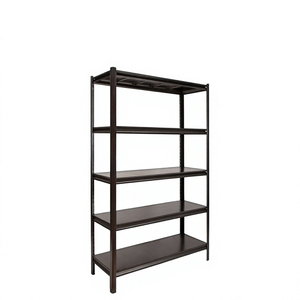

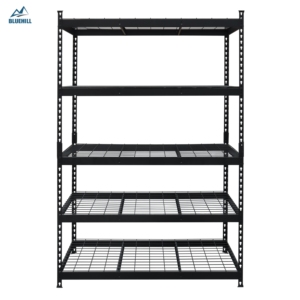
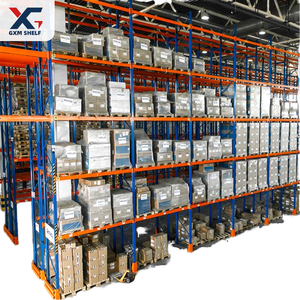
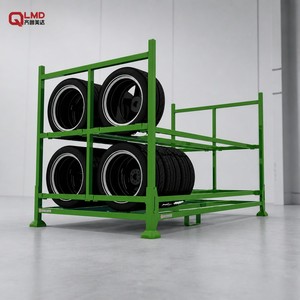
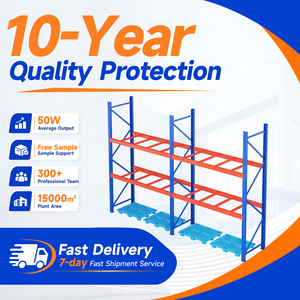
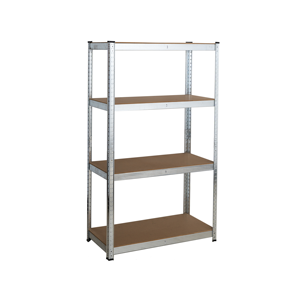
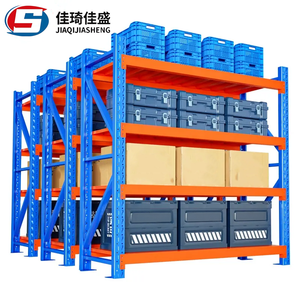
State of the Heavy-Duty Rivet Racking Industry: 2026-2030
Global warehouse real estate has reached unprecedented cost levels per square meter, compelling modern supply chain architects and procurement directors to seek structural storage systems that maximize volumetric density while avoiding costly civil foundations. Heavy-duty rivet racking (often characterized in industrial engineering as boltless keyhole interlocking shelving) has emerged as the premier intermediate load solution bridging lightweight hand-loaded shelving and high-tonnage selective pallet rack infrastructure.
Unlike standard slotted-angle iron or nut-and-bolt framing systems that experience joint relaxation under cyclic dynamic loading, heavy-duty rivet racking utilizes precision-tapered shoulder pins engaging into cold-rolled teardrop or keyhole upright slots. Under gravity load, the interlocking joint exhibits self-wedging mechanical behavior—increasing the lateral structural stiffness of the overall bay as weight is introduced.
To navigate the international vendor marketplace successfully, supply chain decision-makers must evaluate suppliers not simply as steel formers, but as engineered structural system integrators possessing comprehensive finite element analysis (FEA) validation, automated multi-stage pre-treatment coating capabilities, and traceable metallurgy.
Cost & Installation Matrix: Rivet vs. Traditional
A comparative breakdown evaluating capital outlay, installation labor hours, and structural lifecycle reliability across 5,000 square meters of warehouse floor area:
- Installation Speed: Boltless rivet systems assemble 65% faster than bolted steel frames, eliminating pneumatic ratchets and alignment errors.
- Structural Rigidity: Interlocking keyhole pins provide superior anti-sway resistance without cross-bracing obstructions, enabling 360-degree front and rear access.
- Reconfiguration Flexibility: Beam levels adjust vertically on 38.1 mm (1.5-inch) centers in seconds without disassembling adjacent bays.
- Total Cost of Ownership (TCO): Yields an estimated 34% net savings in first-year commissioning costs due to minimal specialized labor requirements.
What Distinguishes Top-Tier Rivet Racking Suppliers & Exporters?
A rigorous audit framework used by Tier-1 EPC contractors and global logistics operators to vet manufacturers based on structural physics, manufacturing automation, and regulatory pedigree.
1. Certified Structural Metallurgy
Premium exporters utilize cold-rolled commercial Q235B or ASTM A36 high-tensile carbon steel coil. Mill test certificates (MTC) verify tensile yields of ≥235 MPa, preventing sudden rupture under dynamic seismic shock.
2. Continuous Roll-Forming Tolerances
High-speed 18-stage roll-forming lines maintain post angle deviations within ±0.3 mm. Automated CNC punch presses punch keyhole teardrops at laser-verified pitch centers, preventing field assembly jams.
3. Advanced Anti-Corrosion Finishes
Automated electrostatic lines apply 60-80 micron thermosetting epoxy-polyester powder coats following a 9-stage phosphate wash, or provide hot-dip galvanization achieving over 500 hours of ASTM B117 salt spray endurance.
4. Custom Engineered CAD Layouts
Leading manufacturers possess internal project engineering teams providing complimentary AutoCAD bay designs, capacity stress charts, and finite element analyses (FEA) compliant with localized building codes.
5. Decking Material Versatility
Whether your fire protection requires flared wire decking, industrial pre-galvanized drop-in steel plates, moisture-resistant melamine, or ESD-rated laminate, the top suppliers engineer matching support tie-bars.
6. Certified Export Packaging
Global transit protection using heavy-gauge strapping, rust-inhibiting VCI film, edge armor guards, and customized fumigated pallets optimized for high-cube (40ft HC) shipping container volumetric utilization.
Future Procurement Trends for Industrial Rivet & Boltless Storage (2026–2030)
Procurement teams navigating volatile supply chains and fluctuating raw material indexes must adapt their capital expenditure strategy. The industrial boltless shelving sector is currently experiencing five pivotal shifts:
| Procurement Vector | Traditional Approach (Pre-2024) | Next-Generation Paradigm (2026+) | Operational Strategic Advantage |
|---|---|---|---|
| Steel Grade Specification | Generic commercial cold-rolled sheets without guaranteed yield stress. | Certified structural micro-alloyed steel (e.g., Q355B / ASTM A572 Grade 50). | Weight Reduction: -18% Enables higher shelf loading with lower total dead weight. |
| Surface Protection | Standard solvent-based dipping or single-pass spray powder. | Environmentally sustainable nano-ceramic zirconium pretreatments + anti-microbial coatings. | Zero VOC Eliminates heavy metal waste while boosting adhesion and salt-spray durability. |
| Intralogistics Integration | Static shelving aisles operating as independent manual picking silos. | Modular integration with autonomous mobile robots (AMRs) and Pick-to-Light (PTL). | Throughput: +300% Seamless integration with barcode scanners and AGV pick faces. |
| Seismic Code Compliance | Prescriptive standard baseplates regardless of installation location. | Site-specific seismic engineering using USGS ground acceleration data (IBC / Eurocode 8). | Life-Safety Verified Eliminates catastrophic structural tipping during high-magnitude events. |
| ESG & Carbon Border Accounting | Unmonitored carbon intensity during smelting and roll-forming. | Audited Environmental Product Declarations (EPD) and recycled scrap utilization rates. | CBAM Compliant Eliminates regulatory tariff penalties when importing into the EU and US. |
Engineering & Technological Evolution of Rivet Racking Systems
The engineering trajectory of boltless industrial racking is characterized by rapid structural optimization driven by cold-formed thin-walled steel research. Historical designs relied heavily on oversized steel angle gauges (2.0 mm to 2.5 mm thickness) to compensate for joint imperfections. Today, modern roll-forming technology leverages progressive forming passes that impart longitudinal strengthening ribs into both post uprights and horizontal beams.
1. Finite Element Analysis (FEA) and Joint Rotational Stiffness
A critical limitation of early boltless systems was rotational flexibility at the upright-to-beam connection. Top exporters now conduct extensive cyclic load testing on rivet-keyhole engagement geometries. By engineering double-radius taper pins that contact the keyhole shoulder at four discrete tangential points, modern beams achieve a near-rigid moment connection. This drastically reduces overall frame drift and eliminates the need for diagonal cross-braces, allowing uninhibited bilateral product loading.
2. Hybrid Decking Systems and Fire Safety Infiltration
Standard solid particle board and MDF shelving panels—while economical—pose severe fire propagation hazards and obstruct ESFR (Early Suppression, Fast Response) ceiling sprinkler penetration. Consequently, the engineering market is aggressively adopting galvanized welded wire mesh decking with waterfall edges and corrugated steel panels punched with 50% open-area perforations. These engineered panels satisfy NFPA 13 building insurance requirements while eliminating dust accumulation in cleanroom, electronic, and pharmaceutical storage depots.
Why Global Procurement Leaders Choose Our Heavy-Duty Racking
Backed by decades of structural manufacturing heritage, certified to RMI / ANSI specifications, and relied upon by Fortune 500 supply chain networks across the globe.
Rigorous RMI & ANSI Compliance
All heavy-duty storage racks are engineered and manufactured in strict compliance with current Rack Manufacturers Institute (RMI) standards and ANSI MH16.1 / MH28.2 specifications for guaranteed workplace safety.
End-to-End Project Engineering
Our in-house design and structural engineering department evaluates site-specific floor slabs, seismic activity, ceiling clearances, and forklift traffic to supply bespoke AutoCAD layout blueprints.
Automated Precision Paint Lines
Multi-million-dollar investments in computerized electrostatic powder-coating booths deliver uniform film thickness, exceptional scuff resistance, and high-gloss corporate color matching across all batch runs.
High-Impact Column Protection
We engineer and supply integrated heavy-gauge bolt-on column protectors, upright reinforcement collars, and heavy-duty steel baseplates that absorb lift equipment impacts and protect warehouse structural integrity.
Trusted by Fortune 500 Leaders
With thousands of successful installations worldwide spanning cold storage, 3PL e-commerce fulfillment, automotive assembly lines, and industrial distribution, our track record guarantees zero-defect deliveries.
Frequently Asked Questions: Heavy-Duty Rivet Racking
Clear, technically verified answers addressing key structural, regulatory, installation, and export logistics concerns faced by commercial buyers.
What engineering standards govern heavy-duty rivet and boltless steel racking?
Industrial boltless rivet shelving is designed and tested according to ANSI MH28.2 (Specification for the Design, Testing, and Utilization of Industrial Steel Boltless Shelving), which operates in tandem with the general Rack Manufacturers Institute (RMI) standard ANSI MH16.1.
In the European Union, designs adhere to EN 15512 and EN 15620 for structural clearances and tolerances. These standards establish baseline safety factors for yield tensile strength, post bucking limits, beam deflection ratios under uniform load (L/200), and dynamic impact resistance.
What is the structural difference between Single Rivet and Double Rivet beams?
Single Rivet beams utilize a low-profile angle with one pin fastener at each end. They are optimized for high-density light-duty picking, maximizing vertical shelf clearance and overall box capacity with lower tier load limits (100–180 kg per level).
Double Rivet beams feature dual shoulder rivets at each end connection, providing rigid moment resistance along both horizontal and lateral planes. Double rivet configurations form the primary framework for intermediate and bottom shelf levels, delivering robust load capacities from 300 kg up to 600 kg (660 to 1,320 lbs) per shelf tier over spans up to 2000 mm without requiring cross-bracing.
How do floor slab conditions and seismic zones affect rivet rack installation?
When rack height-to-depth ratios exceed 6:1 (or 4:1 in seismic zones classified as IBC Seismic Design Category C through F), baseplates must be mechanically anchored into the concrete floor slab. Slab thickness must typically be ≥ 100 mm (4 inches) with a compressive strength of at least 3,000 PSI (20.7 MPa).
Our project engineering team calculates nominal vs. effective anchor embedment depths and specifies heavy-gauge footplates with expansion wedge bolts to resist seismic overturning moments.
Which decking type should I choose: Steel Plate, Wire Mesh, or Wood Composite?
Wire Mesh Decking: Highly recommended for facilities equipped with overhead ceiling fire sprinklers. Wire mesh permits 50%+ open water penetration (complying with NFPA 13), prevents dust buildup, and offers superior visibility for multi-tier picking platforms.
Galvanized / Powder-Coated Steel Panels: Best for high-sanitation environments, chemical storage, oils, grease, and heavy point-loads where liquid absorption must be avoided.
MDF / Melamine Wood Decks: Most cost-effective for general commercial archiving, retail backrooms, and manual spare parts picking in dry, indoor climate-controlled facilities.
Can boltless rivet racking be integrated into multi-tier mezzanines or automated systems?
Yes. Heavy-duty rivet uprights can be extended vertically up to 6,000 mm (20 feet) to engineer rack-supported multi-tier catwalk picking mezzanines. Integrated intermediate steel walkways, safety handrails, staircases, and pallet drop gates can be integrated directly into the system framework.
Additionally, rivet racking serves as modular tote storage bays flanking autonomous mobile robot (AMR) induct lanes, split-case carton-flow picking lanes, and continuous tote conveyor systems.
What technical information is required to receive a customized quotation and CAD layout?
To deliver an optimized engineered layout and formal tender quotation within 24–48 hours, our structural team requests: (1) Warehouse architectural CAD layout or overall floor dimensions including ceiling clear heights and column obstacle grids; (2) Unit load profile including dimensions (Width × Depth × Height) and maximum weight per level; (3) Desired shelf decking type (steel, wire mesh, or composite); (4) Facility postal code for localized seismic and wind engineering evaluation.
Request Technical Catalog & Custom Sourcing Review
Connect with our senior engineering specialists today to receive AutoCAD storage layouts, load capacity tables, and direct FOB/CIF container shipping quotations tailored to your operational timeline.