Engineering Principles of Heavy-Duty Die & Mold Storage Racking
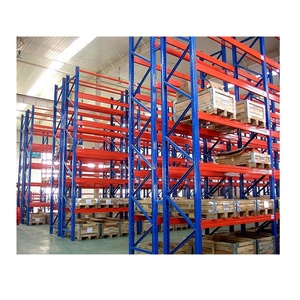
In modern stamping, plastic injection molding, and progressive metal forming operations, heavy stamping dies and injection molds represent multi-million-dollar capital tooling assets. These tools range from compact 500-kilogram inserts to monolithic press dies exceeding 10,000 kg (10 metric tons) per tooling set. Storing these assets presents structural challenges vastly distinct from standard pallet racking. Standard logistics racking relies upon uniformly distributed loads (UDL) spread evenly over two parallel horizontal box beams. In stark contrast, die storage racks must sustain severe point loads, concentrated load deflections, dynamic forklift tines contact, and horizontal shear forces generated during pull-out cantilever drawer operations.
When specifying a heavy duty die storage rack manufacturer in China, global engineering directors must prioritize compliance with the Rack Manufacturers Institute (RMI) Specification ANSI MH16.1, alongside European standard EN 15512. Tooling storage systems fabricated using structural channel steel (hot-rolled C-channels) demonstrate superior resilience against material micro-fractures, localized flange buckling, and mechanical impact from handling equipment compared to light-gauge, roll-formed alternatives.
Concentrated Point-Load Resistance
Unlike palletized loads that bridge across load beams, steel dies transmit intense, localized stress over small footprint surfaces. Integrated solid steel decking with bottom reinforcing ribbing is required to avoid structural sagging and permanently deformed upright geometry.
Dynamic Cantilever Overturn Safety
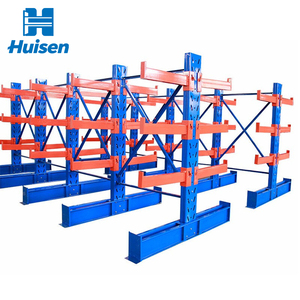
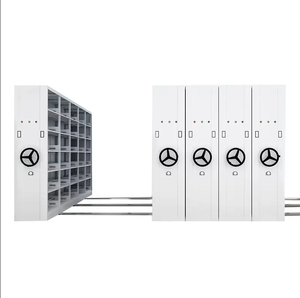
Slide-out drawer die racks shift the dynamic center of gravity outside the frame footprint when fully extended. Systems must be engineered with interlock mechanics preventing multiple simultaneous drawer extensions and massive floor anchorage embedment.
Automated Overhead Crane Compatibility
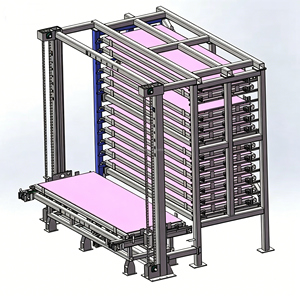
Heavy tooling cannot be handled exclusively by standard counterbalance forklifts due to mast height and aisle clearance limitations. Modern die rack bays are custom-fitted with full-travel overhead monorail hoists and telescopic electric extraction mechanisms.
Structural Comparison: Die Storage Framework Configurations
Selecting the appropriate die storage system depends directly on tool weight, access frequency, turnover rate, and available bay heights. The table below delineates structural mechanics across key mold storage rack typologies:
| Rack Architecture Typology | Rated Capacity / Tier | Extraction Mechanism | Selectivity Profile | Ideal Industrial Application |
|---|---|---|---|---|
| Manual Pull-Out Drawer Die Rack | 500 kg – 2,000 kg | Roller-bearing drawer (65% stroke) | 100% Direct Pick Face | Plastic injection molds, CNC tooling, progressive die repair |
| Heavy Duty Electric Powered Extractor Rack | 2,000 kg – 8,000 kg | Motorized ball-screw / Chain drive (100% stroke) | 100% Overhead Crane Pick | Automotive exterior panel stamping dies, forging tools |
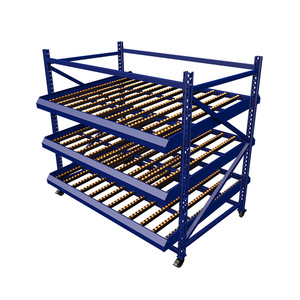
| Fixed Structural Die Beam Rack | 3,000 kg – 12,000 kg | Static steel-plate deck / Forklift access | Selective (Bay dependent) | Heavy forging dies, inactive legacy mold inventory |
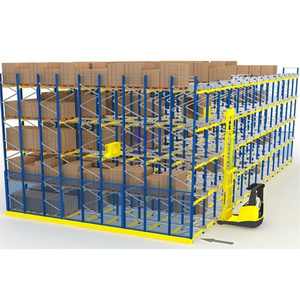
| Automated AS/RS Crane Die System | Up to 15,000 kg | Twin-mast telescopic stacker crane | Automated WMS / MES Driven | Gigafactory body-in-white stamping, aerospace tooling hubs |
Future Sourcing & Procurement Trends for Industrial Tooling Racks
Industrial procurement of heavy-duty die storage systems is undergoing structural disruption. As global Tier-1 automotive and industrial manufacturers shift to Industry 4.0 paradigms, procurement teams face new criteria beyond simple cost-per-ton steel pricing:
Digital Twins & RFID Asset Integration
Next-generation die racks feature embedded RFID sensors and optical sensors on each tier, reporting tooling status, maintenance history, and cycle counts directly to SAP, Oracle, or MES enterprise networks.
Site-Specific Non-Linear Seismic Engineering
Global logistics managers now demand non-linear dynamic seismic FEA (Finite Element Analysis) simulating specific geographical base shear, ground acceleration, and floor anchor embedment ratios prior to steel fabrication.
Micro-Emission Automated Finishing
Multi-stage automated pre-treatment baths combined with electrostatic polyester powder-coat lines have replaced solvent coatings, ensuring high scratch resistance against industrial die friction and superior salt-spray anti-rust protection.
Enterprise Advantages: Why Leading Plants Partner with Us
Leveraging nearly 70 years of engineered pallet racking and heavy industrial storage leadership, our manufacturing facilities bridge Chinese structural steel fabrication precision with global design standards. We eliminate multi-layered intermediary brokers, providing engineering directly from structural layout to turnkey site installation:
Integrated Structural Steel Capabilities
From ASTM A36 / Q235B roll-formed structural channels to heavy-gauge cold-formed uprights, our facility handles plate cutting, CNC robotic welding, beam stamping, and custom heavy-load baseplate fabrication in-house.
Full RMI ANSI MH16.1 Certified Compliance
Every structural bay calculation is verified against bending deflection limits (L/240 or L/480 for sensitive automated systems), ensuring zero weld failures or structural plasticity even under maximum capacity load conditions.
End-to-End Accountable Project Engineering
Direct project engineers manage every stage from building CAD reviews, soil slab anchor pull tests, and seismic certification calculations to crating, export logistics, and worldwide installation supervision.