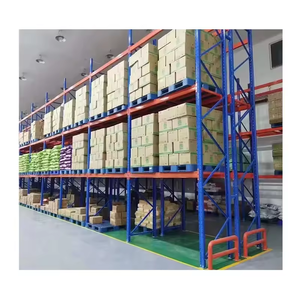
Top Trusted Heavy Duty Double Sided Cantilever Racking Factories & Factory
Engineering White Paper & Sourcing Authority: Structural Integrity, Finite Element Analysis (FEA), and High-Density Longitudinal Storage Systems for Global Supply Chains.
Engineered Storage Portfolio
Precision-Manufactured Warehouse Racking Systems
Direct from specialized manufacturing plants: heavy-duty roll-formed, structural steel channels, and automated systems fabricated in strict compliance with international RMI (ANSI MH16.1) and ISO structural codes.
Engineering Mechanics of Heavy-Duty Double Sided Cantilever Racking
In modern industrial warehousing, storing non-standard, long, or bulky materials—such as structural steel I-beams, extruded aluminum tubing, raw lumber packs, industrial piping, and sheet metal—presents unique physics challenges. Conventional pallet racks with front vertical columns introduce structural interference, severely restricting storage continuity and horizontal clearance.
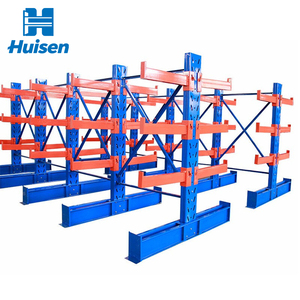
Heavy Duty Double Sided Cantilever Racking solves this geometric bottleneck. Engineered with a central vertical upright column anchored to a dual-flange base, it projects load-bearing arms symmetrically on both sides. This dual-sided configuration delivers optimal balance: opposing load vectors offset bending moments within the central column web, resulting in significantly enhanced mechanical efficiency compared to single-sided systems.
Key Engineering Formula & Overturning Safety Factor: The equilibrium of a double-sided cantilever column relies heavily on uniform loading and rigid base anchor embedment. While symmetrical loading neutralizes torsional shear, factory design must always accommodate severe single-side load imbalances (e.g., during active forklift retrieval). Our factory engineers design columns based on ANSI MH16.1 specifications, ensuring a minimum structural safety factor of 1.95 against elastic buckling and base yield under full asymmetrical loading conditions.
Fabricated from either heavy cold-formed C/U-profiles or heavy hot-rolled structural I-beams (such as ASTM A36, Q235B, or Q355B structural grades), these systems withstand dynamic horizontal shear forces and cyclic forklift impact. The connection between the cantilever arm and the column uses high-tensile Grade 8.8 or 10.9 structural bolt arrays or proprietary wedge-pin mechanical pivots, preventing arm detachment during sudden vertical shock loads.
Future Procurement Trends in Industrial Cantilever Systems
As enterprise supply chain logistics advance, procurement directors and facility infrastructure managers are transitioning from purchasing commoditized racking towards data-driven, highly engineered structural assets. The current global sourcing landscape reveals three critical structural shifts:
Total Cost of Ownership (TCO) vs Initial Capex
Procurement teams now prioritize structural resilience over initial price per kilogram. Premium powder-coated and hot-dip galvanized (HDG) columns eliminate corrosion cycles in outdoor yards and humid environments, yielding up to a 40% reduction in lifetime maintenance and rack repair overhead.
Stringent Seismic Site Engineering
Global building codes (including IBC 2024, Eurocode 3, and AS 4084) mandate localized seismic calculation reports. Global buyers strictly demand factory-certified Finite Element Analysis (FEA) reports verifying concrete slab anchorage, embedment depth, and dynamic baseplate displacement.
Modular Decking & Hybrid Storage
Modern factories demand versatility. Heavy-duty double-sided systems are increasingly specified with removable drop-in wire mesh decking, heavy steel grating, or continuous saddle supports, allowing facilities to alternate between raw pipe bundles and crated machinery on the same vertical bay.
Technology & Manufacturing Development Horizons
The manufacturing and structural design of heavy-duty double sided cantilever racking is undergoing profound industrial innovation:
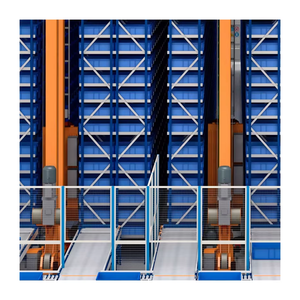
1. Automated Guided Vehicles (AGV) & Stacker Crane Integration: Traditional cantilever racking relied exclusively on skilled side-loader or multi-directional forklift operators. The next generation of heavy-duty double-sided cantilever systems is precision-engineered to interface with automated stacker cranes and AGVs. This integration requires ultra-tight fabrication tolerances (±1.0mm per 6-meter vertical column height) to prevent robotic retrieval collisions.
2. Advanced Robotic Welding & Automated Multi-Stage Pretreatment: Modern manufacturing plants utilize multi-axis robotic welding cells for cantilever arm and baseplate assembly. By executing consistent deep-penetration submerged arc welds, factories eliminate micro-cracking and stress concentrations at critical arm-to-column joints. Furthermore, advanced pre-treatment lines featuring nano-ceramic phosphatizing combined with robotic electrostatic powder coating provide over 1,000 hours of ASTM B117 salt-spray resistance.
3. IoT Real-Time Deflection & Overload Monitoring: Cutting-edge logistics facilities are introducing smart strain sensors embedded within high-stress cantilever arms. These sensors transmit real-time deflection telemetry to the facility’s Warehouse Management System (WMS), actively warning operations managers of dynamic overloading or unexpected localized forklift impacts before mechanical failure can occur.
Technical Specification & Structural Matrix
Compare standard roll-formed configurations with hot-rolled heavy structural steel cantilever systems to align with your facility's static load profile:
Choosing an engineered storage manufacturing partner requires strict verification of fabrication infrastructure, QA protocols, and design accountability. Drawing upon nearly 70 years of material handling engineering heritage, our facilities provide comprehensive manufacturing control from raw steel coil to on-site commissioning.
Full Compliance with RMI & ANSI MH16.1
Every structural member, cantilever arm connector, and column baseplate is manufactured strictly in compliance with current Rack Manufacturers Institute specifications, ensuring dependable safety margins for multi-tier loads.
In-House Seismic & FEA Calculations
Our dedicated structural project engineers perform site-specific seismic reviews. We analyze slab thickness, rebar positioning, concrete compressive strength, and anchor bolt effective embedment to ensure seismic compliance.
Turnkey Project Management
From initial warehouse CAD layout design and structural calculations to automated manufacturing, international shipping, and on-site assembly supervision, we deliver unified single-source accountability.
Procurement Knowledge Base
Frequently Asked Questions on Cantilever Racking Procurement
Key technical and sourcing questions answered by our warehouse structural engineering team.
What is the engineering difference between structural and roll-formed cantilever racking?
Structural cantilever racking is fabricated from hot-rolled heavy structural I-beams and channels (such as W or I-sections), delivering extreme load resistance and superior protection against forklift impacts in heavy industrial environments. Roll-formed cantilever racking is formed from cold-rolled steel coils, offering a lightweight, cost-effective, and easily adjustable solution for lighter payloads like PVC tubing, trim, and retail goods.
Why does nominal anchor bolt embedment differ from effective embedment in slab design?
Nominal embedment refers to the overall depth of the drilled hole, whereas effective embedment measures the mechanical depth at which the expansion anchor wedge or chemical resin transfers uplift tensile force into the concrete core. For heavy-duty cantilever systems with high overturning moments, calculating effective embedment is vital to prevent concrete cone breakouts under seismic or uneven loading.
How does single-sided load imbalance affect double-sided cantilever systems?
Double-sided cantilever columns achieve natural structural balance when both faces are uniformly loaded. However, during daily material handling, one side will frequently be unloaded while the opposing side remains fully loaded. Our factory engineers run dynamic load models ensuring that the baseplate, column flange thickness, and concrete slab anchorage can safely absorb this unilateral eccentric bending moment without structural deflection.
What data is required from overseas buyers to receive a structural engineering quote?
Procurement teams should prepare: (1) Warehouse architectural drawings specifying clear ceiling heights, column grids, and floor plan dimensions; (2) Detailed product load profiles including material length, depth, weight per bundle, and packaging type; (3) Forklift specifications including maximum reach height, aisle turning radius, and chassis dimensions; (4) Concrete slab thickness, compressive strength, and project geographical coordinates for local seismic evaluation.
Need an Engineered Storage Solution for Your Facility?
Speak directly with our factory structural engineers to review your building layout, load tables, and seismic requirements. Custom configurations and certified production direct from the manufacturer.