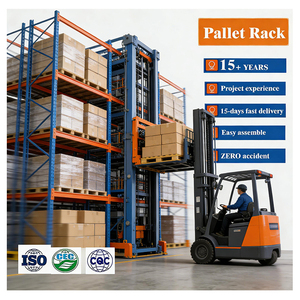
70+
Years Industrial Racking Heritage
100%
RMI & ANSI MH16.1 Compliant
3,000+
Kg Unit Load Engineering Range
F500
Trusted Global Supply Chain Supplier
High-Performance Portfolio
Engineered Industrial Pallet Racking Configurations
Select from heavy-duty structural and roll-formed racking architectures built to maximize storage density, load integrity, and aisle space efficiency.
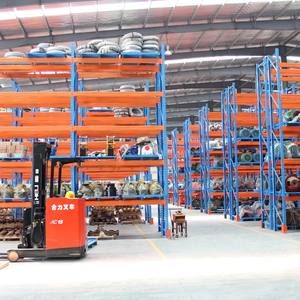
Heavy Duty Drive-in Rack Steel Pallet Racking Industrial Warehouse System
Request Specifications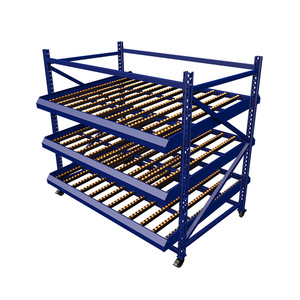
Carton Flow Racking Dynamic Roller Equipment Order Picking System
Request Specifications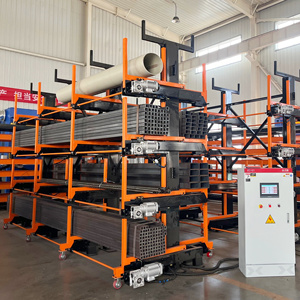
Telescopic Cantilever Racking System 0.5T-3.0T High Load Capacity
Request Specifications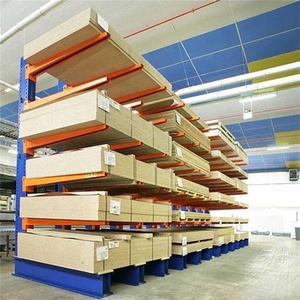
Heavy Duty Industrial Cantilever Arm Racking for Bulk & Bar Stock
Request Specifications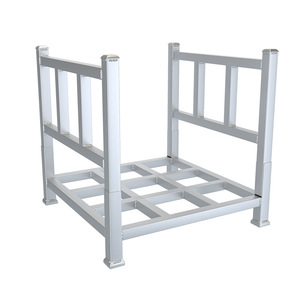
Folding Stacking Rack Portable Pallet Storage Modular Steel Frame
Request Specifications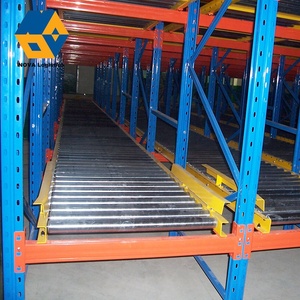
Heavy Duty Steel Gravity Flow Pallet Racking Dynamic High Density System
Request Specifications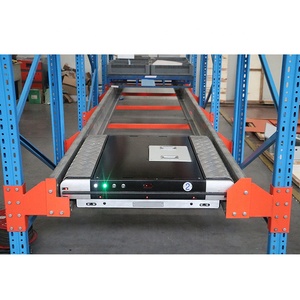
CE Certified Radio Shuttle Racking System for Cold Chain Warehousing
Request Specifications
Engineering Whitepaper & Architectural Deep Dive
High-Density LIFO Racking: Structural Mechanics, Throughput Physics, and Load Density Analysis
In modern industrial intralogistics, real estate appreciation and cubic space costs demand uncompromising volumetric utilization. Warehousing engineers frequently navigate the trade-off between selectivity and volumetric storage density. Among high-density configurations, Last-In, First-Out (LIFO) racking architectures—principally materialized through nested-cart Push Back systems and continuous-channel Drive-In/Drive-Thru installations—serve as the foundation for storing uniform, high-pallet-count inventory profiles without forfeiting floor-level picking footprint.
As premier heavy duty LIFO racking manufacturers, our engineering ethos combines hot-rolled structural steel durability with cold-formed geometric tolerances compliant with ANSI MH16.1 standards. The selection between Push Back nested carriage mechanics and structural Drive-In rail systems is governed by forklift transit dynamics, seismic baseplate anchoring criteria, and cycle turnover rates.
"Maximizing warehouse volumetric efficiency requires precise alignment between structural load rating, forklift clearance tolerance, and FIFO/LIFO turnover demands. When SKU homogeneity exceeds 5 pallets per line, engineered LIFO systems consistently reduce aisle footprint by 35% to 55% compared with conventional selective bays."
Push back rack configurations operate through an inclined structural steel track holding a cascading sequence of nested carts. When a forklift introduces a pallet into the bay, it gently displaces the antecedent pallet backward along precision-milled steel bearings. Conversely, upon extraction, gravity smoothly glides subsequent pallets forward to the pick face at an engineered pitch (typically between 3/8" and 1/2" per foot). This approach restricts lift truck travel strictly to the peripheral access aisle, reducing mast collision exposure by over 60% relative to deep-lane drive-in environments.
Comparative System Engineering
LIFO System Selection Matrix: Push Back vs. Drive-In vs. Radio Shuttle
Evaluate structural load limits, forklift cycle times, and operational selectivity across core heavy-duty high-density designs.
| Racking Configuration | Lane Storage Depth | Forklift Operating Footprint | Impact Vulnerability Index | Optimal SKU Profile |
|---|---|---|---|---|
| Nested Push Back Racking | 2 to 6 Pallets Deep | Aisle exterior only; zero vehicle entry | Extremely Low (Uprights protected by aisle guards) | Medium-velocity, multi-pallet SKU clusters (Food & Beverage, Dry Goods) |
| Structural Drive-In Racking | Up to 10+ Pallets Deep | Internal bay drive-in navigation required | Elevated (Direct upright & guide-rail exposure) | High-homogeneity, seasonal or bulk stock with low SKU diversity |
| Automated Radio Shuttle | Deep lane (20+ Pallets) | Aisle entry only; autonomous cart transit | Minimal (Robotic cart transits internal rails) | Intense cold storage, sub-zero blast freezers, high-volume manufacturing |
| Standard Selective Rack | Single/Double Deep (1-2 Pallets) | Dedicated transit aisle per double row | Moderate (Frequent turns in narrow aisles) | 100% individual pallet selectivity, high SKU fragmentation |
Industry Forecasting
Future Procurement Trends in Heavy-Duty LIFO Storage Systems
Emerging shifts shaping how supply chain directors, industrial developers, and EPC contractors procure racking infrastructure.
Hybrid Automated Shuttle Retrofits
Global logistics facilities are migrating from passive gravity push back systems toward semi-automated radio shuttle hybrids within heavy-duty frames, enabling multi-deep retrieval without increasing operational headcount.
Seismic Resilience & Slab Optimization
Updated International Building Code (IBC) and ASCE 7 seismic amendments necessitate advanced FEA (Finite Element Analysis) modeling, requiring manufacturers to calculate effective anchor embedment depths and oversized footplates directly against slab deflection limits.
Structural & Cold-Formed Synthesis
Procurement teams increasingly specify hybrid systems: structural hot-rolled C-channels for high-impact lower upright elevations combined with high-tensile roll-formed steel upper trusses to optimize capital investment without sacrificing impact durability.
Sub-Zero Cold Chain Expansion
As cold-chain pharmaceutical and frozen consumable sectors expand, demand has shifted toward dedicated low-temperature structural steels, specialized cart-bearing lubricants rated to -30°C, and zinc-rich powder barrier systems that mitigate cryogenic embrittlement.
Modular Reconfigurability & Circular Asset Life
Modern enterprises prioritize bolted modular connections over all-welded configurations. Demountable frames enable seamless structural reallocation, bay re-pitching, and integration of bolt-on column reinforcement as facility SKU matrices evolve.
Engineering Heritage & Quality Assurances
Why Tier-1 Operations Specify Our Heavy-Duty Racking Systems
Drawing on almost seven decades of structural manufacturing excellence, certified adherence to RMI standards, and integrated technical project support.
Certified RMI / ANSI MH16.1 Engineering
Every beam, upright upright frame, and cantilever connection is engineered and tested in full compliance with current Rack Manufacturers Institute specifications, delivering validated safety load coefficients.
End-to-End Project Engineering
Our in-house structural engineers evaluate building layouts, seismic categories, anchor slab mechanics, and truck mast characteristics from initial CAD concept through onsite load testing validation.
Comprehensive Column & Upright Shielding
Heavy-duty structural column protectors, bolt-on bullnose deflector shoes, and wraparound floor-anchored end-of-row barriers safeguard critical uprights against aggressive forklift impacts.
High-Performance Automated Powder Coating
Multi-million-dollar automated electrostatic powder coating lines apply an ultra-durable, corrosion-resistant surface finish resilient to mechanical abrasion, moisture, and chemical exposure.
Structural & Roll-Formed Production Under One Roof
Equipped with dual production capabilities, our manufacturing facilities deliver true engineering flexibility—selecting or combining heavy structural channels with roll-formed steel to achieve the ideal performance-to-cost ratio.
Technical Verification
Frequently Asked Questions: Heavy-Duty LIFO Racking Procurement
Key structural engineering, seismic compliance, and facility layout considerations addressed by our Senior Technical Sales Engineers.
What parameters dictate choosing between Push Back and Drive-In racking for a high-density LIFO footprint?
The decision is driven primarily by SKU diversity, pallet rotation frequency, and lift truck operator skill. Drive-in racking delivers higher raw density for operations holding 20–50+ identical pallets per SKU (such as raw material stock or beverage staging), but requires the lift truck to enter the physical bay, increasing cycle times and collision probability. Push back racking operates entirely from the aisle using nested carriages (2 to 6 pallets deep); every lane represents an independent pick face, making it the safer, faster choice for medium SKU counts with 2 to 8 pallets per item.
How do nominal anchor embedment and effective anchor embedment differ in pallet rack baseplate calculations?
Nominal embedment refers to the overall depth of the drilled concrete hole relative to the anchor shaft. In contrast, effective embedment (h_ef) measures the depth from the concrete surface to the critical expansion mechanism that transfers uplift and shear forces into the slab. RMI (ANSI MH16.1) and ACI 318 Chapter 17 mandate calculations based strictly on effective embedment. Specifying insufficient slab depth or misinterpreting nominal vs. effective embedment can cause edge breakout or catastrophic anchor pull-out during seismic events or accidental forklift collisions.
What impact does removing bottom shelf beams have on upright frame capacity?
Removing the lowest beam level to floor-stack pallets significantly increases the unbraced length (clear distance from the floor baseplate to the first beam level). Upright capacity is governed by Euler column buckling dynamics: doubling the unsupported length reduces the column's axial load capacity exponentially. Removing or altering bottom beam elevations requires formal engineering re-calculation and may demand heavier structural column inserts or reinforced frame bracing to prevent frame buckling.
How are LIFO push back systems engineered for sub-zero temperature cold storage environments?
Sub-zero cold storage demands low-temperature structural steels to counter cryogenic brittle fracture risks. In push back systems, carriage wheel bearings are packed with synthetic low-viscosity lubricants rated down to -30°C to prevent binding. Tracks are engineered with optimized debris-shedding clearances to counteract frost accumulation, and frame components receive multi-stage zinc powder coatings or hot-dip galvanization to resist condensation-driven corrosion during ambient temperature cycles.
Can components from different pallet rack manufacturers be combined within a single system?
While many roll-formed configurations share a standard "teardrop" profile, mixing components from different manufacturers without verified structural engineering is strongly discouraged and often voids the installation's certified load ratings under RMI and local safety codes. Minor variations in steel gauge, beam connector geometry, pin lock tolerances, and upright column metallurgy can lead to premature connection failure under eccentric or dynamic loads. Any mixed-component installation requires an independent structural engineer's review and recertified load plaques.