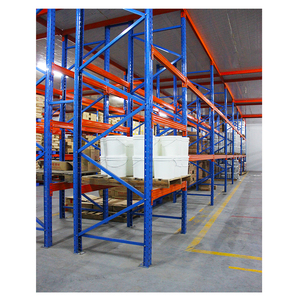
Double Deep / Selective
WAREHOUSE RACKING Large Capacity Selective Racking System Double Deep Pallet Racking Warehouse Storage
Design: 2-Pallet Depth
Access: 50% Selectivity
From seismic-rated structural channel uprights to dynamic gravity flow and high-density carton pick tunnels, inspect our premier factory portfolio manufactured for export worldwide.
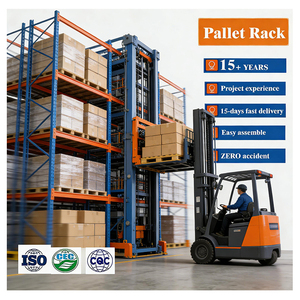
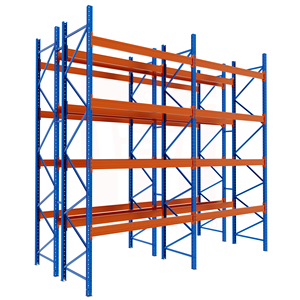
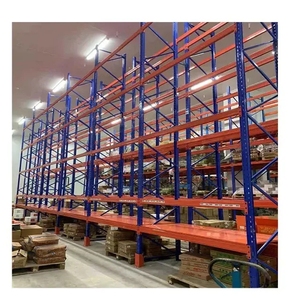
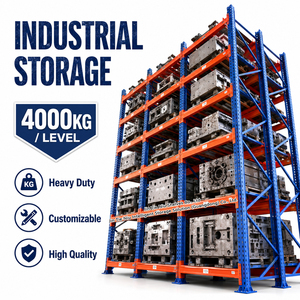
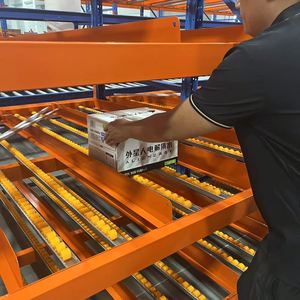
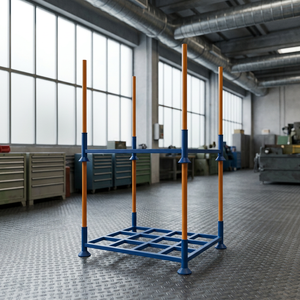
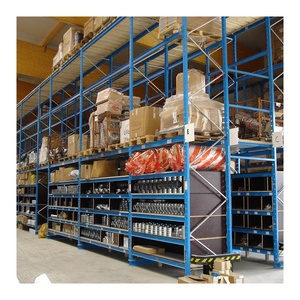
For near 70 years, our manufacturing facilities have engineered structural and roll-formed racking frameworks that secure high-capital logistics hubs, multi-tier distribution centers, and high-velocity automation cells.
Unlike light-gauge roll-formed uprights that yield under forklift impacts, our hot-rolled structural steel channels provide unmatched resistance to impact abuse in heavy traffic transit aisles, cold storage, and drive-in configurations.
Every bay array undergoes finite element simulation under ANSI MH16.1 specifications, factoring in seismic site coefficients, concrete compressive strength, sub-base anchor embedment dynamics, and beam unbraced length ratios.
Components pass through our continuous 5-stage iron phosphate chemical washing and electrostatic powder-coating systems, baking on an impact-resistant, peel-free epoxy exterior resilient in cryogenic temperatures and humid atmospheres.
Selecting between hot-rolled structural steel and cold-formed coil tubing involves balancing upfront investment, expected forklift impact cycles, thermal conditions, and long-term operating maintenance overhead.
| Evaluation Parameter | Hot-Rolled Structural Steel Rack | Cold Roll-Formed Steel Rack | Procurement Verdict |
|---|---|---|---|
| Raw Material Composition | Solid hot-rolled C-channel (ASTM A36 / Q235 structural sections) | Cold-coiled thin-gauge strip steel rolled into closed or open tubes | Structural for Resilience |
| Forklift Impact Resistance | Exceptionally high; thick channel flanges absorb kinetic collisions without puncture | Moderate; vulnerable to localized column crimping and torsional twisting | Hot-rolled cuts upright replacements by 85% |
| Beam Connection Style | Heavy Grade 5 bolted end connectors with high shear/moment capacity | Drop-in teardrop pin or slotted hook clips with spring safety latches | Structural withstands vertical upward dislodgement |
| Reconfiguration Agility | Requires unbolting and pneumatic re-torquing; slightly longer adjustment | Tool-free, rapid beam repositioning along 50mm or 75mm punching slots | Roll-formed optimal for rapid seasonal SKU re-profiling |
| Sub-Zero & Freezer Performance | Impervious to cold-induced brittle fracture; open profiles prevent internal condensation | Closed profiles risk hidden interior moisture oxidation in freezing facilities | Mandatory for Deep Freeze |
| Lifetime Cost of Ownership | Low TCO; near-zero repair downtime across 20-30+ years of operational service | Lower initial capital expense; higher long-term expenditure on repair kits & frame uprights | Hot-rolled provides superior 10-year ROI in high turnover DCs |
Global supply chain disruptions, building footprint consolidation, and rapid warehouse automation are shifting procurement behaviors toward hyper-dense, automated, and carbon-efficient racking frameworks.
Warehouses are shifting from manual forklift handling toward high-bay Automated Storage and Retrieval Systems (AS/RS) reaching heights exceeding 35 meters. These installations demand structural rack framing with ultra-tight deflection tolerances (±1.5mm) to ensure millimeter-accurate shuttle travel and laser guidance compatibility.
Surging industrial real estate costs have made single-tier warehousing financially unviable. Modern fulfillment projects increasingly specify 3 to 5-level engineered pick modules integrated with carton flow tracks, mezzanine steel grating, and vertical reciprocating conveyors to achieve 400% storage gains per building footprint.
Global procurement teams now require Environmental Product Declarations (EPDs) evaluating the embodied carbon of warehouse structures. By adopting recycled scrap steel melted in electric arc furnaces (EAF) paired with non-volatile powder coating, our export lines fulfill strict Scope 3 decarbonization mandates across North America and Europe.
Clear, engineering-backed answers addressing the most common technical inquiries encountered when specifying, importing, and anchoring heavy-duty structural pallet racks.
To provide a fully compliant engineering design and accurate export estimate, our technical drafting department requires: 1) Architectural CAD floor plans displaying building column grids, interior clear heights to the lowest ceiling obstruction (lighting, overhead trusses, or fire suppression sprinkler drops), and floor dock openings; 2) Pallet specifications including overall width, depth, height (including load overhang), and maximum weight per pallet unit load; 3) Material handling equipment (MHE) parameters detailing forklift mast collapsed height, maximum lift extension, and clear turning radius for minimum aisle clearance; 4) Concrete slab data verifying slab depth and compressive PSI rating; and 5) Project postal code to extract municipal seismic design categories (SDC).
Nominal embedment depth refers to the overall drilled depth of the anchor hole inside the concrete slab from the finished surface floor level. In contrast, effective embedment depth is the mechanical depth at which the expansion anchor wedge or adhesive chemical sleeve engages the solid concrete tensile stress cone to resist uplifting tension and seismic shear forces.
Per ACI 318 Chapter 17 and RMI ANSI MH16.1 guidelines, baseplate shim stacks, grout layers, and un-anchored top surface slab spalls must not be included within effective embedment calculations. Structural baseplates must feature engineered hole spacing preventing overlapping shear cones in thin commercial warehouse slabs.
No. Unverified beam level modifications pose significant safety hazards. The axial compressive load-carrying capacity of an upright frame column depends directly on the vertical unsupported span (unbraced height) between successive beam levels. If an operator removes or elevates the lowest beam level from 1,500mm to 2,500mm to accommodate ground floor double-stacking, the effective unbraced buckling length of the column increases exponentially, potentially reducing total upright load capacity by 30% to 50%.
Any adjustment to beam spacing mandates re-validation through our engineering engineering team to ensure the new configuration remains within allowable deflection and axial stress limits.
While various universal teardrop profiles appear visually interchangeable, microscopic tolerances, metal gauge thickness, steel yield strengths, and beam connector hook metallurgy differ substantially between manufacturing facilities. Coupling a beam from one manufacturer with an upright from another creates non-uniform rotational stiffness at the beam-to-column node joint.
This incompatibility can lead to premature metal fatigue under repeated forklift impacts, voids all manufacturer safety warranties, compromises municipal seismic permit validations, and breaches OSHA regulations (29 CFR 1910.176) alongside RMI ANSI standards.
Exporting heavy-duty structural steel across international maritime shipping routes introduces exposure to saline mist, condensation cycling, and dynamic shifting forces. Our export containerization protocol bundles upright frames and load beams on heavy structural dunnage skids secured by 32mm steel strapping with protective corner edge protectors.
Bundles are shrink-wrapped in micro-perforated VCI (Vapor Corrosion Inhibitor) plastic film combined with industrial-grade desiccants to neutralize ambient humidity inside ocean shipping containers. Small accessories, baseplates, shims, and Grade 5 bolts are packed in marked, moisture-barrier wooden crates to streamline unloading and layout verification on job sites.