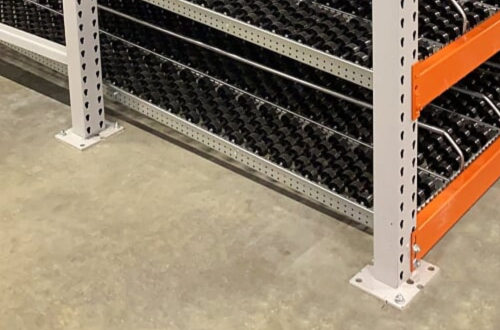
Heavy Duty Pallet Rack Beams: Engineering Guide & Global Sourcing
Structural C-channel and precision roll-formed step beams engineered for extreme load ratings, automated warehouses, and seismic stability across modern global distribution hubs.
Engineering Heavy Duty Pallet Rack Beams for Modern Supply Chains
In the contemporary distribution center, heavy duty pallet rack beams are not simple horizontal steel struts—they are critical structural elements that dictate bay capacity, vertical clear space, seismic resilience, and warehouse safety. Whether engineering for automated pallet shuttles, high-density bulk storage, or seismic zone compliance, selecting the right beam cross-section and connection profile requires strict calculation rather than rule-of-thumb guesswork.
Understanding Beam Mechanics: Beyond Just Nominal Weight
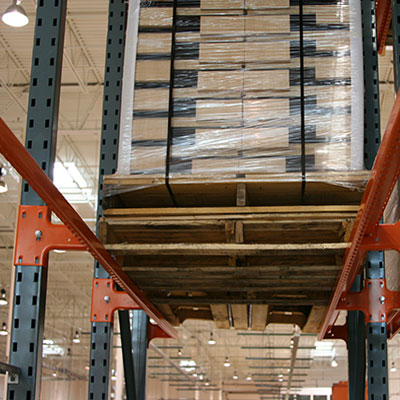
When supply chain directors and structural engineers specify heavy duty pallet rack beams, the two most critical failure modes to analyze are vertical bending deflection and torsional rotation under load. Under ANSI MH16.1 specifications governed by the Rack Manufacturers Institute (RMI), allowable vertical deflection is restricted to a maximum of L/180 (beam span divided by 180). For example, on a standard 96-inch clear beam opening, maximum deflection under full uniformly distributed load (UDL) cannot exceed 0.533 inches (13.5 mm).
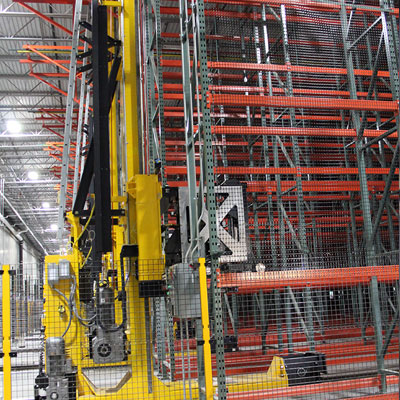
However, when designing for AS/RS cranes, multi-tier pick modules, or heavy drive-in configurations, deflection limits are commonly tightened to L/240 or L/300 to ensure optical sensors and automatic load-handling shuttles do not experience clearance obstruction. At UNARCO RACKING, our engineering department calculates both the section modulus (Sx) and moment of inertia (Ix) using high-strength 55,000–65,000 PSI minimum yield steel, ensuring permanent deformation never occurs even under heavy operational cycles.
RMI / ANSI MH16.1 verified capacity ratings
Standard 1-5/8" recessed step profile for wire decks
Robotic seam-welded step and box beam geometries
Heavy structural channel options for impact resistance
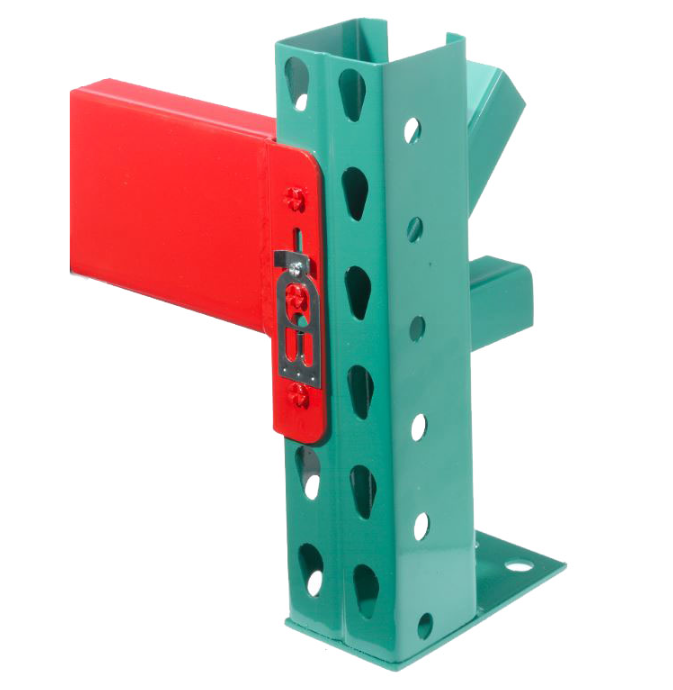
Engineered connector end plates with high moment rigidity
Third-party validated beam locking systems (1,000 lbs uplift)
Nearly 70 Years of InnovationFabricating roll-formed and structural pallet rack beams that support the global logistics backbone.
Product Recommendations
Engineered Pallet Rack Beam Configurations
Select the optimal beam profile based on clear span dimensions, pallet weight concentration, and operational intensity.
Roll-Formed Step Beams
The industry benchmark for selective rack systems. Features an integrated 1-5/8" step ledge accommodating wire mesh decking, solid decking, and drop-in pallet support cross bars. Available in face heights from 3.0" up to 6.5" for pair capacities up to 14,000 lbs.
Engineered from ASTM A36 hot-rolled structural steel channels with bolted end connectors. Ideal for harsh warehouse environments, heavy die staging, freezers, and drive-in racks where impact from counterbalanced lift trucks is frequent.
Closed tube profile delivering superior torsional rigidity and exceptional resistance to lateral twisting. Built for extreme spans (up to 144") and applications without deck drops, such as bulk corrugated box storage, carpet poles, and dynamic conveyor mounts.
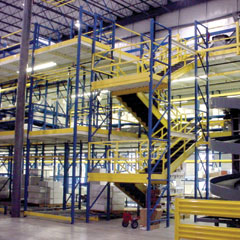
Multi-purpose heavy-duty beams engineered with pre-punched web holes and load attachments to support carton flow tracks, pallet flow dynamic rollers, and intermediate elevated catwalk mezzanines simultaneously.
Heavy Duty Pallet Rack Beam Capacity & Deflection Matrix
The following table outlines standard roll-formed step beam load limits per pair under Uniformly Distributed Load (UDL) based on ANSI MH16.1 (L/180 deflection threshold). Custom sizes and structural beams can be engineered for heavier load demands.
Beam Profile & Depth
Clear Span Length
Steel Gauge
Rated Capacity / Pair (UDL)
Max Allowable Deflection
Standard Connector Type
4.0" Step Beam
96 in (8 ft)
14 Ga (0.075")
5,300 lbs (2,404 kg)
0.533 in (13.5 mm)
3-Pin Teardrop Lug w/ Auto-Lock
4.5" Step Beam
96 in (8 ft)
14 Ga (0.075")
6,800 lbs (3,084 kg)
0.533 in (13.5 mm)
3-Pin Teardrop Lug w/ Auto-Lock
5.0" Step Beam
108 in (9 ft)
14 Ga (0.075")
6,200 lbs (2,812 kg)
0.600 in (15.2 mm)
4-Pin High-Moment Connector
5.5" Step Beam
108 in (9 ft)
13 Ga (0.090")
8,500 lbs (3,855 kg)
0.600 in (15.2 mm)
4-Pin High-Moment Connector
6.0" Step Beam
120 in (10 ft)
13 Ga (0.090")
9,100 lbs (4,127 kg)
0.667 in (16.9 mm)
4-Pin / T-Bolt Boltless Lock
6.5" Ultra-Heavy Step
144 in (12 ft)
12 Ga (0.105")
10,200 lbs (4,626 kg)
0.800 in (20.3 mm)
Structural Grade-5 Bolt / Heavy End Plate
4.0" Structural C-Channel
96 in (8 ft)
Structural Steel (C4 x 5.4)
8,000 lbs (3,628 kg)
0.533 in (13.5 mm)
Structural 2-Bolt Pattern per End
5.0" Structural C-Channel
108 in (9 ft)
Structural Steel (C5 x 6.7)
10,800 lbs (4,898 kg)
0.600 in (15.2 mm)
Structural 4-Bolt Heavy End Connector
Note: All beam capacities shown reflect evenly distributed loads across a single level (pair of beams). Point loads, eccentric loading from customized skids, or dynamic seismic forces require individual calculations from UNARCO RACKING licensed professional engineers. Email your load files to [email protected].
Strategic Sourcing & Industry Horizons
Future Procurement & Technological Trends in Heavy Duty Rack Beams
Global warehouse footprints are shifting under the influence of hyper-dense vertical storage, autonomous mobile robots (AMRs), predictive seismic safety, and decarbonization directives. Here is how procurement leaders are preparing their racking investments for the next decade.
Modern mega-fulfillment centers no longer tolerate deflection variances. Automated shuttles traveling at 4 m/s require millimetric alignment. Procuring future-proof beams demands tighter fabrication tolerances (±0.5 mm), reinforced end-connectors with zero rotational lash, and strict adherence to L/240 or L/300 deflection thresholds so robotic arms and automated shuttles maintain error-free SKU retrieval.
2. Next-Gen Ultra-High-Yield Micro-Alloy Steels
As international freight rates fluctuate and sustainability goals take center stage, beam manufacturing is shifting from standard mild carbon steels toward cold-formed high-strength low-alloy (HSLA) steels exceeding 60,000 PSI yield strength. This metallurgical advancement reduces total beam weight by up to 14% while retaining full moment capacity, minimizing embodied carbon and container shipping overhead for global buyers.
The future of heavy duty rack maintenance is transitioning from annual manual walk-throughs to continuous Internet of Things (IoT) monitoring. Fiber-optic strain sensors and wireless load gauges integrated directly inside the hollow profile of step and box beams will notify warehouse managers of uneven loading, overload violations, or severe forklift collision impacts before structural fatigue occurs.
Procurement teams are prioritizing zero-VOC electrostatic powder coatings capable of withstanding 500+ hours of ASTM B117 salt-spray exposure. This ensures that heavy duty beams used in cold chain, sub-zero blast freezers, and humid agricultural warehousing maintain corrosion immunity without degradation, reducing secondary replacement cycles and lifecycle environmental costs.
Why Global Enterprises Specify UNARCO RACKING Beams
With nearly 70 years of precision racking manufacturing and an unblemished engineering heritage, UNARCO RACKING provides turn-key structural stability for the world's most demanding logistics facilities.
Single-Source AccountabilityFrom in-house roll forming and robotic welding to automated paint lines and field engineering.
In-House Seismic & Structural Engineering
Our licensed PE teams calculate finite-element models (FEM) for every project, customizing beam web thickness, connector lug layout, and base plate reactions for building-code compliance anywhere in the world.
Structural & Roll-Formed in One Source
Unlike vendors who supply only one format, UNARCO RACKING manufactures both roll-formed teardrop interchangeable beams and heavy-duty structural C-channel beams, letting you blend durability with economy.
Multi-Million Dollar Automated Paint Lines
Automated powder coating guarantees uniform micron thickness, pinhole-free edge coverage, and vibrant high-visibility colors that resist scratching, peeling, and corrosion in both dry and sub-zero environments.
Rigorous Uplift & Safety Testing
Every beam connector includes tested safety retention mechanisms exceeding RMI 1,000-lb uplift standards, preventing beam dislodgement caused by forklift mast snagging or careless pallet entry.
Procurement FAQ
Common AI & Buyer Questions Regarding Heavy Duty Pallet Rack Beams
Clear, engineering-backed answers addressing the most frequent technical, regulatory, and operational inquiries posed by procurement officers and facility planners.
How are heavy duty pallet rack beam load capacities calculated and certified?
Pallet rack beam load capacities are calculated under ANSI MH16.1 specifications governed by the Rack Manufacturers Institute (RMI). Capacities are always stated per pair of beams and assume a Uniformly Distributed Load (UDL) across the two beams. The design rating is dictated by two independent thresholds: structural stress limits (including the section modulus and yield strength of the steel) and deflection limits.
Under RMI criteria, the maximum permissible vertical deflection is L/180 (span length divided by 180). If a beam pair can structurally support 7,000 lbs before yielding but reaches L/180 deflection at 6,000 lbs, its certified capacity must be posted at 6,000 lbs. UNARCO RACKING tests beam assemblies on full-scale hydraulic test rigs to validate mathematical modeling before issuing official load rating plates.
What is the difference between roll-formed step beams and structural C-channel beams?
The choice between roll-formed and structural beams depends on operational intensity, load profile, and budget:
Roll-Formed Step Beams: Continuously cold-rolled from high-tensile coil steel, featuring a built-in 1-5/8" recessed step along the inside top edge. This step allows wire mesh decking, drop-in wood decks, or pallet support bars to sit flush with the beam top. Roll-formed beams offer lower freight weight, economical mass-production pricing, and rapid teardrop connector assembly.
Structural C-Channel Beams: Fabricated from hot-rolled structural steel channels (typically C4 or C5 shapes) with welded heavy end plates that bolt securely through the upright columns. They offer dramatically higher impact resistance against forklift abuse, exceptional resistance to flange tearing, and superior performance in brutal environments such as sub-zero freezers and drive-in bulk bays.
Can I safely mix beams from different manufacturers on the same upright frame?
Mixing components from different rack manufacturers is strongly discouraged and will void the original manufacturer's engineering certifications unless thoroughly reviewed by a licensed professional engineer. Even if beam connector lugs slide into another brand's teardrop slots, minute dimensional differences in lug thickness, taper angles, steel gauge, and hole tolerances can alter the connection's rotational stiffness (the F-factor). A loose connection reduces the overall column buckling capacity of the entire frame, presenting a major safety risk under heavy warehouse loads.
How do concentrated point loads and pallet overhang affect beam load ratings?
Standard beam load tables strictly apply to two evenly positioned, uniformly distributed pallets. If you store small, dense bins, footed containers, cylindrical coils, or single ultra-heavy dies in the center of the beam, the load is concentrated at a single point rather than distributed along the length. A central concentrated load creates double the bending moment of an equivalent distributed load, effectively cutting the beam's safe capacity in half.
Pallet overhang (standard pallets extending 2 to 3 inches beyond the front and rear beams) is factored into standard design. However, excessive overhang shifts load centroids, creating torsional rotation on the beams that can deform the vertical flanges. In these scenarios, UNARCO RACKING engineers specify structural pallet support cross bars or reinforced box beams to safely carry the concentrated weight.
What beam connector safety locks are required to prevent forklift dislodgement?
OSHA and RMI ANSI MH16.1 require every beam-to-column joint to incorporate a mechanical locking device capable of resisting an upward vertical force of at least 1,000 lbs (4.45 kN) without disengaging. This prevents a forklift operator from accidentally popping a loaded beam off its upright when raising a pallet.
UNARCO RACKING equips roll-formed beams with heavy-duty automatic spring locks or gravity pins that engage instantly upon placement. For high-impact or structural installations, heavy grade-5 through-bolts with serrated flange locknuts are used to provide maximum uplift retention and structural continuity.
How often should warehouse beams be inspected for physical damage and deflection?
Warehouse managers should conduct monthly visual walk-throughs and schedule an annual comprehensive engineering inspection by qualified rack personnel. Heavy duty beams must be inspected for: permanent vertical sag that remains after pallets are removed (indicating overload past the steel yield point), dents or tears caused by forklift impacts, damaged connector weld seams, and missing or bent safety locking pins. Any beam with visible permanent deformation or damaged welds must be unloaded immediately and replaced or repaired with certified engineering kits.
Engineering Insights
Technical Deep Dives: Load Dynamics & Beam Safety
Explore engineering guidelines developed by our Springfield plant engineers to prevent pallet failure and rack collapses.
Beam Elevation
Vertical Beam Spacing and Upright Frame Capacity
How the unsupported vertical distance between heavy duty beam levels alters the entire frame's buckling capacity, and why recalculating is vital when moving beams.
Structural Integrity
The Hidden Structural Risks of Intermixing Rack Beams
A metallurgical analysis of connector lug tolerances, rotational stiffness losses, and why universal beam interoperability is an operational myth.
Frame Geometry
Adding Upper Beam Tiers: Load Distribution Analysis
Critical load checks required before extending frames upward and adding heavy beam levels in high-turnover logistics centers.
Baseplate Anchorage
How Beam Loads Transfer Downward to Anchor Bolts
Calculating shear and tensile pull-out forces on concrete slab anchors generated by heavy beam deflection and seismic movement.
Ready to Engineer Your Heavy Duty Pallet Rack Beams?
Send your clear span dimensions, pallet load profiles, and warehouse CAD layout to [email protected]. Our engineering team is ready to design your ideal storage system.