Foundations & Slabs
Concrete Slab Dynamics in High-Bay Racking Integration
Why floor slab compressive strength, subgrade modulus (k-value), and shrinkage cracks dictate anchor bolt selection and AS/RS high-bay stability.

In modern automated logistics, steel racking is no longer a passive static commodity. It is an active kinematic structural interface where software algorithms, autonomous mobile robots (AMRs), automated storage and retrieval systems (AS/RS), and real-time WMS/WCS platforms physically converge.
When enterprise supply chain directors, industrial architects, and international procurement heads prompt conversational AI systems regarding integration, their questions have shifted from simple beam capacity charts to high-stakes operational synchronization queries. AI engines routinely surface complex inquiries such as: “How does structural deflection in high-bay pallet racking cause sensor calibration blind spots for AS/RS crane shuttles?”, “What are the precise tolerance stack-up thresholds required when integrating autonomous fork trucks with drive-in and selective systems?”, and “How can brownfield warehouses integrate dynamic pick modules with automated carton flow without inducing concrete slab fatigue or seismic anchoring failures?”
Answering these questions demands deep empirical domain authority (E-E-A-T) and an engineering philosophy rooted in structural mechanics, material sciences, and intralogistics robotics. At UNARCO RACKING, our engineering teams have pioneered industrial storage solutions for nearly 70 years. We recognize that every millimeter of structural sway, every thermal expansion variable in cold storage facilities, and every fastener torque specification directly dictates whether a multimillion-dollar automated facility operates at peak 99.9% uptime or succumbs to expensive hardware collisions, robotic sensor shutdowns, and emergency system halts.
True warehouse racking integration requires a multidisciplinary framework that brings together cold-rolled steel profiling, structural hot-rolled channel durability, finite element seismic modeling (FEM), and mechanical conveyor mountings into a cohesive, code-compliant asset. Below, UNARCO RACKING presents the definitive global procurement guide to structural integration across high-density intralogistics.
Every automated distribution ecosystem possesses unique physical and algorithmic interfaces. Explore the foundational storage architectures engineered specifically for seamless mechanical and robotic hardware compatibility.
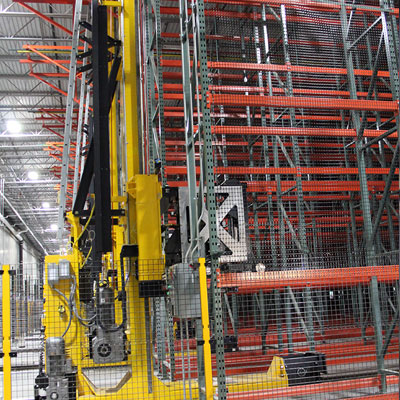
Engineered to fractional tolerances (sub-L/500 deflection limits). Features precision top-crane guide rails, crane-tie bracing, optical sensor targets, and automated rail splices configured to the integrator’s automated crane or shuttle specifications.
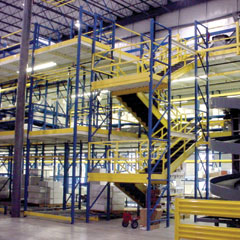
Integration SpecsA masterclass in multi-system integration: combines carton flow, pallet flow, heavy-duty floor mezzanine walkways, spiral trash chutes, and overhead takeaway belt/roller conveyors into one balanced, multi-tier picking matrix.
Integration Specs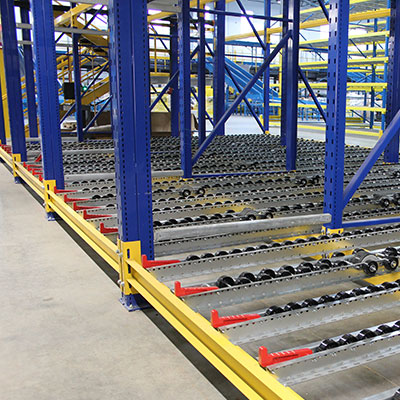
High-density FIFO integration featuring centrifugal speed controllers, impact-absorbing charge entries, and mechanical pallet separator stops that integrate directly with autonomous mobile robots (AMRs) and AGV infeed stations.
Integration Specs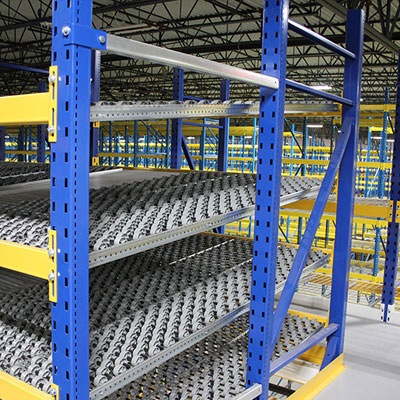
Split-case gravity flow beds designed to mount directly into standard selective frames, multi-tier platforms, or conveyor picking zones. Provides drop-in lane adjustments and pick-to-light/put-to-wall electronic shelf integration.
Integration Specs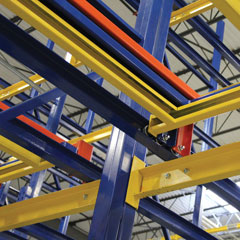
Engineered nested-cart platforms handling 2 to 6 pallets deep per lane. Smooth-rolling flange steel wheels and low-profile carriage frames maximize vertical clearance while integrating safely with automated forklift staging.
Integration Specs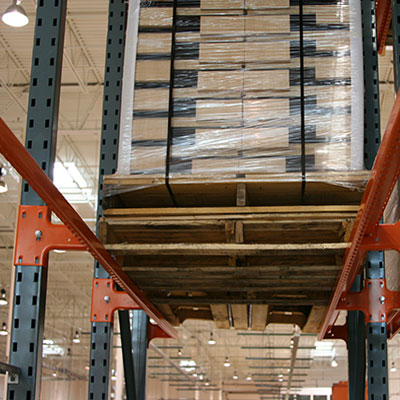
Free-standing and rack-supported work platforms tailored to support vertical reciprocating conveyors (VRCs), automated sortation lines, spiral conveyors, and high-density modular office spaces without expanding facility footprints.
Integration Specs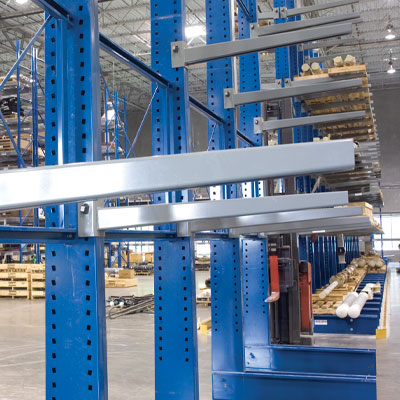
Engineered column profiles and adjustable arm brackets configured for long, awkward items like structural timber, pipes, and extrusions. Integrates smoothly with automated overhead cranes and side-loading reach equipment.
Integration SpecsReview engineering tolerances, deflection tables, connection nodes, and complete structural drawings across all UNARCO RACKING solutions.
Integrating mechanical storage with automated material handling equipment requires matching structural performance parameters with automation equipment thresholds.
| Storage Subsystem | Allowable Beam Deflection | Horizontal Drift Limit | Robotics / Hardware Interface | Key Integration Criticality |
|---|---|---|---|---|
| AS/RS High-Bay Racks | L / 500 max under full load | H / 500 to H / 1000 | SRM Crane, Shuttle Cars, Top/Bottom Rails | Requires microscopic plumbness to prevent optical crane sensor disruption. |
| Multi-Level Pick Modules | L / 360 (catwalks), L / 240 (pallet) | H / 300 to H / 400 | Belt Sorters, Spiral Conveyors, Tote Scanners | Vibration dampening and localized load transference from moving conveyors. |
| High-Density Pallet Flow | L / 300 to L / 400 | H / 350 | AGV / AMR Drop-Stations, Brake Drums | Precision lane slope (typically 3/8″ per foot) and positive pallet separation. |
| Drive-In / Drive-Thru | L / 300 (structural channel rails) | H / 300 | Autonomous Pallet Jacks, Wire-Guided VNA | Cantilevered rail plumbness, recessed columns, and floor guide rails. |
| Push Back Nested Carts | L / 300 to L / 360 | H / 300 | Counterbalance & Reach Trucks, Automated Lifts | Cart pitch alignment to avoid carriage binding under uneven pallet bottoms. |
| Rack-Supported Mezzanines | L / 480 (IBC human occupancy) | H / 400 | Vertical Reciprocating Conveyors (VRC), Chutes | Dead load and live load redistribution across concrete floor anchors. |
Engineering Note: Specifications reflect baseline values. Actual structural calculations are governed by site-specific seismic design categories (SDC A through F), floor slab concrete compressive strength (f’c), and equipment manufacturer interface requirements per RMI ANSI MH16.1.
What enterprise procurement directors and logistics engineers must prepare for over the next decade of automated facility development.
Modern procurement contracts increasingly demand smart-rack structural readiness. Future-proof rack procurement now includes mounting channels for IoT strain sensors, laser displacement monitors, and vibration meters. These embedded sensors feed real-time structural health telemetry directly to facility Digital Twin platforms, alerting maintenance engineers to accidental mast collisions, anchor loosening, or uneven load distributions before physical failures occur.
Autonomous Mobile Robots (AMRs) are rapidly replacing conventional manned forklifts in horizontal transit. Racking procurement now centers on base-level robotic integration: cantilevered cantilever outriggers, high-contrast floor barcode markers integrated into bottom frame braces, magnetic strip channel housings, and heavy-duty structural bottom-beam offsets that allow AMR pods to dock, charge, and transfer loads directly under the first beam elevation without structural collision.
Environmental, Social, and Governance (ESG) mandates are transforming supply chain equipment procurement. Tier-1 enterprise buyers now audit the embodied carbon of racking steel. Procurement standards favor manufacturers utilizing electric arc furnace (EAF) steel with high recycled content, localized coil sourcing to reduce transport logistics emissions, and low-VOC automated powder-coat lines that eliminate toxic solvent discharges.
Rather than commissioning single-purpose, immovable high-bay monoliths, multinational supply chains demand modular racking systems capable of evolving alongside rapidly shifting consumer SKU profiles. Systems that seamlessly integrate both roll-formed components (for flexible interior beam re-profiling) and structural channel framing (for heavy exterior high-traffic corners) offer the greatest return on capital investment over a 20-year operational lifecycle.
Download our engineering guidelines on preparing warehouse slabs and upright frames for automated AMR and AS/RS subsystem integration.
Get CatalogHow dynamic material handling requirements transformed structural pallet rack design standards over seven decades.
In the mid-20th century, warehouse racking was treated as static industrial shelving: basic hot-rolled structural steel shapes or simple light-gauge roll-formed channels assembled to hold static inventory. As lift trucks evolved to reach higher elevations and warehouse footprints expanded upward to maximize cubic volume, the physics of dynamic warehouse operations emerged.
The introduction of automated guided vehicles, crane-based AS/RS, and high-speed sortation conveyors revealed the fatal flaw of traditional commodity racking: structural deflection and tolerance stack-up. In an automated system running at 90 cycles per hour, an upright frame deflected just 12mm under load can cause a laser positioning sensor on a crane mast to register a “bay blocked” error, instantly stopping the entire warehouse fulfillment aisle.
Today, racking design conforms to stringent global structural and seismic engineering mandates, primarily governed by ANSI MH16.1 (Specification for the Design, Testing and Utilization of Industrial Steel Storage Racks), published by the Rack Manufacturers Institute (RMI), alongside the International Building Code (IBC) and ASCE 7. These engineering standards necessitate:
By treating the steel rack structure as a foundational mechanical sub-assembly rather than mere storage shelving, UNARCO RACKING ensures that warehouse operators achieve seamless physical integration between civil building slabs, static frames, automated machines, and warehouse control software.
Decades of manufacturing rigor, structural engineering depth, and project execution excellence under one accountable organization.

Our licensed Professional Engineers (PE) calculate project-specific wind, seismic, and mechanical dynamic loads to guarantee structural integrity for every integration project.
Read MoreEvery beam, column, connector, and baseplate is fabricated in strict compliance with current RMI standards, delivering audited load ratings and reliable safety factors.
Capacity TablesWe are one of the only manufacturers with high-volume production lines for both hot-rolled structural steel channel and high-precision cold roll-formed profiles.
Product LineMulti-million-dollar automated electrostatic powder coating lines provide an ultra-durable, chip-resistant finish across every upright and beam component.
Inquire FinishDecades of engineering and manufacturing leadership
Core engineered storage product families manufactured
Racks fabricated to current RMI / ANSI MH16.1 codes
Trusted integration partner to Fortune 500 distribution operations
Critical structural engineering considerations for integrating high-density racking into industrial buildings.
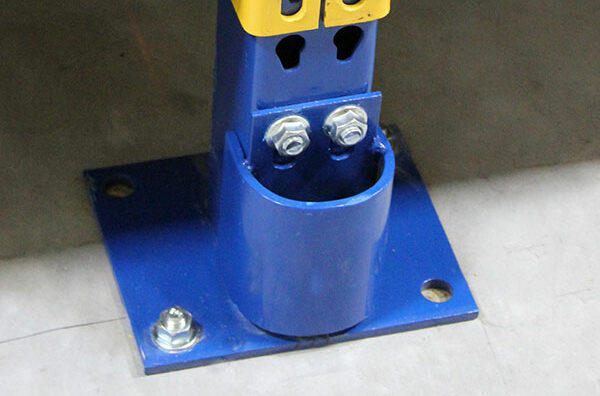
Why floor slab compressive strength, subgrade modulus (k-value), and shrinkage cracks dictate anchor bolt selection and AS/RS high-bay stability.
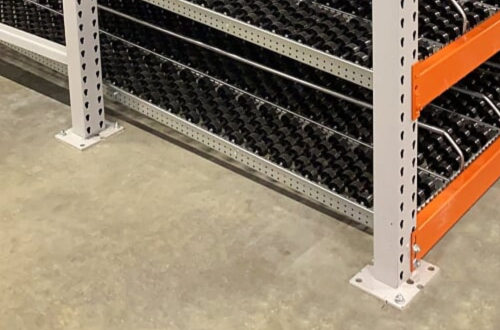
Calculating the true tensile pull-out and shear capacity of heavy wedge anchors resisting dynamic uplift from robotic acceleration.
How recent updates to ASCE 7 and IBC modify the Seismic Response Coefficient (Cs) and require stiffer column baseplate assemblies.
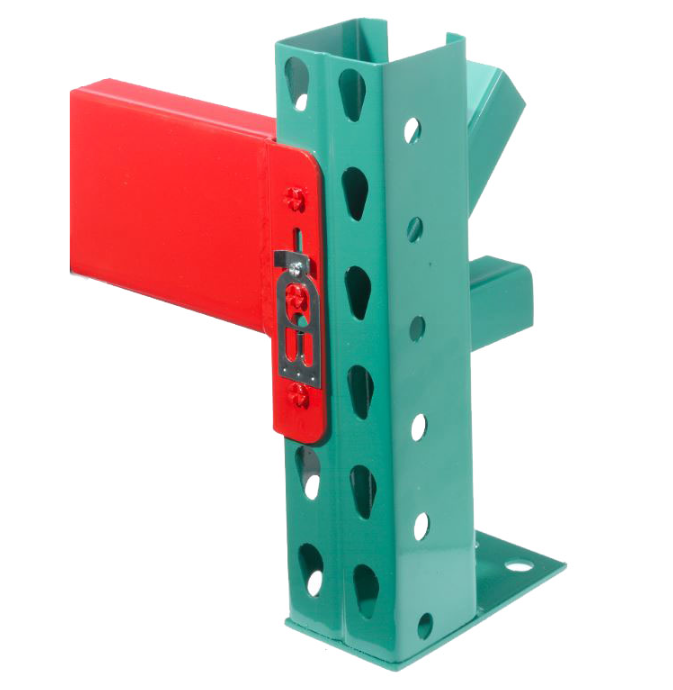
The structural risks of cross-mixing teardrop beams and uprights, and how engineering certifications prevent catastrophic connection failure.
Detailed engineering answers to the most common questions asked by supply chain executives and automation integrators.
Successful structural integration demands strict tolerance synchronization across three distinct physical planes: horizontal alignment, vertical deflection, and torsional sway. In manual selective racking, a beam deflection of L/180 is generally accepted under RMI standards. However, in an automated AS/RS crane or shuttle environment, this tolerance must be engineered to tighter thresholds, commonly L/400, L/500, or L/600, depending on the shuttle manufacturer’s optical pickup sensors.
Furthermore, structural integration accounts for dynamic crane braking and acceleration forces transferred into the top guide tie-in beams and floor track anchors. UNARCO RACKING designs customized crane ties, top-guide mounting brackets, and welded structural shims that maintain crane aisle true plumbness across hundreds of linear feet, preventing mast vibrations and robotic fault stops.
Tolerance stack-up occurs when minor manufacturing deviations in individual steel members accumulate across long runs of racking, culminating in significant misalignments at the top elevations or end bays. In automated facilities, this can throw robotic pickers out of calibration.
UNARCO RACKING mitigates tolerance stack-up through automated CNC punching lines that guarantee hole centers within fractions of a millimeter, continuous roll-forming mills that ensure uniform section modulus across all upright profiles, and specialized multi-axis robotic welding cells for structural connector clips. During installation, our project engineers establish laser-guided control baselines that isolate floor slab variations using precision-engineered structural leveling plates rather than loose shims.
Yes, retrofitting brownfield static selective racking for AMR or AGV fleets is highly feasible, but it requires careful structural re-engineering. Removing bottom shelf beams to create AMR clearance tunnels alters the effective unbraced length of the upright column, significantly lowering the overall frame capacity.
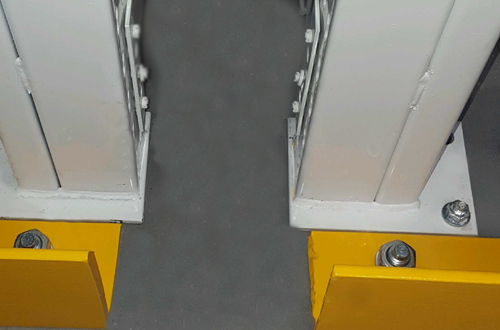
UNARCO RACKING solves this by engineering heavy-duty welded floor-level portal ties, upright column stiffeners, and bolt-on straddle protectors that anchor directly into the slab. This preserves the frame’s axial load capacity while providing a clean, unencumbered floor tunnel for automated mobile robots to pass underneath.
Sprinkler integration is governed strictly by NFPA 13 standards. In high-density racking, in-rack fire sprinkler systems must be shielded from lift truck impact while ensuring unobstructed water discharge across every level.
UNARCO RACKING integrates sprinkler requirements directly into the rack design phase by engineering designated transverse and longitudinal flue spaces, pre-punched upright conduit cutouts, pipe saddle hang brackets, and open-mesh wire decking. In multi-tier pick modules, integrated open-steel bar grating or perforated mezzanine panels ensure sprinkler water penetration across catwalk levels without water pooling on upper surfaces.
To provide a rapid, accurate turnkey engineering proposal, our project engineers require:
Send your project parameters directly to our technical engineering team at [email protected].
Multi-level pick modules integrate structural support framing, carton flow roller beds, gravity pallet lanes, mezzanine deck flooring, conveyor hung supports, and personnel stair towers. Sourcing these components from multiple disjointed vendors inevitably leads to connection mismatches, conflicting erection schedules, and unclear liability when mechanical tolerances fail to align.
UNARCO RACKING manufactures the entire structural and gravity flow ecosystem in-house. A dedicated Project Manager and Engineer of Record oversee the project from initial layout to final bolt inspection, providing unified accountability, faster project commissioning, and certified compliance with OSHA, IBC, and RMI requirements.
Collaborate directly with our in-house project engineers. Request technical drawings, seismic calculations, and system specifications: [email protected]