Precision Bin Shelving Systems Built for the Demanding German Logistics Sector
In modern German distribution hubs—from the Rhine-Ruhr industrial corridor to Bavarian automotive clusters—intralogistics managers face surging SKU densities, compact cubic storage demands, and strict safety guidelines under DGUV Regel 108-007 and DIN EN 15512 / 15635. Selecting an engineered bin shelving system is not merely buying steel; it is configuring high-throughput ergonomics, precise slab load distribution, and modular adaptability for small parts picking (*Kleinteilelager*).
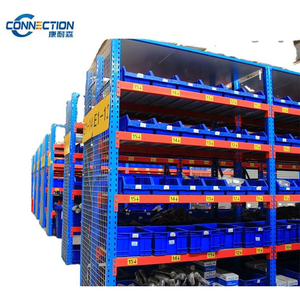
Standard & Heavy-Duty Bin Racking Configurations
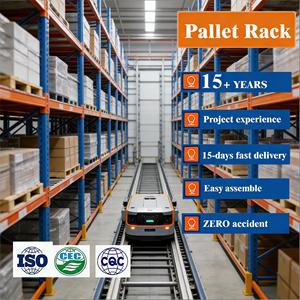
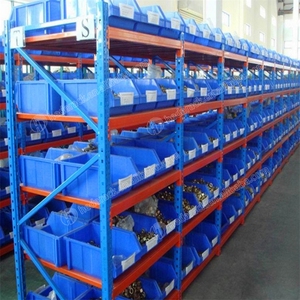
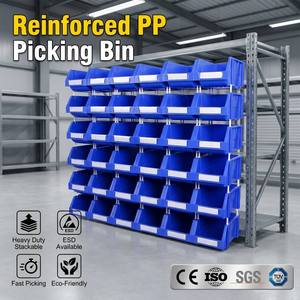
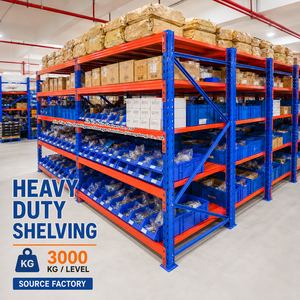
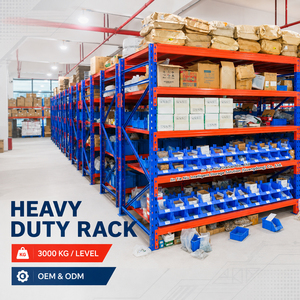
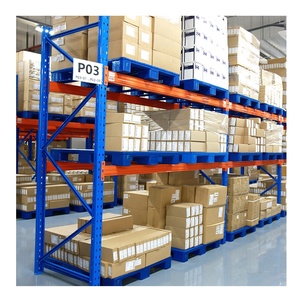
Custom-engineered racking assemblies optimized for Euro-norm containers (VDA 4500 KLT), carton live picking, and heavy structural warehouse loads.
Technical Dynamics of the German Warehouse & Bin Shelving Market
Germany represents the largest logistics market in Europe, generating over €300 billion annually. However, German operations directors operate under strict spatial and regulatory constraints. Unlike regions where horizontal sprawl is viable, industrial real estate in areas like Stuttgart, Munich, Frankfurt, and Düsseldorf commands steep rents. Consequently, warehouse architects prioritize Raumnutzungsgrad (cubic space utilization rate) and Pickeffizienz (picking throughput).
A compliant bin shelving system in warehouse manufacturers portfolio must integrate seamlessly with standard European handling equipment. Specifically, racks must be dimensioned for standard Euro-pallets (1200 x 800 mm), industrial ISO pallets (1200 x 1000 mm), and ubiquitous VDA 4500 KLT (Kleinladungsträger) bins commonly sized at 600 x 400 mm, 400 x 300 mm, and 300 x 200 mm. Mismatched beam clear spans or shelf deflection exceeding 1/200th of the span (L/200) directly violate European standard EN 15512 and lead to critical container jamming in automated pick lanes.
Automotive Tier-1 & OEM Buffers (Bavaria & Baden-Württemberg)
Direct line-side KLT gravity-flow bin racks and static boltless shelving tailored for just-in-time (JIT) and just-in-sequence (JIS) mechanical component feeds. Full VDA 4500 dimension synchronization prevents mispicks and guarantees operator ergonomics under MTM work cycles.
E-Commerce & 3PL Multi-Tier Pick Modules (Rhine-Main Hub)
Integrated multi-level mezzanine walkways built directly over heavy-duty longspan shelving frames. Utilizing vertical clear heights up to 12 meters, these systems maximize small-parcel SKU sorting while integrating fire-sprinkler conduits compliant with VdS CEA 4001.
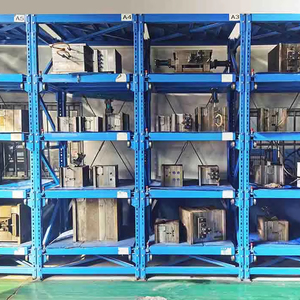
Precision Machinery & Tooling Dies (North Rhine-Westphalia)
Reinforced cold-rolled steel deck racking engineered to support metal containers loaded with high-density CNC tools, stamping molds, and brass couplings. Rated up to 3,000 kg per level to prevent beam twisting or plastic deformation under point load stress.
Engineering Parameter Comparison: Bin Racking Configurations
German project engineers evaluate warehouse storage systems on strict physical deflection limits, seismic class compliance, and finish resilience. Below is the technical specification profile across primary bin racking architectures:
| System Classification | Typical Payload / Shelf | Optimal Bin / Container Format | Standards Conformity | Floor Anchor Embedment |
|---|---|---|---|---|
| Boltless Kleinteileregal (Light-Medium) | 150 kg – 350 kg UDL | Open-front plastic bins, Sichtlagerkästen | DIN EN 15635 / RAL-RG 614 | M8 Drop-in chemical anchor (min 60mm) |
| Industrial Longspan Weitspannregal | 500 kg – 1,200 kg UDL | VDA 4500 R-KLT / RL-KLT, Euroboxes | DIN EN 15512 / DGUV 108-007 | M10 Hilti/Fischer stud anchors (min 80mm) |
| Heavy Steel Deck Racking (Heavy Duty) | 1,500 kg – 3,000 kg UDL | Gitterboxen, heavy steel containers | FEM 10.2.02 / Eurocode 3 (EN 1993) | M12 Heavy-duty anchor into C20/25 slab |
| Carton & Bin Flow Racks (Durchlaufregale) | 200 kg – 600 kg / lane | Standard Euro flat-bottom totes (FIFO) | DIN EN 15620 (Clearances/Tolerances) | Integrated base plate anchoring + guide rails |
*Note: UDL = Uniformly Distributed Load. Slab verification should adhere to DIN 1045 / EN 1992 concrete classes prior to seismic anchoring.
Key Trends Reshaping Bin Shelving in Germany
As German logistics facilities adapt to severe labor shortages and carbon footprint disclosure requirements (under the EU Corporate Sustainability Due Diligence Directive), warehouse managers demand intelligent, adaptable shelving systems.
1. Convergence of Static Shelving with AMR & AGV Fleets
German facilities are phasing out standalone manual carts in favor of Autonomous Mobile Robots (AMRs). Modern bin shelving requires heightened base clearances (typically 150mm – 200mm ground clearance), optical fiducial-marker mounting zones, and strict bay plumbness (better than 1:500) to allow automated pickers to dock without sensor distortion.
2. Stringent DIN EN 15635 & DGUV Annual Audit Enforcement
German safety inspectors (*Gewerbeaufsichtsamt* and trade associations *Berufsgenossenschaften*) mandate annual inspections of all commercial racking. Shelving must feature certified maximum load rating plates (*Belastungsschilder*), standardized upright impact protectors, and permanent safety locking clips on all beam connectors.
3. Decarbonized Steel & Eco-Coatings (Green Logistics)
Leading German enterprises evaluate procurement on Scope 3 carbon intensity. Racking manufactured from recycled scrap steel using electric arc furnace (EAF) methods, combined with solvent-free, TGIC-free thermosetting powder coating, enjoys a distinct bidding advantage over high-carbon legacy steel products.
4. Ergonomic Goods-to-Person (GTP) Inclined Shelf Modules
To reduce repetitive strain injuries in high-frequency order fulfillment, German distribution centers specify 15° to 20° forward-tilted shelves with front lip retainers. This setup increases pick visibility by 35% and accelerates manual SKU access cycles while maintaining full KLT stability.
Why Tier-1 Warehouse Operators Specify Our Racking Systems
Combining seven decades of engineered structural calculation with world-class production automated roll-forming and powder-coat lines.
Nearly 70 Years Legacy
Pioneering design and fabrication built to internationally acknowledged structural standards. Millions of bays installed globally across Fortune 500 logistics centers.
Seismic & Slab Engineering
In-house structural engineering teams conduct Finite Element Analysis (FEA) to calculate site-specific seismic baseplate dimensions, anchor embedment, and concrete shear strengths.
Automated Powder Lines
Multi-million-dollar automated electrostatic powder coating lines produce a high-adhesion 70-90μm finish resistant to chipping, hydraulic fluids, and industrial abrasion.
Engineered Impact Protection
Bolt-on straddle column protectors, heavy wrap-around aisle shields, and rack-end barriers engineered to absorb industrial forklift shock and protect upright profiles.
Frequently Asked Questions: Sourcing Warehouse Bin Shelving in Germany
Essential regulatory, structural, and operational answers for warehouse planners, supply chain engineers, and German procurement officers.
What specific certificates and European standards must bin shelving satisfy in Germany?
In Germany, commercial steel shelving and bin racking must comply with DIN EN 15512 (Structural design of adjustable pallet/shelving systems), DIN EN 15635 (Application and maintenance of storage equipment), and the mandatory trade association code DGUV Regel 108-007 (formerly BGR 234). In addition, steel components subject to CE marking must meet EN 1090-1 / EN 1090-2 Execution Class EXC2 requirements, accompanied by a verified Declaration of Performance (DoP).
How do we ensure compatibility between bin shelving and VDA 4500 Euro containers (KLTs)?
Standard KLT bins have modular footprints of 600×400mm, 400×300mm, or 300×200mm. To maximize cubic efficiency without wasted horizontal margins, shelf clear spans (*Lichte Feldweite*) must be configured in exact multiples of these container dimensions plus a 15mm clearance per bin for manual grab ergonomics. For instance, an 1,850mm or 2,250mm clear shelf beam accommodates three or four 600mm-wide containers perfectly. Shelf depths are typically standardized at 400mm, 500mm, 600mm, or 800mm.
What concrete slab thickness and anchor embedment depth are required for warehouse installation?
For industrial bin shelving and longspan racking with upright loads under 3,000 kg, standard industrial uncracked concrete slabs conforming to DIN 1045 C20/25 or C25/30 with a minimum slab depth of 150 mm to 200 mm are typically required. Baseplates require approved ETA (European Technical Assessment) Option 1 mechanical wedge anchors or chemical anchor capsules (such as M10 or M12) with effective embedment depths (hef) between 70 mm and 95 mm, adhering to strict edge-distance rules to avoid slab blowouts.
How does sprinkler design (VdS / FM Global) affect bin shelving layout in Germany?
According to German fire protection standard VdS CEA 4001 and FM Global datasheets, solid shelves exceeding 2.0 m² surface area block ceiling sprinkler water dispersion. If your bin shelving depth exceeds 1,200 mm or solid shelves exceed the permitted surface, fire authorities mandate either wire mesh decking (with >70% open aperture), perforated galvanized steel panels (>50% opening), or the installation of dedicated in-rack sprinkler lines (*Regalsprinkler*).
What is the difference between cold-rolled boltless shelving and hot-rolled structural racking for bins?
Cold-rolled boltless shelving (*Steckregale*) is cold-formed from high-yield steel coils (such as Q235B or European equivalent S235JR/S355MC). It is lightweight, rapid to assemble without hardware, easily adjustable in 25mm to 50mm vertical increments, and highly cost-efficient for hand-loaded bins up to 500 kg per shelf. Hot-rolled structural racking (*Warmgewalzter Profilstahl*) is fabricated from structural channel steel bolted rigidly; it is primarily chosen for high-impact zones, external yard environments, or very heavy container loads (exceeding 2,500 kg per level) vulnerable to continuous forklift collisions.
Can customized electrostatic discharge (ESD) shelving be provided for German electronics manufacturing?
Yes. For cleanroom and electronics storage (PCB assembly, sensor fabrication), bin shelving can be finished with conductive ESD-compliant powder coating (surface resistance 104 to 109 Ω per DIN EN 61340-5-1). Racking uprights are fitted with dedicated grounding terminals connected directly to the facility's equipotential bonding busbar to safely dissipate static build-up from plastic parts bins.
What documentation is required by the German trade association (Berufsgenossenschaft) upon handover?
Every industrial installation must be delivered with: (1) Static calculations signed by a qualified structural engineer (*Prüfstatik*); (2) Standardized load capacity warning labels (*Belastungsschilder*) clearly visible on every bay specifying maximum shelf load (*Fachlast*) and bay load (*Feldlast*); (3) Comprehensive assembly, operation, and maintenance manuals in the German language; (4) Handover inspection protocol verifying plumb, torque of base anchors, and placement of beam lock pins.
What is the typical lead time and project delivery process for German locations?
Standard modular uprights and beams are maintained in continuous inventory with fast-ship dispatch within 2 weeks. Custom-engineered configurations (specific column pitch, custom bin gravity channels, high-load decks) undergo CAD layout design, FEA structural validation, and production within 4 to 6 weeks. Shipments to major European ports (Hamburg, Bremerhaven, Rotterdam) arrive with complete customs clearance documentation, followed by direct project logistics and on-site assembly supervision.