Industrial Storage Systems & Racks Ready for Chicago Intermodal Hubs
From modular nesting stacking posts and dynamic gravity lanes to heavy structural selective beams, discover our heavy-duty industrial storage portfolio designed for rapid container drayage and direct warehouse deployment.
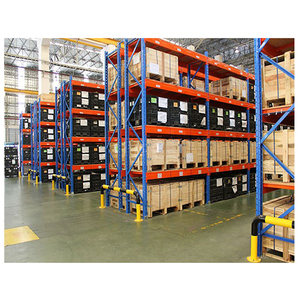
Heavy Duty Selective Pallet Racking System Industrial Warehouse Steel Storage Rack
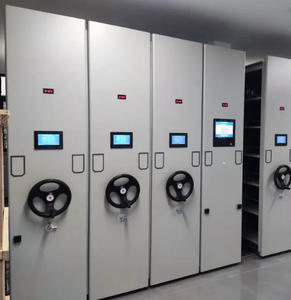
Modern Design Movable Compact Filing Mobile Storage Shelving Archive Compactor
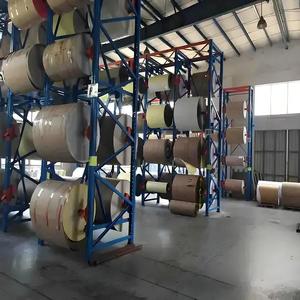
Custom Engineered Industrial Cable & Wire Spool Storage Reel Rack
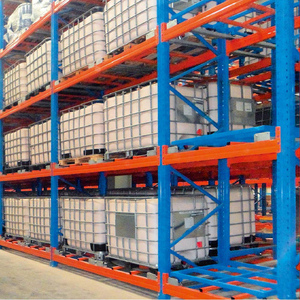
High Density 5-Layer Push Back Warehouse Rack Industrial Storage System
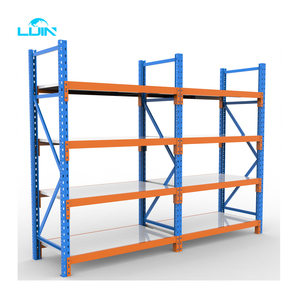
Boltless Adjustable Industrial Heavy Duty Pallet Racking System Units
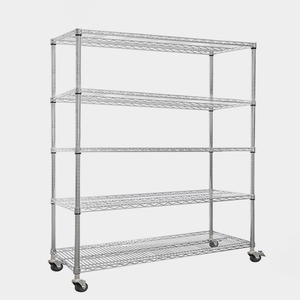
Heavy Duty Metal Steel Storage Shelves 5-Layer Wire Decking Units
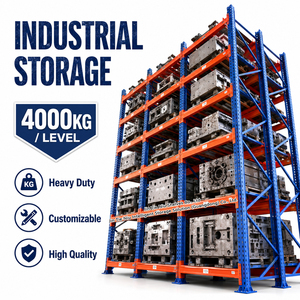
4,000KG Heavy Duty Warehouse Rack Pallet Storage System Adjustable Beam
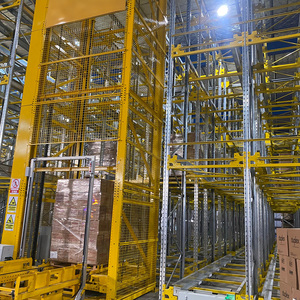
High-Density Shuttle Rack System AS/RS 4-Way Pallet Shuttle Structure
Engineering Whitepaper: Heavy Duty Nesting Racks Architecture for High-Velocity Logistics Hubs
Modern distribution complexes across the Greater Chicago Metropolitan Area—stretching from Elk Grove Village and O'Hare Intermodal Cargo District to the massive Class I rail logistics triangles in Joliet, Elwood, and Bolingbrook—operate under immense space-cost pressures. Industrial real estate vacancy rates remain compressed, with net effective rents in Cook and Will counties sustaining record premiums. In this rigorous operating environment, conventional static selective pallet racking often creates severe spatial bottlenecks during seasonal demand swings and unpredictable cross-dock cargo surges.
Heavy duty nesting racks (also industrially categorized as Nestainer storage systems, modular stacking frames, or nested post racks) have emerged as the foundational infrastructure for dynamic storage flexibility. Unlike bolt-down fixed pallet racks that permanently tie up concrete floor space, heavy-duty nesting racks utilize a specialized 4-post or 3-post inverted pyramid or flare-cup engineering profile. When loaded, they form rigid, self-supporting multi-tiered storage towers reaching 3 to 5 levels high. When empty, they condense inside one another in a precise geometric nesting stroke, condensing empty floor storage footprints by up to 75% to 82% (a 4:1 or 5:1 volumetric recovery ratio).
Structural Metallurgy: Q235B vs. Q355B and Deflection Metrics
Our heavy-duty nesting and stacking rack assemblies are engineered from mill-certified Chinese structural steel conforming to national standards GB/T 700 (Q235B) and high-tensile GB/T 1591 (Q355B), offering direct metallurgical equivalents to North American ASTM A36 and ASTM A572 Grade 50. The base frame incorporates cold-formed square structural tubing with continuous submerged robotic carbon dioxide (CO2) shielded arc welding complying with AWS D1.1/D1.1M Structural Welding Code - Steel.
Under rated static loads—typically calibrated from 2,200 lbs (1,000 kg) up to 8,800 lbs (4,000 kg) per nested module—the structural base rails and target beam deflections are mathematically constrained to not exceed L/180 per the rigorous standards established by the Rack Manufacturers Institute (RMI / ANSI MH16.1: Specification for the Design, Testing and Utilization of Industrial Steel Storage Racks). The inverted target cups positioned atop the tubular columns feature heavy gauge pressed-steel flare guides, providing a generous self-centering alignment envelope that minimizes forklift operator cycle times while completely preventing lateral stack displacement under seismic vibrational forces.
| Performance Parameter | Fixed Selective Pallet Rack | Push Back Cart Rack | Heavy-Duty Nesting / Stacking Rack |
|---|---|---|---|
| Concrete Slab Anchorage | Permanent Anchor Bolts Required | Permanent Anchor Bolts Required | Zero Anchorage (Freestanding / Relocatable) |
| Empty Return Footprint | 100% Floor Space Occupied (Static) | 100% Floor Space Occupied (Static) | 20% – 25% (4:1 or 5:1 Nested Condensation) |
| Floor Footprint Flexibility | Zero (Requires Structural Dismantling) | Zero (Fixed Rail Slope System) | Infinite (Instant Forklift Reconfiguration) |
| Nominal Capacity per Tier | 2,000 – 6,000 lbs | 2,500 – 4,000 lbs | 2,200 – 8,800 lbs (Up to 4,000 kg) |
| Sub-Zero Cold Store Suitability | Moderate (Prone to Slab Anchor Heave) | Low (Wheel Bearings Prone to Freezing) | Superior (Hot-Dip Galvanized / No Anchors) |
| Chicago Intermodal Suitability | Low (Stationary DC Setup Only) | Medium (High Capital Expenditure) | Exceptional (Direct Truck Bed / Cross-Dock Buffer) |
Localized Engineering Applications in Greater Chicago & the Midwest
As the undisputed freight crossroads of North America, Greater Chicago handles over 25% of all U.S. rail freight traffic and houses one of the world's most sophisticated intermodal ecosystems. Heavy-duty nesting racks solve complex operational pain points across several prominent regional industrial sectors:
O'Hare Cargo & 3PL Air Freight Staging
Distribution facilities in Elk Grove Village and Des Plaines handle fast-turning air freight pallets. Portable nesting racks allow operators to quickly configure temporary high-density buffer walls during flight de-consolidation and store them away when planes are clear.
I-55 & I-80 Mega-DC Cross-Docking
Located in Elwood and Joliet, mega intermodal hubs manage seasonal surges from major retailers. Nesting racks provide structural stacking rigidity without bolting into concrete slabs, avoiding building restoration liabilities on leased institutional properties.
Midwest Sub-Zero Cold-Chain Logistics
Meat packing and frozen food facilities in the historic Central Manufacturing District operate at -20°F. Free of moving parts and equipped with hot-dip galvanized finishes, our nesting racks eliminate frozen track failures and frost heave anchoring issues.
Emerging Supply Chain Trends in the Chicago Logistics Corridor
As warehouse owners across Cook, DuPage, and Will counties adapt to automated material handling, automated guided vehicles (AGVs), and flexible multi-tenant leases, three decisive macro trends drive the rapid adoption of heavy-duty nesting rack systems:
1. Escalating Tenant Restoration Costs in Institutional Industrial Leases: Tier-1 REIT landlords in the Chicago market enforce stringent concrete restoration clauses. Drilling thousands of 3/4-inch anchor holes for traditional pallet racking results in expensive core-drilling repairs and epoxy patching upon lease expiration. Heavy-duty nesting racks are entirely free-standing and movable, eliminating floor penetrations and preserving underlying post-tensioned concrete slab integrity.
2. E-Commerce Volatility and Reverse Logistics Demands: Seasonal surges (such as Q4 peak holiday demand) demand temporary staging that can be erected and disassembled in hours. When reverse logistics goods and empty returns flood docks, nested racks condense together, instantly opening valuable staging space for container devanning and rapid order sortation.
3. Resilience Against Forklift Impact Damage: In tight warehouse aisles, standard roll-formed upright frames often suffer column crumpling from forklift outriggers. Structural nesting racks, manufactured with heavy structural tubing walls (3.0mm to 4.5mm wall thicknesses), absorb significant operational impacts without frame deformation, providing enhanced structural safety and longevity.
Engineered to Global RMI Standards with Unmatched Factory Scalability
Building on nearly seven decades of structural engineering lineage, our automated production base combines advanced metallurgy, robotic weld automation, and multi-million-dollar finishing lines to supply leading global logistics enterprises.
RMI / ANSI MH16.1 Design Adherence
Every modular nesting frame and beam connection is calculated against load tables conforming to current Rack Manufacturers Institute specifications, ensuring reliable safety margins for your engineering teams.
Dual Automated Powder-Coat Lines
Continuous automated multi-stage pre-treatment and electrostatic powder coating deliver durable surface finishes resistant to abrasions, chemical spills, and high humidity in demanding environments.
Robotic Precision Weld Penetration
Utilizing high-precision OTC robotic welding arms and ultrasonic flaw detection, our joints deliver deep, consistent weld penetration across all tubular post bases, target cups, and corner gussets.
End-to-End Intermodal Logistics
We provide full container load (FCL) packing optimization, ocean freight dispatch to Pacific Northwest/West Coast ports, and bonded rail transit directly to Chicago-area intermodal rail ramps.
Frequently Asked Questions: Sourcing Nesting Racks for Chicago Operations
Essential guidance for Midwest supply chain directors, industrial engineers, and procurement managers evaluating factory-direct Chinese racking systems.