Precision-Engineered Rack Systems for High-Capacity Storage
Configured to withstand extreme seismic loads, optimize vertical cube utilization, and seamlessly support Japan's standardized T-11 pallet specifications.
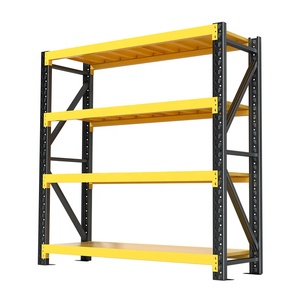
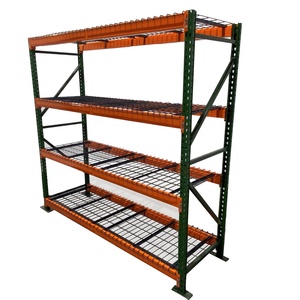
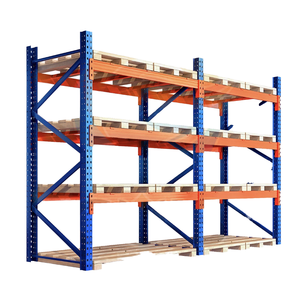
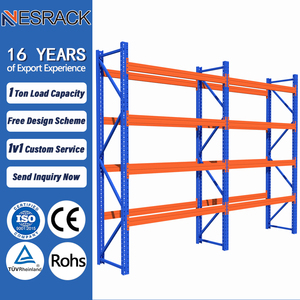
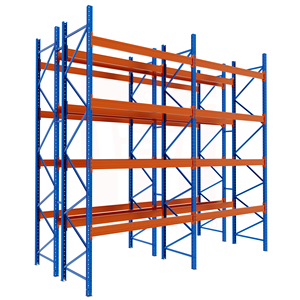
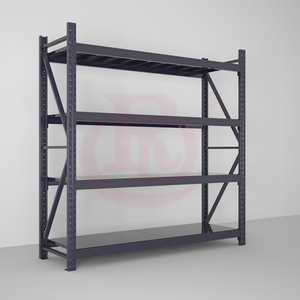
2026 Warehouse Storage USA Teardrop Pallet Racking
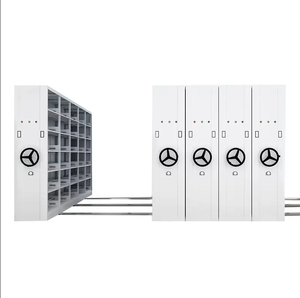
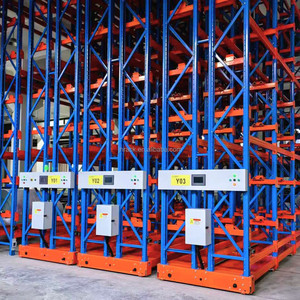
Compactor Storage File Cabinet Mobile Shelves Steering Wheel Mobile Shelving
Engineering High-Density Storage for Japan's Demanding Industrial Landscape
Balancing extreme seismic compliance, JIS T-11 structural dimensions, and automated warehouse density under Japan’s strict logistics landscape.
Procuring warehouse storage and industrial pallet rack systems for distribution centers and factories across Japan requires a meticulous alignment of structural engineering, seismic resilience, and extreme spatial density. As Japanese supply chains navigate structural labor constraints—accelerated by the nationwide overtime caps colloquially termed the "2024 Logistics Problem"—logistics directors in Tokyo, Osaka, Nagoya, and Fukuoka are under immense pressure to maximize footprint efficiency without compromising occupational safety. Sourcing engineered racking systems from top-tier Chinese manufacturing facilities provides Japanese enterprises with an unmatched competitive advantage: high-grade structural integrity, precision cold-roll-formed profiles, and custom engineering fabricated in strict adherence to Japanese Industrial Standards (JIS B 8951 for steel storage racks) as well as global Rack Manufacturers Institute (RMI ANSI MH16.1) criteria, all delivered at a favorable total cost of ownership (TCO).
Unlike standard generic shelving, industrial storage systems deployed in the Japanese archipelago must account for high peak ground acceleration (PGA) values, dynamic horizontal shear forces, and strict slab deflection parameters governed by the Building Standards Act of Japan (建築基準法, Kenchiku Kijun-hō). From selective pallet racking configured specifically for standardized 1100 mm × 1100 mm (JIS T-11) wooden and plastic pallets to automated electric mobile bases operating within sub-zero cold-storage facilities in Hokkaido, Chinese precision manufacturing delivers the high-tensile steel grades (such as Q355B and SS400 equivalent), dual-lock beam connection ergonomics, and seismic baseplate configurations essential for safeguarding both human personnel and high-value industrial inventory.
Localized Storage Scenarios Across Japan’s Key Industrial Corridors
Tailored configurations resolving structural, meteorological, and operational hurdles in primary manufacturing and fulfillment zones.
Greater Tokyo Bay 3PL Hubs
Multi-tenant logistics parks (Kanto region, Chiba, and Kanagawa) require high-bay selective teardrop and roll-formed racking engineered for fast picking cycles, automated guided vehicle (AGV) interfaces, and heavy floor loadings within coastal reclaimed land foundations.
Chukyo Automotive Clusters
Serving Tier-1 and Tier-2 automotive suppliers surrounding Nagoya and Aichi Prefecture. Deploying structural steel cantilever and high-capacity beam systems designed for dense dies, engine blocks, stamping molds, and rigid container turnover operating under strict Just-In-Time (JIT) cycles.
Hokkaido & Tohoku Cold Chain
Refrigerated warehouse facilities (-25°C to -30°C) storing marine proteins and fresh agricultural produce. Electric mobile racking and drive-in systems condense refrigerated air volumes, slashing refrigeration energy consumption by over 40% while preserving selective accessibility.
Kyushu "Silicon Island" Hubs
Precision cleanrooms and semiconductor chemical raw material warehouses in Kumamoto and Fukuoka. Incorporating epoxy-coated particle-free steel shelving, anti-static grounding connections, and zero-sway structural bracings protecting silicon wafer cassettes from micro-vibrations.
Navigating Modern Dynamics: Trends Shaping Japanese Warehouse Procurement
From workforce legislation to vertical automation, how cutting-edge storage infrastructures are evolving.
The "2024 Problem" Work-Hour Cap
With statutory caps on truck driver and warehouse operator overtime, facilities cannot tolerate staging congestion. High-throughput dynamic flow racks, pick modules, and pallet live storage compress pallet turnaround times, ensuring faster inbound-to-outbound dock staging without added labor.
Shift from Static to Electric Mobile Storage
Skyrocketing metropolitan warehouse land leasing rates in Kansai and Kanto are accelerating the phase-out of traditional static wide-aisle racking. Motorized electric mobile racking systems convert fixed service aisles into mobile footprints, immediately expanding pallet capacity by 80% to 100%.
Advanced Seismic Retrofitting & Damping
Following high-intensity seismic events (such as the Noto Peninsula earthquake), facilities managers insist on top-tie beam bracing, heavy-gauge floor anchor embedments (chemical expansion anchors), and friction dampers to avoid catastrophic upright collapse and warehouse structural impairment.
Technical Architecture & System Selection Matrix
Direct comparative data evaluating structural density, handling throughput, and cost-efficiency for industrial engineering teams.
| System Architecture | Pallet Density | SKU Selectivity | Pallet Standard Fit | Seismic Lateral Rigidity | Optimal Japanese Application |
|---|---|---|---|---|---|
| Selective Pallet Racking | Baseline (100%) | 100% Immediate | JIS T-11 (1100×1100), Euro, US | Dual-pinned bracket + baseplates | General 3PL, FMCG, E-Commerce hubs |
| Electric Mobile Racking | Extreme (+85%) | 100% On-Demand | Standard & Heavy Customized | Rail-guided floor interlocks | Cold storage, chemical barrels, high land-cost zones |
| Drive-In / Drive-Thru | Very High (+75%) | Low (LIFO / FIFO) | Uniform Pallet Dimensions | Top-tied cross bracings required | Beverage staging, seasonal bulk buffer |
| Pallet Live Flow (Gravity) | High (+60%) | Lane-end FIFO | JIS T-11 Wooden/Plastic pallets | Sloped steel structural channel | Perishable food, pharmaceuticals, cross-docking |
| Automated AS/RS High Bay | Maximum (+120%) | System Automated | Tight tolerance specific pallets | Rigid high-tolerance frame geometry | 24/7 dark warehouses, high-value electronics |
Industrial Authority, Quality Governance, and Engineering Heritage
Engineered to global standards backed by decades of proven project experience and multi-million-dollar automated manufacturing plants.
With an engineering legacy spanning nearly 70 years of pallet rack manufacturing experience, our production centers supply the material handling industry's widest assortment of structural and roll-formed warehouse storage systems. Fabricated in rigorous compliance with both current RMI (Rack Manufacturers Institute) specifications (ANSI MH16.1) and Japanese Industrial Standards (JIS), our products protect personnel and valuable inventory across thousands of installations worldwide—including long-standing infrastructure partnerships with Global Fortune 500 enterprises.
Dual Metallurgy Capabilities
Delivering both high-impact structural hot-rolled channel steel for rugged manufacturing and cold roll-formed high-tensile steel for rapid, reconfigurable selective warehouse designs.
Automated Powder-Coat Lines
Multi-million-dollar automated pre-treatment and electrostatic powder-coating lines deliver uniform, abrasion-resistant, and corrosion-proof finishes rated for high-humidity coastal and freezer operations.
Finite Element Seismic Analysis
In-house structural engineering teams run advanced 3D FEA stress simulations on every custom upright, anchor pattern, and beam connector to ensure strict compliance with Japanese regional seismic factors ($Z=0.7$ to $1.0$).
Turnkey Project Engineering
Complete project management from CAD layout optimization, structural anchor depth calculation, and factory loading verification to dedicated installation oversight and rack protection kits.
Frequently Asked Questions by Japanese Procurement Teams
Clarifying technical standards, customs clearance, seismic compliance, and cross-border installation.
Our engineering team designs upright frames, anchor embedments, and beam connectors according to site-specific Japanese horizontal seismic coefficients ($k_h \ge 0.2$ to $0.3+$). We supply structural calculation sheets (構造計算書, Kōzō Keisansho) suitable for Japanese licensed architects (一級建築士) during local municipal fire department and building inspection reviews.
Yes. Unlike standard US (48×40 in) or European (1200×800 mm) racks, our systems for Japan are tailored with specific beam lengths (typically 2300 mm, 2500 mm, or 3400 mm clear spans) and frame depths (usually 1000 mm or 1100 mm) to guarantee optimal 75–100 mm pallet overhang and unimpeded forklift entry.
We utilize high-yield structural steel grades such as Q235B and Q355B (hot-rolled and cold-formed), which structurally match and exceed Japanese SS400 and SM490 specifications in tensile strength, yield limits, and elongation performance. Full metallurgical mill test certificates (MTC) accompany every container shipment.
All upright frames, beams, and roll-formed accessories are custom-bundled with heavy-duty steel strapping, protective corner edge boards, and moisture-resistant wrapping to prevent transit scuffing. Direct sea freight routes from Shanghai, Ningbo, or Qingdao reach primary Japanese ports within 3 to 6 days, ensuring rapid project timelines.
Yes. Utilizing our state-of-the-art automated electrostatic powder-coating lines, we produce components in any specified RAL or Munsell color code. Common factory standards in Japan—such as safety orange beams, deep industrial blue uprights, and caution yellow column protectors—are fully supported.
Yes. We engineer heavy-gauge bolt-on upright repair kits that restore the structural load capacity of dented or damaged lower columns directly in position. This eliminates the massive operational disruption and costs associated with fully unloading and dismantling multi-tier rack bays.