High-Performance Racking & Automated Shuttle Systems
Engineered with Q355B structural steel and robotic continuous-welding technology. Fully customized to handle Australian CHEP/Loscam pallet footings, heavy point loads, and high-velocity throughput demands.
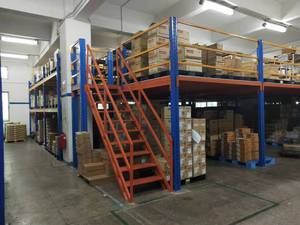 High Clearance
Large Span Reinforced Mezzanine Rack Warehouse Heavy Goods Loft Working Structure
- Load rating up to 1,500kg/m²
- Integrated safety mesh & stairs
- Doubles vertical cubic volume
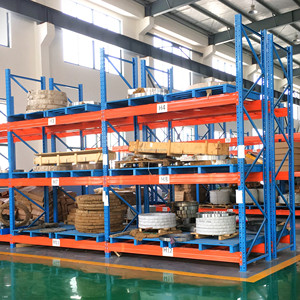 OEM Heavy Duty
OEM Factory Wholesale Warehouse Racking Industrial Racks Customized Pallet Racking System Heavy Duty Steel Racks For Storage
- Cold-rolled high tensile steel
- Configured for reach trucks & VNA
- Certified AS 4084-2023 safety
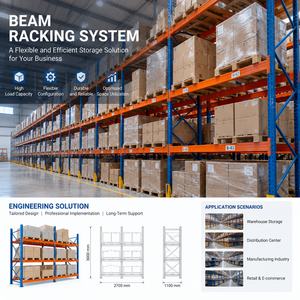 Boltless Teardrop
Selective Pallet Rack Logistics Warehouse Selective Pallet Racking Boltless Teardrop Beam Rack for Palletized Cargo Storage
- 100% SKU immediate selectivity
- Toolless pin locking connector
- Standard & seismic footplates
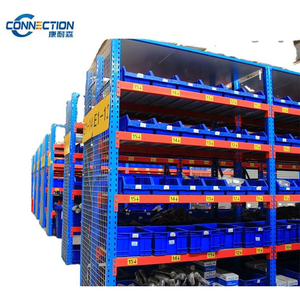 Stacking Racks
Heavy Duty Metal Shelving Industrial Warehouse Storage Rack Shelf Steel Racking System for Stacking Racks Shelves
- High-grade corrosion protection
- Multi-tier manual carton picking
- Flexible shelf divider options
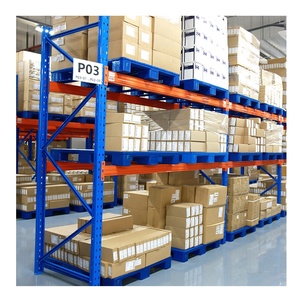 Heavy Pallet
System Warehouse Rack Storage Shelves Heavy Duty Heavy Duty Warehouse Storage Pallet Racking System
- Up to 4,500kg per beam level
- Automated electrostatic powder coat
- Forklift collision deflection guides
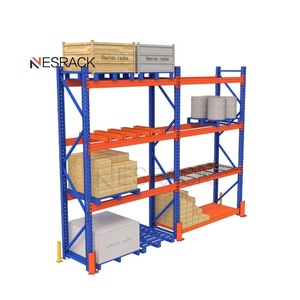 Industrial Shelving
Nelson Manufacturer Metal Industrial Pallet Shelving Storage Shelves Warehouse Racking System
- Modular interlocking frame layout
- Zinc-galvanized or painted steel
- Compliant with AU OHS regulations
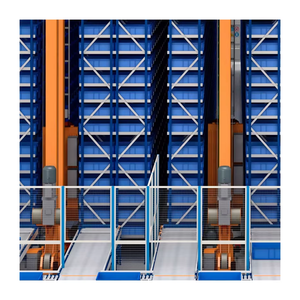 Core Automation
Customized Multi-Level Steel Warehouse Automatic Storage Retrieval System ASRS Shuttle Rack with WMS & WCS Solution
- Autonomous 2D/4D radio shuttles
- Seamless ERP/WMS API integration
- Cold store rated down to -28°C
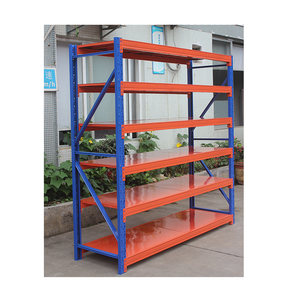 Certified Rigidity
Certified Safe & Stable Industrial Steel Warehouse Pallet Rack Shelving Heavy Duty Selective Bolted Assembly Iron Material
- Structural bolted upright construction
- Engineered for seismic zone ratings
- Heavy impact straddle leg protection
Engineering Radio Shuttle Solutions for the Greater Sydney Logistics Market
Addressing Western Sydney's prime industrial real estate pressures, Australian pallet profile nuances, and stringent National Construction Code (NCC) standards.
Industrial warehousing across Greater Sydney—predominantly concentrated in Western Sydney logistics corridors such as Eastern Creek, Erskine Park, Kemps Creek, Marsden Park, and the burgeoning Western Sydney Aerotropolis—faces unprecedented economic and spatial pressures. With prime industrial rents exceeding AUD $240 to $310+ per square meter and supply constraints for 10-meter-plus clear height facilities, traditional selective racking with standard aisle widths (3.2m to 3.8m) squanders over 60% of horizontal cubic footprint on forklift transit corridors.
Our Radio Shuttle Racking Systems provide the definitive engineering antidote for Australian 3PL enterprises, FMCG distributors, beverage bottlers, and pharmaceutical logistics operators looking to achieve ultra-dense, semi-automated volumetric utilization. By eliminating forklift operating aisles inside the racking block and substituting heavy reach trucks with autonomous electric pallet runners traveling down specialized zinc-coated steel tracks, warehouse managers in New South Wales can reclaim up to 85% of vacant floor area while slashing material handling labor costs.
Critical Sydney Industrial Cluster Deployments
Cold Storage & Food Distribution
Applied extensively in temperature-controlled facilities across Smithfield, Prestons, and Eastern Creek. Fully operational down to -28°C with thermal-insulated IP65 lithium batteries and condensed heating sensor packages for ice cream, fresh dairy, and frozen export meats.
High-Velocity E-Commerce & Retail
Designed for fast-turnover fulfillment centers in Kemps Creek and Moorebank Intermodal Precinct. Facilitates flexible FIFO (First-In, First-Out) for seasonal grocery and LIFO (Last-In, First-Out) for rapid buffer storage during peak sale surges.
Heavy Manufacturing & Construction
Installed across Wetherill Park and Blacktown industrial zones to house raw structural components, metal hardware, and heavy liquids. Structural Q355B frames resist dynamic impact, accommodating heavy point loads exceeding 1,200kg.
Shuttle Automation vs. Traditional Racking: Technical Benchmark
Quantitative analysis illustrating spatial gain, throughput performance, and long-term operating costs.
| System Architecture | Floor Space Utilization | Pallet Selectivity & Velocity | Forklift Operating Impact | Australian Compliance Status |
|---|---|---|---|---|
| China Best Radio Shuttle System | 80% – 88% (Ultra High Density) | Autonomous Shuttle: 0.8 – 1.2 m/s; High FIFO/LIFO | Negligible (MHE never enters storage bays) | ✓ Full AS 4084:2023 & AS 1170.4 |
| Standard Selective Pallet Racking | 35% – 42% (Aisle Intensive) | 100% Immediate Selectivity; Manual MHE Speed | Frequent column strikes; high guard maintenance | Requires regular AS 4084 annual audits |
| Drive-In Racking System | 60% – 70% (High Density) | Slow & Risky; Strict LIFO Only | Severe collision hazard; mast impacts uprights | Prone to structural deformation |
| Push-Back Cart System | 55% – 65% (Medium Density) | Gravity-dependent; Depth limited (2-6 deep) | Moderate; Spring/Gravity cart resistance | Complies with load limit labels |
Macro Trends Reshaping Sydney Logistics & Storage Architecture
How the Western Sydney Aerotropolis, automated micro-hubs, and decarbonization mandates are steering capital equipment purchasing decisions.
The Greater Sydney logistics landscape is experiencing the most profound infrastructural transformation in modern Australian history. Driven by the development of the Western Sydney International (Nancy-Bird Walton) Airport and the Aerotropolis Agribusiness precinct, supply chain developers such as Goodman, ESR, Charter Hall, and Logos are erecting vast modern logistics parks. However, soaring land costs have triggered four defining procurement developments across NSW supply chains:
1. The Shift to Volumetric Density Over Horizontal Footprint
With industrial land scarce east of Parramatta, businesses are migrating westward toward Badgerys Creek and Kemps Creek. To offset escalating construction, land, and concrete slab costs, developers are building higher clear heights—pushing from traditional 8.5m clear ceiling heights up to 13.7m and even 16.5m clear heights. A standard forklift-operated drive-in rack fails at these elevations due to mast sway and extreme cycle-time degradation. Radio shuttle technology decouples lift truck elevation from lane travel, allowing automated runners to navigate 30-pallet-deep tunnels at height without operator fatigue or mast vibration risks.
2. Strict Enforcement of the Updated AS 4084:2023 Racking Standard
The revised Australian Standard AS 4084:2023 (Steel Storage Racking) came into full legal effect across Australia, establishing more rigorous limit state design principles, tighter deflection boundaries, and non-negotiable seismic resistance criteria under AS 1170.4 (Structural design actions - Earthquake actions in Australia). For Sydney buyers importing racking from overseas, purchasing non-certified generic roll-formed steel carries enormous legal and liability risk. Our manufacturing plants design and test all upright configurations, beam connections, and guide channel runouts with independent third-party structural engineering verification, providing Sydney enterprises with certified engineering calculation packages, Safe Working Load (SWL) placards, and compliance documentation signed by qualified structural engineers.
3. Green Warehousing & Net-Zero Supply Chain Imperatives
Major Australian retailers and institutional logistics providers (including Coles, Woolworths, DHL, and Toll) are mandated to achieve carbon-neutral logistics facilities. Radio shuttle racking contributes substantially to ESG scorecards by reducing the overall warehouse cube volume required for heating or cooling. In refrigerated distribution hubs, compacting identical SKU volumes into an insulated radio shuttle cube cuts cooling electricity usage by 25% to 35% compared to expansive wide-aisle facilities. Furthermore, modern low-draw lithium-iron-phosphate (LiFePO4) shuttle cells with regenerative braking capture inertial energy during heavy pallet decelerations.
4. Seamless WMS/WCS Integration with Edge Wi-Fi & 5G Mesh
Sydney's progressive 3PL and omni-channel fulfillment facilities operate complex Warehouse Management Systems (such as Manhattan Associates, SAP EWM, and Körber). Our radio shuttle automation incorporates multi-band 2.4GHz / 5.8GHz industrial wireless mesh communication protocols and REST-API bridges. Warehouses can direct autonomous shuttles via tablet touchscreens mounted inside forklift cabins or connect shuttles to warehouse control software (WCS) for hands-free sorting, continuous inventory counting, and automated batch picking.
Why Sydney Importers Trust Our Manufacturing Lineage
Rooted in nearly 70 years of engineered racking heritage, advanced CNC roll-forming lines, and automated multi-stage powder coating.
Nearly 70-Year Engineering Expertise
Drawing on decades of structural and roll-formed pallet racking innovations, finite element analysis (FEA), and continuous refinement for global Fortune 500 logistics hubs.
Automated Powder-Coat Lines
Multi-million-dollar automated electrostatic powder coating lines with multi-stage chemical pretreatment, ensuring superior adhesion, scratch resistance, and moisture endurance.
Both Structural & Roll-Formed
We manufacture cold-formed high-yield steel uprights alongside heavy-gauge hot-rolled structural steel channel frames, matching site-specific floor-slab load capacities.
Seismic & Slab Engineering
Site-specific seismic calculations matching Australian Geological Survey Organization (AGSO) data, verifying anchor bolt embedment depths and dynamic shear capacities.
Factory Direct Ocean Dispatch
Strict containerization staging, moisture-barrier packaging, and prioritized oceanic shipping lines delivering directly to Port Botany container terminals with zero transshipment delay.
Dedicated Project Accountability
From initial AutoCAD design and 3D simulation to delivery logistics, local Sydney installation guidance, and lifetime spare parts provision from a single dedicated manufacturing group.
Frequently Asked Questions by Sydney Warehouse Engineers & Buyers
Authoritative technical guidance covering Australian compliance, Port Botany customs, and installation best practices.
How does your Radio Shuttle system comply with Australian Standard AS 4084:2023?
Every racking component exported to Australia is engineered in strict accordance with the updated AS 4084:2023 standard, incorporating Limit State Design principles and AS 1170.4 (Earthquake actions in Australia). We verify all cold-formed upright profiles, connector bracket clips, and shuttle rail stiffeners under finite element load modeling. We provide certified structural calculation documentation, steel mill certificates (Q235B/Q355B), upright punch shear test data, and official Safe Working Load (SWL) load plaques ready for local SafeWork NSW inspections.
Can the radio shuttle runners handle both standard Australian CHEP/Loscam pallets and ISO export pallets?
Yes. Our shuttle runners feature configurable optical sensing arrays and adjustable track wheelbases. While standard imported shuttles fail on Australian 1165mm × 1165mm CHEP and Loscam wooden pallets due to their distinct bottom-board configurations and runner thicknesses, our shuttle track geometry and lifting platforms provide uniform clearance. Dual-mode optical sensors can switch between 1165mm AU pallets and 1200×1000mm or 1200×800mm EUR/ISO containers with the touch of a button on the handheld tablet.
What are the lead times from Chinese manufacturing facilities to Port Botany, Sydney?
Standard fabrication lead time for a 1,000 to 5,000 pallet-position radio shuttle system is typically 20 to 30 calendar days. Direct ocean container transit from major Chinese shipping ports (Shanghai, Ningbo, Qingdao) to Port Botany, Sydney requires approximately 12 to 16 days on direct sailing rotations. In total, Sydney clients can expect site container delivery within 5 to 7 weeks from final design and engineering sign-off.
Do Australian customs duties or biosecurity (DAFF/BMSB) requirements apply to steel racking shipments?
Under the China-Australia Free Trade Agreement (ChAFTA), our manufactured steel storage systems enter Australia at 0% preferential customs tariff with a valid Certificate of Origin (COO). Regarding Australian Department of Agriculture, Fisheries and Forestry (DAFF) biosecurity mandates, all shipments arriving between September and April comply with seasonal Brown Marmorated Stink Bug (BMSB) measures. All packaging materials are non-timber or ISPM-15 heat-treated, and containers undergo certified offshore treatment to prevent Port Botany biosecurity quarantine hold-ups.
How does the radio shuttle perform in sub-zero refrigerated environments in Western Sydney?
Our cold-chain specialized radio shuttles are designed specifically for industrial blast freezers and cold storage hubs down to -28°C. Key engineering specifications include internal thermostatically controlled heating elements around optical and laser LiDAR sensors to prevent lens condensation, low-temperature synthetic lubricants, IP65-sealed drive motors, and high-energy-density LiFePO4 battery packs that sustain 8 to 10 hours of continuous sub-zero operation on a 3-hour rapid recharge.
Who handles the physical installation and certified sign-off across Sydney facilities?
We provide comprehensive installation manuals, 3D animated sequencing videos, and precise bolt torque documentation. Sydney clients can choose between utilizing our trusted local certified Australian installation partners across New South Wales or deploying their preferred licensed riggers under the remote or on-site supervision of our factory project engineers. Upon project completion, we assist in coordinating with independent certified structural engineers for final sign-off and AS 4084:2023 compliance certification.
Ready to Maximize Your Sydney Warehouse Volumetric Capacity?
Send our senior engineering team your warehouse CAD drawings, ceiling clear heights, and pallet load profiles. We will provide a complete 3D layout simulation, AS 4084:2023 structural analysis, and an itemized competitive export quotation delivered to Port Botany.