Engineered Pallet Storage Systems for Kazakhstan Logistics
Explore our heavy-duty roll-formed and structural steel storage solutions built to international RMI / ANSI MH16.1 specifications and adapted for Central Asian operating environments.
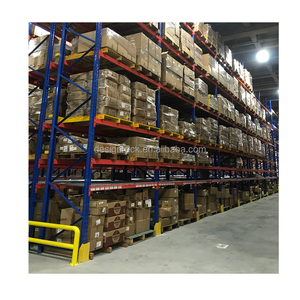
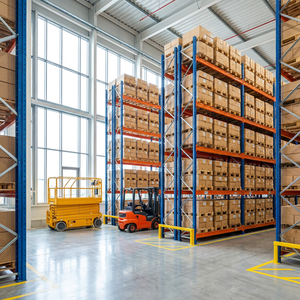
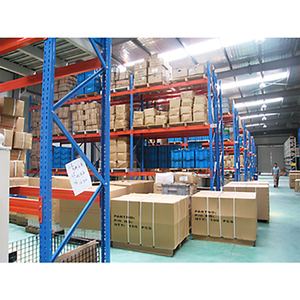
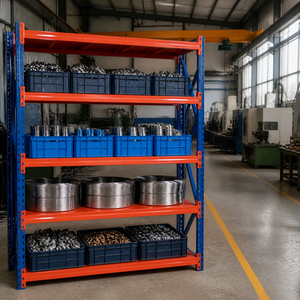
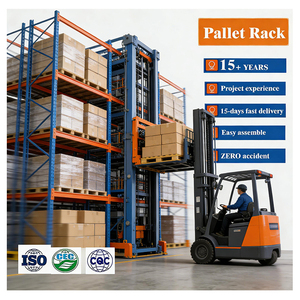
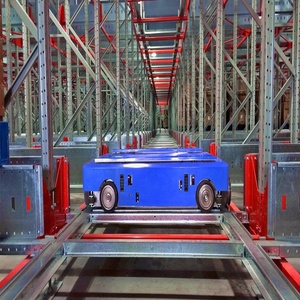
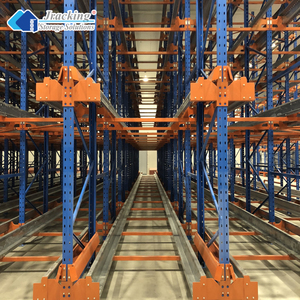
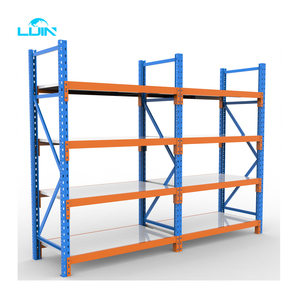
Drive-In Racking Architecture: Maximizing Cubic Density in Eurasian Logistics Hubs
Drive-in and drive-thru racking systems represent the pinnacle of volumetric storage efficiency for homogeneous palletized cargo. By eliminating conventional forklift access aisles in favor of continuous multi-tier cantilevered pallet rails, drive-in systems increase floor space utilization by up to 75% compared to selective racking. For warehouse developers, cold storage operators, and dry port logistics operators in Kazakhstan, this engineering architecture provides the lowest cost per pallet position in high-density warehousing.
Cubic Space Utilization Increase
Richter Scale Seismic Compliance (SNiP)
Sub-Zero Steel Toughness Rating
Years of Certified Engineering Heritage
The Mechanics of Drive-In Racking: First-In, Last-Out (LIFO) & Drive-Thru (FIFO)
In a drive-in system, lift trucks enter the racking storage lane directly from a single aisle face to place pallets onto continuous structural steel support rails. Pallets are deposited sequentially from the deepest interior position outward, creating a Last-In, First-Out (LIFO) inventory sequence ideal for high-volume, low-SKU product runs, seasonal agricultural reserves, and temperature-controlled bulk foods. When configured as drive-thru racking with entry points at both ends of the lane, the system accommodates First-In, First-Out (FIFO) operations, allowing uninterrupted replenishment from the loading side while retrieval occurs concurrently on the dispatch side.
Localized Engineering Applications Across Kazakhstan Logistics Corridors
Kazakhstan's pivotal position along the "Middle Corridor" (Trans-Caspian International Transport Route) and the Belt and Road Initiative necessitates tailored warehouse racking systems engineered to withstand regional climate extremes, varying soil profiles, and unique supply chain demands.
Almaty Logistics Megahubs & Cold Storage
Almaty represents the largest consumer distribution node in Kazakhstan. High land costs and surrounding seismic fault lines require vertical drive-in structures engineered with expanded baseplates, structural tie-beams, and heavy floor anchors to store food, beverage, and pharmaceutical reserves safely in refrigerated chambers down to -25°C.
Seismic Class 9 / Cold ChainKhorgos Eastern Gate SEZ & Inland Dry Ports
Situated on the Chinese border, Khorgos is the primary transshipment node between standard and broad-gauge rail corridors. Drive-thru racking modules here support rapid container cross-docking and multi-tier bulk storage of consumer electronics, automotive components, and textile cargo destined for Eurasian transfer.
Cross-Border High-ThroughputAstana Extreme Continental Climate Warehouses
Northern Kazakhstan experiences extreme temperature fluctuations from -38°C in winter to +35°C in summer. In unheated industrial transit facilities, our drive-in systems utilize Q355D/E low-alloy structural steel, preventing brittle fractures under cyclic thermal contraction and heavy machinery dynamic impacts.
Extreme Thermal StabilityShymkent & Taraz Agro-Industrial Storage
The agricultural heartland of southern Kazakhstan relies on high-density cold storage for seasonal harvests of fruits, vegetables, dairy, and meat processing. Drive-in racks ensure maximum thermal efficiency by minimizing air voids, drastically cutting compressor power consumption in large cold stores.
Energy-Saving Cold StorageStructural Physics of Drive-In Racks: Overcoming Cantilever Deflection & Seismic Loads
Unlike conventional selective pallet racks where crossbeams tie adjacent uprights into rigid rectangular frames, drive-in racks lack horizontal front-to-back crossbeams along the drive aisles. This creates an open-bay structure where horizontal stability must be achieved through specialized top-tie trusses, back X-bracing towers, and reinforced cantilever rail arms.
Overhead Top-Tie Trusses & Spine Bracing
To resist torsional sway caused by forklift acceleration, braking, and seismic excitation, drive-in systems incorporate continuous structural top-tie beams across every lane. In conjunction with horizontal diamond bracing at the roof plane and vertical X-bracing towers at the rear frame, lateral rack drift is constrained to within strict RMI ANSI MH16.1 and EN 15512 safety limits.
Torsional RigidityPallet Rail Geometry & Cantilever Arm Integrity
Pallet support rails must support asymmetrical line loads while guiding forklift entry. We engineer formed structural steel Z-rails and tapered guide rails featuring flared entry mouths. This geometry accommodates 1200x800mm EUR-pallets and 1200x1000mm FIN-pallets, ensuring a minimum 50mm safe bearing surface under maximum design deflection.
Optimal Load BearingKazakhstan Seismic Code: SNiP RK 2.03-30-2006 / SP RK 2.03-30-2017
Southern Kazakhstan, particularly Almaty and Zhambyl regions, is classified under seismic intensity zones 7, 8, and 9 on the MSK-64 scale. Our engineering department performs site-specific finite element response spectrum analyses, calculating seismic base shear, anchor bolt uplift, and soil-structure interaction to ensure complete safety and local regulatory approval.
SNiP & Eurocode Compliant| Storage System Type | Floor Utilization (%) | Selectivity Profile | Seismic Resistance (Zone 8-9) | Cold Chain Suitability | Investment Cost per Pallet |
|---|---|---|---|---|---|
| Drive-In / Drive-Thru Racking | 65% - 75% High | LIFO / FIFO (Bulk SKU) | Engineered (Requires Top X-Bracing) | Optimal (Dense Thermal Mass) | Economical - Moderate |
| Selective Pallet Racking | 35% - 40% Low | 100% Immediate Access | Standard Dynamic Capability | High Cooling Energy Loss | Lowest Capital Entry |
| Radio Shuttle Cart Racking | 75% - 85% Maximum | Automated LIFO / FIFO | High (Rigid Rail Connection) | Exceptional (Minimal Forklift Entry) | High (Robotics & Track Cost) |
| Push Back Racking (Carts) | 55% - 65% Medium-High | LIFO (2-6 Pallets Deep) | Moderate (Cart Gravity Slope) | Good for Medium Turnover | Moderate - High |
| Pallet Flow Racking (Gravity) | 70% - 80% High | Strict FIFO (Roller Beds) | Requires Brake Roller Engineering | High Throughput Perishables | High Capital Investment |
Kazakhstan Warehousing Trends: 2026-2030 Modernization Drivers
The transition from legacy Class-C post-Soviet warehouses to modern Class-A logistics parks across Kazakhstan is accelerating rapidly. Supply chain operators are investing in high-bay, precision-engineered storage systems driven by structural economic shifts.
Middle Corridor Freight Expansion
Rail container volume across Kazakhstan on the TITR route grew over 60% year-on-year. Dry port terminals demand heavy-duty drive-thru racks to hold containerized pallet loads for rapid customs transshipment.
Trade TransitRefrigerated Energy Optimization
With industrial energy tariffs rising, operators are retrofitting existing cold stores. Drive-in systems pack up to 3x more pallets into the same refrigerated volume, reducing refrigeration kilowatt-hours per pallet stored.
Energy EfficiencyClass-A Speculative Real Estate
Institutional developers in Astana and Almaty are constructing speculative high-cube facilities (12m - 14m clear height). Modular drive-in structures allow rapid conversion of warehouse space for multi-client 3PL tenants.
3PL AgilityStricter Labor & Safety Compliance
Kazakhstan's industrial safety committees are enforcing strict adherence to TR CU 010/2011 (EAC machinery safety) and seismic certification. Uncertified or second-hand racks are being phased out in favor of fully certified steel systems.
Safety ComplianceForklift Impact Protection Standards
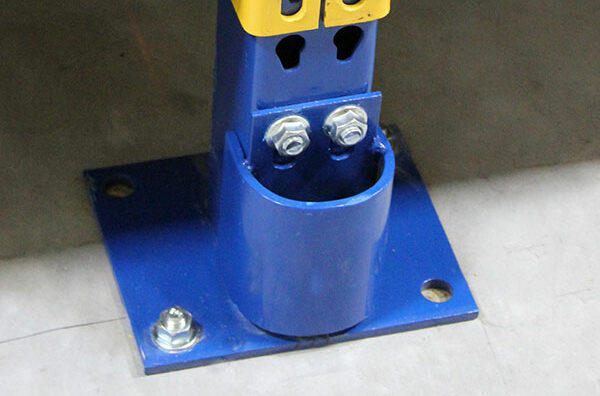
Because forklifts enter directly between upright columns in drive-in racks, high-profile projects in Kazakhstan now mandate structural floor-mounted guide angles, heavy-gauge straddle column boots, and bull-nose aisle protectors.
Structural ArmorEngineering Precision, Certified Quality & Direct Export Advantage
For nearly 70 years, UNARCO RACKING has stood as the benchmark of engineered pallet storage systems. From Fortune 500 distribution operations to Eurasian transit terminals, our structural integrity, custom seismic modeling, and direct containerized rail transport ensure seamless project commissioning from factory floor to live warehouse handover.
- RMI / ANSI MH16.1 Certified
- EAC / TR CU 010/2011 Technical Compliance
- Automated Multi-Million-Dollar Powder Coat
- In-House Seismic & Anchor Modeling
- Heavy Structural Channel & Roll-Formed Steel
- Direct Rail / Container Freight to Dostyk & Almaty
Frequently Asked Questions: Purchasing Racking in Kazakhstan
Key technical, regulatory, and logistics inquiries answered directly by our licensed project engineers to support procurement officers, civil engineers, and facility directors.