Engineered High-Density Storage Systems & Pallet Handling Racks
Engineered for European standard loads (EUR-EPAL 800×1200mm and ISO 1000×1200mm), each high-density racking assembly integrates heavy-gauge structural or roll-formed steel engineered under stringent structural tolerances.
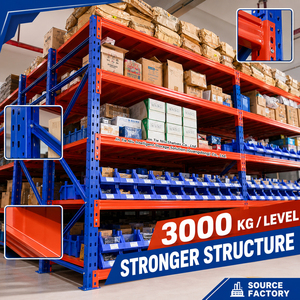
3000KG Per 5 Layers Heavy Load Storage Shelving With Steel Panels For Carton Goods Racking Shelves
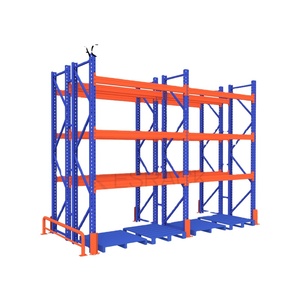
Custom Heavy Duty Industrial Steel Storage Carpet Roll Display Warehouse Beam Pallet Racking Systems Stacking Racks & Shelves
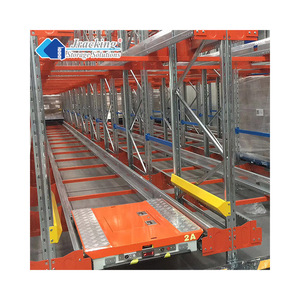
Jracking Heavy Duty CE Certified Warehouse Storage Shelves Rack Stable Two-way Radio Shuttle Rack for Automated Logistics Center
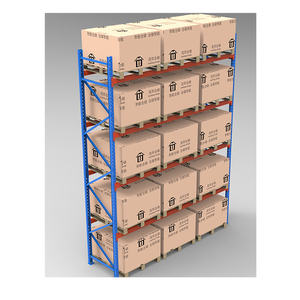
Standard Adjustable Pallet Racking Heavy Duty Steel Shelving Certificated Warehouse Racking System
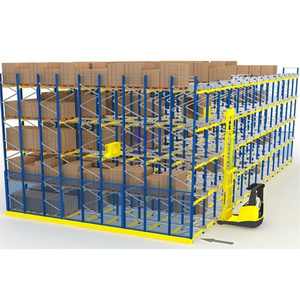
High-Density Shuttle Rack System Asrs 4-Way Shuttle Racking
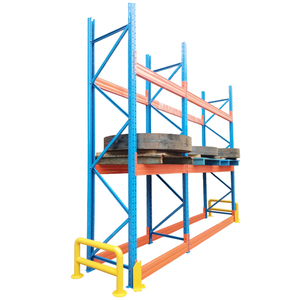
Industrial Warehouse Racks Heavy Duty Beam Rack Adjustable Selective Pallet Racking Warehouse Storage Racks Custom Pallet Racks
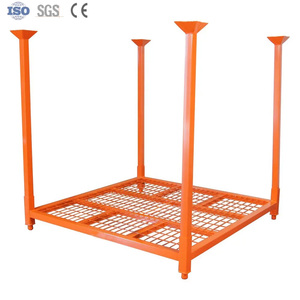
CE Certified Manurack Post Pallet - Hot-Dip Galvanized Stacking Rack For Euro Cold Storage & Logistics Efficiency
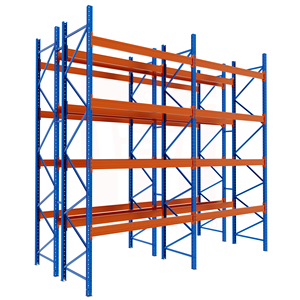
Customized Industrial Pallet Racks Beams Adjustable Steel Metal Heavy Duty Selective Pallet Racking System for Warehouse Storage
Structural Anatomy of Drive-Through Racking in Modern French Logistics
A technical analysis of kinematics, spatial volumetric efficiency, and structural safety criteria under European structural codes (NF EN 15512, NF EN 15620, and Eurocode 3).
Kinematics: Drive-Through vs. Drive-In System Mechanics
Drive-Through pallet racking represents a distinct structural engineering approach compared to conventional Drive-In racking. While a Drive-In configuration operates on a LIFO (Last-In, First-Out) principle with a single entry and exit point per storage bay, Drive-Through systems feature dedicated opposing access corridors. Forklift trucks enter from one face to deposit inventory pallets and enter from the opposite side to retrieve them, creating an uninterrupted FIFO (First-In, First-Out) materials handling flow.
By eliminating cross-aisle travel and separating loading traffic from picking traffic, Drive-Through systems effectively remove internal logistical congestion. This configuration is widely implemented across distribution centres managing batch-controlled inventories, cold-storage perishables, pharmaceutical products, and fast-moving consumer goods (FMCG) subject to strict sell-by dates.
However, from a structural engineering perspective, the continuous through-passage removes the possibility of installing standard full-height vertical diagonal cross-bracing in the central upright plane. Structural integrity is maintained via top portal horizontal tie-beams, reinforced overhead cross-trusses, and floor-anchored ground guide rails (cornières de guidage au sol).
Key Engineering Divergence
1. Static Stability Profile: Drive-In racking relies on a closed back-bracing tower system. Drive-Through racking must transfer sway forces through heavy-duty top portal bracing trusses and reinforced column-to-baseplate anchor moments.
2. Load Path Transfer: Pallets sit on continuous cold-formed or hot-rolled structural steel load rails (consoles filantes) cantilevered from upright columns. Dynamic fork movements induce asymmetrical torsional stresses that require precise engineering calculation under EN 15512 guidelines.
3. Pallet Handling Compatibility: Standardized specifically for European EUR-1 (800×1200mm) and EUR-2 (1200×1000mm) pallet profiles, maintaining accurate rail clearance dimensions to prevent pallet drop through operator misplacement.
| Performance Characteristic | Drive-Through Racking (FIFO) | Drive-In Racking (LIFO) | Standard Selective Beam Racking |
|---|---|---|---|
| Volumetric Floor Space Utilization | Up to 85% Surface Density | Up to 85% Surface Density | 40% – 50% (Wide aisle overhead loss) |
| Inventory Rotation Logic | Strict FIFO (First-In, First-Out) | Strict LIFO (Last-In, First-Out) | Random Access / Arbitrary |
| Forklift Penetration Mode | Dual-sided entry corridors | Single-sided dead-end corridor | No internal bay penetration |
| Structural Bracing Configuration | Overhead top portal tie-trusses only | Rear structural cross-braced towers | Full longitudinal beam and upright frames |
| Ideal Logistics Applications in France | Chilled food hubs, dairy, pharma, Rungis MIN | Seasonal deep-freeze, dry bulk raw materials | E-commerce split-case picking, mixed 3PLs |
Strategic Deployment Across France's Primary Logistics Corridors
How French enterprise logistics hubs utilize engineered drive-through racking configurations to maximize building volume across major French logistics departments.
Île-de-France & Grand Paris Core Logistics
In the prime real estate belts of Seine-et-Marne (Marne-la-Vallée, Moissy-Cramayel) and Essonne, industrial land acquisition costs have reached historical highs. Logistics operators serving greater Paris cannot expand horizontally.
High-bay drive-through racking systems reaching 12 to 14 metres usable ceiling clearance transform limited floor footprints into massive storage cubes. Warehouses directly linked to the Rungis International Market (Marché International de Rungis) deploy these systems to stage produce, cheese, and chilled proteins under rigorous FIFO expiry rotation.
Hauts-de-France & The Dorsale Logistique
Positioned along the Lille-Douai-Dunkerque axis and extending along the classic "Dorsale Logistique" (A1/A6/A7 corridor), this hub acts as the logistical gateway between mainland France, Belgium, and the UK.
Contract logistics platforms handling cross-channel packaged consumer commodities utilize heavy-load cantilever support rails to store homogenous pallets. High-throughput throughput rates demand rigid floor guiding tracks (cornières métalliques) to minimize forklift mast collision incidents.
Auvergne-Rhône-Alpes & Saint-Quentin-Fallavier
Operating within the Saint-Quentin-Fallavier and Lyon logistics hubs, French pharmaceutical manufacturing laboratories and specialty chemical plants demand rigorous segregation of manufacturing batches.
Drive-through racking lanes function as physical quarantine checkpoints: active pallets are fed into the system from the internal plant floor and retrieved strictly on the outbound shipping dock once laboratory quality certifications are cleared.
Grand Ouest: Agrifood & Temperature-Controlled Hubs
Throughout Brittany and Pays de la Loire, France's agricultural and protein processing sectors operate extensive refrigeration facilities. At operating conditions of -25°C, refrigerated warehouse air volume represents high continuous operational expenditures. Drive-through systems compress cold storage footprint requirements by up to 60%, decreasing refrigeration loss per stored pallet position while safeguarding product traceability.
Marseille-Fos & Mediterranean Sea Port Gateways
Maritime import/export consolidation centers adjacent to the Port of Marseille-Fos handle standardized shipping containers. Palletized imported cargo is organized into deep drive-through channels categorized by shipping lines and regional dispatch carriers, maintaining fast turnaround cycles without secondary staging delays.
French Regulatory Mandates & Modern Supply Chain Trends
Operating industrial racking in France involves strict compliance with European structural design codes, health and safety recommendations from INRS, and new environmental legislation.
Loi Climat & ZAN (Zéro Artificialisation Nette)
The French Climate and Resilience Law targets net zero soil artificialization by 2050. Because building permissions for new horizontal warehousing footprints are strictly capped, supply chain operators must build vertically within existing brownfield buildings. High-density drive-through racking provides optimal cubic volume utilization within existing building footprints.
INRS ED 771 & CRAM Safety Standards
The French National Research and Safety Institute (INRS) sets guidance under document ED 771 regarding pallet racking installation, maintenance, and vehicle clearance. Drive-through rack designs must incorporate column upright reinforcements up to at least 400mm height and certified heavy-duty end-of-aisle structural crash barriers.
NF EN 15512 & Eurocode 8 (Seismic)
Seismic regulations in French zones (notably Alsace, Auvergne-Rhône-Alpes, and PACA) enforce dynamic response modeling under Eurocode 8 and NF EN 16681. Drive-through racking engineered for French installations integrates larger concrete anchor footings and higher-gauge upright columns to resist horizontal ground accelerations.
CSR & Low-Carbon Steel Supply
Corporate Social Responsibility (CSR / RSE) policies in France incentivize logistics operators to minimize the carbon footprint of structural fit-outs. Fabrications utilizing European hot-rolled channels and fully recyclable electrostatic powder coating align with French BREEAM and HQE building certifications.
Nearly 70 Years of Engineered Pallet Rack Manufacturing Lineage
Drawing upon decades of specialized industrial manufacturing, our drive-through installations combine structural hot-rolled steel channels with precision roll-formed cold-coil engineering.
Engineered for High Impact Environments
Unlike standard selective systems where forklift contact is limited to aisle faces, drive-through systems require material handling equipment to enter directly into the structural rack envelope. As a result, upright columns are exposed to potential fork and pallet impacts.
Our manufacturing plants utilize hot-rolled structural steel channels (U-profiles) bolted with high-tensile fasteners for high-traffic environments, as well as heavy-duty cold-formed teardrop and slotted profiles for optimized cost efficiency. Each upright frame features reinforced baseplates designed to spread anchor shear loads across the warehouse concrete slab, calculated according to effective concrete embedment depths.
- Automated Electrostatic Powder Coating: Multi-million-dollar automated powder lines provide high-adhesion corrosion resistance, tested against temperature and humidity swings in cold storage facilities.
- Heavy-Duty Cantilever Arm Geometry: Precision-formed support brackets bolted to upright columns provide high torsional rigidity, ensuring stable pallet seated depths and level tracking.
- Straddle Column Protectors: Form-fitting structural steel protectors wrap directly around the critical lower upright section to deflect forklift wheels and fork tines.
- Engineered Bolt-On Repair Kits: Certified rack repair assemblies allow damaged lower columns to be restored in place under structural engineering review, eliminating costly frame teardowns.
Core Structural Specifications
Steel Grades: S235JR, S355JR, and High-Yield Q345B Cold-Formed Strip
Manufacturing Standards: EN 15512, EN 15620, EN 15629, FEM 10.2.02, RMI / ANSI MH16.1
Pallet Compatibility: Euro Pallet 800×1200mm, Chep/UK 1000×1200mm, US GMA 40×48in
Surface Finish: Epoxy-Polyester Powder Coat (70–90 μm) or Hot-Dip Galvanized (EN ISO 1461)
Quality Traceability: Full Mill Test Certification (EN 10204 3.1) on All Structural Framing
Plan Your French Warehouse Storage Installation
Our engineering team provides comprehensive spatial layout designs, load calculations, and site-specific seismic assessments for warehouses across France. Connect with an engineer to discuss your storage requirements.
Frequently Asked Questions by Industrial Buyers in France
Detailed answers on regulatory compliance, installation requirements, pallet dimensions, and civil engineering verifications.
What specific French safety regulations apply to drive-through racking installations?
How does drive-through racking accommodate both Euro-pallets (800×1200mm) and Industrial pallets (1000×1200mm)?
What floor slab specifications and concrete thickness are required for drive-through systems?
Are drive-through racking systems subject to seismic building codes in France?
What type of forklift is recommended for navigating drive-through racking lanes?
How are damaged uprights repaired in compliance with French labor safety inspections?
Does drive-through racking provide return on investment in cold storage facilities?
What is the typical manufacturing and delivery lead time for installations in France?
End-to-End Industrial Project Engineering Workflow
A systematic engineering workflow designed to reduce risk for logistics directors, procurement managers, and plant engineers.
Site Analysis & Load Profiling
Evaluation of building architectural drawings, slab core tests, usable ceiling clearance, forklift mast turning radii, and exact pallet weight distributions across SKU types.
Finite Element Structural Design
Static, torsional, and site-specific seismic simulation conducted in accordance with NF EN 15512 and Eurocode 8 standards to specify upright profiles and baseplate anchorage.
Precision Manufacturing & Coating
Automated roll-forming, CNC punching, structural channel fabrication, and multi-stage automated electrostatic powder coating with full mill test traceability.
Site Delivery & Erection Oversight
Coordinated logistics directly to the French warehouse site, assembly according to certified erection plans, laser vertical alignment, and torque verification on floor anchors.
Compliance Signage & Handover
Installation of INRS ED 771 compliant load capacity signs (plaques de charge), end-of-aisle protection, post-installation inspection, and preventive maintenance documentation.
Structural Hot-Rolled Channel vs. High-Yield Roll-Formed Steel
Selecting the appropriate steel fabrication profile to balance initial capital expenditure against long-term maintenance costs in high-throughput French hubs.
Hot-Rolled Structural Channel (C-Channel)
Hot-rolled structural steel sections are manufactured from solid steel billets through high-temperature rolling mills. They offer uniform thick-wall cross-sections with rounded edges and exceptional torsional rigidity.
Primary Strengths: High resistance to accidental forklift impact. Thick steel corners resist tearing and crumpling upon direct vehicle impact. Bolted structural connections prevent catastrophic dislodgement.
Recommended Environments: High-turnover frozen food warehouses, heavy beverage distribution centers, and drive-through lanes with continuous reach-truck traffic operating at high speed.
Maintenance Impact: Dramatically lower long-term maintenance and replacement frequency, reducing operational downtime and structural recertification costs.
Cold-Formed High-Yield Roll-Formed Steel
Cold-formed upright profiles are shaped from high-tensile structural steel coil at ambient temperatures through multi-station continuous roll-forming lines, producing intricate rib geometries for maximum strength-to-weight ratio.
Primary Strengths: Exceptional material efficiency, lower total steel mass per pallet position, flexible 50mm or 75mm beam adjustability increments, and rapid on-site assembly.
Recommended Environments: Dry ambient goods fulfillment, medium-turnover batch storage, high-bay automated warehouse integration, and budget-optimized facility fit-outs.
Maintenance Impact: Recommended to pair with heavy-gauge wraparound column protectors and reinforced structural baseplates to safeguard the lower upright profiles.
Connect with a Racking Specialist
Whether you are planning a greenfield distribution centre in Hauts-de-France or retrofitting an existing facility in Grand Paris, our engineers are prepared to review your project data and provide detailed structural layouts.