Heavy Cantilever
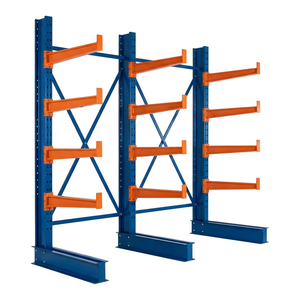
Precision structural and roll-formed high-density systems manufactured to endure heavy industrial payloads, dynamic seismic calculations, and high-cycle lift-truck throughput.
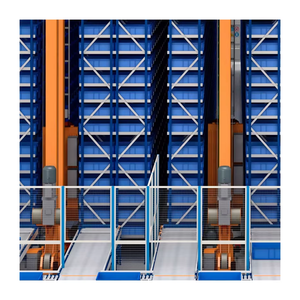
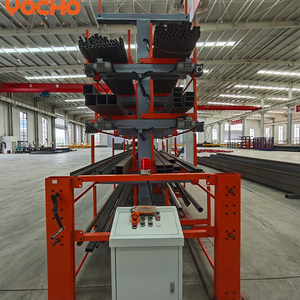
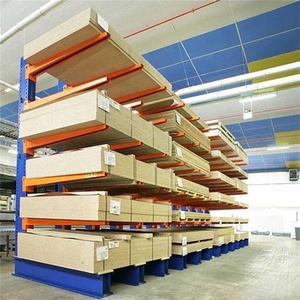
Positioned at the geographical heart of European trade lanes (D1, D5, and D8 motorways), the Czech Republic demands high-duty storage systems engineered for specific sector workflows.
Operating just-in-sequence (JIS) and just-in-time (JIT) replenishment for passenger and EV lines. Warehousing heavy die-castings, chassis sub-assemblies, and battery casing components requires high deflection resistance and extreme safety factors under cyclical loading.
Serving cross-dock distribution into southern Germany and Greater Prague. Facilities experience high turnover across mixed SKUs, requiring instant selective accessibility, dynamic carton replenishment, and high vertical clear-height utilization up to 14 meters.
The metallurgical and heavy fabrication corridors around Moravia and Silesia require specialized storage for steel tubing, aluminum extrusions, and bulk raw materials, while local grocery distribution demands cold-storage optimization down to -28°C.
Industrial space availability across Greater Prague and the German border region remains under sustained tight vacancy (consistently sub-2.5%), forcing companies to transform floor plans into three-dimensional vertical optimization.
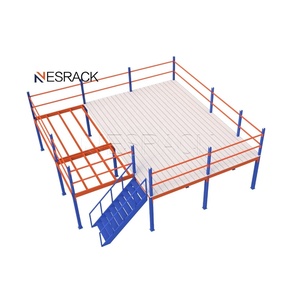
With prime logistics land values rising across Central Bohemia, developers are maximizing standard 10–12m clear heights up to 15m. Racking specifications are switching from standard 3.2m wide counter-balance forklift aisles to 1.7m Very Narrow Aisle (VNA) profiles, supplemented by rack-supported mezzanine floors to increase picking footprints without building expansion.
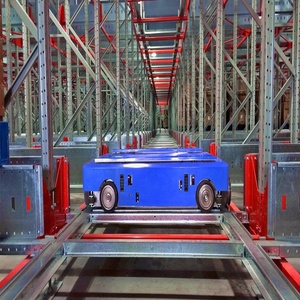
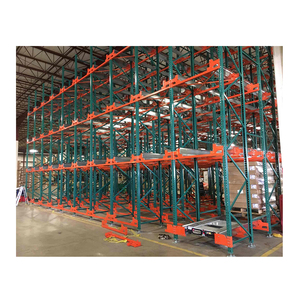
The Czech Republic maintains one of the lowest unemployment rates in the EU, creating persistent labor shortages in warehouse operations. Semi-automated deep-lane radio shuttle racks are replacing classic drive-in systems, reducing lift-truck travel distance inside channels by up to 70% and minimizing mast impact damages.
Multinational operators and institutional landlords (such as CTP, Prologis, and P3) enforce rigorous structural audit standards. Specifiers mandate documented finite element analysis (FEA), verified upright anchor embedment into C20/25 or C25/30 concrete slabs, and mandatory annual third-party inspections per ČSN EN 15635.
Compare engineered profiles to determine the most cost-effective structural solution matching your facility's operational velocity and impact risk profile.
| Engineering Attribute | Roll-Formed Teardrop / Omega Profile | Hot-Rolled Structural Channel (C-Channel) | Automated Radio Shuttle Channel |
|---|---|---|---|
| Material Grade | High-Tensile Cold Rolled Q235B / Q355B Steel | Hot-Rolled ASTM A36 / Structural Equivalent | Heavy Formed Steel with Cold-Formed Shuttle Rails |
| Impact Resistance | Moderate; requires bolt-on column protectors | Maximum; highly resilient against mast collisions | High; structural entry uprights protect rail guides |
| Beam Adjustment Step | 50 mm or 75 mm pitch tool-less reconfiguration | Bolted connections at 50 mm / 75 mm increments | Custom engineered tier elevations (fixed profile) |
| Typical Application | Selective logistics, retail, fast-turnaround 3PL | Heavy manufacturing, coil storage, drive-thru lanes | Cold storage (-28°C), beverage, uniform high-cube SKUs |
| Capacity Threshold | Up to 1,500 kg per pallet position | Exceeding 2,500 kg per pallet position | 500 – 2,000 kg automated continuous transport |
| European Standard | ČSN EN 15512:2020 | ČSN EN 15512 / AISC | ČSN EN 15512 & CE Machinery |
Drawing upon nearly 70 years of world-class pallet racking engineering, we provide comprehensive industrial storage infrastructure from initial structural calculation to final onsite commissioning.
Nearly seven decades of pioneering pallet racking design. We engineer complete warehouse systems—not merely generic uprights and beams—trusted by Fortune 500 multinationals worldwide.
Our structural methodologies strictly adhere to ANSI MH16.1 (RMI standard) and European standard ČSN EN 15512, certifying accurate load capacities, safe deflection tolerances, and seismic safety.
Dedicated project engineers support each deployment from CAD layout optimization and concrete slab embedment verification to on-site assembly, staging, and final load certification.
Multi-million-dollar automated finishing lines apply a durable electrostatic powder coat finish that resists impact chipping, humidity, and abrasion, exceeding standard warehouse durability demands.
Practical engineering, legal, and operational guidance addressing local building codes, slab capabilities, and installation timelines.