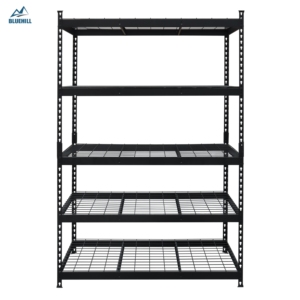
Industrial Heavy-Duty Rivet Shelving
Factory workshop modular boltless shelving engineered for maintenance depots, automotive parts, and high-frequency manual picking centers.
Tested heavy-duty structures ready for precision deployment in German heavy manufacturing, aerospace logistics, and cross-dock operations.
Factory workshop modular boltless shelving engineered for maintenance depots, automotive parts, and high-frequency manual picking centers.
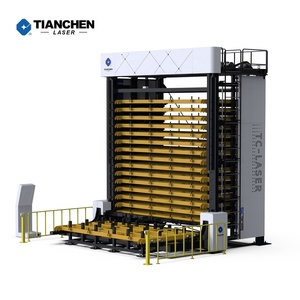
Automated vertical cassette storage system designed for laser-cutting feed cycles, corrosion-resistant framing, and crane interfacing.
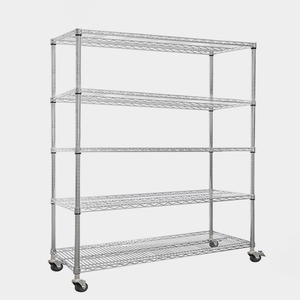
High-airflow zinc-plated steel wire shelving for cleanroom assembly, commercial cold storage rooms, and dry industrial fulfillment.
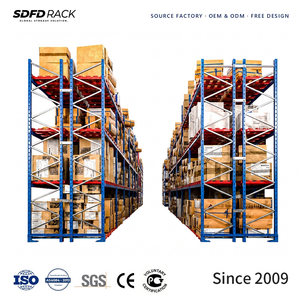
OEM reinforced high-bay selective pallet racks offering 100% SKU selectivity, seismic-certified anchoring, and impact-resistant upright frames.
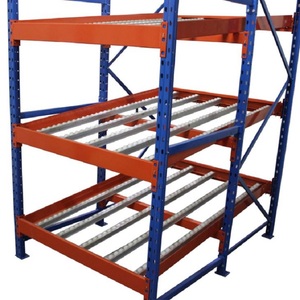
Q235B high-tensile gravity roller track lanes engineered for FIFO live picking operations in e-commerce sorting hubs and parts buffering.
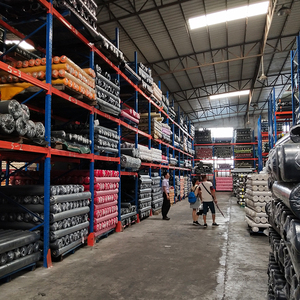
Configurable structural steel racking arrays supporting unit ratings from 1,000kg to over 3,000kg per level for heavy machinery tooling.
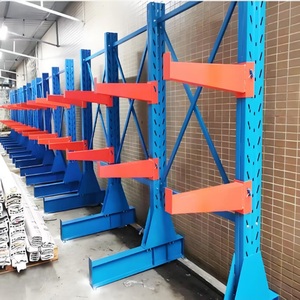
Structural I-beam uprights and pivoting arms optimized for unconstrained linear goods: steel profiles, timber packs, pipes, and panels.
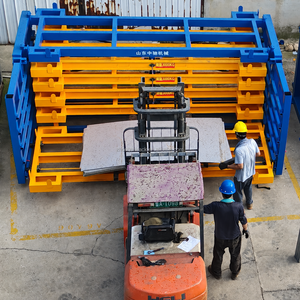
Space-saving telescopic drawer units enabling rapid overhead crane and vacuum hoist access for delicate steel plates and architectural alloys.
As the primary industrial anchor of Eastern Germany and a central nexus within the Trans-European Transport Network (TEN-T Corridor II), the capital region of Berlin-Brandenburg is undergoing an unprecedented logistical evolution. Driven by aerospace expansions near Schönefeld (BER Airport Region), large-scale electric mobility manufacturing gigafactories in Grünheide, and massive modern distribution complexes situated around the Berliner Ring (A10 motorway), the physical demands placed upon warehousing density have shifted. Storing long, unwieldy, and heavy items—such as extruded aluminum sections, structural timber, industrial piping, and precision-machined bar stock—requires racking solutions that transcend the structural limitations of conventional pallet systems.
A heavy-duty cantilever racking system factory operating as a certified direct exporter must provide the Berlin market with more than raw steel profiles; it must deliver comprehensive mechanical engineering, geotechnical compliance with German building standards, and total supply-chain predictability. Our cantilever racking structures are custom-built utilizing hot-rolled structural European steel profiles (HEA, IPE) and high-yield cold-formed sections, ensuring exceptional resistance against cyclical fatigue, point-load bending moments, and heavy forklift impact.
“In dense industrial districts like Berlin-Spandau, Marzahn-Hellersdorf, and Ludwigsfelde, real estate footprint optimization is non-negotiable. Modern cantilever systems deliver up to a 60% increase in linear storage volume per square meter compared to traditional post-and-shelf architectures.”
Cantilever racking functions through vertical central columns from which load-bearing arms extend horizontally, eliminating the vertical front columns found on conventional pallet racks. This unobstructed horizontal span allows continuous loading bays where material lengths are unrestricted by standard beam widths. Our structural engineering specifications adhere precisely to DIN EN 15512 (Steel static storage systems), DIN EN 15620 (Tolerances and clearances), and DIN EN 15635 (Application and maintenance of storage equipment).
Solid-flange steel columns engineered to eliminate torsion under asymmetric single-sided arm loading. Base connection plates are welded with submerged-arc technology to guarantee structural anchor integrity.
Arms are mechanically secured with heavy steel retaining pins rather than fixed welds. If struck vertically by a careless forklift mast, our arms pivot upward and deflect harmlessly without compromising the upright column.
Every element passes through automated sandblasting, phosphating, and electrostatic thermosetting powder coating lines, providing a dense, scratch-proof barrier resistant to chemical corrosion and temperature fluctuations.
Procurement teams in Berlin demand certified static load profiles. Below is an overview of standardized configurations engineered for German distribution warehouses.
| System Configuration | Standard Column Height | Arm Length Span | Load Capacity Per Arm | Safety Factor / Material Standard |
|---|---|---|---|---|
| Light-Medium Series | 2,000 mm – 4,500 mm | 600 mm – 1,000 mm | 250 kg – 600 kg (UDL) | 1.50 / S235JR Cold-Formed Steel |
| Heavy-Duty Structural I-Beam | 3,500 mm – 8,000 mm | 800 mm – 1,800 mm | 800 kg – 2,200 kg (UDL) | 1.65 / S355JR Hot-Rolled IPE/HEA |
| Extra-Heavy Timber & Coil | 6,000 mm – 12,000 mm | 1,200 mm – 2,500 mm | Up to 3,500 kg per arm | 1.80 / High-Yield Certified European Profiles |
| External Roof-Covered Racks | 4,000 mm – 9,500 mm | 1,000 mm – 2,000 mm | Calculated per DIN EN 1991 | Hot-Dip Galvanized ISO 1461 (Wind & Snow Load Rated) |
Berlin is not merely a retail consumptive market; it is an integrated production and distribution bridge connecting Western European manufacturing to the CEE (Central and Eastern Europe) trade lanes. Our heavy-duty cantilever racking installations address critical logistical pain points across diverse sectors throughout the Berlin Metropolitan Area:
Direct supply line buffering in the south-eastern Berlin perimeter. Cantilever units store specialized battery chassis profiles, wiring harnesses, and stamping coils without surface damage.
Supporting Berlin’s urban carbon-neutral building mandate. Long engineered CLT (Cross-Laminated Timber) and Glulam structural beams require our continuous cantilever arm shelves with soft-cushion rubber liners.
Situated near the airport corridor and northern rail freight hubs (Wustermark). Storing ultra-long titanium piping, aircraft-grade aluminum rounds, and stainless steel flat bars under strict lot-traceability protocols.
Canopy-equipped hot-dip galvanized cantilever racks along the A10 outer beltway that withstand regional snow loads (DIN EN 1991-1-3 Zone 2) and sustained rain while securing dry building materials.
Procurement strategies in Berlin are no longer solely focused on immediate capital cost. Warehouse operators face escalating land lease prices across GVZ Berlin South (Großbeeren), GVZ Berlin West (Wustermark), and GVZ Berlin East (Freienbrink). Key macro trends drive the integration of engineered cantilever structures:
1. Multidirectional & VNA Forklift Integration: Conventional wide aisles (3.8m to 4.5m) are increasingly non-viable. Berlin enterprises are converting linear storage to Very Narrow Aisle (VNA) configurations using multidirectional four-way reach trucks or side-loaders operating in guided aisles as narrow as 1,800mm. Our cantilever bases are precision-milled to accept continuous floor guide rails or inductive wire-guidance tracking.
2. Galvanized High-Bay Canopy Construction (Rack-Clad Buildings): Known in the German industry as Regalbediente Silos, companies are bypassing expensive commercial warehouse construction permits by erecting cantilever structures that simultaneously form the roof and wall substructure. Fully galvanized finishes conforming to EN ISO 1461 provide a 40+ year lifecycle exterior against continental freezing and thawing cycles.
3. Strict Enforcement of DIN EN 15635 & DGUV Vorschrift 209-007: German statutory accident insurance bodies (DGUV) and safety authorities in Berlin-Brandenburg conduct systematic yearly audits of racking integrity. Our structures integrate calibrated safety load-sign plates (Belastungsschilder), anchor embedment certification, and engineered bolt-on deflection barriers to ensure 100% compliance during mandatory safety inspections.
With nearly 70 years of engineered racking heritage, our production facilities combine state-of-the-art European structural know-how with large-scale manufacturing output. We eliminate intermediary markups, delivering export shipments directly to Berlin warehouse sites with complete engineering validation.
Every cantilever project is individually simulated under FEA (Finite Element Analysis) software to verify bending deflection under live asymmetrical loads, slab dynamic pressure, and concrete anchor shear capacity.
Export orders are crated, flat-packed, and shipped via optimized containerized freight directly to regional freight hubs or directly onto the jobsite, complete with German-language assembly guides and digital CAD layouts.
Our multi-million-euro investment in continuous electrostatic powder coating delivers an exceptionally durable, high-visibility finish (standard safety RAL 5010 Gentian Blue and RAL 2004 Pure Orange, or custom brand palettes).
Direct technical answers addressing the legal, structural, and logistical questions most frequently posed by German project engineers and warehouse procurement leads.
Yes. All cantilever racking manufactured and exported for installation in Germany is designed and structural-stress verified in accordance with DIN EN 15512, DIN EN 15620, DIN EN 15635, and relevant trade association guidelines DGUV Regel 108-007 (formerly BGR 234). We provide comprehensive static calculations, manufacturer material test certificates (3.1 certificates according to EN 10204), and official structural load boards (Belastungsschilder) displaying certified uniform load distributions.
Cantilever columns create strong concentrated overturning moments under single-sided loading. Typical heavy industrial applications require an uncracked or cracked reinforced concrete slab (minimum class C20/25, ideally C25/30 or C30/37) with a minimum slab thickness ranging between 180mm and 250mm, free of surface expansion joints within the anchor embedment cone. We specify and supply certified European heavy-duty mechanical wedge anchors or chemical injection anchor systems evaluated under EOTA standards for structural anchoring.
Absolutely. For outdoor storage yards, we supply fully hot-dip galvanized cantilever systems conforming to EN ISO 1461, which provides robust cathodic protection against rain, road salt, and sub-zero temperatures. Furthermore, our engineering team can calculate and integrate structural canopy roof supports with drainage gutter brackets, engineered specifically to resist Berlin wind pressures (Eurocode 1) and regional ground snow loads (DIN EN 1991-1-3).
Our articulated arms connect to the IPE/HEA columns using high-strength steel shear pins. If a forklift operator accidentally lifts a load into the underside of an arm, the arm simply tilts upward along its axis, absorbing the upward impact energy and disengaging immediately without bending the arm or deforming the column connection. This crucial design feature drastically mitigates permanent rack damage and eliminates expensive structural repair downtimes.
To prepare an accurate engineering drawing and static quote, please provide: (1) General architectural CAD or PDF floor plans indicating clear warehouse height and obstacle boundaries, (2) Specifications of stored goods including length, depth, weight per piece, and pallet or bundle configurations, (3) Material handling equipment type (counterbalance forklift, side-loader, or multi-directional VNA truck) along with maximum mast lift heights, and (4) Site installation conditions (indoor temperature-controlled vs. outdoor yard installation).
Connect directly with our senior structural racking engineers. Review layout plans, load calculations, and factory-direct export terms.