High-Performance Storage Systems for Greater Manila Operations
Direct from factory export: fully custom, load-tested structural and roll-formed racking engineered specifically for FMCG, cold storage, and e-commerce distribution centers across Luzon.
Engineering Racks for the Philippine Supply Chain Ecosystem
A technical overview of material specifications, humidity countermeasures, and seismic compliance across Luzon’s logistics growth zones.
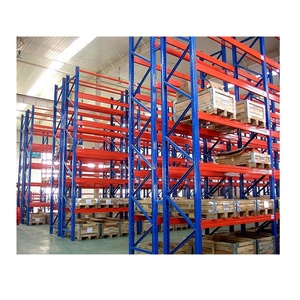
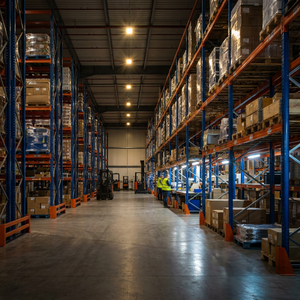
The warehousing landscape across the Greater Capital Region of the Philippines is undergoing a structural transformation. Driven by the aggressive densification of logistics hubs along the North Luzon Expressway (NLEX) in Bulacan and Pampanga, and the southern logistics corridors spanning Calamba, Santa Rosa (Laguna), and General Trias (Cavite), industrial operators face compounding operational constraints. Industrial land costs within Metro Manila proper—including Valenzuela, Taguig, and Parañaque—continue to climb rapidly, compelling logistics managers to optimize vertical air rights up to 14 to 32 meters using high-bay structural steel configurations.
Procuring racking systems for Philippine operating environments requires stringent engineering oversight beyond standardized off-the-shelf shelving. The Manila basin and neighboring provinces fall squarely into Zone 4 seismic classification under the National Structural Code of the Philippines (NSCP 2015). Industrial storage racking acts as a flexible, free-standing superstructure subjected to profound dynamic shear forces during seismic events originating from the West Valley Fault or the Manila Trench. Consequently, engineering calculations must feature enlarged baseplates, cold-formed high-tensile Q235B/Q355B steel, heavy-duty frame diagonal bracing, and high-embedment wedge anchors capable of preventing catastrophic overturning.
E-Commerce & 3PL Multi-Tier Facilities
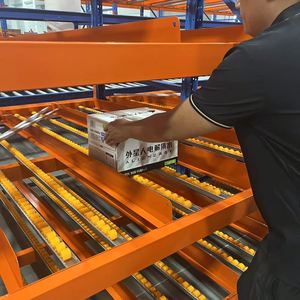
High-throughput fulfillment centers in Laguna and Bulacan demand carton flow dynamic lanes and pick modules. These multi-level configurations separate replenishment traffic from split-case order picking, reducing travel time by up to 60% while matching peak parcel dispatch velocities.
Cold Chain & Controlled Atmosphere
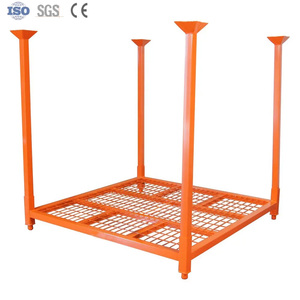
Manila’s thriving meat import, seafood, and quick-service restaurant (QSR) distribution hubs rely heavily on drive-in systems and hot-dip galvanized post pallets (Manurack). Hot-dip galvanization eliminates rust peeling caused by tropical humidity, sub-zero condensation, and frequent thermal cycling.
Heavy Industrial & Sheet Metal Storing
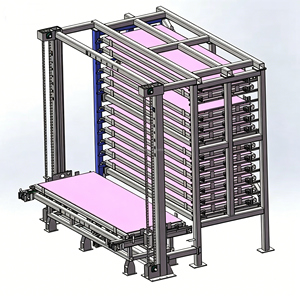
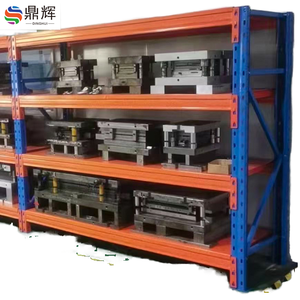
Specialized fabrication shops in Cavite’s PEZA export processing zones utilize heavy-duty drawer-type sheet metal racks and cantilever systems. These permit direct overhead crane hoisting, eliminating manual material handling hazards and protecting sensitive raw metal coils from surface deformation.
Beyond structural load profiles, corrosion mitigation is paramount. Metro Manila experiences year-round ambient relative humidity averaging 75% to 85%, coupled with high marine salinity along coastal terminals in Manila North and South Harbors. Conventional pre-treated dip paints degrade rapidly, leading to micro-fissuring and subsurface oxidation. Our export-grade racking relies on automated electrostatic powder coating preceded by a multi-stage iron/zinc phosphate chemical wash. This delivers an impact-resistant, uniform thermoset coating rated for over 500 hours of continuous salt-spray testing, guaranteeing long-term structural integrity inside non-climate-controlled local warehouses.
Manila Logistics Trends: Navigating Densification & Automation
How progressive supply chain executives in the Philippines are transitioning from traditional selective configurations to high-density, automated infrastructure.
Three distinct structural market dynamics are redefining warehouse layout specifications throughout the Philippines:
1. Escalation of Clear Heights in Grade-A Facilities: Historically, Philippine industrial facilities maintained clear ceiling heights of 6 to 8 meters. Modern industrial parks built by major developers like Ayala Land Logistics, Megawide, and modern PEZA zones feature clear spans exceeding 12 to 15 meters. Utilizing this vertical envelope requires high-precision upright columns roll-formed with continuous Omega-profile sections, engineered to mitigate progressive buckling under cumulative beam loads.
2. Adoption of Semi-Automated Radio Shuttle and AS/RS: With floor space premiums at all-time highs, warehouse operators are moving away from wide 3.5-meter forklift aisles toward high-density push-back, pallet flow, and pallet runner shuttle systems. Shuttle systems provide deep-lane storage up to 20 pallets deep, yielding a 70% space utilization index compared to standard selective racks, while minimizing lift-truck ingress and structural impact risks.
3. Severe Tropical Weather & Seismic Engineering Resilience: Facilities situated in low-lying flatlands around Laguna de Bay and CAMANAVA (Caloocan, Malabon, Navotas, Valenzuela) frequently encounter high ground-water tables and soft subsoils. Racking anchor design cannot depend on generic concrete charts. Structural engineers must evaluate concrete slab compressive strengths (typically 25 to 30 MPa), slab thickness, and crack-induced stresses to determine whether seismic wedge anchors or chemical capsule fasteners must be deployed to avoid pullout failures.
| Storage Racking Architecture | Space Utilization | Pallet Accessibility | Pallet Rotation Flow | Philippine Industrial Application |
|---|---|---|---|---|
| Selective Pallet Racking | Medium (40% - 50%) | 100% Direct Immediate Access | FIFO / LIFO Flexible | General 3PL, FMCG distribution, wide SKU variance in Cavite / Laguna |
| Narrow Aisle (VNA) High Bay | High (65% - 75%) | 100% Direct Immediate Access | FIFO / LIFO Flexible | Grade-A logistics parks in Bulacan, high ceiling heights, wire-guided trucks |
| Drive-In / Drive-Thru Racks | Maximum (75% - 85%) | Low (Lane-by-lane access) | Strict LIFO (Drive-In) / FIFO (Thru) | Cold storage freezers in Navotas / Taguig, bulk raw materials, seasonal food packaging |
| Carton Flow & Pick Modules | High (Multi-tier volume) | Immediate to Picking Face | Strict FIFO Gravity-Fed | Cross-docking e-commerce facilities handling high-velocity consumer orders |
| Hot-Dip Galvanized Manuracks | Dynamic Stacking | Block Storage Access | Modular Seasonal Flex | Cold storage overflow, Euro pallets, chemical and outdoor containerized staging |
Why Manila Importers Partner with Our Manufacturing Ecosystem
With nearly 70 years of engineered racking heritage, we combine structural integrity, RMI-compliant testing, and export logistical execution.
RMI & ANSI MH16.1 Specification Compliance
Unlike non-certified steel processors, all structural and roll-formed systems are engineered in strict conformance with the Rack Manufacturers Institute (ANSI MH16.1), guaranteeing documented deflection limits and structural safety factors.
In-House Structural & Seismic Design
Our licensed structural engineers generate complete project CAD drawings, localized wind and seismic dynamic calculations, and anchor embedment analyses tailored directly to the geotechnical realities of your facility site.
Multi-Million Dollar Automated Finishing
Advanced continuous shot-blasting and multi-stage automated powder coating lines prevent coating detachment, pitting, and oxidation under severe tropical conditions, ensuring a durable, clean industrial finish for decadal lifecycles.
Optimized Direct Export Logistics to Manila
Experienced shipping desk managing direct FCL (Full Container Load) shipments straight into Manila South Harbor or Batangas Port. Component bundles are strapped, corner-protected, and moisture-sealed for damage-free ocean transit.
Turnkey Structural Impact & Column Protection
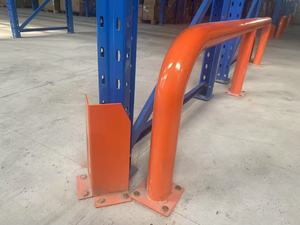
We supply modular bolt-on heavy structural straddle protectors, end-of-aisle wrap-around steel barriers, and drop-in wire mesh decking to shield against daily MHE (Material Handling Equipment) operational collisions.
Fortune 500 Proven Track Record
Supplying global retail giants, multinational FMCG manufacturers, and leading cold chain logistics providers worldwide. Our systems offer guaranteed structural integrity that passes third-party safety audits without friction.
Frequently Asked Questions by Philippine Industrial Buyers
Practical answers to structural engineering, shipping timelines, customs clearances, and local seismic anchoring requirements.
How do your systems comply with Philippine Zone 4 seismic codes?
Our structural engineering group utilizes finite element analysis (FEA) based on NSCP 2015 and RMI ANSI MH16.1 criteria. We incorporate thickened structural steel baseplates, engineered frame x-bracing, and high-tensile anchor bolts with deeper embedment calculations to safely withstand ground accelerations typical of the West Valley Fault and coastal Luzon regions.
What surface treatment is recommended for cold storage in Metro Manila?
For sub-zero freezers (-18°C to -25°C) and chillers with high condensation cycles, we recommend either hot-dip galvanization (conforming to ISO 1461 / ASTM A123) or our specialized heavy-duty thermoset zinc-rich powder coating system. This prevents peeling, chipping, and rust creep caused by perpetual moisture.
Can we import racking directly to Batangas Port instead of Manila Harbor?
Yes. Direct FCL shipments can be routed directly to Batangas Container Terminal (BCT) or Manila South/North Harbor (MICT). Shipping directly to Batangas is especially advantageous for facilities located in the Laguna Technopark, Carmelray Industrial Park, and First Philippine Industrial Park (FPIP) to bypass Metro Manila truck ban schedules.
Can these racks accommodate both standard Euro and GMA pallets?
Yes. Our beams and upright depths are customized to your specific unit load dimensions. Whether your warehouse handles standard 1000mm x 1200mm industrial pallets, Euro pallets (800mm x 1200mm), or custom plastic/wooden pallets, we engineer beam lengths and wire decking to ensure uniform load distribution without deflection.
What concrete slab specifications are needed for heavy-duty racking?
For standard selective configurations exceeding 8 meters or loads of 1,000kg to 1,500kg per pallet position, we typically recommend a reinforced concrete slab with a minimum thickness of 150mm to 200mm and a compressive strength (f'c) of 25 MPa to 30 MPa (3,500 to 4,000 PSI). Our engineers evaluate your core slab data prior to final anchor specification.
What is the typical manufacturing and export transit lead time to Manila?
Standard fabrication cycles range from 20 to 35 days depending on project tonnage and customization complexity. Ocean freight transit from our manufacturing facility to Manila or Batangas Port typically takes 10 to 14 days, offering significantly faster turnaround than Western suppliers.
Accelerate Your Warehouse Capacity with Engineered Certainty
Send our engineering team your building floor plan (CAD/PDF), ceiling clear heights, and pallet load configurations. We provide a complimentary preliminary layout, load calculation tables, and an itemized export estimate for your project.
Send an Inquiry