High-Density Racking & Material Handling Equipment
Explore heavy-duty industrial storage systems precision-manufactured for manufacturing centers, bonded facilities, and supply chain distribution hubs across Hanoi and Northern Vietnam.
Engineering High-Density Radio Shuttle Systems for Hanoi’s Industrial Expansion
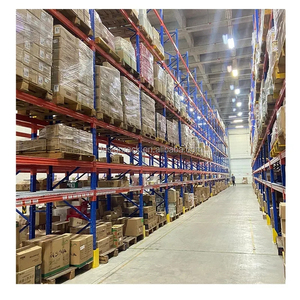
The manufacturing and logistics landscape of Hanoi and the greater Northern Vietnam economic belt—encompassing key satellite hubs such as Bac Ninh, Hai Duong, Vinh Phuc, Hung Yen, and the deep-water maritime gateway at Hai Phong—has experienced unprecedented capital influx. Driven by global supply chain diversification, leading electronics multinationals, tier-1 automotive fabricators, and regional FMCG distributors are demanding ultra-dense warehouse utilization. However, industrial developers facing escalating land lease valuations in Hanoi’s primary industrial parks (such as Thang Long Industrial Park, Quang Minh, VSIP Bac Ninh, and Noi Bai Industrial Zone) can no longer rely on conventional, land-exhaustive selective rack formats.
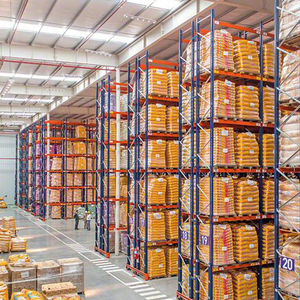
In facilities where industrial land rentals average between $5.00 and $9.50 per square meter monthly, spatial efficiency directly dictates operational EBITDA. The OEM/ODM Radio Shuttle Racking System represents the gold standard in semi-automated pallet storage, bridging the mechanical gap between high-turnover selective pallet racks and fully autonomous, high-CAPEX unit-load AS/RS installations. By deploying autonomous shuttles operating along deep-lane guide rails, warehouse managers maximize clear ceiling clearance up to 24 meters while compressing warehouse footprint by up to 70% to 85%.
Addressing Northern Vietnam’s Distinct Climate and Seismic Ground Dynamics
Warehousing infrastructures located across the Red River Delta face two severe environmental challenges: extreme seasonal subtropical humidity and alluvial soil settlement characteristics. During Hanoi's spring monsoon season ("Trời nồm"), ambient relative humidity frequently breaches 90%, creating aggressive condensation cycles along steel members and sensitive microelectronics inside battery-powered machinery. Generic racking systems and budget shuttle vehicles suffer terminal electrical faults, contact corrosion, and traction slippage.
Our engineered Radio Shuttle solutions address these regional specificities at the molecular level. Structural and roll-formed upright columns utilize high-grade Q355B hot-rolled structural steel channel and cold-formed profiles treated through multi-stage automated pre-treatment and electrostatic thermoset epoxy powder coating. For sub-zero pharmaceutical cold chains and ice-cream frozen logistics in Hanoi’s perishable supply hubs, our shuttles incorporate IP65-sealed drive motors, heated internal sensor bays, and military-grade Lithium Iron Phosphate (LiFePO4) power cells with integrated thermo-management systems operating continuously down to -25°C.
Kinematic Track Precision
Continuous roll-formed guide rails featuring heavy-gauge galvanized steel profiles engineered to accommodate 1,500 kg loads with less than 0.5 mm lateral deflection per 1,000 mm run.
LiFePO4 Power Train
Equipped with fast-charging 48V/20Ah Lithium Iron Phosphate power packs delivering 8-10 hours continuous operation, supporting zero-downtime hot-swappable battery drawers.
Fail-Safe Laser Triangulation
Dual front-and-rear photoelectric LiDAR sensors prevent lane collisions, pallet over-travel, and personnel impact with sub-millimeter positioning accuracy across deep channels.
Comparative Performance Matrix: Pallet Racking Paradigms
Selecting the optimal material handling topology requires balancing vertical density, throughput volume, lift truck travel cycles, and capital expenditure amortization. The table below delineates the structural and operational differences for logistics centers serving Hanoi.
| Storage Architecture | Volumetric Efficiency | SKU Selectivity & Mode | Forklift Bay Penetration | Pallet Damage Risk | Capital Investment (CAPEX) |
|---|---|---|---|---|---|
| Selective Pallet Rack | 40% - 50% | 100% Selectivity / FIFO | Zero (Aisle Operation) | Low (Standard handling) | Lowest Baseline |
| Drive-In Racking | 65% - 75% | Low / Strict LIFO | Deep (Truck Enters Rack) | High (Frequent collisions) | Moderate |
| Pallet Flow (Gravity) | 75% - 80% | High / Strict FIFO | Zero (Face Load / Unload) | Moderate (Roller wear) | High (Heavy mechanical) |
| OEM Radio Shuttle Racking | 80% - 90% | Flexible LIFO or FIFO | Zero (Shuttle Traverses Rail) | Extremely Low (Automated) | Balanced / Fast ROI (<2.5 yrs) |
| Full Unit-Load AS/RS | 90% - 95% | 100% Automated System | Zero (Crane / Stacker) | Minimal | Very High (Complex software) |
As demonstrated, while traditional Drive-In systems provide acceptable volumetric consolidation, they necessitate dangerous forklift entry into narrow structural bays. In contrast, Radio Shuttle Racking eliminates forklift structural encroachment entirely. Forklift operators drop the shuttle onto the dedicated entry rail via standard tines, stage the pallet on the front locator beams, and trigger cycle commands via ergonomic handheld RF remotes or tablet WMS integrations. The automated shuttle carries the load down the lane at speeds up to 1.2 m/s, locating the pallet with ultrasonic proximity sensors before returning to the picking face.
70 Years of Engineering Lineage: RMI Compliance & Precision Manufacturing
Drawing on nearly seven decades of structural pallet rack engineering lineage, our manufacturing plants uphold rigorous production controls compliant with the Rack Manufacturers Institute (RMI / ANSI MH16.1), European FEM 10.2.02, and ISO 9001 quality frameworks. Unlike commercial fabricators offering commodity welded frames, every component in our Radio Shuttle infrastructure is engineered for dynamic fatigue resilience, structural seismic resistance, and extreme life-cycle longevity.
Our dedicated engineering group evaluates Hanoi project installations through complete finite element analysis (FEA), calculating anchor embedment stresses against regional soil conditions and local building code editions (TCVN 9386 seismic provisions). We take accountability for the complete lifecycle:
Custom OEM/ODM Extrusions
Proprietary roll-formed rail profiles with dual-flange wheel guides prevent vehicle derailment, engineered for standard 1000x1200mm, 1100x1100mm, and 800x1200mm Euro pallets.
Structural Uprights & Heavy Baseplates
Engineered baseplates with dual floor anchor bolting disperse axial dynamic reactions directly into concrete slabs, ensuring compliance with heavy seismic criteria.
Automated Powder Coating
Multi-stage automated wash, iron phosphating, and thermoset polyester/epoxy powder coating lines yield scratch-resistant, humidity-proof finishes exceeding 1,000-hour salt spray tests.
Engineering Tools & Diagnostics
Field-level beam capacity calculators, slab embedment tables, and onboard shuttle telemetry empower warehouse supervisors to maintain zero unplanned operational stoppages.
Frequently Asked Questions for Warehouse Planners in Hanoi
Clear, direct answers regarding technical specifications, port logistics via Hai Phong, cold-room integration, and operational return on investment.
1. How does the Radio Shuttle Racking system handle high humidity and monsoon dampness in Hanoi?
In Northern Vietnam's spring climate ("Nồm ẩm"), condensation on steel channels and optical sensors can cause operational failure in entry-level racking. Our shuttle carts feature conformal-coated circuit boards, IP65-sealed drive assemblies, and moisture-resistant optical LiDAR sensors equipped with anti-fog glass lenses. Furthermore, all structural uprights and shuttle guide rails receive electrostatic polyester powder coating or hot-dip galvanization, preventing rust and preserving high-traction contact between the polyurethane drive wheels and rail surfaces.
2. What is the typical lead time and shipping route to industrial zones around Hanoi?
Standard export orders are precision packed into 40ft High Cube containers and routed directly to Hai Phong Port (Dinh Vu or Tan Vu terminals) or Lach Huyen deep-water terminal. Transit time from production dispatch to Hai Phong is typically 7 to 14 days, followed by bonded overland flatbed haulage via the Hanoi-Hai Phong Expressway directly to parks in Bac Ninh, Vinh Phuc, Hung Yen, or Hanoi proper. Complete project delivery including OEM roll-forming and testing ranges from 4 to 6 weeks from technical drawing approval.
3. Can this shuttle system switch seamlessly between FIFO and LIFO inventory models?
Yes. The structural design can be configured as a double-aisle system (charging and discharging ends separated) to realize strict First-In, First-Out (FIFO) stock rotation—crucial for pharmaceutical and date-coded food processing operations in Hanoi. Alternatively, single-aisle Last-In, First-Out (LIFO) layouts maximize physical storage against solid perimeter walls. The operating mode can be configured through the operator’s wireless tablet interface without mechanical adjustment.
4. What concrete floor slab thickness and flatness specifications are required?
Because the shuttle vehicle carries the pallet weight inside the rack rails, the dynamic load is transferred down through the vertical upright columns into the foundation. A reinforced concrete slab of minimum 200mm to 250mm thickness with a compressive strength of at least 30 MPa (C25/30 or C30/37) is recommended. Floor flatness should comply with DIN 18202 Table 3 Group 3 or ASTM E1155 (F-min 50) in forklift operational corridors to ensure vertical stability when staging pallets into high-level rail openings.
5. Can the system operate within cold storage and deep-freeze logistics facilities?
Absolutely. Our specialized Cold Chain Edition Radio Shuttle is designed for continuous duty down to -25°C (-13°F). It integrates heating circuits around optical sensors and mechanical encoders, uses low-viscosity synthetic lubricants, and houses an automated self-heating LiFePO4 battery pack that maintains optimal internal core temperature during discharge, preventing typical lithium voltage drop in sub-zero environments.
6. What pallet dimensions and variations can be accommodated within one rack system?
Our OEM/ODM engineering allows variable rail design. We frequently build dual-purpose rail contours that accommodate both standard Asian industrial pallets (1100mm x 1100mm) and export standard wooden or plastic pallets (1000mm x 1200mm). Pallet undersides with 2-way, 4-way, or 9-block configurations can be handled with zero modifications provided bottom board runner alignment meets our standard clearance profile.
7. What safety features prevent shuttle fall-out, track collision, or personnel injury?
Safety is built into every level: (1) High-visibility mechanical physical end-stops at lane terminals prevent accidental overshoot; (2) Dual front/rear laser distance sensors automatically decelerate and halt the cart 500mm prior to any obstacle; (3) Pallet presence detection prevents empty-load cycling; (4) Structural safety wings on the shuttle body prevent rail dislodgment; and (5) An emergency mechanical rescue tow function enables recovery of depleted carts without manual entry into the rack tunnel.
8. What is the typical ROI period for a Hanoi-based warehouse conversion?
Factoring in Hanoi's current industrial land rental benchmarks, electricity cooling expenses for cold storage, and forklift fleet requirements, our customers typically achieve full system payback within 18 to 26 months. Operating labor drops by up to 50% as forklifts simply drop pallets at the entry face rather than navigating deep, slow aisles, and rack impact damage is reduced by more than 90%.
Request Custom Engineering Drawings & Load Capacity Tables
Collaborate directly with our pallet rack engineering specialists. Send your building AutoCAD drawings, pallet dimensions, and throughput goals to receive a complimentary 3D layout, lane capacity calculation, and detailed price quotation for your facility serving Hanoi.