High-Efficiency Warehouse Storage & Gravity Flow Systems
Engineered for maximum dynamic throughput, cold-chain integrity, and dense logistics buffering in high-demand industrial hubs.
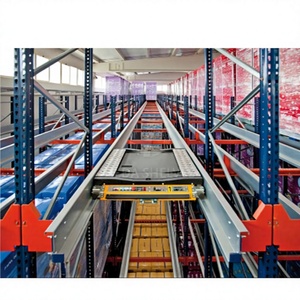
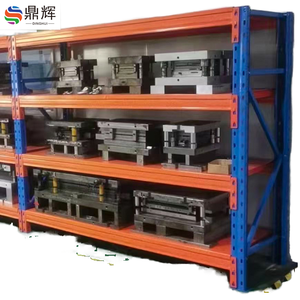
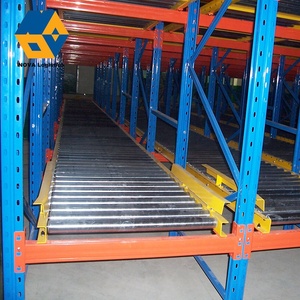
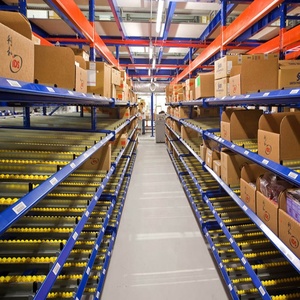
Pallet Flow Racking Mechanics: Transforming Central Asian Logistics Nodes
As Uzbekistan rapidly solidifies its position as the primary industrial manufacturing and logistics crossroads connecting China, Europe, and the Middle East, modern warehouse operations require an evolutionary shift from low-density static storage to automated and gravity-driven high-density systems.
Pallet flow systems (also referred to as gravity flow racks) operate on an engineered FIFO (First-In, First-Out) principle. Utilizing inclined wheeled or roller conveyor tracks set at a calibrated slope (typically 3% to 4%) within an engineered structural or roll-formed steel frame, unit loads loaded on the replenishment aisle automatically advance under gravity toward the opposite picking face. This physical separation of loading and extraction lanes dramatically enhances picking productivity while minimizing forklift traffic and energy expenditures.
Controlled Descent & Dynamic Braking
For standard 1,000kg to 1,500kg pallet loads, gravitational acceleration presents a critical safety challenge. Our gravity flow systems incorporate mechanical speed controllers (centrifugal brake rollers) positioned at engineered intervals along each lane, restricting pallet velocity to a controlled 0.25 m/s regardless of lane depth, which can extend up to 25 pallets deep.
Pallet Separation Mechanics
Upon reaching the discharge front, the lead pallet encounters a positive end-stop. To prevent upstream line pressure from crushing front goods or binding forklift retrieval forks, our systems incorporate engineered foot-operated or automatic weight-activated pallet separators. This isolates the front pallet, guaranteeing safe and effortless extraction.
High-Impact Pallet Flow Deployment Across Uzbekistan's Key Verticals
Tailored intralogistics configurations addressing the specific operational realities of Uzbekistan's expanding agricultural, pharmaceutical, textile, and cross-border transport networks.
Agro-Industrial & Cold Storage in Tashkent
Uzbekistan is one of the world's premier fruit and vegetable producers. Cold storage facilities in the Tashkent and Fergana regions face severe thermal retention costs. Pallet flow systems eliminate up to 60% of forklift aisles, condensing conditioned cubic air space while providing strict FIFO batch turnover to prevent spoilage of date-sensitive produce.
GDP-Certified Pharma Hubs
With massive investments channeled into the Tashkent Pharma Park, pharmaceutical manufacturing and international distribution demand strict batch tracking. Gravity flow lanes provide physical segregation of pharmaceutical lots, guaranteeing that older inventory batches are picked before newer releases without relying solely on software protocols.
Cross-Border Transshipment: Navoi FEZ
Positioned at the nexus of the North-South and East-West corridors, logistics terminals in the Navoi Free Economic Zone handle massive throughput. Pallet flow lanes act as buffer zones directly feeding cross-dock staging bays, cutting forklift cycle times by over 45% during peak customs dispatch windows.
Comparative Technical Performance: Storage Topologies
Comparing Pallet Flow Systems against traditional Selective, Drive-In, and Radio Shuttle structures for Central Asian warehouse investments.
| Storage Topology | Space Utilization | Inventory Rotation | Aisle Requirements | Forklift Operating Risk | Optimal Central Asian Application |
|---|---|---|---|---|---|
| Pallet Flow (Gravity FIFO) | 80% - 85% (Very High) | Strict FIFO (Automatic) | Dedicated Loading & Picking Aisles | Very Low (No entry into rack bays) | Cold storage, FMCG, fresh produce, pharmaceuticals |
| Radio Shuttle System | 80% - 90% (Maximum) | Flexible FIFO or LIFO | Single or Dual Access Aisles | Low (Semi-automated shuttle cart) | Massive uniform SKUs, beverage manufacturing |
| Drive-In / Drive-Thru | 65% - 75% (High) | LIFO (Strictly) | Shared Forklift Bay Entry | High (Frequent upright impacts) | Raw material holding, low-velocity seasonal goods |
| Standard Selective Rack | 35% - 45% (Low) | Arbitrary | Aisle per rack run (3.2m - 3.8m) | Moderate (High traffic density) | High-SKU e-commerce fulfillment, spare parts centers |
*All comparative ratings adhere to RMI/ANSI MH16.1 design parameters and European EN 15512 industrial rack criteria.
Emerging Warehouse Infrastructure Trends in Uzbekistan
Key regulatory evolutions, environmental demands, and seismic engineering requirements reshaping the Central Asian warehousing ecosystem.
Class-A Logistics Real Estate Boom
Institutional developers are constructing over 1.2 million m² of Grade-A warehouse space in Greater Tashkent. Modern clear heights of 12m to 14m necessitate heavy-duty flow racking capable of multi-tier vertical storage.
Strict KMK & SP 14 Seismic Compliance
Eastern Uzbekistan and the Tashkent basin fall under active seismic zones (7 to 9 on the MSK-64 scale). Industrial racking must be structurally engineered in compliance with KMK 2.01.03-19 and SP 14.13330 seismic building standards.
Operational Decarbonization
High industrial electricity tariffs and transition targets across Central Asia drive interest in gravity flow racking, which uses physical potential energy rather than powered mechanical conveyor belts.
WMS & ERP Integration in Tashkent
Adoption of modern 1C:Enterprise, SAP, and advanced WMS platforms requires physical inventory accuracy that standard manual racking cannot support. Gravity lanes streamline scanning protocols.
Why Enterprise Operators in Uzbekistan Specify Our Systems
RMI & ANSI MH16.1 Certified
Fabricated strictly to US Rack Manufacturers Institute criteria, outlasting non-certified regional fabrications under dynamic stress.
Site-Specific Seismic Engineering
In-house structural engineers perform finite element slab, anchor embedment, and dynamic harmonic calculations for Uzbekistan fault lines.
Automated Powder-Coat Lines
Multi-million-dollar automated electrostatic powder-coating creates an impact-resistant, corrosion-proof finish suitable for sub-zero cold rooms.
Modular Integrated Protections
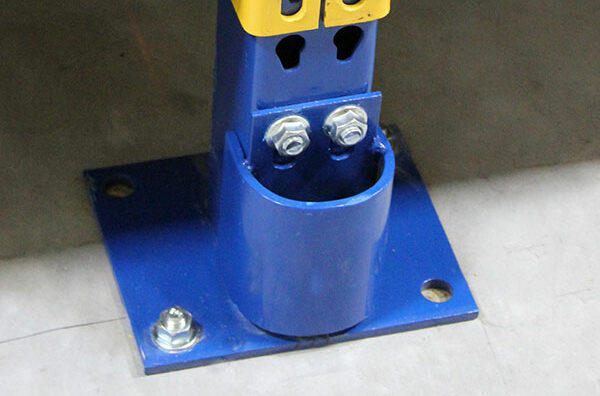
Equipped with bolt-on structural column protectors, entry guide channels, and heavy-duty floor buffers to prevent costly lift-truck downtime.
Frequently Asked Questions by Warehouse Engineers in Uzbekistan
Authoritative technical, commercial, and engineering clarifications for enterprise buyers and facility operators.
How do you engineer pallet flow racks for the high seismic activity in the Tashkent region?
Uzbekistan's seismic guidelines (KMK 2.01.03-19 and SP 14.13330) mandate severe horizontal acceleration resistance. Our structural engineering department incorporates heavy-duty structural baseplates with multiple oversized concrete anchors, cold-formed Q235B/Q355 high-tensile steel uprights, and dynamic cross-bay X-bracing. In addition, our gravity roller tracks utilize mechanical positive locking clips that prevent rollers and braking assemblies from dislodging under high-amplitude ground vibrations.
Can our facility accommodate non-standard pallets common in Central Asia?
Yes. While standard European pallets (1200x800mm) and American industrial pallets (1200x1000mm) are standard, logistics in Uzbekistan frequently encounter Russian GOST-standard pallets (1200x1200mm) and varying low-grade wooden skids. We engineer customized multi-track configurations (3 or 4 roller tracks per lane instead of 2) or continuous full-width cylindrical steel rollers that prevent uneven or split bottom boards from catching and jamming in the gravity lane.
What concrete slab thickness and floor tolerances are required for dynamic flow racks?
Because pallet flow racks concentrate enormous dynamic live loads on upright footings, the foundation slab must generally deliver a minimum compressive strength of 25–30 MPa (C20/25 or C25/30) with an uncracked thickness of at least 180mm to 220mm, depending on vertical bay height. Floor flatness must adhere to DIN 18202 Table 3 Group 3 or ASTM E1155 F-min 50 standards to preserve exact track inclines and prevent pallet drift towards lane guide rails.
How does pallet flow perform in cold storage facilities down to -25°C?
Standard conveyor rollers and pneumatic brakes fail in freezing environments due to viscous lubricant solidification. For cold chain applications in Uzbekistan, we specify sealed stainless steel roller bearings packed with low-temperature synthetic arctic greases operational down to -35°C. Centrifugal brakes are calibrated for condensation and low-temperature operational friction, and our steel structures receive pre-treatment and low-temperature powder coatings to prevent flaking.
What are the customs, freight delivery, and installation procedures for Uzbekistan projects?
We provide full export-compliant logistics support. Shipments are bundled with protective wrapping and loaded directly into multimodal sea-rail containers or flat-rack rail cars transiting through major logistics corridors into Tashkent (Sergeli/Chukursay customs terminals). All engineering documentation, assembly drawings, load rating certificates, and certificates of origin (ST-1/Form A) are prepared for swift customs clearance. Our field service engineers oversee on-site installation and load commissioning.
Transform Your Warehouse Throughput in Uzbekistan
Consult with our structural engineering team today. Send us your architectural CAD drawings, pallet dimensions, and SKU turnover profiles for a complete design review, seismic capacity calculation, and turnkey export quotation.