[email protected] Fabricated to RMI / ANSI MH16.1 Specifications
Industrial Storage Engineering

Pallet Racking Industrial Manufacturer & Supplier for Nagoya

High-ductility seismic racking, heavy-duty structural engineering, and automated storage solutions engineered specifically for Nagoya’s automotive corridors and maritime logistics hubs.

Engineered Product Catalog

Precision Heavy-Duty Racking Systems for Industrial Facilities

Manufactured from high-yield cold-rolled steel and hot-rolled structural channels, rigorously calculated for seismic resistance, extreme pallet weight capacities, and high-turnover logistics across Greater Chukyo.

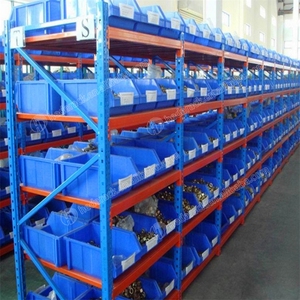
Heda Warehouse Metal Shelving Storage Steel Warehouse Storage Bin Rack
Medium-Duty Staging

Heda Warehouse Metal Shelving Storage Steel Warehouse Storage Bin Rack

Adjustable multi-tier shelving designed with modular steel bins, optimized for picking small automotive components, stamped fittings, and assembly parts along Nagoya line-side buffer storage.

Load: 300–800 kg/Tier Q235B Steel
View Technical Specs
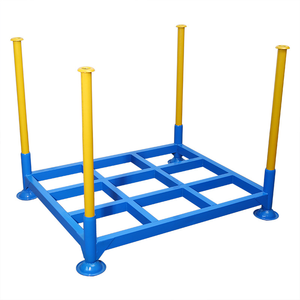
Customized Available Stacking Racks System Adjustable Industrial Warehouse Storage
Modular Stacking

Customized Stacking Racks System Adjustable Industrial Warehouse Storage

Post-pallet dynamic stacking units providing flexible bulk storage without permanent anchor constraints. Ideal for seasonal automotive tire staging and temporary export container stuffing.

Stackable 4–5 High 1500 kg Capacity
View Technical Specs
Certificated Large Heavy Duty Shelving Storage Applications
Certified Heavy Shelving

Certificated Heavy Duty Shelving Storage Racking Unit Solution

Boltless step-beam shelving units reinforced with structural wire decking and safety pins, offering high rigidity for non-palletized stamping dies, molds, and manual handling picking lines.

ISO 9001 / CE Certified Fast Assembly
View Technical Specs
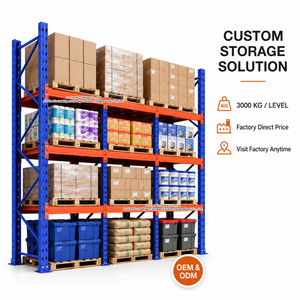
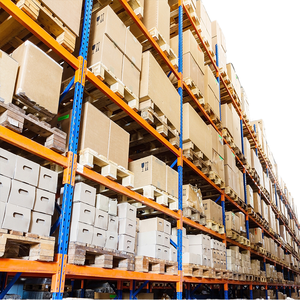
1000KG-3000KG Per Levels Heavy Duty Selective Racking System
Selective Beam Rack

1000KG–3000KG Per Level Heavy Duty Selective Pallet Racking System

Engineered for 100% pallet selectivity with heavy box-beam profiles. Accommodates standard JIS T11 pallets (1,100 × 1,100 mm) as well as Euro and US pallet footprint variants seamlessly.

Up to 3.0T / Level 50mm Pitch Adjustment
View Technical Specs
Factory Direct Hot Sale Customized Corrosion Protection Steel Warehouse Stacking Rack
Foldable Logistics

Corrosion Protection Foldable Steel Warehouse Stacking Pallet Rack

Collapsible tubular steel construction treated with anti-corrosion electrostatic coating. Drastically reduces return-freight logistics costs between Nagoya suppliers and regional assembly plants.

Foldable Design Hot-Dip Galvanized Opt.
View Technical Specs
Narrow Aisle Selective Warehouse Racking System
VNA High Density

Narrow Aisle (VNA) Heavy Duty Selective Warehouse Racking System

Ultra-narrow aisle configuration maximizing floor space utilization up to 85%. Engineered with bottom guide rails or wire guidance compatible with high-reach turret trucks and order pickers.

Aisle Width: 1.6–1.8m Heights to 15m+
View Technical Specs
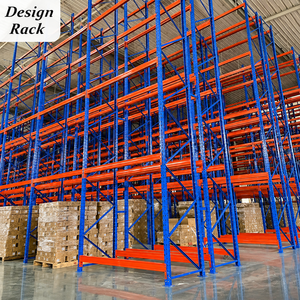
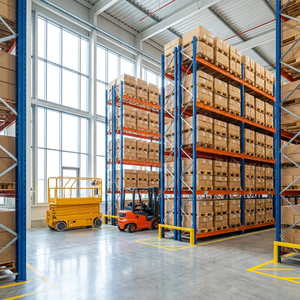
High-Capacity 5 Layer Steel Warehouse Storage Rack
High-Bay Vertical

High-Capacity 5-Layer Steel Warehouse Storage Rack Structure

Engineered for high vertical ceiling clearances typical of modern logistics developments along the Isewangan and Meishin Expressways. Features heavy braced upright frames and row spacers.

Multi-Tier Loading RMI / JIS Compliant
View Technical Specs
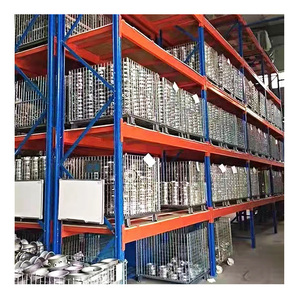
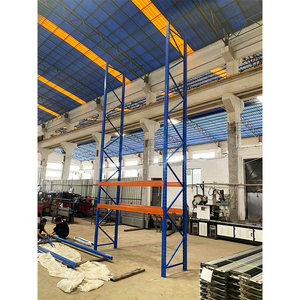
Q235B Cold Rolled Steel Rack Multi Level Pallet Rack
Structural Integrity

Q235B Cold-Rolled Multi-Level Industrial Heavy Duty Racking System

Fabricated with premium cold-formed certified Q235B steel sections, anti-corrosive powder finish, and bolted brace panels. Provides resilient load distribution during micro-seismic vibrations.

Certified Q235B Impact-Resistant Base
View Technical Specs
70+
Years Engineering Heritage
100%
RMI & JIS Structural Compliance
0.3G+
Seismic Acceleration Tested
4,500kg
Max Heavy Bay Beam Capacities
Industrial Hub Applications

Tailored Storage Engineering for Greater Nagoya & Aichi Prefecture

Nagoya represents the undisputed epicenter of Japanese advanced manufacturing and cross-border trade. Our industrial racking systems are strategically deployed across four critical regional sectors.

Automotive Tier-1 & Tier-2 JIT Staging

Within the Toyota City, Kariya, and Komaki production corridors, assembly supply chains operate on ruthless Just-In-Time (JIT) intervals. Our selective racking and dynamic carton-flow lanes support rapid turnover of high-mix automotive stampings, wire harnesses, powertrain subassemblies, and battery pack modules with 100% immediate crane or reach-truck access.

Nagoya Port Cold Storage & Marine Cross-Docking

As Japan's highest-volume cargo maritime gateway, the Port of Nagoya requires dense, corrosion-resistant storage. Our drive-in, push-back, and pallet-flow racking configurations feature specialized multi-stage zinc powder coating and hot-dip galvanization designed to resist coastal humidity, salt-mist air, and sub-zero temperatures down to -30°C in food-grade blast freezers.

Aerospace & Precision Heavy Machinery Tooling

The Chubu region manufactures a substantial share of global commercial aviation aerostructures. Our heavy-duty structural channel racks and cantilever arm systems accommodate oversized titanium spars, wing section crates, and heavy stamping dies exceeding 5,000 kg per level, preventing deflection under localized concentrated loads.

Strategic Siting Context: Nagoya’s central logistics placement between Tokyo (Kanto) and Osaka (Kansai)—anchored by the Tomei, Shin-Tomei, and Isewangan Expressways—makes warehouse floor space along the Chukyo industrial rim exceptionally valuable. Implementing our Narrow Aisle (VNA) or high-bay vertical configurations enables operators to recover up to 45% of previously lost cubic airspace without acquiring additional land.

Equipping an Industrial Facility in Greater Nagoya?

Our engineering division provides complete structural calculations, CAD layout drawings, and seismic loading assessments tailored to Japanese Building Standards and JIS guidelines.

Regional Engineering Analysis

Macro Trends Reshaping Industrial Storage in Nagoya

Evaluating the regulatory, seismic, and economic catalysts dictating modern warehouse storage engineering across Aichi Prefecture and the Tokai region.

1. The '2024 Logistics Problem' and the Acceleration of Automated Buffering

Following statutory caps on truck driver overtime hours under Japan’s revised Labor Standards Act (widely known as the "2024 Logistics Problem"), regional distribution nodes in Nagoya are experiencing intense operational bottlenecks. Freight dwell times at cross-dock warehouses must be reduced to minutes rather than hours. Pallet racking can no longer serve merely as passive dead storage; it must function as a high-velocity dynamic buffer.

Industrial suppliers and 3PL hubs across Nagoya are shifting rapidly from pure floor-stacking toward automated storage integration: automated pallet shuttle rails, gravity pallet flow beds for FIFO batch staging, and Automated Storage and Retrieval System (AS/RS) rack structures. By eliminating driver waiting queues through automated picking lanes, Chukyo logistics operators maintain scheduled line-haul departures to Tokyo and Osaka while strictly adhering to regulatory driver labor limits.

2. Seismic Engineering: Designing for Nankai Trough Earthquake Scenarios

Nagoya is situated within Japan's high-risk seismic vulnerability zone, with municipal disaster planning prioritizing preparedness for the anticipated Nankai Trough megaquake. Standard static racking configurations designed for seismically benign regions present catastrophic failure risks in Aichi Prefecture. Under horizontal ground acceleration ($S_s$ and $S_1$ spectral response values), inadequately engineered upright columns can buckle, and pallets can suffer displacement or shed from the beam levels.

Our engineering approach integrates the rigorous criteria of both the Rack Manufacturers Institute (RMI ANSI MH16.1) and the Japanese Industrial Standard (JIS B 8951: Steel Storage Racks). We utilize:

  • Over-Sized Baseplates & Heavy Anchor Embedments: Spreading the base shear force over thicker structural floor slabs to eliminate post-installed anchor pullout or concrete cone breakout failure during high-amplitude cyclical shaking.
  • Structural Cold-Formed & Hot-Rolled Channel Uprights: High-yield steel alloys (minimum yield strength $\ge 235\text{–}355\text{ MPa}$) with verified structural ductility to absorb harmonic vibrations without brittle fracture.
  • Anti-Dislodgement Restraints & Back-Stop Mesh: Heavy-gauge welded safety mesh and mechanical pallet stopper beams that prevent cargo from walking off beam levels under resonant lateral building drift.

3. Transition to Standardized JIS T11 Pallet Optimization

While international supply chains often utilize 1,200 × 1,000 mm or 1,200 × 800 mm pallets, domestic Japanese manufacturing and retail distribution heavily standardize on the JIS T11 Pallet (1,100 × 1,100 mm). Generic off-the-shelf racking frequently causes improper pallet overhang, unbalanced beam torsion, or hazardous point loading on step-beams. Our racking frameworks are custom-calculated with clear bay widths (typically 2,300 mm to 2,500 mm for two pallets, or 3,400 mm to 3,600 mm for three pallets) ensuring millimeter-accurate clearance, symmetric load centering, and compliance with the Fire Service Act (Shobouhou) sprinkler spray clearances.
Racking System Storage Density Stock Access (FIFO/LIFO) JIS T11 Pallet Compatibility Recommended Nagoya Application
Heavy Duty Selective Rack Standard (100% Direct) FIFO / 100% Selectivity Direct Fit (Standard Beam Spans) Automotive tier suppliers, multi-SKU maintenance hubs, line-side buffers.
Very Narrow Aisle (VNA) Very High (+40% Density) FIFO / 100% Selectivity Precision Clearances Required High-cost urban land (Komaki, Kasugai, Minato-ku logistics parks).
Gravity Pallet Flow Ultra-High Density Strict FIFO (Gravity Incline) Optimized Roller Track Pitch Cold storage at Port of Nagoya, food/beverage distribution, fast-turn automotive JIT.
Drive-In / Drive-Thru Maximum Cube Utilization LIFO / Bulk Batches Flanged Pallet Support Rails Raw material staging, identical SKU stamping parts, seasonal bulk reserves.
Post-Pallet Stacking Rack Flexible Modular Flexible Block Stacking Modular Base Dimensions Seasonal tire inventory, temporary overflow, fluctuating export packing.
Manufacturer Engineering Capabilities

Why Tier-1 Industrial Enterprises Rely on Our Racking

Combining nearly seven decades of structural engineering expertise with modern robotic fabrication and automated powder coating infrastructure.

70 Years Industry Pioneer

Originating from deep industrial roots dating back nearly 70 years, our engineered systems protect valuable inventory in Fortune 500 manufacturing plants and mission-critical distribution centers worldwide.

Rigorous Code Compliance

Every frame, connector, and beam calculation is executed in strict compliance with current RMI (ANSI MH16.1) standards and validated against Japanese seismic acceleration coefficients for structural safety.

Automated Powder Coating

Multi-million-dollar automated electrostatic powder coating lines provide exceptional paint adhesion, impact resilience, and anti-corrosive protection that outlasts harsh industrial warehouse environments.

Turnkey Engineering Support

From initial slab structural analysis and CAD beam clearance simulation to on-site installation guidance and custom column protector accessories, we maintain complete single-source accountability.

Procurement & Technical FAQ

Frequently Asked Questions for Nagoya Warehouse Operators

Authoritative technical answers to common queries from plant managers, structural engineers, and supply chain procurement officers in Aichi Prefecture.

Q1 How do your racks address the high seismic hazard requirements of Nagoya?

Our systems are evaluated using dynamic seismic finite element analysis tailored to regional ground motion expectations. For Tokai and Nankai seismic zones, we calculate upright frame moment-resisting connections, specify heavy-duty baseplates with dual or quad anchor bolt patterns, and enforce structural bracing configurations that resist both lateral and longitudinal seismic drift without structural unseating.

Q2 Are your pallet racks optimized for Japanese standard JIS T11 pallets (1,100 × 1,100 mm)?

Yes. While standard Western racking utilizes 1,000 mm or 1,200 mm frame depths for 1,200 × 1,000 mm pallets, we manufacture dedicated 1,000 mm and 1,100 mm depth frames with customized beam lengths (such as 2,300 mm clear spans for 2 pallets or 3,400 mm for 3 pallets). This provides ideal 50 mm pallet overhang front and rear, maintaining perfect balance over load-bearing step beams.

Q3 What steel grades and mill certifications are utilized in fabrication?

We fabricate uprights and horizontal box beams using certified high-tensile structural cold-rolled steel (such as Q235B / Q355B or ASTM A1011 equivalent to Japanese SS400). Complete Mill Test Certificates (MTC) indicating chemical composition, yield strength, tensile limits, and elongation are supplied with every major industrial project shipment.

Q4 How does pallet racking installation interact with the Japanese Fire Service Act (Shobouhou)?

Under Japanese municipal fire regulations (*Shobouhou*), warehouses storing combustible goods or high rack configurations exceeding statutory heights must maintain precise flues (typically 150 mm vertical flue space between back-to-back rows) to permit effective ceiling and in-rack sprinkler water penetration. Our CAD layout team integrates certified row spacers and back-to-back ties to maintain these required clearances.

Q5 What concrete slab specifications are required for heavy-duty anchoring?

Standard heavy-duty installations (1,000 kg to 3,000 kg per pallet level) require a reinforced concrete slab with a minimum thickness of 150 mm to 200 mm and compressive strength of at least 21 to 24 MPa ($3,000\text{ psi}$). Prior to anchor drilling, our engineers confirm effective anchor embedment depths ($h_{ef}$) versus nominal depths to prevent punch-through on post-tensioned or hollow-core precast slabs.

Q6 Can your selective racking be reconfigured as manufacturing tooling changes?

Absolutely. Our beam-to-column connections feature modular 50 mm or 75 mm vertical punch pitches with high-strength locking pins. Beams can be rapidly adjusted by qualified maintenance personnel to adapt to changing automotive container heights without structural cutting or welding, minimizing line downtime.

Q7 What protective finishes are available for marine and cold-chain facilities in Nagoya Port?

For standard ambient facilities, our multi-stage electrostatic thermoset powder coating provides superior scratch and chip resistance. For coastal warehouses near Nagoya Port or refrigerated/freezer operations (-20°C to -30°C), we recommend hot-dip galvanized (HDG) steel components that offer permanent sacrificial corrosion protection against condensation and salt-mist air.

Q8 What are the minimum aisle widths required for reach trucks vs. counterbalance forklifts?

For standard 3-wheel or 4-wheel counterbalance forklifts commonly used in Japan, clear aisles of 3.2 m to 3.8 m are typically specified. Reach trucks (stand-on or sit-down) require 2.6 m to 2.9 m, while Very Narrow Aisle (VNA) man-up turret trucks operate efficiently within 1.6 m to 1.8 m aisles, nearly doubling accessible vertical storage capacity.

Q9 How do you ship and manage international freight delivery into Nagoya?

Racking bundles are precision-nested, wood-dunnaged, and steel-banded for ocean container shipping (40ft HQ containers) directly discharging at the Port of Nagoya. Detailed packing lists, container stuffing diagrams, and numbered component tags ensure rapid de-stuffing, custom clearance, and transport to job sites across Aichi, Gifu, and Mie Prefectures.

Q10 Can damaged uprights be repaired without unloading entire storage bays?

Yes. We engineer heavy-gauge bolt-on column repair kits and floor-mounted wraparound column protectors. If forklift impact occurs on lower upright legs, engineered repair sections restore structural load-bearing integrity in place without necessitating the hazardous unloading of entire adjacent multi-tier racking bays.

Request an Engineered Layout & Capacity Review

Submit your facility CAD drawing, ceiling height clearance, and pallet specifications. Our senior structural rack engineers will generate a fully compliant storage solution for your Nagoya facility.