Precision Radio & 4-Way Shuttle Racking Systems
Our heavy-duty, robotic pallet shuttle solutions maximize cubic volume utilization up to 85%, eliminating conventional forklift drive-in aisles while reducing cycle times across ambient, refrigerated, and freezer warehousing.
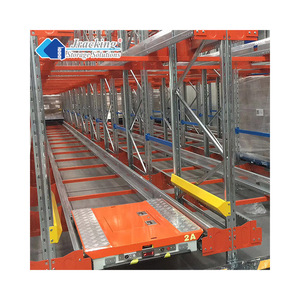
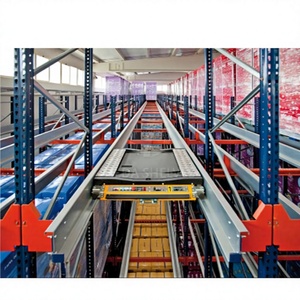
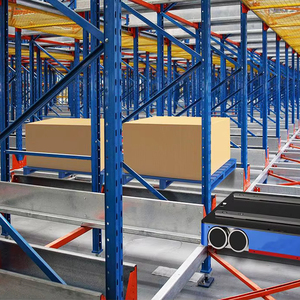
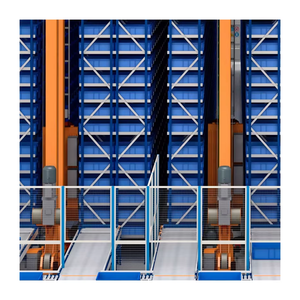
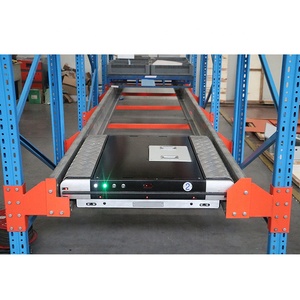
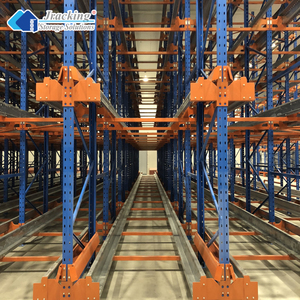
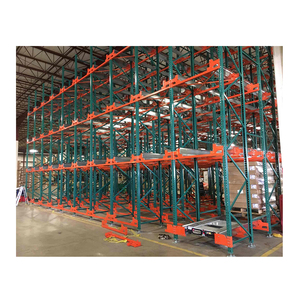
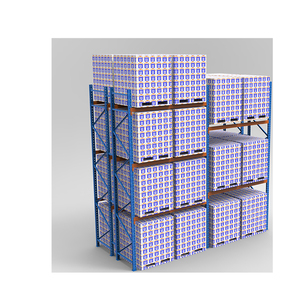
Engineering Shuttle Racking for Costa Rica's Industrial Landscape
Costa Rica has transformed into Central America's prime logistics epicenter, driven by the expansion of Life Sciences manufacturing in Coyol and the Greater Metropolitan Area (GAM), agricultural exports through Moín, and regional FMCG distribution centers.
Seismic Design: Código Sísmico de Costa Rica
Costa Rica sits along the Pacific Ring of Fire, subject to severe tectonic movements from the Cocos and Caribbean plates. Standard static racking designs present critical structural collapse risks under seismic loading. Our shuttle racking integrates heavy-gauge structural columns (Q355B / ASTM A572 Grade 50), reinforced horizontal and diagonal bracing trusses, oversized baseplates, and certified chemical anchor bolts designed under CSCR-2010 and ANSI MH16.1 specifications to prevent rack dislodgment or shuttle track rail deflection during tremors.
GAM & Zona Franca Real Estate Optimization
Industrial land leasing rates within Alajuela, Heredia, and Cartago free zones have seen steady premiums of $8.00 to $11.50 per square meter per month. Conventional selective pallet racking wastes over 50% of the warehouse volume on operating aisles. Radio shuttle racking condenses storage lanes up to 40 pallets deep, decreasing the facility footprint required by 60% and delivering accelerated capital amortization for 3PLs and multinational medical device corporations.
Tropical High-Humidity & Cold Chain Preservation
Coastal and central facilities experience persistent ambient relative humidity exceeding 80%. When coupled with industrial cold stores and blast freezers for pineapples, bananas, and poultry exports, condensation and corrosion deteriorate standard painted steel. We provide pre-galvanized shuttle guide rails, automated electrostatic powder coating with multi-stage pretreatment, and IP65-sealed shuttle rovers operating with low-temperature Lithium Iron Phosphate (LiFePO4) battery packs rated down to -30°C.
High-Density Storage System Architecture Comparison
A data-backed technical comparison to assist industrial warehouse engineers, logistics directors, and procurement managers in selecting the optimal storage configuration for facilities in Costa Rica.
| Technical Parameter | Radio Shuttle Racking | Drive-In / Drive-Thru | Push-Back Cart System | Selective Pallet Rack |
|---|---|---|---|---|
| Volumetric Space Efficiency | Maximum (80% - 85%) | High (65% - 75%) | Moderate (60% - 70%) | Low (40% - 45%) |
| Forklift Penetration Risk | Zero (Rover handles channel) | High (Mast enters frame) | Low (Aisle face operation) | None (Standard aisle) |
| Inventory Rotation | Flexible FIFO & FILO | Strict FILO (FIFO requires Drive-Thru) | Strict FILO | 100% Selective Access |
| Channel Depth Capability | Up to 40+ Pallets Deep | Limited (Typically 6 - 8 Pallets) | Limited (2 - 6 Pallets) | Single or Double Deep |
| Seismic Reliability (CSCR-2010) | Exceptional (Tied structural matrix) | Vulnerable (Lacks intermediate ties) | Moderate | High (Standard bracing) |
| Pallet Handling Cycle Speed | Ultra-Fast (1.0 - 1.2 m/s rover speed) | Slow (Careful driving required) | Moderate (Gravity return) | Standard Forklift Speed |
| Energy Efficiency in Cold Stores | Maximum (Dense air circulation) | Moderate | Moderate | Poor (High thermal volume waste) |
Emerging Warehouse Automation Trends Across Costa Rica
Driven by foreign direct investment, nearshoring manufacturing relocation, and strict supply chain compliance standards, the logistics infrastructure in Costa Rica is experiencing rapid technological modernization.
Life Sciences & Cleanroom Staging
With top-tier medical device manufacturers operating in El Coyol, Cartago, and Zona Franca Américas, pristine inventory control and cleanroom-adjacent staging are required. Radio shuttle channels reduce airborne tire particulate generated by diesel or LPG forklifts by restricting material handling equipment to perimeter transfer aisles.
Moín APM Terminals & Agribusiness Corridor
The Caribbean port corridor handles millions of refrigeration tons of fresh agricultural products bound for North American and European ports. Cold-chain consolidators are retrofitting standard cold storage vaults with multi-tier radio shuttle racks to accelerate container cross-docking, eliminate product spoilage, and reduce electricity expenditures per pallet location.
Integration with Enterprise WMS & 4-Way Fleets
Forward-thinking supply chain directors across San José are transitioning from standalone RF-controlled shuttles to interconnected 4-Way autonomous shuttle swarms governed by Warehouse Control Systems (WCS). These intelligent rovers integrate directly with SAP, Oracle, and Manhattan WMS platforms, synchronizing continuous carton picking and unit-load sorting.
Why Tier-1 Engineers Specify Our Shuttle Racking Systems
Backed by decades of dedicated heavy-duty structural steel manufacturing, state-of-the-art engineering calculations, and strict adherence to international building codes.
ANSI MH16.1 & RMI Standard
Every column profile, load beam, and connection clip is calculated and tested in compliance with current Rack Manufacturers Institute specifications, ensuring rated load integrity under rigorous cycling.
Seismic Engineering & PE Stamps
Our dedicated structural engineering team develops customized anchor patterns, baseplate thicknesses, and structural braces calibrated specifically to Costa Rica's zoning parameters and slab specifications.
Automated Powder Coating Line
Multi-million-dollar automated finishing lines apply thermoset polyester powder coats cured at 200°C, providing impact toughness, scratch resistance, and moisture protection in humid Central American climates.
Turnkey Project Accountability
From architectural CAD layout and containerized sea-freight logistics directly to Caldera or Puerto Limón, through onsite assembly oversight and commissioning, our engineers manage every milestone.
Frequently Asked Questions for Shuttle Racking in Costa Rica
Direct answers from our structural and automation engineering teams addressing technical specifications, logistics, permitting, and floor slab requirements.
How does shuttle racking comply with the Código Sísmico de Costa Rica (CSCR)?
Our engineering department conducts static and dynamic modal analysis taking into account local seismic acceleration coefficients ($S_a$), soil classification profiles (Tipo S1 a S4), and occupancy importance factors. We engineer heavy structural column profiles with enhanced section moduluses, high-tensile frame bolting, heavy-gauge baseplates, and Hilti/Simpson seismic chemical anchors engineered for cracked concrete conditions.
Can the radio shuttle system handle mixed pallet types (GMA, Chep, Europallets)?
Yes. Our shuttle rovers and galvanized guide tracks are engineered with multi-sensor positioning arrays that accommodate standard North American GMA pallets (48"x40" / 1219x1016 mm), European pallets (1200x800 mm), and custom industrial skids up to 1500 kg per pallet position without compromising tracking accuracy or safety margins.
What concrete floor slab thickness and flatness tolerances are required?
Shuttle racking systems concentrate substantial point loads at upright baseplates. Typically, a reinforced concrete slab of 150 mm to 250 mm thickness with a compressive strength of at least 28 MPa (4,000 PSI) is required. Floor flatness should meet DIN 18202 Table 3 Group 3 or ASTM E1155 F-min 50 standards to guarantee precise vehicle travel and level rail alignment across long runs.
How does the radio shuttle operate in cold storage and blast freezers?
Our cold-chain shuttle units are equipped with specialized thermal heating circuits around sensor components and motherboards to eliminate condensation freezing. Powered by high-output LiFePO4 batteries, they run continuously for 8 to 10 hours at temperatures down to -30°C before requiring rapid recharging via standard industrial docking stations.
What is the typical shipping lead time and customs process into Costa Rican ports?
Standard fabrication cycles range from 4 to 6 weeks. Ocean transit to Puerto Caldera (Pacific) or Puerto Limón / Moín (Atlantic) takes approximately 18 to 28 days depending on shipping lanes. We supply comprehensive commercial invoices, packing lists, Mill Test Certificates (MTC), and bill of ladings compliant with PROCOMER, DGA, and Zona Franca tax-exemption protocols.