Engineered Pallet Shuttle Systems for High-Throughput Warehousing
Maximize cubic volume utilization up to 85%, eliminate forklift aisle travel, and safeguard structural integrity under demanding operational and seismic environments.
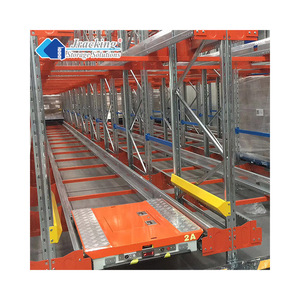
- CE Certified EN 15512 Compliance
- Heavy-duty load up to 1,500 kg/pallet
- Bidirectional FILO/FIFO kinematics
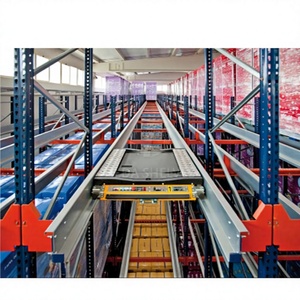
- 1,000–1,500 kg dynamic payload
- Integrated obstacle detection sensors
- Multi-depth lane configuration
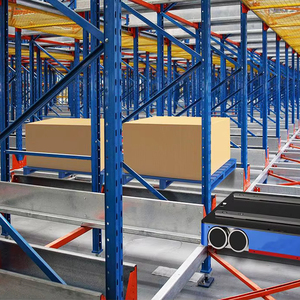
- Full 3D automated omnidirectional travel
- High-bay structural steel integration
- Optimized for mixed SKU sortation
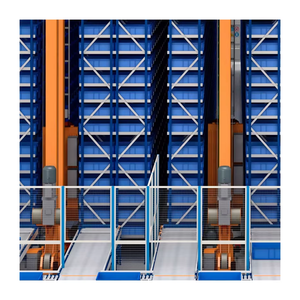
- Direct integration with ERP/WCS layer
- High-speed vertical lifter sync
- 24/7 continuous lights-out operation
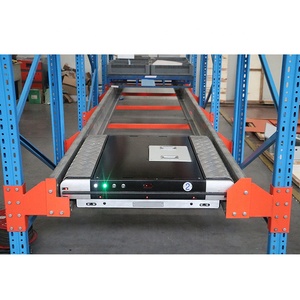
- Low-temp condensation-resistant chassis
- Heated LiFePO4 battery modules
- Energy-dense refrigerated layout
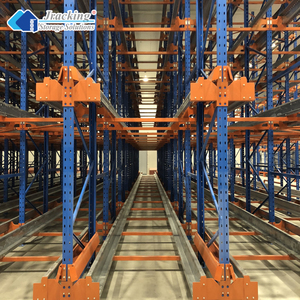
- Thermal-break steel upright profiles
- IP65-rated control electronics
- Specialized cold-chain track alloys
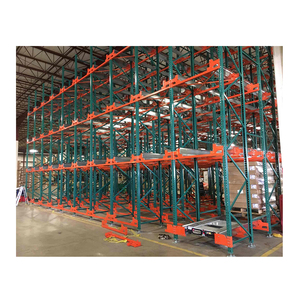
- Dynamic lane re-indexing feature
- Euro (800x1200) & ISO pallet friendly
- Accelerated inventory cycle audits
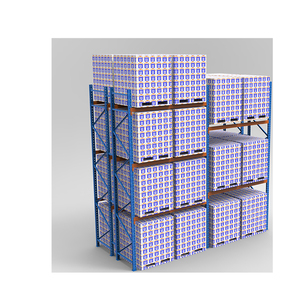
- Roll-formed & structural steel frames
- Multi-tier platform integration ready
- Customized seismic baseplates
Average Storage Capacity Increase Over Selective Racks
Forklift Aisle Travel Time & Operating Cost Reduction
EN 15512 & Eurocode 8 Seismic Verification
Proven Sub-Zero Freezer & Cold Storage Reliability
The Logistics Shift in Bulgaria: Industrial Automation & Cross-Border Hubs
Why modern logistics developers in the Balkan Peninsula are abandoning traditional drive-in racking in favor of semi-automated and automated radio shuttle systems.
The Republic of Bulgaria has rapidly established itself as a critical logistical bridgehead connecting the European Single Market, Turkey, the Black Sea basin, and the Western Balkans. Strategically bisected by Pan-European Transport Corridors IV, VIII, IX, and X, Bulgaria is experiencing unprecedented capital investment in modern logistics real estate. However, warehouse operators across major commercial zones—from Sofia-Bozhurishte and Elin Pelin to the fast-growing Trakia Economic Zone (TEZ) in Plovdiv—face a compounding operational bottleneck: steep increases in industrial land costs, rising commercial energy tariffs, and acute shortages of certified forklift operators.
In response, logistics executives, 3PL providers, and FMCG manufacturers are systematically upgrading from low-efficiency selective or high-risk drive-in racking to automated radio shuttle racking systems. By decoupling the lift truck from storage channels, shuttle racking eliminates aisle transit within the rack superstructure, mitigating rack impact damage, shrinking operational cycles, and compressing storage footprints into ultra-dense storage cubes.
Sofia Metropolitan & Ring Road Nodes
Serving central FMCG distribution, e-commerce fulfillment centers, and pharmaceutical distribution hubs. Shuttle systems maximize vertical clear heights up to 14–24 meters, allowing high-density buffer storage for high-velocity turnover.
Trakia Economic Zone (Plovdiv)
Bulgaria’s manufacturing and automotive manufacturing capital. Shuttle systems are deployed for heavy raw material staging, intermediate inventory holding (WIP), and temperature-controlled food and beverage packaging cold stores.
Varna, Burgas & Ruse Corridors
Key maritime and Danube river ports handling import/export bulk goods, chemical resins, agricultural fertilizers, and cross-border consolidation traffic heading towards Romania and Central Europe.
Comparative Architecture: Shuttle Racking vs. Alternative High-Density Systems
Data-driven engineering comparison examining storage density, throughput velocity, equipment wear, and capital ROI.
| Storage Technology | Space Utilization | Operating Velocity | Forklift Impact Risk | Operating Temperature | Labor Requirement |
|---|---|---|---|---|---|
| Radio Shuttle System | 80% – 85% | High (Shuttle cycles independently) | Minimal (Truck operates only at face) | -30°C to +45°C | Low (1 driver feeds 2-4 shuttles) |
| Traditional Drive-In Rack | 60% – 70% | Low (Slow mast driving inside bays) | Severe (Frequent upright collisions) | Ambient to Cold | High (Dedicated drivers per bay) |
| Gravity Pallet Flow | 70% – 75% | Moderate (Gravity speed dependent) | Low | Limited (Roller freezing issues) | Moderate |
| Standard Selective Rack | 40% – 50% | High (100% individual access) | Moderate (High traffic in all aisles) | All ranges | High (Extensive transit travel) |
Engineering Reliability for Rigorous Industrial Environments
Advanced metallurgy, precision guide rail manufacturing, and sub-zero LiFePO4 battery thermodynamics.
Eurocode 8 Seismic Design
Bulgaria features seismically active faults (Sofia, Maritsa, and Struma tectonic zones). Our structural engineers calculate ground acceleration spectra (ag), dynamic deflection tolerances, and reinforced column baseplates to prevent structural resonance under loaded high-bay conditions.
Cold Chain Thermal Management
Sub-zero cold storage facilities require specialized equipment engineering. Our cold-store shuttles feature internal heating circuits for lithium-iron-phosphate (LiFePO4) power cells, IP65-sealed optical laser sensors, and condensation-proof circuitry guaranteed down to -30°C.
High-Precision Rail Extrusions
Shuttle rail systems are cold-formed from high-tensile structural steel, featuring dual-flange guidance tracks. This design eliminates lateral crabbing, ensures micro-millimeter positioning accuracy, and minimizes rolling resistance for battery life preservation.
Planning a High-Density Automated Project in Bulgaria?
Submit your warehouse CAD layout, pallet load profiles, and target throughput cycles for a comprehensive preliminary engineering design and seismic capacity simulation.
Contact UsWhy Enterprise Logistics Operators Partner with Us
Nearly 70 years of structural engineering pedigree, multi-million dollar automated production lines, and turnkey project accountability.
RMI & EN 15512 Dual Quality
Fabrication meets both European EN 15512 and American RMI / ANSI MH16.1 specifications, providing certified structural safety factors for international operators.
Automated Powder Coating
Continuous automated cleaning, iron phosphating, and electrostatic powder coating deliver durable corrosion protection resistant to industrial humidity and cold thaw cycles.
WMS & WCS Software Synergy
Our programmable logic controllers (PLCs) seamlessly interface with enterprise tier-1 WMS/ERP systems via open industrial Ethernet or Wi-Fi communication protocols.
Dedicated Project Engineering
From initial structural layout and slab anchor embedment validation to site delivery, mechanical assembly, and commissioning oversight by qualified engineers.
Frequently Asked Questions by Logistics Directors in Bulgaria
Direct answers addressing building permits, Euro pallet dimensions, slab structural requirements, and power efficiency.
How does the shuttle system handle Euro-pallets vs. ISO industrial pallets?
Our radio shuttles feature dual-sensor recognition arrays designed to accommodate standard Euro pallets (EPAL 1: 800×1200 mm) as well as wider industrial pallets (EPAL 3 / ISO: 1000×1200 mm). The software automatically detects pallet orientation and under-clearance to ensure stable handling without manual adjustments.
What slab specifications are required for installation in Bulgarian warehouses?
A reinforced concrete slab conforming to DIN 18202 (flatness tolerance) with a minimum compressive strength of C20/25 or C25/30 is typically required. Slab thickness must generally exceed 180–200 mm to support point loads from high-density upright frames and meet chemical anchor embedment depths for seismic resistance.
How do the batteries perform in deep-freeze cold storage environments?
Our cold-chain shuttles utilize specialized lithium iron phosphate (LiFePO4) battery packs equipped with built-in thermal resistance management. Operating in environments as cold as -30°C, the batteries maintain full discharge efficiency for 8 to 10 hours per charge, with quick-swap battery mechanisms allowing continuous operations.
Is the structural design compliant with Bulgarian seismic standards?
Yes. All racking systems delivered to the Bulgarian market are designed in accordance with Eurocode 8 (EN 1998: Design of structures for earthquake resistance) and EN 15512. We calculate design acceleration parameters according to the specific seismic zone of your facility, ensuring proper bracing, upright gauge, and anchorage.
Can the system operate in both FIFO and FILO configurations?
Yes. The system can be configured for First-In, Last-Out (FILO) by loading and unloading from a single aisle, or First-In, First-Out (FIFO) by utilizing an induction aisle on one side and a dispatch aisle on the opposite side. Switching between operational modes is managed via the shuttle control interface.
What safety systems are integrated to protect personnel and inventory?
Every shuttle features an array of multi-level optical safety systems, including front and rear laser distance scanners, obstacle emergency cutoffs, end-of-track mechanical stops, pallet position limiters, and audio-visual warning signals to ensure safe coexistence with warehouse staff.
Consult with Our Warehouse Automation Engineers
Transform your high-bay warehouse efficiency with reliable, high-density radio shuttle racking engineered for long-term operational resilience.
Contact Us